
Knightdale is considered moderately priced in 2026, with median home values at $305,500 and median rent at $1,409 per month. The value proposition depends on housing entry cost versus car dependence, with transportation exposure varying sharply based on commute length and vehicle count.
You’re staring at a spreadsheet, trying to figure out whether a move to Knightdale pencils out. The rent looks reasonable. The home prices aren’t outrageous. But you’ve heard the commute can be brutal, and you’re not sure what else you’re signing up for. Here’s the reality: Knightdale’s cost structure is shaped more by how you move and where you need to go than by sticker prices alone.
Overall Cost of Living Snapshot
Knightdale sits just above the national baseline for overall cost pressure, with a regional price parity index of 103—meaning goods and services run about 3% higher than the U.S. average. But that modest premium doesn’t tell the full story. The city’s cost profile is dominated by housing entry costs and transportation dependence, with utilities adding seasonal swings tied to North Carolina’s hot, humid summers.
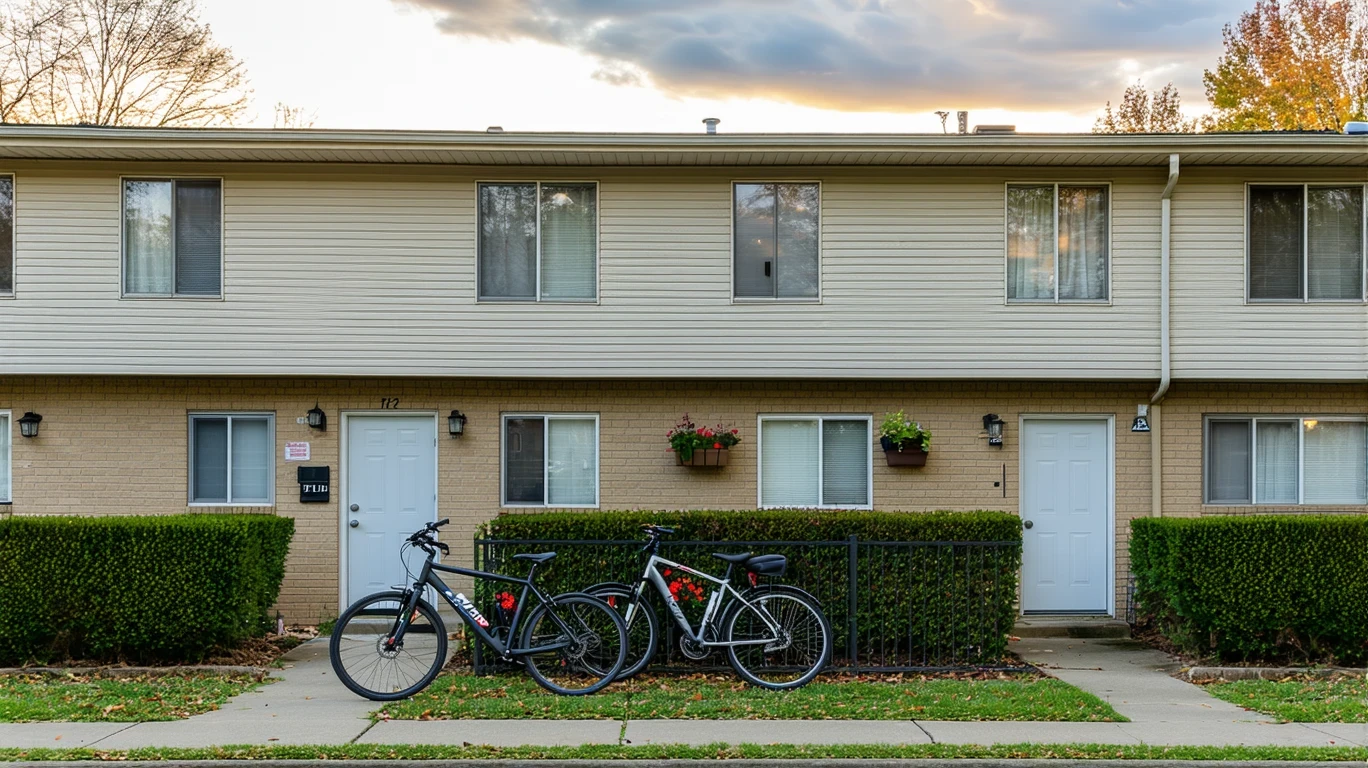
What surprises newcomers isn’t the day-to-day price of groceries or gas—it’s the structural reality of getting around. Knightdale has bus service and notable bike infrastructure in pockets, but errands and essential services cluster along corridors rather than spreading evenly across neighborhoods. That means households without flexible schedules or multiple vehicles face higher friction costs: more time, more planning, more trips bundled together.
The unemployment rate sits at 3.1%, reflecting a tight labor market typical of the Raleigh metro. Median household income is $79,364 per year, which translates to roughly $6,614 in gross monthly income. The primary cost driver here is housing entry, followed closely by transportation exposure. Utility seasonality matters, but it’s a swing factor rather than a baseline burden. Groceries run slightly above the national average but don’t dominate household pressure the way housing and commuting do.
Driver verdict: Knightdale’s cost structure rewards those who can lock in housing early and minimize vehicle dependence through remote work or short commutes. Surprises come from transportation friction and corridor-based errands, not from inflated grocery bills or extreme utility rates.
Housing Costs (Primary Driver)
Housing is the anchor. The median home value of $305,500 reflects Knightdale’s position as a commuter suburb within the Raleigh metro—close enough to access regional employment, but far enough out that land costs stay manageable. For renters, the median gross rent of $1,409 per month offers a lower entry threshold than ownership, but it doesn’t eliminate housing pressure—it just shifts the timeline.
Owning in Knightdale means committing to a mortgage that likely exceeds $1,800 per month before property taxes, insurance, and maintenance. Renting defers that commitment but exposes households to lease renewals and the risk of being priced out over time. The city’s housing stock leans toward single-family homes with mixed building heights, meaning rental inventory is more limited than in denser metro cores.
The renting-versus-owning calculus here isn’t about bedrooms or square footage—it’s about duration and mobility. If you’re planning to stay for five years or more and can handle the upfront costs, ownership offers more control over long-term housing expenses. If you’re uncertain about job stability, commute tolerance, or family growth, renting preserves flexibility at the cost of less predictable annual increases.
Conclusion: Knightdale is a transitional city for renters and a buy-and-hold market for owners. The housing entry cost is the single largest financial hurdle, and it determines almost everything else about your cost exposure here.
| Housing Type | Cost Anchor | What That Buys You |
|---|---|---|
| Median Home Value | $305,500 | Single-family ownership in a commuter suburb with moderate regional access |
| Median Gross Rent | $1,409/month | Lower entry threshold, lease flexibility, exposure to annual increases |
Utilities & Energy Risk
Electricity in Knightdale runs 13.68¢ per kilowatt-hour, which sits near the middle of the national range. The real exposure comes from cooling demand during North Carolina’s extended summer heat. Triple-digit temperatures aren’t rare, and humidity amplifies the load on air conditioning systems. Households in older homes or those without programmable thermostats face higher seasonal swings.
Natural gas is priced at $17.89 per thousand cubic feet (MCF), roughly equivalent to $17.89 per 100 therms. Gas heating is less common here than electric heat pumps, but for homes that do rely on gas, winter usage is modest compared to northern climates. The bigger volatility risk is summer electricity, not winter heating.
Utility bills here aren’t a crisis, but they’re not negligible either. Expect cooling costs to dominate from May through September, with smaller baseline loads the rest of the year. Efficiency upgrades—better insulation, programmable thermostats, or newer HVAC systems—reduce exposure more effectively than behavioral changes alone.
Risk classification: Moderate. Utility costs won’t break a budget, but they add meaningful seasonal pressure that compounds with housing and transportation expenses.
Groceries & Daily Costs
Grocery costs in Knightdale reflect the regional price parity index of 103, running slightly above the national baseline. Ground beef sits at $6.90 per pound, eggs at $2.42 per dozen, and milk at $4.19 per half-gallon. These are derived estimates based on national baselines adjusted for regional price parity, not observed local prices, but they provide useful context for understanding category-level pressure.
The bigger issue isn’t what groceries cost—it’s where you get them. Knightdale’s food and grocery establishments cluster along commercial corridors rather than spreading evenly across residential areas. That means households without a car, or those trying to minimize vehicle trips, face higher planning friction. You can’t just walk to the corner store; you’re bundling errands, timing trips, and navigating traffic corridors.
For households with flexible schedules and reliable transportation, grocery costs are a minor line item. For those juggling shift work, limited vehicle access, or caregiving responsibilities, the access friction adds invisible costs in time and complexity.
Transportation Reality
Transportation is where Knightdale’s cost structure diverges sharply based on household circumstances. The city has bus service and notable bike infrastructure in pockets, with a high pedestrian-to-road ratio in certain areas. But transit is bus-only, and the bike network doesn’t extend uniformly across the city. If you’re commuting to Raleigh or another regional employment center, you’re almost certainly driving.
Gas prices sit at $3.89 per gallon, close to the state average. The real cost isn’t the fuel—it’s the recurring exposure of vehicle ownership: insurance, maintenance, registration, and depreciation. Households with two commuters and two vehicles face double the fixed costs, even if daily mileage stays modest.
Knightdale’s structure rewards remote workers and short-commute households. If you’re driving 25 miles each way to Raleigh five days a week, transportation becomes a secondary cost driver that rivals housing. If you work locally or from home, the pressure drops significantly, and the city’s walkable pockets and bike infrastructure become genuine assets rather than theoretical amenities.
Transportation as recurring exposure: Car dependency here isn’t optional for most households, and the cost compounds over time. The difference between one vehicle and two, or between a 10-mile commute and a 30-mile commute, reshapes the entire cost profile.
Cost Exposure Profiles
Knightdale’s cost exposures split along clear structural lines. Housing entry cost is the first gate: whether you’re buying or renting, the upfront commitment determines your baseline. Transportation dependence is the second: vehicle count and commute length create recurring fixed costs that either amplify or moderate overall pressure. Utility volatility adds seasonal swings, but it’s a smaller factor than the first two.
Low-exposure situations: Remote workers or short-commute households who own a single vehicle and lock in housing early face the most predictable cost structure. Seasonal utility swings are manageable, errands are plannable, and the city’s walkable pockets and bike infrastructure offer occasional alternatives to driving.
High-exposure situations: Dual-commuter households with two vehicles, long drives to regional employment centers, and rental housing face compounding pressures. Lease renewals, fuel costs, vehicle maintenance, and corridor-based errands all add friction. Healthcare access is limited locally—no hospital, pharmacies present but clinics absent—so medical needs often require trips outside the city.
The city’s infrastructure reflects its role as a commuter suburb: family amenities are limited (school density is low), and daily errands cluster along corridors rather than integrating into neighborhoods. That structure works well for households with cars, flexible schedules, and stable housing. It works poorly for those juggling multiple jobs, limited transportation, or frequent medical needs.
Frequently Asked Questions
Is Knightdale more affordable than Raleigh in 2026? Knightdale generally offers lower housing entry costs than Raleigh, but the tradeoff is increased transportation dependence and longer commutes for those working in the metro core. The savings on rent or mortgage can be offset by vehicle expenses and time costs.
What does a typical cost profile look like in Knightdale? Housing dominates, followed by transportation for commuters. Utilities add seasonal swings tied to summer cooling, and groceries run slightly above the national average but don’t drive overall pressure. The profile varies sharply based on commute length and vehicle count.
Do utilities cost more in Knightdale than in nearby areas? Electricity rates are moderate, but cooling demand during hot, humid summers drives higher seasonal usage. Utility costs here are more about exposure duration than rate premiums—long cooling seasons matter more than per-kilowatt-hour pricing.
What costs tend to surprise newcomers in Knightdale? Transportation friction and corridor-based errands catch people off guard. The city has walkable pockets and bike infrastructure, but essential services don’t spread evenly, so households without flexible schedules face higher planning burdens. Limited local healthcare access also means more trips outside the city.
Are grocery prices higher in Knightdale than in Raleigh? Grocery costs reflect the regional price parity index and run slightly above the national baseline, but the bigger issue is access rather than price. Food and grocery options cluster along corridors, so convenience depends on vehicle access and schedule flexibility.
How does commuting affect the overall cost of living in Knightdale? Commuting is a primary cost driver for households working outside the city. Vehicle ownership, fuel, maintenance, and time costs compound quickly, especially for dual-commuter households. Remote work or short local commutes significantly reduce overall cost pressure.
Is Knightdale a good value for renters or buyers? Knightdale offers better value for buyers planning to stay long-term and for renters who prioritize flexibility over ownership. The housing entry cost is lower than in Raleigh’s core, but the value proposition depends heavily on transportation needs and household stability.
How this article was built: In addition to public economic data, this article incorporates location-based experiential signals derived from anonymized geographic patterns—such as access density, walkability, and land-use mix—to reflect how day-to-day living actually feels in Knightdale, NC.
—