
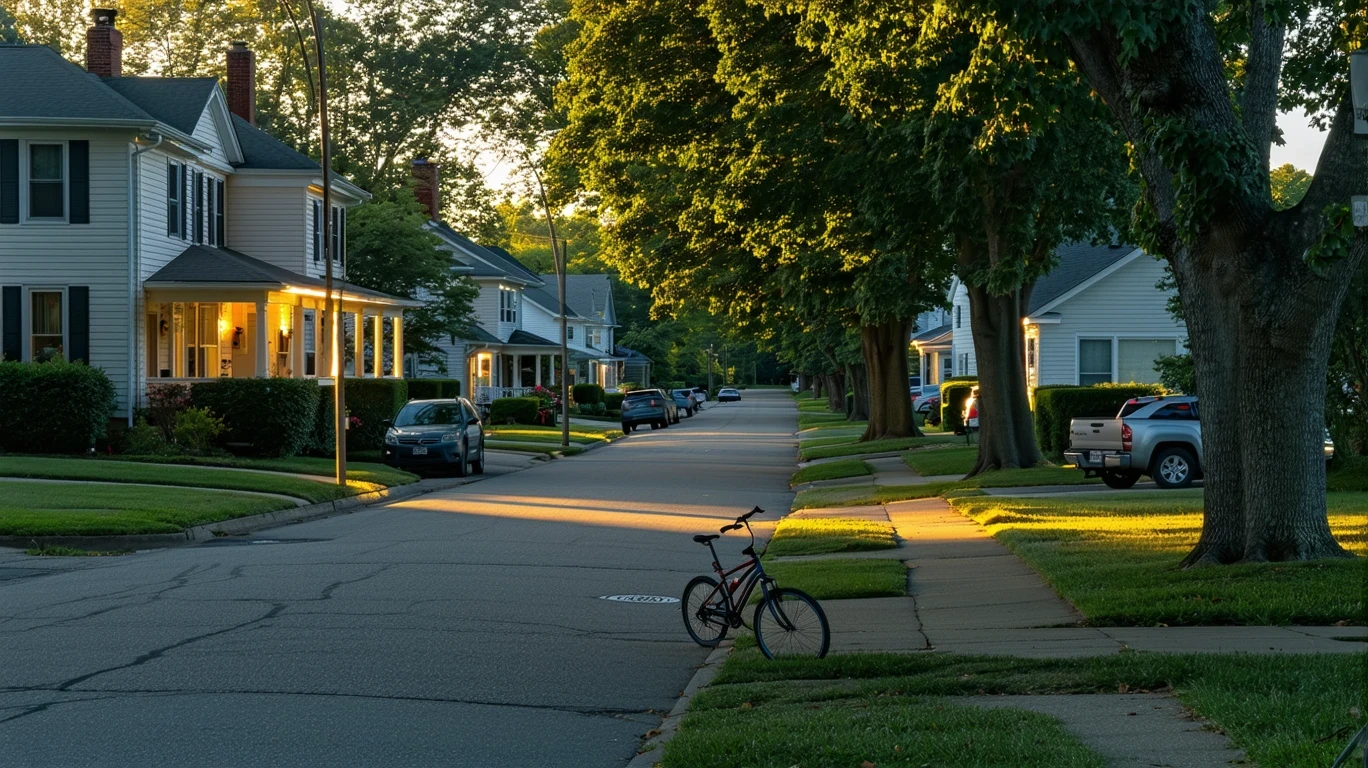
Which city gives you more for your money? For households weighing a move within the Raleigh metro in 2026, the choice between Knightdale and Raleigh isn’t about finding the “cheaper” option—it’s about understanding where cost pressure shows up and which tradeoffs align with your household’s priorities. Knightdale, a growing suburb east of the capital, offers a different cost structure than Raleigh itself, particularly around housing entry barriers, transportation dependence, and access to services. Both cities share the same regional economy and unemployment rate of 3.1%, but the day-to-day financial experience differs in meaningful ways.
Raleigh serves as the state capital and regional hub, with rail transit, hospital facilities, and extensive park networks that shape how residents move, access care, and spend discretionary time. Knightdale, by contrast, operates more as a commuter-oriented suburb with notable cycling infrastructure, lower home prices, and a cost profile that rewards car ownership and planning. The decision between them hinges less on total affordability and more on which costs dominate your household budget—and whether you’re more sensitive to upfront housing expenses, ongoing transportation volatility, or access friction in daily errands and healthcare.
This comparison explains how housing, utilities, groceries, transportation, and taxes behave differently in each city, and which households feel those differences most acutely. It does not declare a winner or calculate total monthly costs. Instead, it clarifies the mechanisms behind cost pressure so you can evaluate fit based on your income structure, household size, commute patterns, and tolerance for trade-offs between entry cost and ongoing exposure.
Housing Costs in Knightdale vs Raleigh
Housing represents the most visible difference between Knightdale and Raleigh in 2026. Knightdale’s median home value sits at $305,500, while Raleigh’s reaches $347,000—a gap that reflects both market positioning and the types of housing stock available in each city. For buyers, Knightdale presents a lower entry barrier, particularly for households seeking single-family homes with yard space in newer subdivisions. Raleigh’s higher home values correspond to proximity to employment centers, transit access, and a broader mix of housing types, including older neighborhoods closer to downtown and denser developments near universities and hospitals.
Rental markets show a different pattern. Knightdale’s median gross rent stands at $1,409 per month, slightly higher than Raleigh’s $1,371 per month. This reversal suggests that Knightdale’s rental inventory skews toward newer single-family rentals and townhomes, while Raleigh offers more apartment options across a wider range of ages and sizes. Renters in Raleigh may find more flexibility in unit type and location, particularly near transit corridors or within walking distance of grocery stores and clinics. Renters in Knightdale often face longer lease commitments in car-dependent subdivisions, where proximity to services requires intentional planning.
The housing cost structure affects different households unevenly. First-time buyers prioritizing lower down payments and monthly mortgage obligations may find Knightdale more accessible, especially if they’re comfortable with a car-oriented lifestyle and longer commutes. Families seeking space and newer construction often gravitate toward Knightdale’s suburban layout. Renters who value transit access, walkable errands, or proximity to healthcare may find Raleigh’s slightly lower rent and denser infrastructure a better fit, even if home purchase feels further out of reach. The choice isn’t about which city costs less—it’s about whether housing pressure concentrates at entry (Raleigh) or spreads across transportation and time costs (knightdale).
| Housing Type | Knightdale | Raleigh |
|---|---|---|
| Median Home Value | $305,500 | $347,000 |
| Median Gross Rent | $1,409/month | $1,371/month |
Housing takeaway: Knightdale reduces upfront housing costs for buyers but increases reliance on car-based access to services. Raleigh imposes a higher entry barrier for homeownership but offers renters more unit diversity and reduces transportation dependence for households near transit or mixed-use corridors. Families prioritizing space and lower purchase prices may find Knightdale more accessible; renters valuing walkability and service proximity may experience less friction in Raleigh.
Utilities and Energy Costs
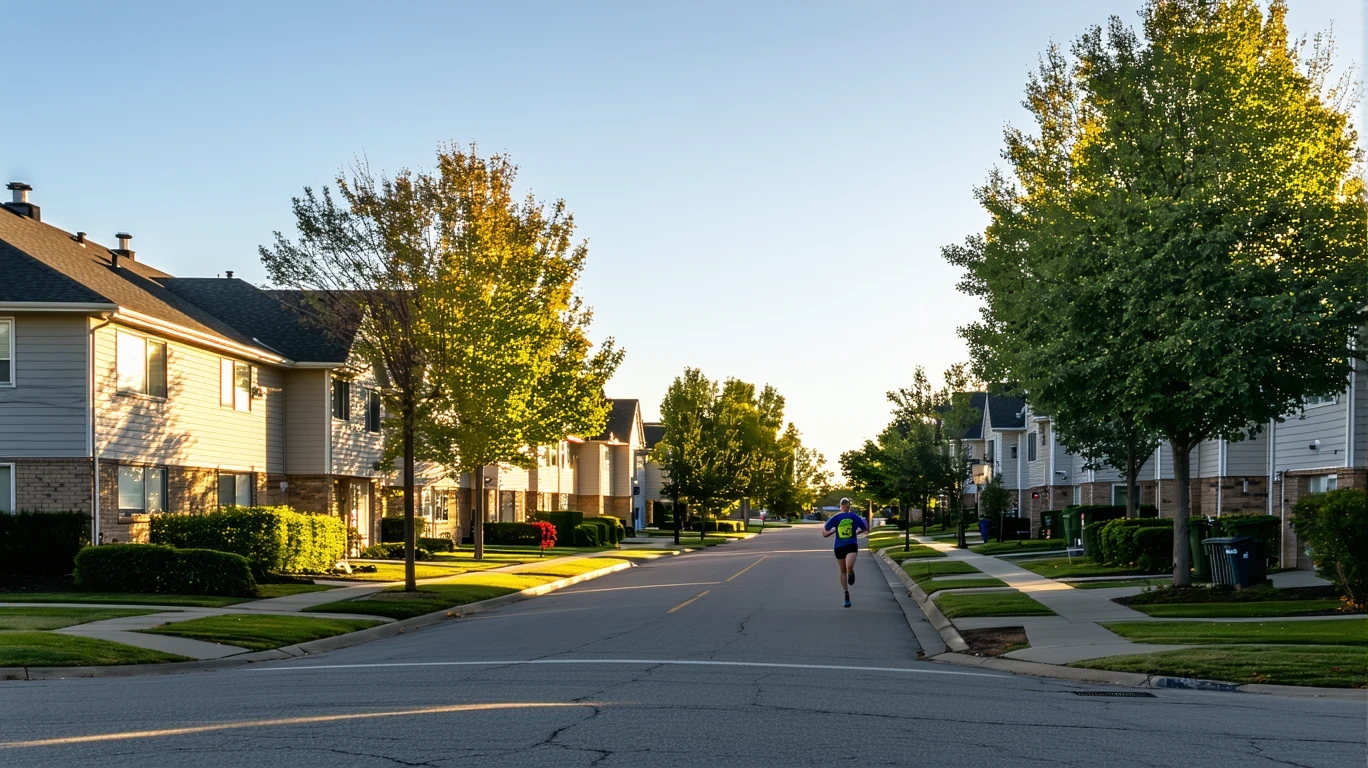
Utility cost exposure in Knightdale and Raleigh reflects both rate structures and housing characteristics. Knightdale’s electricity rate sits at 13.68¢/kWh, slightly below Raleigh’s 14.64¢/kWh. Natural gas pricing shows a similar pattern: Knightdale’s rate of $17.89/MCF compares to Raleigh’s $20.48/MCF. These differences suggest that Knightdale households face marginally lower per-unit energy costs, though the impact depends heavily on home size, insulation quality, and cooling demands during North Carolina’s extended warm season.
Both cities experience similar climate exposure—hot, humid summers that drive air conditioning use from May through September, and mild winters with occasional cold snaps that require heating. However, housing stock differences shape how utility costs accumulate. Knightdale’s newer subdivisions often feature homes built to more recent energy codes, with better insulation and more efficient HVAC systems, which can offset higher square footage. Raleigh’s older housing stock, particularly in established neighborhoods closer to downtown, may include homes with less efficient windows, older heating systems, and higher baseline energy loss, even in smaller footprints.
Household size and housing type interact with these rate differences in predictable ways. Single adults or couples in Raleigh apartments may see lower absolute utility bills due to smaller conditioned space, even at slightly higher rates. Families in Knightdale single-family homes face larger cooling loads and longer run times, but benefit from lower per-unit costs and often newer, more efficient equipment. Renters in both cities should clarify whether utilities are included in rent or billed separately, as this shifts cost predictability significantly. Homeowners in either city can reduce volatility through programmable thermostats, attic insulation upgrades, and strategic use of ceiling fans, though the payoff timeline depends on home age and existing efficiency.
Utility takeaway: Knightdale offers slightly lower energy rates, which benefits households in larger homes with high cooling demands. Raleigh’s higher rates matter less for renters in smaller units or households in well-insulated older homes. Utility cost volatility is driven more by home size and age than by city of residence, but Knightdale’s newer housing stock generally reduces exposure to inefficiency penalties. Households sensitive to seasonal bill swings should prioritize home age and HVAC condition over rate differences alone.
Groceries and Daily Expenses
Grocery and everyday spending pressure in Knightdale and Raleigh reflects both price sensitivity and access patterns. Knightdale’s regional price parity index of 103 indicates costs slightly above the national baseline, while Raleigh’s index of 98 suggests costs slightly below. This difference shows up most clearly in grocery staples, prepared foods, and convenience spending, where Raleigh’s denser commercial corridors and competition among grocery chains create more price flexibility. Knightdale’s suburban layout concentrates grocery options along major corridors, often requiring car trips and reducing the ability to comparison-shop quickly.
The structure of daily errands differs meaningfully between the two cities. Raleigh’s grocery density exceeds high thresholds in many areas, with supermarkets, ethnic grocers, and discount chains accessible within shorter distances. This allows households to shift spending toward lower-cost providers or specialty stores depending on weekly needs. Knightdale’s grocery options cluster along commercial strips, with fewer walkable alternatives and less density overall. Households in Knightdale often consolidate grocery trips to reduce fuel costs, which can limit flexibility in taking advantage of sales or rotating between stores.
Dining out and convenience spending follow similar patterns. Raleigh’s mixed-use neighborhoods and proximity to universities support a broader range of casual dining, coffee shops, and takeout options at multiple price points. This density can either reduce costs—by enabling quick, low-cost meals between errands—or increase them, by normalizing frequent small purchases. Knightdale’s dining options tend toward chain restaurants and drive-through formats, which can feel more predictable but offer less variety for households seeking budget-friendly or culturally specific meals. Single adults and couples in Raleigh may find it easier to manage grocery costs through walkable access and store variety; families in Knightdale benefit from bulk shopping at big-box stores but face less flexibility in adjusting week-to-week spending.
Grocery takeaway: Raleigh’s lower price parity and denser grocery access reduce cost pressure for households willing to shop strategically across multiple stores. Knightdale’s suburban layout increases reliance on car-based grocery trips and limits price flexibility, though bulk shopping at discount chains remains accessible. Households sensitive to convenience spending creep may find Raleigh’s density either helpful (more low-cost options) or risky (more frequent small purchases). Families managing large grocery volumes may prefer Knightdale’s big-box access despite slightly higher baseline costs.
Taxes and Fees
Tax and fee structures in Knightdale and Raleigh shape ongoing cost obligations in ways that vary by housing type and tenure. Both cities fall under Wake County’s property tax system, but local fees, service charges, and homeowners association (HOA) obligations differ based on neighborhood age and governance structure. Knightdale’s newer subdivisions often include HOA fees that bundle landscaping, street maintenance, and amenity access, adding predictable monthly costs that renters avoid but owners must budget for. Raleigh’s older neighborhoods typically lack HOAs, reducing recurring fees but shifting maintenance responsibility entirely to the homeowner.
Sales tax rates apply uniformly across Wake County, so neither city offers an advantage in consumption-based taxation. However, the structure of utility billing and trash collection varies. Some Knightdale neighborhoods contract private waste services, while Raleigh provides municipal collection funded through property taxes or separate fees. Renters in both cities should confirm whether water, sewer, and trash are included in rent or billed separately, as this affects both predictability and total monthly obligations.
Property tax exposure depends on assessed home value and length of ownership. Knightdale’s lower median home value translates to lower absolute property tax bills for equivalent housing types, though newer homes may see faster assessment increases as neighborhoods mature. Raleigh homeowners face higher baseline property taxes due to higher home values, but older homes in established neighborhoods often benefit from slower assessment growth. Long-term residents in either city may qualify for exemptions or caps, but recent buyers face full current-year assessments without phase-in relief.
Tax and fee takeaway: Knightdale homeowners face lower baseline property taxes due to lower home values, but HOA fees in newer subdivisions add predictable monthly costs that Raleigh’s older neighborhoods often avoid. Raleigh’s higher home values increase property tax obligations, but the absence of HOAs in many areas reduces recurring fees. Renters in both cities experience similar tax exposure indirectly through rent, though fee structures for utilities and services vary by building and landlord. Households planning to stay several years should evaluate total ownership costs—including HOA fees and assessment trends—rather than purchase price alone.
How People Get Around Knightdale and Raleigh
Transportation costs and commute patterns represent one of the sharpest structural differences between Knightdale and Raleigh in 2026. Knightdale operates as a car-dependent suburb, with bus service present but limited coverage and frequency. Cycling infrastructure is notably strong relative to road networks, offering recreational and short-trip options for households near greenways, but daily errands and commutes still require a vehicle for most residents. Raleigh, by contrast, includes rail transit service and denser bus networks, reducing car dependence for households living near transit corridors or within walking distance of employment centers, grocery stores, and healthcare facilities.
Fuel costs add another layer of difference. Knightdale’s gas price sits at $3.89/gal, while Raleigh’s stands at $2.71/gal—a gap that affects households differently depending on commute length and frequency. Knightdale residents commuting to Raleigh for work face both higher per-gallon costs and longer distances, compounding transportation exposure. Raleigh residents working within the city or using transit for part of their commute experience lower fuel costs and, in some cases, the option to reduce car ownership entirely. Single-car households in Raleigh may find transit viable for one earner, reducing insurance, maintenance, and parking costs. Knightdale households typically require at least one vehicle per driver, with limited alternatives for non-drivers.
Commute friction extends beyond fuel. Knightdale’s suburban layout increases travel time for errands, medical appointments, and social activities, even when destinations are nearby by distance. Raleigh’s mixed-use corridors and transit options reduce time costs for households prioritizing walkability or rail access, though traffic congestion near downtown and universities can offset those gains during peak hours. Families with school-age children in Knightdale often rely on personal vehicles for school drop-offs and activity transportation, while Raleigh families near transit or within walkable school zones may reduce daily driving.
Transportation takeaway: Knightdale’s car dependence and higher gas prices increase transportation exposure for commuters and households making frequent trips. Raleigh’s transit options and lower fuel costs reduce car reliance for some households, though proximity to transit determines whether those savings materialize. Households sensitive to commute friction and fuel volatility may find Raleigh’s infrastructure more forgiving; those prioritizing lower housing costs and accepting car dependence may find Knightdale’s tradeoffs manageable.
Where Cost Pressure Concentrates
Housing dominates the cost experience in both cities, but the pressure shows up differently. Knightdale front-loads savings through lower home purchase prices, then distributes costs across transportation fuel, longer commutes, and car-dependent errands. Raleigh concentrates pressure at the housing entry point, with higher home values and competitive rental markets, but reduces ongoing transportation costs for households able to use transit or live near mixed-use corridors. Renters experience this tradeoff in reverse: Knightdale’s slightly higher rents come with newer units and more space, while Raleigh’s lower median rent reflects older stock and smaller apartments, offset by better access to services.
Utilities introduce more volatility in Knightdale for households in larger single-family homes, despite slightly lower rates. Raleigh’s higher per-unit costs matter less for renters in smaller apartments or households in well-insulated older homes. The difference isn’t about which city has cheaper utilities—it’s about whether your housing type amplifies or dampens seasonal swings. Families in Knightdale managing cooling costs in 2,500-square-foot homes face different exposure than couples in Raleigh managing a 900-square-foot apartment, even at higher rates.
Daily living costs—groceries, dining, convenience spending—favor Raleigh’s denser access and lower price parity, but only for households willing to shop strategically and avoid convenience creep. Knightdale’s suburban layout increases reliance on bulk shopping and car-based errands, which can either reduce costs (fewer impulse purchases) or increase them (higher fuel use, less price flexibility). Transportation patterns matter more in Knightdale, where every household decision assumes car access. Raleigh households near transit or within walkable neighborhoods experience less friction, though those in car-dependent parts of the city face similar exposure to Knightdale without the lower housing entry cost.
The better choice depends on which costs dominate your household. Households sensitive to upfront housing expenses and willing to absorb transportation costs may prefer Knightdale’s lower home prices and suburban space. Households prioritizing transit access, walkable errands, or proximity to healthcare may find Raleigh’s higher housing costs offset by reduced car dependence and lower friction in daily logistics. For families, the difference is less about price and more about predictability: Knightdale offers lower entry and higher ongoing transportation exposure, while Raleigh offers higher entry and more flexibility in reducing car reliance.
How the Same Income Feels in Knightdale vs Raleigh
Single Adult
For a single adult, housing becomes non-negotiable first, but the form it takes differs. In Knightdale, lower home prices make ownership more accessible, but car ownership and fuel costs become unavoidable. In Raleigh, higher rent or mortgage payments dominate, but proximity to transit or walkable errands can reduce transportation exposure. Flexibility exists in Raleigh through unit type and location choices; in Knightdale, flexibility comes from accepting a longer commute in exchange for more space. The role of commute friction matters more in Knightdale, where every errand assumes car access and time costs accumulate invisibly.
Dual-Income Couple
For dual-income couples, the first non-negotiable cost is housing that accommodates two work schedules. In Knightdale, lower home prices allow faster equity building, but both earners typically need cars, doubling insurance, fuel, and maintenance costs. In Raleigh, higher housing costs tighten the budget upfront, but transit access may allow one earner to reduce or eliminate car dependence, lowering ongoing obligations. Flexibility exists in Raleigh through walkable access to groceries and services, reducing time costs; in Knightdale, flexibility comes from larger homes and lower entry barriers, but time costs rise through car-dependent errands and longer commutes.
Family with Kids
For families, housing space and school access become non-negotiable first, and Knightdale’s lower home prices and larger lots often feel more accessible. Car dependence becomes total, with school drop-offs, activities, and errands requiring multiple vehicles. In Raleigh, higher housing costs and smaller lots create pressure, but proximity to parks, healthcare, and transit can reduce logistical friction. Flexibility disappears faster in Knightdale when both parents work and children need transportation; in Raleigh, flexibility exists through walkable schools or transit access, though fewer families can afford single-family homes near those corridors. The role of commute friction and car dependence defines daily life more than housing cost alone.
Decision Matrix: Which City Fits Which Household?
| Decision factor | If you’re sensitive to this… | Knightdale tends to fit when… | Raleigh tends to fit when… |
|---|---|---|---|
| Housing entry + space needs | Down payment size, mortgage affordability, yard space | You prioritize lower purchase prices and accept car dependence for access to services | You value proximity to transit and services over square footage and can absorb higher entry costs |
| Transportation dependence + commute friction | Fuel volatility, car ownership costs, commute time | You accept higher fuel costs and longer commutes in exchange for lower housing entry barriers | You can reduce car dependence through transit or walkable access and prioritize lower fuel exposure |
| Utility variability + home size exposure | Seasonal bill swings, cooling costs, home efficiency | You choose newer construction with better efficiency despite larger square footage | You prioritize smaller conditioned space or well-insulated older homes to reduce absolute usage |
| Grocery strategy + convenience spending creep | Price flexibility, store access, impulse purchases | You consolidate trips to big-box stores and accept less variety in exchange for bulk savings | You value dense store access and strategic shopping across multiple providers to reduce baseline costs |
| Fees + friction costs (HOA, services, upkeep) | Predictable monthly fees, maintenance control, service bundling | You accept HOA fees for bundled services and newer infrastructure in exchange for lower home prices | You prefer avoiding HOA fees and managing maintenance directly despite higher baseline home values |
| Time budget (schedule flexibility, errands, logistics) | Errand consolidation, healthcare access, activity transportation | You can consolidate errands and accept longer travel times for lower housing and space costs | You prioritize walkable access to services and shorter errand times despite higher housing costs |
Lifestyle Fit Beyond the Numbers
Lifestyle differences between Knightdale and Raleigh extend beyond cost structure into how daily life feels and what tradeoffs households accept. Knightdale operates as a commuter-oriented suburb with notable cycling infrastructure, offering greenway access and recreational trails that appeal to households valuing outdoor activity without urban density. The suburban layout prioritizes single-family homes, yard space, and newer construction, which suits families seeking room to grow and a quieter pace. However, this layout increases reliance on cars for nearly every errand, and social or cultural activities often require trips into Raleigh or other parts of the metro.
Raleigh’s role as the state capital and regional hub shapes its lifestyle character. Rail transit and denser bus networks make car-free or car-light living viable for some households, particularly those near downtown, universities, or mixed-use corridors. The city’s integrated park system and water features provide green space access without requiring a car, and hospital facilities offer stronger healthcare access for families managing chronic conditions or seeking specialized care. Raleigh’s cultural amenities—museums, live music, diverse dining—are more accessible for residents living within the city, though traffic congestion and parking costs can offset convenience during peak times.
The indirect cost effects of these lifestyle differences matter. Knightdale’s car dependence increases transportation costs but reduces housing entry barriers, making homeownership more accessible for families willing to drive. Raleigh’s walkability and transit access reduce transportation costs for some households but concentrate pressure on housing affordability, particularly for renters or first-time buyers. Newer housing stock in Knightdale often means lower utility bills despite larger square footage, while Raleigh’s older homes may require efficiency upgrades to avoid seasonal bill volatility. Families in Knightdale gain space and lower entry costs but lose time to commutes and errands; families in Raleigh gain access and reduced friction but pay more upfront for housing.
Quick fact: Knightdale’s pedestrian-to-road ratio exceeds high thresholds, indicating substantial sidewalk and path infrastructure in parts of the city despite overall car dependence.
Quick fact: Raleigh’s park density exceeds high thresholds, with water features present, offering integrated outdoor access across neighborhoods.
Common Questions About Knightdale vs Raleigh in 2026
Is Knightdale or Raleigh more affordable for renters in 2026?
Raleigh’s median gross rent of $1,371 per month sits slightly below Knightdale’s $1,409 per month, but affordability depends on unit type and location. Raleigh offers more apartment options across a wider range of ages and sizes, with some units near transit or walkable corridors that reduce transportation costs. Knightdale’s rental inventory skews toward newer single-family rentals and townhomes, often in car-dependent subdivisions. Renters prioritizing lower absolute rent and transit access may find Raleigh more affordable; those seeking newer construction and more space may prefer Knightdale despite slightly higher rent.
Which city has lower transportation costs, Knightdale or Raleigh?
Raleigh’s gas price of $2.71/gal is substantially lower than Knightdale’s $3.89/gal, and Raleigh’s rail transit and denser bus networks reduce car dependence for households near transit corridors. Knightdale operates as a car-dependent suburb, where every household typically requires at least one vehicle per driver. Transportation costs concentrate in Knightdale through higher fuel prices and longer commutes, while Raleigh offers more flexibility for households able to reduce car ownership or use transit for part of their travel.
Do utilities cost more in Knightdale or Raleigh in 2026?
Knightdale’s electricity rate of 13.68¢/kWh and natural gas price of $17.89/MCF are both lower than Raleigh’s rates of 14.64¢/kWh and $20.48/MCF. However, total utility costs depend more on home size, age, and efficiency than on rate differences alone. Knightdale’s newer housing stock often reduces energy waste despite larger square footage, while Raleigh’s older homes may face higher usage even at smaller sizes. Households in larger homes with high cooling demands benefit more from Knightdale’s lower rates; those in smaller, well-insulated units may see lower absolute bills in Raleigh despite higher rates.
Which city is better for families comparing Knightdale and Raleigh?
Families prioritizing lower home prices, yard space, and newer construction often find Knightdale more accessible, though car dependence becomes total for school drop-offs, activities, and errands. Raleigh offers stronger healthcare access with hospital facilities present, integrated park systems, and transit options that reduce logistical friction for some families. School density sits below low thresholds in both cities, so proximity to specific schools matters more than city of residence. The better fit depends on whether your household prioritizes housing entry costs and space (Knightdale) or service access and reduced car reliance (Raleigh).
How do grocery costs compare between Knightdale and Raleigh in 2026?
Raleigh’s regional price parity index of 98 indicates costs slightly below the national baseline, while Knightdale’s index of 103 suggests costs slightly above. Raleigh’s denser grocery access and competition among chains create more price flexibility for households willing to shop strategically. Knightdale’s suburban layout concentrates grocery options along corridors, requiring car trips and reducing comparison-shopping convenience. Families managing large grocery volumes may prefer Knightdale’s big-box access despite slightly higher baseline costs; households sensitive to price flexibility and walkable access may find Raleigh’s density more forgiving.
Making the Choice
The decision between Knightdale and Raleigh in 2026 comes down to where cost pressure concentrates and which tradeoffs your household can absorb. Knightdale offers lower housing entry costs, newer construction, and suburban space, but increases transportation exposure through higher fuel prices, car dependence, and longer commutes. Raleigh imposes higher housing costs upfront, with competitive home prices and rental markets, but reduces ongoing transportation costs for households near transit and offers stronger access to healthcare, parks, and walkable services. Neither city is universally cheaper—each rewards different priorities.
Households prioritizing homeownership affordability, yard space, and newer homes may find Knightdale’s lower median home value of $305,500 more accessible than Raleigh’s $347,000, especially if they’re comfortable with car-dependent logistics. Families valuing transit options, hospital access, and integrated outdoor space may find Raleigh’s infrastructure worth the higher entry cost, particularly if they can reduce car ownership or live near mixed-use corridors. Renters face a similar choice: Knightdale’s slightly higher rent buys newer units and more space, while Raleigh’s lower median rent and denser options reduce friction in daily errands and access to services. The right choice depends on whether your household is more sensitive to upfront housing costs or ongoing transportation and time exposure—and whether you value predictability in monthly obligations or flexibility in reducing car reliance.
How this article was built: In addition to public economic data, this article incorporates location-based experiential signals derived from anonymized geographic patterns—such as access density, walkability, and land-use mix—to reflect how day-to-day living actually feels in Knightdale, NC.