
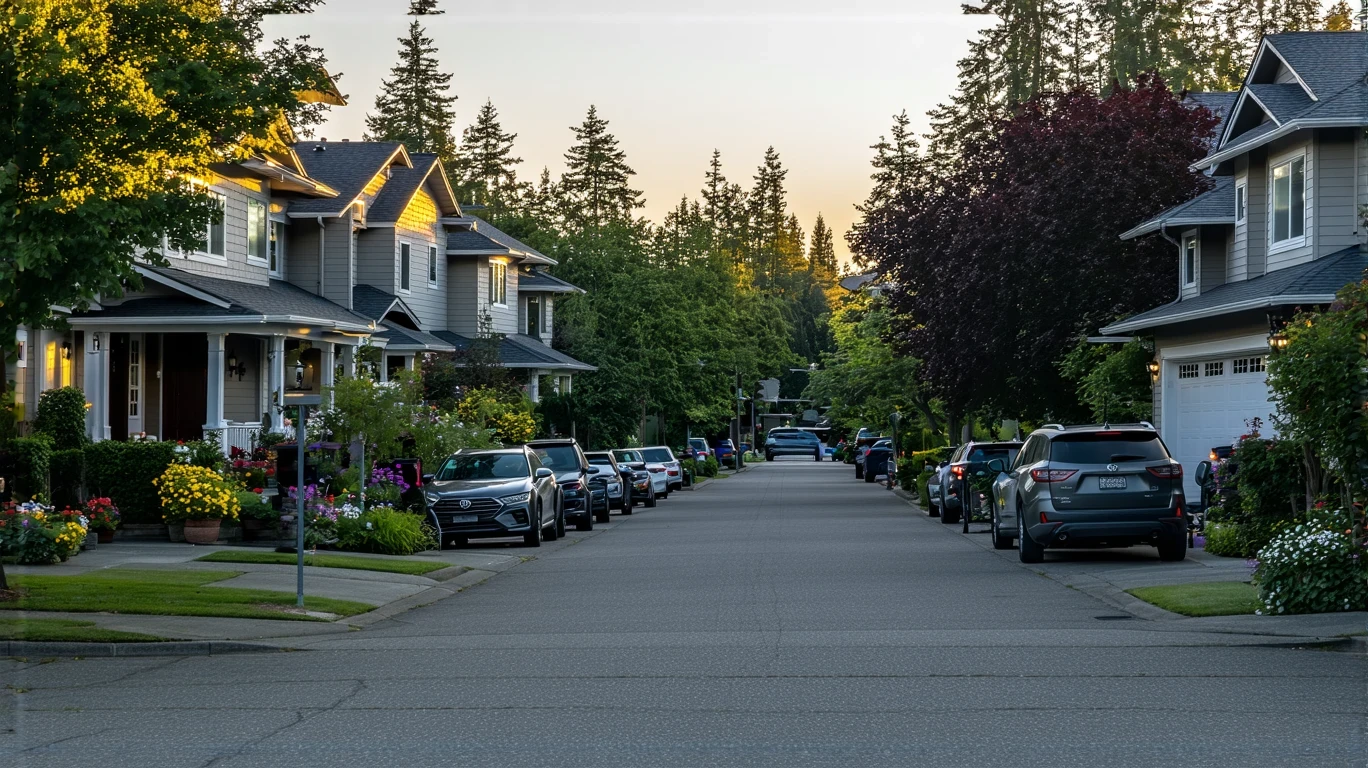
Most people assume Kent is the obvious budget choice when comparing these two Seattle-area cities—after all, it’s further from the urban core and lacks Kirkland’s waterfront cachet. But the 2026 cost reality is more textured than that myth suggests. Both cities sit in the same metro, share similar unemployment rates, and offer access to the broader Puget Sound economy. Yet the way costs show up—and which households feel pressure most acutely—depends less on total spending and more on where financial exposure concentrates. Kirkland’s higher housing entry barrier comes with walkable pockets and integrated parks, while Kent’s lower threshold pairs with rail transit access and broadly accessible grocery options. The decision isn’t about which city costs less overall; it’s about which cost structure aligns with how your household actually lives, commutes, and manages day-to-day logistics in 2026.
Families prioritizing space and school access face different tradeoffs than single professionals optimizing for commute time and walkability. Couples splitting expenses encounter distinct pressure points depending on whether they value front-loaded savings or ongoing predictability. Regional context matters here: both cities experience the Pacific Northwest’s mild, damp climate, but housing stock age, transit infrastructure, and errand accessibility create friction in different places. This comparison explains where costs concentrate, how volatility differs, and which households find better fit in each city—without declaring a universal winner or calculating affordability thresholds that ignore your specific situation.
Housing Costs
Kirkland’s median home value sits at $937,700, while Kent’s stands at $478,400—a structural difference that shapes every housing decision in 2026. This isn’t just about sticker price; it’s about what kind of financial commitment dominates your cost experience. In Kirkland, the entry barrier is steep, requiring substantial down payment reserves and mortgage qualification thresholds that filter access even for dual-income households. Kent’s lower median opens homeownership to a broader income range, but the tradeoff isn’t simply “cheaper housing.” It’s about whether you’re optimizing for proximity to Lake Washington amenities and walkable commercial corridors, or prioritizing space, yard access, and lower monthly obligations that free up budget for other categories.
Renters face a similar structural split. Kirkland’s median gross rent reaches $2,250 per month, compared to Kent’s $1,742 per month. That difference—$508 monthly—reflects more than just location premium. Kirkland’s rental stock skews toward newer construction in mixed-use developments, often with amenities bundled into rent (fitness centers, parking structures, maintained landscaping). Kent’s rental market includes more single-family homes and older apartment complexes, where base rent runs lower but utilities, parking, and maintenance responsibilities may shift to tenants. For renters sensitive to upfront costs and lease flexibility, Kent’s lower threshold reduces pressure. For those prioritizing walkability and lower transportation needs, Kirkland’s rent premium may offset car dependence elsewhere in the budget.
Housing stock composition matters beyond the numbers. Kirkland’s mixed building height profile and land-use mix create pockets where condos and townhomes offer entry points below the single-family median, though HOA fees and special assessments can add unpredictability. Kent’s broader housing variety includes more detached homes with yards, appealing to families needing space for kids, pets, or storage, but ongoing maintenance and utility exposure rise with square footage. First-time buyers in Kirkland face a steeper climb to ownership but may find smaller-footprint options that reduce long-term upkeep costs. In Kent, the lower entry point accelerates ownership timelines, yet larger homes and older construction can introduce deferred maintenance expenses that aren’t visible in the purchase price.
| Housing Type | Kirkland | Kent |
|---|---|---|
| Median Home Value | $937,700 | $478,400 |
| Median Gross Rent | $2,250/month | $1,742/month |
| Typical Rental Stock | Newer apartments, mixed-use condos | Single-family rentals, older complexes |
| Ownership Entry Barrier | High (steep down payment, qualification) | Moderate (broader income access) |
Housing takeaway: Kirkland’s housing costs create a high entry barrier that favors established dual-income households or those willing to trade space for location and walkability. Kent’s lower threshold accelerates ownership and appeals to families prioritizing square footage and yard access, but ongoing costs tied to larger homes and older construction shift pressure from entry to maintenance and utilities. Renters in Kirkland face higher base costs but may reduce transportation and convenience spending; renters in Kent gain budget flexibility but need to account for potential utility variability and car dependence. Neither city offers a universal advantage—the fit depends on whether your household is more exposed to front-loaded costs or ongoing obligations.
Utilities and Energy Costs
Electricity rates in Kirkland average 13.81¢/kWh, while Kent’s come in slightly lower at 13.33¢/kWh—a difference too narrow to drive meaningful monthly variation on its own. What matters more is how housing stock, size, and age interact with the Pacific Northwest’s mild but damp climate. Heating needs dominate utility exposure during the region’s extended cool, wet season, while cooling costs remain modest given the lack of extreme summer heat. Natural gas prices show a wider gap: Kirkland’s $17.38/MCF compared to Kent’s $15.51/MCF. For households relying on gas heat in older, less-insulated homes, that difference compounds over months of furnace use, especially in larger single-family houses common in Kent’s housing mix.
Apartment dwellers in Kirkland’s newer mixed-use buildings often benefit from better insulation, shared-wall efficiency, and landlord-covered water or sewer costs, reducing both baseline usage and volatility. Kent renters in older single-family homes or standalone units face higher exposure: larger square footage, less efficient windows and insulation, and tenant-paid utilities that fluctuate with weather and household behavior. Homeowners in both cities encounter similar dynamics, but Kent’s prevalence of detached homes with yards, basements, and older HVAC systems creates more opportunities for inefficiency. Kirkland homeowners in townhomes or newer construction may see more predictable bills, though HOA fees sometimes bundle certain utilities, masking individual cost control.
Seasonality plays out differently depending on housing type and household size. Single adults in Kirkland apartments may see minimal month-to-month swing, with baseline electric and gas costs staying relatively flat. Families in Kent’s larger homes experience sharper peaks during winter heating months, especially if the home predates modern efficiency standards. Dual-income couples splitting costs in either city need to account for whether their housing choice front-loads efficiency (newer Kirkland condo with heat pump) or defers it (older Kent house with gas furnace and poor attic insulation). Time-of-use billing structures and utility efficiency programs exist in the region, but participation and savings depend on household ability to shift usage or invest in upgrades—options more accessible to homeowners with capital reserves than renters managing month-to-month budgets.
Utility takeaway: Kirkland’s slightly higher electricity and natural gas rates matter less than housing stock efficiency and size. Renters in newer Kirkland apartments face lower volatility and often landlord-covered water costs, while Kent renters in single-family homes encounter higher baseline usage and seasonal swings. Homeowners in Kent’s larger, older housing stock experience more utility exposure, especially during heating season, whereas Kirkland’s mixed building types and newer construction offer more predictable bills at the cost of higher housing entry. Families and larger households feel utility pressure more acutely in Kent; single adults and couples in smaller Kirkland units gain stability but sacrifice space.
Groceries and Daily Expenses
Kirkland’s regional price parity index of 151 compared to Kent’s 113 signals a meaningful difference in how everyday spending pressure accumulates. This isn’t about individual item prices—it’s about the cumulative effect of shopping, dining, and convenience purchases in a higher-cost commercial environment versus a more value-oriented one. Kirkland’s corridor-clustered food and grocery options concentrate along commercial strips where rents run higher, and that cost structure filters into menu prices, prepared food markups, and specialty grocery premiums. Kent’s broadly accessible grocery density reflects a mix of big-box stores, discount chains, and neighborhood markets that compete more directly on price, giving households more flexibility to trade down or shop strategically without driving across town.
Single adults in Kirkland may find themselves spending more on grab-and-go meals, coffee shops, and quick-service dining simply because those options dominate the walkable commercial corridors near residential pockets. The convenience reduces transportation costs and time, but the per-transaction expense creeps higher than it would in Kent, where car-dependent errands often route through larger-format stores with lower per-unit pricing. Couples managing dual schedules face a similar tradeoff: Kirkland’s proximity to prepared food and delivery-friendly restaurants saves time but raises the baseline cost of feeding two people without cooking from scratch. Kent’s grocery landscape rewards households willing to plan, batch-shop, and cook at home, but the time cost of driving to multiple stores or navigating less-dense retail corridors adds friction that busy professionals may not tolerate.
Families managing larger grocery volumes feel the structural difference most acutely. Kent’s access to warehouse clubs, discount grocers, and big-box retailers makes it easier to buy in bulk and control per-serving costs, especially for staples like dairy, produce, and proteins. Kirkland’s grocery options skew toward smaller-footprint stores with curated selections and higher price points, appealing to households prioritizing organic, specialty, or prepared items but penalizing those simply trying to feed three or four people efficiently. Dining out frequency also shifts the equation: Kirkland’s restaurant density and walkable access encourage more frequent small purchases (lunch out, weekend brunch, weeknight takeout), while Kent’s car-dependent layout pushes dining into deliberate, less-frequent events that may cost less per month despite similar per-meal prices.
Grocery and daily expense takeaway: Kirkland’s higher regional price parity and corridor-clustered food access create steady upward pressure on convenience spending, hitting single adults and busy couples hardest when time constraints favor grab-and-go over home cooking. Kent’s broadly accessible grocery density and lower price environment reward families and planners willing to drive and batch-shop, but car dependence adds time and transportation costs that offset some savings. Neither city offers a clear win—Kirkland fits households valuing walkable access and willing to pay for convenience, while Kent suits those optimizing for volume purchasing and price flexibility at the cost of errand logistics.
Taxes and Fees
Washington State imposes no personal income tax, so both Kirkland and Kent households avoid that burden entirely—a structural advantage that simplifies tax planning but shifts revenue reliance onto property taxes, sales taxes, and local fees. Property tax exposure in both cities depends on assessed home value, millage rates set by overlapping jurisdictions (county, city, school district, special levies), and whether the property qualifies for exemptions. Kirkland homeowners face higher absolute property tax bills due to the city’s elevated median home value, even if the effective rate structure mirrors Kent’s. A $937,700 home in Kirkland generates significantly more annual property tax than a $478,400 home in Kent, creating ongoing cost pressure that persists regardless of household income or mortgage payoff status.
Sales tax rates in the Seattle metro area hover near 10%, affecting every retail purchase, restaurant meal, and taxable service in both cities. The impact scales with spending volume and category mix: households that dine out frequently, buy new cars, or renovate homes feel sales tax pressure more than those minimizing discretionary purchases. Kirkland’s higher cost environment compounds this indirectly—when a dinner for two costs more due to menu prices, the sales tax collected on that higher base also rises. Kent’s lower price baseline reduces the absolute sales tax paid on equivalent purchases, though the rate itself remains similar. For families managing tight budgets, this difference accumulates across groceries (non-prepared food exempt, but prepared items taxed), clothing, household goods, and entertainment.
Local fees introduce less predictable variation. Kirkland’s mixed-use developments and newer construction often come with HOA fees that bundle services like landscaping, exterior maintenance, trash, and sometimes water or sewer. These fees range widely depending on the community and amenities, but they shift costs from variable to fixed and reduce individual control. Kent’s prevalence of single-family homes without HOAs means fewer mandatory monthly fees, but homeowners pay directly for trash collection, water, sewer, and stormwater management—costs that fluctuate with usage, rate increases, and infrastructure investments. Renters in both cities may see some fees embedded in rent (trash, water) or billed separately, depending on lease terms and property type. Parking fees, pet deposits, and move-in costs also vary, with Kirkland’s newer buildings more likely to charge separately for garage or reserved spaces.
Taxes and fees takeaway: Kirkland homeowners face higher absolute property tax bills due to elevated home values, creating ongoing cost exposure that doesn’t scale with income. Kent homeowners pay lower property taxes but must budget for direct utility and service fees that HOA-covered Kirkland residents avoid. Sales tax rates affect both cities similarly, but Kirkland’s higher price environment means more tax collected on equivalent purchases. Renters in Kirkland encounter more bundled fees and parking charges, while Kent renters gain fee flexibility but shoulder more direct utility costs. Long-term homeowners in Kirkland experience compounding property tax exposure as assessed values rise; Kent homeowners face more predictable tax growth but less bundled service convenience.
Transportation & Commute Reality
Kent offers rail transit access, a structural advantage that changes the calculus for car-light households and daily commuters heading into Seattle or other metro job centers. Kirkland relies on bus service, which provides coverage but introduces schedule dependence and longer travel times for trips beyond the immediate area. Kent’s average commute clocks in at 30 minutes, with 48.3% of workers facing long commutes—a signal that many residents work outside the city and depend on either personal vehicles or transit connections to reach employment. Only 12.0% of Kent workers report working from home, meaning the vast majority must account for transportation costs and time in their daily routines. Kirkland lacks comparable commute data in the feed, but its bus-only transit and walkable pockets suggest a different mobility texture: more localized errands on foot or bike, but car dependence for longer trips or off-peak travel.
Gas prices in both cities run high by national standards—$5.37/gallon in Kirkland and $5.26/gallon in Kent—but the real cost isn’t the per-gallon rate, it’s how many gallons your household burns each month. Kent’s rail access reduces fuel costs for commuters who can park-and-ride or live within walking distance of a station, but the city’s broader geography and less-dense commercial layout still push most errands and non-commute trips into car territory. Kirkland’s walkable pockets and notable bike infrastructure (high bike-to-road ratio) allow some households to minimize driving for daily needs—coffee, groceries, dining—but anyone commuting to Bellevue, Seattle, or Eastside job centers without direct bus routes will rack up mileage and fuel costs quickly. The time cost of commuting also matters: Kent’s 30-minute average and high long-commute percentage mean many households trade lower housing costs for lost hours in transit, a tradeoff that affects childcare logistics, meal planning, and schedule flexibility.
Households trying to reduce car dependence face different friction in each city. In Kirkland, the pedestrian-to-road ratio exceeds high thresholds, meaning substantial sidewalk and path infrastructure exists in parts of the city—enough to support walking or biking for errands if your residence and destinations align. But bus-only transit limits carless viability for commuters or anyone needing reliable, fast connections beyond the immediate area. Kent’s rail presence opens carless commuting for those near stations, and the city’s broadly accessible grocery density means essential errands don’t require long drives. Yet the medium bike-to-road ratio and walkable pockets (with medium confidence) suggest cycling and pedestrian infrastructure remain inconsistent across neighborhoods. Families managing school drop-offs, activities, and weekend errands will likely need a car in both cities, but the frequency and distance of those trips—and whether transit can absorb commute costs—determine how much transportation pressure dominates the household budget.
How Daily Life Actually Works: What the Infrastructure Tells You
The way Kirkland and Kent are built—not just priced—shapes how households move, shop, and manage logistics every week. Kirkland’s walkable pockets and high pedestrian-to-road ratio mean that in certain neighborhoods, you can handle coffee runs, quick grocery top-ups, and errands on foot or bike without defaulting to the car. The corridor-clustered food and grocery access concentrates options along commercial strips, so if you live near one, daily needs stay within a short walk. But step outside those pockets, and car dependence returns quickly. Kent’s rail transit access fundamentally changes commute viability for carless or one-car households: if you live near a station, the Seattle job market opens up without burning fuel or parking downtown. The city’s broadly accessible grocery density—exceeding high thresholds for both food and grocery establishments—means you’re rarely far from a supermarket or dining option, even if you need to drive to reach it.
Both cities show integrated park access, with park density exceeding high thresholds and water features present, so outdoor recreation and green space don’t require long trips or special planning. Family infrastructure registers as present in both places, with schools meeting density thresholds but playgrounds less consistent—a signal that families will find educational access but may need to drive for structured play or sports. Healthcare access remains routine and local in both cities, with clinics and pharmacies present but no hospital facilities, meaning serious medical needs route to nearby metro hospitals. The mixed building height profile in both places reflects a blend of single-family homes, low-rise apartments, and some taller structures, creating varied housing options without the density or verticality of urban cores. Land-use mix is present in both cities, meaning residential and commercial zones overlap enough to support some walkable errands, though the extent and convenience differ by neighborhood.
What this means in practice: Kirkland households that align residence with walkable commercial corridors can reduce car trips and transportation costs, but anyone commuting outside the city or living in less-connected neighborhoods will still depend on a vehicle. Kent households gain rail commute flexibility and broadly accessible grocery options, but the city’s larger footprint and less-dense layout mean most errands and non-commute trips still require driving. Families in both cities will likely need cars for school, activities, and weekend logistics, but the frequency and distance of those trips—and whether one adult can rely on transit for commuting—determine how much transportation pressure dominates monthly costs. Neither city eliminates car dependence entirely, but the infrastructure creates different opportunities to reduce it depending on where you live and how you work.
Cost Structure Comparison
Housing dominates the cost experience in Kirkland, with the $937,700 median home value creating a steep entry barrier that filters access and shapes every downstream decision. Renters face $2,250 monthly median gross rent, a figure that absorbs a larger share of household budgets and leaves less room for discretionary spending, savings, or unexpected expenses. Kent’s $478,400 median home value and $1,742 median rent lower the threshold for ownership and reduce ongoing rent pressure, freeing up budget capacity for transportation, utilities, or family needs. But that housing savings comes with tradeoffs: larger homes and older construction in Kent introduce more utility volatility and maintenance exposure, while Kirkland’s newer, smaller-footprint housing stock offers more predictable bills at the cost of higher base housing costs.
Utilities introduce more volatility in Kent, where single-family homes with gas heat and older insulation create seasonal swings that apartment dwellers in Kirkland’s mixed-use buildings avoid. Electricity and natural gas rates differ only slightly between the cities, but the housing stock—size, age, efficiency—determines whether those rates translate into stable monthly bills or unpredictable spikes during heating season. Kirkland renters in newer construction often benefit from landlord-covered water and sewer costs, while Kent renters in standalone homes pay directly for utilities and face more exposure to usage-based variability. Homeowners in both cities can invest in efficiency upgrades, but Kent’s prevalence of larger, older homes means more opportunities for inefficiency and higher baseline usage.
Transportation patterns matter more in Kent, where 48.3% of workers face long commutes and only 12.0% work from home, signaling that most households must budget for daily travel costs and time. Rail transit access offers a carless commute option for those near stations, but the city’s broader geography still pushes most errands into car territory. Kirkland’s walkable pockets and notable bike infrastructure allow some households to reduce driving for daily needs, but bus-only transit limits carless viability for commuters or anyone needing reliable connections beyond the immediate area. Gas prices run similarly high in both cities, so the real difference lies in how many miles your household drives each week—and whether transit, walking, or biking can absorb part of that load.
Groceries and daily expenses accumulate differently due to Kirkland’s regional price parity index of 151 versus Kent’s 113. Kirkland’s corridor-clustered food access and higher price environment push convenience spending upward, especially for households that rely on grab-and-go meals, dining out, or specialty grocers. Kent’s broadly accessible grocery density and lower price baseline reward planners willing to batch-shop and cook at home, though the time cost of driving to multiple stores adds friction. For families managing larger grocery volumes, Kent’s access to big-box retailers and discount chains reduces per-serving costs; for single adults or couples prioritizing walkability and time savings, Kirkland’s higher prices may offset transportation and schedule complexity.
The better choice depends on which costs dominate your household’s financial and logistical reality. Households sensitive to housing entry barriers and ongoing rent pressure may find Kent’s lower threshold essential, even if it means accepting higher utility volatility and car dependence. Those prioritizing walkability, transit access for non-car commutes, and predictable utility bills may prefer Kirkland despite the steep housing premium. For families, the decision is less about price and more about whether space, yard access, and grocery savings in Kent outweigh the convenience and lower transportation friction in Kirkland’s walkable pockets. Neither city offers a universal advantage—the fit depends on whether your household is more exposed to front-loaded housing costs or ongoing transportation, utility, and errand logistics.
How the Same Income Feels in Kirkland vs Kent
Single Adult
In Kirkland, rent becomes the non-negotiable anchor, consuming a larger share of gross monthly income and leaving less room for savings or discretionary spending. Flexibility exists in transportation—walkable pockets and bike infrastructure reduce car dependence for daily errands, cutting fuel and parking costs—but dining and convenience spending creep higher due to corridor-clustered options and elevated price parity. In Kent, lower rent frees up budget capacity, but car dependence becomes the friction point: commuting, errands, and weekend activities all require driving, and the time cost of longer commutes reduces schedule flexibility even when fuel costs stay manageable.
Dual-Income Couple
In Kirkland, splitting rent makes the higher housing cost more tolerable, and walkable access to dining, coffee, and errands reduces the need for two cars if both partners work locally or can rely on bus transit. Predictable utility bills in newer apartments simplify budgeting, but less flexibility remains for large purchases, travel, or emergency reserves. In Kent, lower housing costs and broadly accessible groceries create more budget breathing room, but dual commutes—especially if both partners face long drives or need separate vehicles—introduce time and fuel pressure that offsets the housing savings and compresses the household schedule.
Family with Kids
In Kirkland, the housing entry barrier dominates, requiring substantial reserves for down payments or absorbing a large share of income in rent, leaving less for childcare, activities, or college savings. Integrated park access and walkable errands reduce weekend logistics friction, but the lack of space in smaller homes or condos creates storage and privacy challenges as kids grow. In Kent, lower housing costs and access to larger homes with yards ease daily logistics—room for play, storage, and multiple bedrooms—but car dependence becomes non-negotiable for school drop-offs, activities, and errands, and utility volatility in older, larger homes introduces unpredictability that tight family budgets struggle to absorb.
Decision Matrix: Which City Fits Which Household?
| Decision factor | If you’re sensitive to this… | Kirkland tends to fit when… | Kent tends to fit when… |
|---|---|---|---|
| Housing entry + space needs | Down payment reserves, square footage, yard access | You prioritize walkable location over space and can meet the higher entry threshold | You need more square footage, yard access, or lower ownership barriers and can manage car dependence |
| Transportation dependence + commute friction | Daily commute time, car ownership costs, transit reliability | You can walk or bike for errands and work locally or tolerate bus schedules | You can access rail transit for commuting or accept car dependence for flexibility and job access |
| Utility variability + home size exposure | Seasonal bill swings, heating costs, efficiency control | You prefer predictable bills in smaller, newer housing and can sacrifice space | You can absorb seasonal volatility in larger homes and prioritize space over bill stability |
| Grocery strategy + convenience spending creep | Per-item prices, bulk buying, dining out frequency | You value walkable food access and tolerate higher prices for convenience and time savings | You plan meals, batch-shop, and prioritize lower per-unit costs over errand proximity |
| Fees + friction costs (HOA, services, upkeep) | Bundled fees, maintenance control, service |