
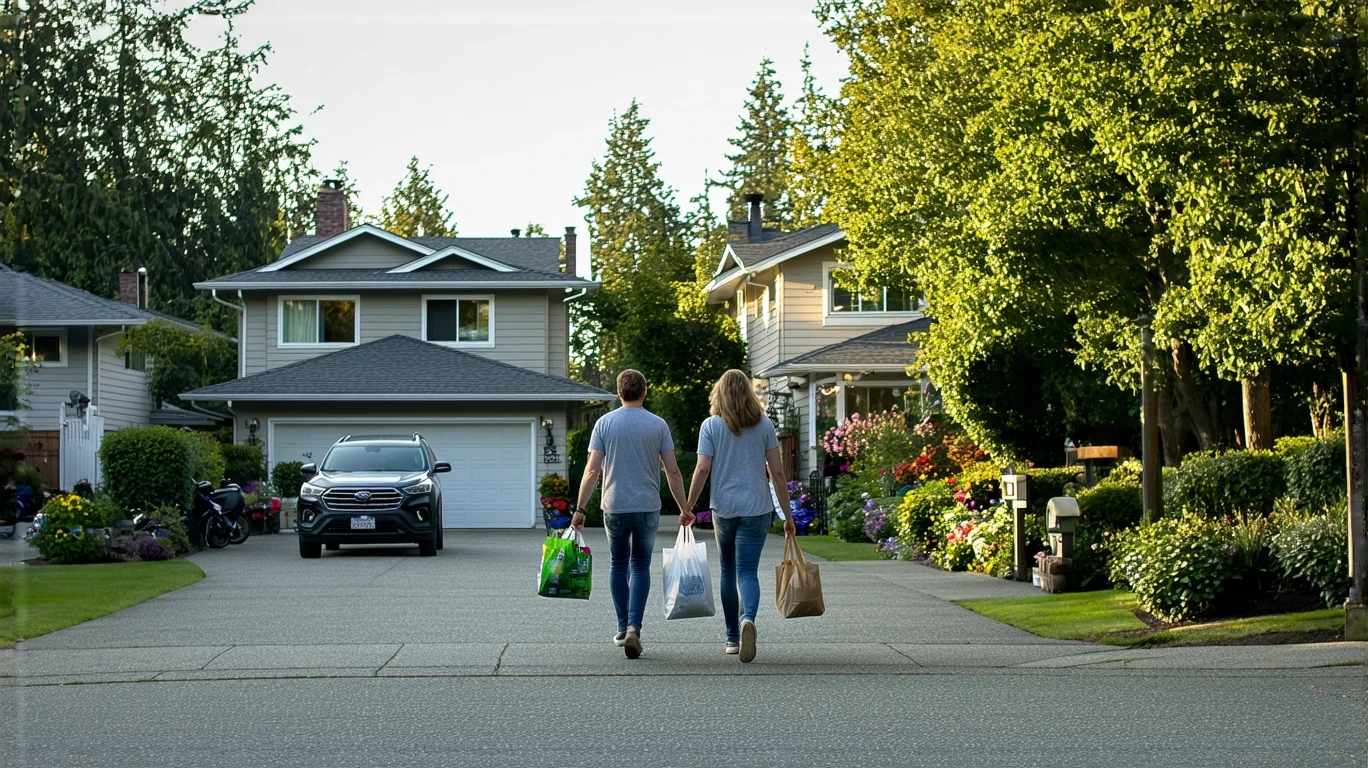
How Grocery Costs Feel in Kirkland
Grocery prices in Kirkland run noticeably higher than the national average, shaped by the broader Seattle metro cost structure and the city’s affluent suburban character. With a regional price parity index of 151, everyday staples—milk, eggs, chicken, produce—carry a premium that adds up quickly, especially for families buying in volume. For households earning near or above Kirkland’s median income of $135,608 per year, grocery costs are noticeable but rarely prohibitive. For single earners, younger professionals, or larger families on tighter budgets, the weekly trip to the store becomes a more deliberate financial exercise, where store choice and shopping habits directly influence how far each paycheck stretches.
Who feels grocery pressure most? Singles and couples without children often absorb the higher per-unit prices without dramatic budget strain, though they may notice the difference when comparing receipts to previous cities or states. Families with children, particularly those with teenagers or multiple dependents, face compounding pressure: the same regional premium applies to every gallon of milk, every pound of ground beef, every dozen eggs. Volume turns a modest per-item surcharge into a meaningful monthly expense. Lower-income households—those earning significantly below the median—experience grocery costs as a primary budget constraint, one that demands active management through store selection, meal planning, and strategic purchasing.
Grocery shopping in Kirkland tends to cluster along commercial corridors rather than being evenly distributed across neighborhoods. This means some residents have multiple stores within a short drive or walk, while others may need to plan trips more deliberately. The concentration of food options along corridors creates choice for those nearby but can add friction—time, fuel, or planning overhead—for households farther from these strips. Access isn’t scarce, but it’s not uniformly convenient, and that spatial pattern subtly shapes how people shop and how often they’re willing to comparison-shop across stores.
Grocery Price Signals (Illustrative)
These prices illustrate how staple items tend to compare locally—not a full shopping list. They reflect Kirkland’s regional cost structure and provide a sense of where everyday grocery dollars go, but they should not be mistaken for precise, store-specific, or week-to-week pricing. Actual costs vary by retailer, season, and product brand.
| Item | Illustrative Price |
|---|---|
| Bread | $2.79/lb |
| Cheese | $7.07/lb |
| Chicken | $3.09/lb |
| Eggs | $3.77/dozen |
| Ground Beef | $10.18/lb |
| Milk | $6.08/half-gallon |
| Rice | $1.62/lb |
Derived estimate based on national baseline adjusted by regional price parity; not an observed local price.
These figures reveal the texture of Kirkland’s grocery landscape: proteins like ground beef and cheese carry steep premiums, while pantry staples like rice remain relatively accessible. Dairy costs—milk at over six dollars per half-gallon—add up quickly for families pouring multiple gallons per week. Eggs, a reliable budget anchor in many markets, still cost more here than in much of the country. The pattern is consistent: Kirkland’s grocery prices don’t spike dramatically on any single item, but the cumulative effect across a cart is unmistakable.
Store Choice & Price Sensitivity
Grocery price pressure in Kirkland varies significantly by store tier, and understanding that variation is essential for managing food costs effectively. Discount-tier stores—no-frills formats focused on private label and high-volume turnover—offer the lowest per-item prices and the greatest relief for budget-conscious households. These stores strip out amenities like extensive prepared foods, specialty sections, or premium ambiance, but they deliver meaningful savings on the staples that make up the bulk of most shopping lists. For families buying in volume or households stretching every dollar, discount-tier shopping isn’t just a preference—it’s a structural advantage.
Mid-tier stores occupy the middle ground: recognizable regional or national chains with broader selection, moderate pricing, and a balance between cost and convenience. These stores serve the majority of Kirkland shoppers who want variety and quality without paying premium-tier prices. Mid-tier pricing reflects Kirkland’s regional cost structure more directly, and for median-income households, this tier often represents the default shopping experience. The tradeoff is straightforward: slightly higher prices than discount stores, but more product variety, better locations, and a shopping environment that feels less utilitarian.
Premium-tier stores—those emphasizing organic, local, specialty, or prepared options—charge the highest prices and cater to households prioritizing quality, convenience, or specific dietary preferences over cost minimization. In Kirkland, where household incomes skew higher, premium stores thrive, but they also widen the gap between what different households pay for similar baskets of food. A family shopping exclusively at premium stores may spend twice what a discount-tier shopper pays for comparable staples, and that gap compounds weekly. Premium stores offer value in the form of curation, service, and product differentiation, but they are not cost-neutral choices.
Store tier choice in Kirkland isn’t just about preference—it’s about financial exposure. A household earning well above the median may not notice the premium-tier surcharge, while a household earning below the median feels it acutely. The corridor-clustered grocery landscape means that access to discount-tier options isn’t always immediate or convenient, and that spatial friction can nudge households toward mid- or premium-tier stores simply because they’re closer or easier to reach on the way home from work.
What Drives Grocery Pressure Here
Kirkland’s grocery costs are shaped by the same forces that elevate housing, utilities, and services across the Seattle metro: regional labor costs, distribution expenses, and real estate premiums that retailers pass through to consumers. The city’s high median income creates a market where premium-tier stores can command higher prices without losing customers, and that dynamic pulls the entire pricing spectrum upward. Even discount-tier stores in Kirkland charge more than their counterparts in lower-cost regions, because their own operating costs—rent, wages, logistics—are higher here.
Household size amplifies grocery pressure in predictable ways. A single person buying for one absorbs the regional premium on a smaller volume of food, making the impact noticeable but contained. A family of four or five, buying multiples of everything, feels the premium multiply across every category: proteins, dairy, produce, snacks, beverages. The math is simple but unforgiving: if every item costs 20–30% more than it would elsewhere, and you’re buying three times the volume, the gap widens fast. Larger families in Kirkland either adjust their shopping habits aggressively—buying in bulk, favoring discount tiers, reducing waste—or they accept grocery costs as a major recurring expense.
Seasonal variability exists but operates more subtly in the Pacific Northwest than in regions with extreme weather or shorter growing seasons. Produce prices shift with availability, and certain items—berries, stone fruits, root vegetables—fluctuate based on local and regional harvests. Winter months may see modest increases in fresh produce costs as supply chains lengthen, but Kirkland’s proximity to agricultural regions in Washington and Oregon moderates those swings. The seasonal effect is real but not dramatic; it’s more about timing purchases around peak availability than bracing for sharp price spikes.
Practical Ways People Manage Grocery Costs
Managing grocery costs in Kirkland starts with store selection. Households that prioritize cost control make deliberate choices about where they shop, often splitting trips between discount-tier stores for staples and mid-tier stores for items that require more variety or quality. This approach requires more time and planning, but it reduces per-item costs without sacrificing access to the full range of products a household needs. The corridor-clustered layout of grocery options means that multi-store shopping is feasible for some but inconvenient for others, depending on where you live and how much time you’re willing to invest.
Meal planning and waste reduction are behavioral strategies that lower grocery spending without requiring extreme frugality. Planning meals around what’s already in the pantry, buying only what will be used, and repurposing leftovers all reduce the volume of food purchased and the frequency of trips to the store. In a high-cost market like Kirkland, waste is expensive—not just because the food itself costs more, but because every discarded item represents a higher dollar loss than it would in a lower-cost region. Households that treat grocery shopping as a planned activity rather than a reactive errand tend to spend less and feel less pressure at checkout.
Buying in bulk works well for non-perishables and household staples, especially for families with storage space and the upfront cash flow to purchase larger quantities. Bulk buying lowers per-unit costs and reduces shopping frequency, but it requires discipline: buying more than you’ll use, even at a discount, isn’t savings. In Kirkland, where warehouse club formats are accessible, bulk purchasing is a common strategy for families looking to offset the regional price premium on items like rice, canned goods, frozen proteins, and cleaning supplies.
Private label and store-brand products offer another lever for cost control. These products typically cost 15–30% less than name-brand equivalents and are often produced by the same manufacturers under different packaging. For households willing to experiment and adjust brand loyalty, private label shopping reduces grocery bills without eliminating choice or quality. The savings are incremental per item but compound across a full cart, and in Kirkland’s elevated price environment, those incremental savings add up quickly.
Groceries vs Eating Out (Directional)
The tradeoff between cooking at home and eating out in Kirkland is shaped by the same cost structure that elevates groceries: labor, rent, and regional operating expenses push restaurant prices higher, often significantly higher than grocery equivalents. A meal prepared at home, even using Kirkland’s premium-priced ingredients, almost always costs less per person than a comparable restaurant meal, especially when factoring in tips, taxes, and beverages. For budget-conscious households, cooking at home isn’t just cheaper—it’s structurally necessary to keep food costs manageable.
That said, the convenience and time savings of eating out or ordering in create real value, particularly for dual-income households or families with demanding schedules. The question isn’t whether eating out costs more—it does—but whether the time and effort saved justify the expense. In Kirkland, where household incomes are high, many families treat dining out as a regular part of their routine, absorbing the cost as a trade for flexibility and reduced meal-prep burden. For others, dining out is reserved for occasional treats, with the bulk of meals prepared at home to control costs.
The frequency of eating out directly affects how much pressure grocery costs create. A household that dines out multiple times per week spends less on groceries simply because they’re buying less food, but their total food spending—groceries plus dining—rises sharply. A household that cooks most meals at home faces higher grocery bills but lower total food costs. The balance depends on income, priorities, and how much value a household places on time versus money. In Kirkland, both patterns are common, and neither is inherently better—they’re just different responses to the same high-cost environment.
FAQs About Grocery Costs in Kirkland (2026)
Is it cheaper to shop in bulk in Kirkland? Buying in bulk lowers per-unit costs for non-perishables and staples, especially for families with storage space and upfront budget flexibility. Warehouse club formats are accessible in the area, and bulk purchasing helps offset Kirkland’s regional price premium on items like rice, canned goods, and frozen proteins.
Which stores in Kirkland are best for low prices? Discount-tier stores—no-frills formats focused on private label and high-volume turnover—offer the lowest prices and the greatest savings for budget-conscious households. Mid-tier stores provide more variety and convenience at moderate pricing, while premium-tier stores charge the highest prices for specialty, organic, or prepared options.
How much more do organic items cost in Kirkland? Organic products typically carry a premium over conventional equivalents, and that gap is more pronounced in higher-cost markets. The exact difference varies by item and store tier, but households prioritizing organic options should expect to pay noticeably more, particularly for proteins, dairy, and fresh produce.
How do grocery costs for two adults in Kirkland tend to compare to nearby cities? Kirkland’s grocery costs align with the broader Seattle metro pricing structure, which runs higher than most U.S. markets. Nearby cities with similar income levels and regional cost pressures show comparable grocery prices, while more distant or lower-cost areas offer meaningfully cheaper options.
How do households in Kirkland think about grocery spending when cooking at home? Many households treat grocery shopping as a planned activity, balancing store tier choice, meal planning, and waste reduction to control costs. Cooking at home remains far cheaper than dining out, even with Kirkland’s elevated ingredient prices, and most families rely on home cooking as the foundation of their monthly budget.
Do grocery prices in Kirkland vary by season? Seasonal variability exists but operates more subtly here than in regions with extreme weather. Produce prices shift with local and regional harvests, and certain items fluctuate based on availability, but Kirkland’s proximity to agricultural regions moderates dramatic swings. Timing purchases around peak availability helps, but seasonal price changes are generally modest.
How does Kirkland’s grocery access affect shopping habits? Grocery options tend to cluster along commercial corridors rather than being evenly distributed across neighborhoods. This creates strong access for some residents and requires more deliberate trip planning for others. The spatial pattern influences how often people comparison-shop across stores and whether multi-store trips are practical or burdensome.
How Groceries Fit Into the Cost of Living in Kirkland
Grocery costs in Kirkland are meaningful but secondary to housing in the overall cost structure. Rent or mortgage payments dominate most household budgets, followed by utilities, transportation, and insurance. Groceries represent a recurring, visible expense—one that households interact with weekly and feel acutely—but they rarely determine whether a household can afford to live in Kirkland. What groceries do determine is how much financial margin remains after fixed costs are covered, and for households already stretched by housing pressure, elevated grocery prices can tip the balance from comfortable to tight.
For a complete picture of how grocery costs fit into monthly spending—alongside housing, utilities, transportation, and other essentials—see the dedicated guide to your monthly budget in Kirkland. That article provides the full breakdown of where money goes each month and how different household types allocate income across competing priorities. Groceries are one piece of a larger puzzle, and understanding the whole structure is essential for realistic financial planning.
The good news: grocery costs, unlike housing or insurance, are partially controllable. Store choice, shopping habits, meal planning, and waste reduction all offer levers for managing spending without eliminating choice or quality. Kirkland’s grocery prices are high, but they’re not rigid. Households that treat grocery shopping as an active decision—rather than a passive routine—can reduce pressure, stretch budgets further, and maintain the quality of life they want without absorbing unnecessary costs. The key is knowing where the levers are and being willing to use them.
How this article was built: In addition to public economic data, this article incorporates location-based experiential signals derived from anonymized geographic patterns—such as access density, walkability, and land-use mix—to reflect how day-to-day living actually feels in Kirkland, WA.