

Which city wins on cost? The answer depends entirely on what kind of cost pressure your household can absorb—and which tradeoffs you’re willing to make. Irving and Katy sit in different Texas metros (Dallas-Fort Worth and Houston, respectively), but both attract families, young professionals, and commuters looking for suburban space without abandoning urban access. In 2026, the decision between them isn’t about which place is universally cheaper. It’s about where housing costs hit hardest, how commute patterns shape daily life, and whether predictability or flexibility matters more to your budget.
Irving offers rail transit access and walkable pockets within a mixed-height urban form, appealing to households that value mobility options and shorter average commutes. Katy emphasizes low-rise residential neighborhoods, integrated park access, and hospital presence, drawing families willing to trade commute time for space and outdoor infrastructure. Both cities show corridor-clustered grocery access and mixed residential-commercial land use, but the structure of daily life—how you move, where costs concentrate, and what flexibility you retain—differs in ways that matter more than any single price point.
This comparison explains where cost pressure shows up in each city, how different households experience that pressure, and which structural differences drive the biggest tradeoffs. It does not declare a winner. It gives you the framework to decide which city fits your priorities in 2026.
Housing Costs
Housing entry costs differ sharply between Irving and Katy, and the gap widens further when you compare renters to buyers. Irving’s median home value sits at $259,500, while Katy’s reaches $359,800—a difference that translates directly into down payment requirements, mortgage obligations, and property tax exposure for homebuyers. For renters, the gap narrows considerably: Irving’s median gross rent is $1,423 per month, and Katy’s is $1,444 per month, a difference small enough that household size, unit type, and lease terms often matter more than city choice alone.
The structural difference lies in what you’re paying for. Irving’s housing stock includes more apartments and mixed-height buildings, offering renters and first-time buyers more entry points at lower price thresholds. Katy’s low-rise character and newer construction appeal to families prioritizing space, yards, and modern finishes, but that preference comes with higher purchase prices and often higher property tax bills tied to home values. Renters in both cities face similar monthly obligations, but the availability of smaller units, older stock, and transit-adjacent buildings gives Irving renters more flexibility to trade space for location.
For homebuyers, the difference is front-loaded. Katy’s higher median home value means larger down payments, higher closing costs, and steeper monthly mortgage obligations—even if interest rates and loan terms remain identical. Property taxes in Texas are assessed on home values, so Katy homeowners also face higher annual tax bills, compounding the ongoing cost difference. Irving homebuyers enter at a lower threshold, but they may trade yard size, home age, or neighborhood character for that access. Families planning to stay long-term and prioritizing space often absorb Katy’s higher entry costs. Singles, couples, and first-time buyers sensitive to down payment size and monthly mortgage pressure tend to find Irving’s housing market more accessible.
| Housing Type | Irving | Katy |
|---|---|---|
| Median Home Value | $259,500 | $359,800 |
| Median Gross Rent | $1,423/month | $1,444/month |
Housing takeaway: Renters experience similar monthly obligations in both cities, but Irving offers more unit diversity and transit-adjacent options. Homebuyers face significantly higher entry costs in Katy, driven by newer construction and larger lot sizes. Households sensitive to down payment size and mortgage predictability tend to prefer Irving. Families prioritizing space, yards, and modern housing stock absorb Katy’s higher purchase prices in exchange for those features. The primary difference is entry barrier and housing form, not rental affordability.
Utilities and Energy Costs
Utility cost exposure in Irving and Katy is shaped more by housing type, home age, and cooling demand than by rate differences. Irving’s electricity rate is 15.69¢/kWh, while Katy’s is 15.87¢/kWh—a gap too narrow to drive meaningful monthly differences on its own. Natural gas pricing is identical at $19.31/MCF in both cities. What matters more is how housing stock, building height, and seasonal extremes interact with those rates to create volatility or predictability in monthly bills.
Both cities experience hot Texas summers that drive extended cooling seasons, but the impact varies by housing type. Irving’s mixed-height character includes more apartments and attached units, which often share walls and reduce per-unit cooling loads. Katy’s low-rise, detached housing stock exposes more exterior surface area to heat, increasing air conditioning demand in single-family homes. Newer construction in Katy may offset some of that exposure through better insulation and modern HVAC systems, but older single-family homes—common in both cities—tend to show higher seasonal volatility. Renters in multi-unit buildings, regardless of city, typically experience more predictable utility costs than homeowners in detached houses.
Household size and home age amplify these differences. A family of four in a 2,000-square-foot single-family home in Katy faces higher baseline cooling costs than a couple in an 800-square-foot apartment in Irving, even if both households set thermostats identically. Older homes in either city—those built before modern efficiency standards—introduce unpredictability, especially during peak summer months when air conditioning runs continuously. Renters often benefit from landlord-managed systems and shared utility infrastructure, reducing both cost and control. Homeowners, particularly those in larger or older homes, carry full exposure to seasonal swings and maintenance-driven inefficiencies.
Utility takeaway: Rate differences between Irving and Katy are negligible. Housing type drives exposure: renters in apartments experience more predictable bills, while homeowners in detached single-family homes face higher seasonal volatility. Katy’s low-rise housing stock increases cooling surface area, raising baseline summer costs for families in larger homes. Irving’s mixed-height character offers more multi-unit options that reduce per-household energy demand. Households sensitive to utility volatility benefit from smaller, newer, or attached housing in either city. Families prioritizing space in Katy should plan for higher summer cooling exposure, especially in older construction.
Groceries and Daily Expenses
Grocery cost pressure in Irving and Katy is driven more by shopping habits and access patterns than by price differences at the register. Irving’s regional price parity index is 103, meaning prices run slightly above the national baseline, while Katy’s index is 100, aligning with national averages. That difference shows up in derived grocery estimates—bread in Irving is $1.91/lb compared to $1.85/lb in Katy; ground beef is $6.94/lb versus $6.74/lb—but the real cost differentiation comes from how households shop, how often they rely on convenience options, and how grocery infrastructure is distributed across each city.
Both cities show corridor-clustered food and grocery access, meaning stores concentrate along major roads rather than spreading evenly through neighborhoods. That structure rewards households with flexible schedules and reliable transportation, allowing them to plan larger, less frequent shopping trips to access better prices at big-box retailers or discount grocers. Households without cars, those with unpredictable schedules, or families managing frequent small trips face higher costs in both cities, not because prices are higher everywhere, but because convenience stores, prepared food options, and smaller neighborhood markets charge premiums for immediacy and location.
Single adults and couples often absorb Irving’s slightly higher grocery prices without noticing, especially if they eat out frequently or prioritize convenience over bulk savings. Families managing larger weekly grocery volumes feel the difference more acutely, and Katy’s lower baseline prices combined with access to big-box retailers reduce per-item costs when shopping in bulk. Dining out, coffee runs, and prepared food spending introduce variability in both cities, but Irving’s mixed land use and denser commercial corridors offer more walkable dining options, which can either increase convenience spending or reduce car dependency depending on household habits. Katy’s spread-out retail requires more intentional trip planning, which can reduce impulse spending but increases reliance on driving for every errand.
Groceries takeaway: Katy’s lower regional price parity gives families shopping in bulk a slight per-item advantage, especially for staples like meat, dairy, and produce. Irving’s higher baseline prices are offset by denser commercial access and more walkable dining options, which reduce car dependency but can increase convenience spending. Households sensitive to grocery costs benefit from planning larger, less frequent trips in either city. Singles and couples prioritizing walkability and dining variety may prefer Irving’s corridor-clustered access. Families managing high-volume grocery needs and willing to drive for savings tend to find Katy’s structure more cost-effective, assuming they avoid frequent convenience purchases.
Taxes and Fees
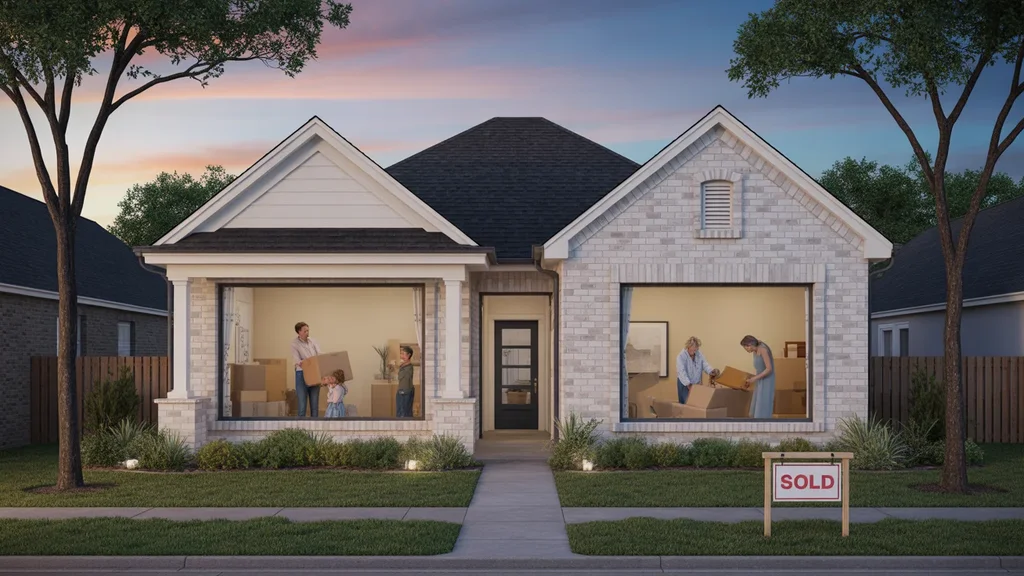
Property taxes in Texas are assessed on home values, so the difference in median home prices between Irving and Katy translates directly into ongoing tax obligations for homeowners. Katy’s higher median home value of $359,800 means higher annual property tax bills compared to Irving’s $259,500 median, even if effective tax rates remain similar. Renters don’t pay property taxes directly, but landlords pass those costs through in rent, so the impact is indirect and harder to isolate. For homeowners, property taxes are predictable in structure but tied to assessed value, meaning Katy homeowners carry higher baseline tax exposure as long as they own.
Sales tax rates, local fees, and service charges vary by jurisdiction and can include trash collection, water, stormwater management, and HOA fees in certain neighborhoods. Both cities rely on a mix of property and consumption taxes to fund services, but the prevalence of HOA fees in newer suburban developments—common in Katy—adds another layer of recurring cost that doesn’t appear in rent or mortgage figures alone. HOAs may bundle landscaping, amenity access, and exterior maintenance, but they also introduce mandatory monthly fees that reduce flexibility. Irving’s older housing stock includes fewer HOA-governed communities, giving homeowners more control over maintenance spending but also more responsibility for upkeep.
Long-term residents and homeowners planning to stay several years feel tax and fee differences more acutely than recent movers or short-term renters. Property tax exposure grows with home value appreciation, so Katy homeowners in appreciating neighborhoods face rising tax bills even if rates stay flat. Renters experience tax pressure indirectly through rent increases, but they retain mobility to relocate if costs rise. Homeowners in Irving benefit from lower entry-level property tax obligations, but they may face higher maintenance costs in older homes without HOA-managed services. Households prioritizing predictability and bundled services may prefer Katy’s HOA-heavy developments. Those seeking flexibility and lower baseline fees tend to favor Irving’s older, non-HOA stock.
Taxes and fees takeaway: Katy homeowners face higher property tax exposure due to higher home values, and newer neighborhoods often add HOA fees that bundle services but reduce cost flexibility. Irving homeowners benefit from lower baseline property taxes tied to lower home values, but older housing stock may require more out-of-pocket maintenance spending. Renters in both cities experience tax pressure indirectly through rent, with less visibility into how fees are structured. Households planning to stay long-term and prioritizing bundled services may absorb Katy’s higher fees. Those sensitive to baseline tax obligations and seeking flexibility prefer Irving’s lower entry costs and fewer mandatory fees.
Transportation & Commute Reality
Commute patterns and transportation dependence differ sharply between Irving and Katy, driven by transit infrastructure, job center proximity, and car reliance. Irving’s average commute is 23 minutes, while Katy’s stretches to 29 minutes—a difference that compounds daily when combined with each city’s transportation structure. Irving offers rail transit access, reducing car dependency for some trips and giving households without cars or with limited parking access a viable alternative. Katy shows no rail presence in the data, meaning nearly all trips require a car, and longer commutes translate directly into time, fuel, and vehicle wear.
Work-from-home rates provide additional context: only 4.8% of Irving workers report working from home, compared to 13.5% in Katy. That gap suggests Katy attracts more remote workers or households with flexible schedules, which reduces daily commute frequency and softens the impact of longer average commute times. But for households commuting five days a week, Katy’s 48.4% long-commute percentage—nearly half of all workers—signals significant time cost and fuel exposure. Irving’s 32.7% long-commute rate is lower, and rail access offers an alternative to driving for some trips, reducing both fuel costs and parking pressure in job-dense areas.
Gas prices show a small advantage for Katy at $3.38/gal compared to Irving’s $3.61/gal, but that difference is overwhelmed by commute distance and frequency. A household driving 25 miles round trip five days a week spends more on fuel in Katy despite lower per-gallon prices, simply because the commute is longer and no transit alternative exists. Irving’s shorter average commute and rail access reduce both fuel spending and time cost for households able to use transit or live closer to work. Families with two working adults in Katy face compounded transportation exposure: two cars, two commutes, and limited flexibility to reduce driving without relocating closer to job centers.
Transportation takeaway: Irving’s rail access and shorter average commute reduce car dependency and time cost for households able to use transit or live near job centers. Katy’s longer average commute and lack of rail transit increase fuel exposure and time cost, especially for dual-income households commuting five days a week. Higher work-from-home rates in Katy soften commute pressure for remote workers, but in-person commuters face significant time and fuel obligations. Households sensitive to commute time and car dependency prefer Irving’s transit options and shorter distances. Families with flexible schedules or remote work capacity absorb Katy’s longer commutes more easily, especially if they prioritize space and park access over daily mobility.
Cost Structure Comparison
Housing pressure dominates the cost experience in both cities, but the nature of that pressure differs. Irving’s lower median home value reduces entry barriers for first-time buyers and lowers baseline property tax exposure, making homeownership more accessible to households sensitive to down payment size and monthly mortgage obligations. Katy’s higher home values front-load costs, appealing to families prioritizing space, newer construction, and larger lots who can absorb higher purchase prices and ongoing property taxes. Renters face similar monthly obligations in both cities, but Irving’s mixed-height housing stock and transit-adjacent buildings offer more unit diversity and location flexibility.
Utilities introduce more volatility in Katy, driven by low-rise housing that exposes more surface area to heat and increases cooling demand in single-family homes. Irving’s apartments and attached units reduce per-household energy loads, creating more predictable utility bills for renters and smaller households. Homeowners in detached houses face seasonal swings in both cities, but Katy’s emphasis on single-family housing means more households carry full exposure to summer cooling costs. Families in larger homes should plan for higher utility volatility in Katy, especially in older construction. Singles and couples in apartments experience more predictable energy costs in Irving.
Transportation patterns matter more in Katy, where longer average commutes and lack of rail transit increase fuel exposure and time cost for in-person workers. Irving’s rail access and shorter commutes reduce car dependency and offer households without cars a viable alternative for some trips. Katy’s higher work-from-home rate softens commute pressure for remote workers, but dual-income households commuting daily face compounded transportation obligations. Households sensitive to commute time and fuel costs prefer Irving’s transit options. Families with flexible schedules or remote work capacity absorb Katy’s longer distances more easily, especially if they prioritize outdoor access and hospital presence over daily mobility.
Groceries and daily expenses show modest differences, with Katy’s lower regional price parity offering slight per-item savings for families shopping in bulk. Irving’s higher baseline prices are offset by denser commercial access and more walkable dining options, which reduce car dependency but can increase convenience spending depending on household habits. Both cities show corridor-clustered grocery access, rewarding households with flexible schedules and reliable transportation. Families managing high-volume grocery needs benefit from Katy’s lower baseline prices. Singles and couples prioritizing walkability and dining variety may prefer Irving’s mixed land use.
The better choice depends on which costs dominate your household. For renters and first-time buyers sensitive to entry barriers, Irving’s lower home values and transit access reduce upfront costs and car dependency. For families prioritizing space, parks, and hospital access, Katy’s higher purchase prices and longer commutes are tradeoffs for larger homes and integrated green space. Households with predictable schedules and in-person work benefit from Irving’s shorter commutes and rail options. Those with remote work flexibility or tolerance for longer drives absorb Katy’s transportation exposure in exchange for outdoor infrastructure and low-rise residential character. The difference is less about total cost and more about where pressure concentrates and which household structure can absorb it.
How the Same Income Feels in Irving vs Katy
Single Adult
For a single adult, housing becomes the first non-negotiable cost, and Irving’s lower median home value and diverse rental stock offer more entry points at accessible price thresholds. Flexibility exists in transportation: Irving’s rail access reduces car dependency for some trips, lowering fuel and parking costs, while Katy requires a car for nearly all errands and commutes. The role of commute friction differs sharply—Irving’s shorter average commute preserves time for other activities, while Katy’s longer distances and car reliance increase both time cost and fuel exposure. A single adult in Irving can trade space for location and mobility options; in Katy, the same income buys more square footage but demands more driving and time spent commuting.
Dual-Income Couple
For a dual-income couple, housing costs still dominate, but the gap between Irving and Katy narrows if both partners work remotely or have flexible schedules that reduce commute frequency. Non-negotiable costs include rent or mortgage, utilities, and transportation—but the structure differs. In Irving, rail access and walkable pockets reduce the need for two cars, lowering insurance, fuel, and maintenance obligations. In Katy, two cars become essential, compounding transportation exposure even if gas prices are slightly lower. Flexibility exists in grocery and dining habits: Irving’s denser commercial corridors offer more walkable options, while Katy’s spread-out retail rewards bulk shopping and planning. The role of housing form matters—couples in Irving apartments experience predictable utility costs, while those in Katy single-family homes face higher cooling exposure and yard maintenance.
Family with Kids
For a family with kids, housing costs become front-loaded and ongoing, with Katy’s higher home values requiring larger down payments and higher property taxes but delivering more space, yards, and access to parks. Non-negotiable costs expand to include childcare logistics, school proximity, and healthcare access—Katy’s hospital presence and integrated park density support family routines, while Irving’s rail access and shorter commutes reduce time spent driving. Flexibility disappears in transportation: families in Katy need reliable cars for every trip, while Irving offers some transit alternatives that reduce parking pressure and fuel costs. The role of commute friction intensifies with two working parents—Katy’s longer average commute and high long-commute percentage increase time cost and reduce schedule flexibility, while Irving’s shorter distances and rail options preserve time for family logistics and errands.
Decision Matrix: Which City Fits Which Household?
| Decision factor | If you’re sensitive to this… | Irving tends to fit when… | Katy tends to fit when… |
|---|---|---|---|
| Housing entry + space needs | Down payment size, property tax exposure, unit diversity | You prioritize lower entry costs, transit-adjacent options, and rental flexibility over yard size | You prioritize space, newer construction, and larger lots over lower purchase prices |
| Transportation dependence + commute friction | Commute time, fuel costs, car dependency, transit viability | You value shorter commutes, rail access, and reduced car dependency for daily trips | You tolerate longer commutes and car reliance in exchange for space and remote work flexibility |
| Utility variability + home size exposure | Seasonal cooling costs, predictability, building type | You prefer apartments or attached units that reduce cooling loads and stabilize monthly bills | You accept higher summer cooling exposure in detached homes in exchange for yards and privacy |
| Grocery strategy + convenience spending creep | Price sensitivity, bulk shopping access, walkable dining options | You value walkable commercial corridors and dining variety over per-item grocery savings | You plan larger, less frequent shopping trips and prioritize lower baseline grocery prices |
| Fees + friction costs (HOA, services, upkeep) | Mandatory fees, bundled services, maintenance control | You prefer flexibility and lower baseline fees over bundled HOA services | You prefer predictable HOA-managed services over variable out-of-pocket maintenance spending |
| Time budget (schedule flexibility, errands, logistics) | Commute time, errand planning, transit alternatives | You prioritize shorter commutes and rail options that reduce time spent driving | You tolerate longer commutes and car-dependent errands in exchange for park access and space |
Lifestyle Fit
Irving and Katy offer distinct lifestyle structures that indirectly shape cost exposure and daily routines. Irving’s rail transit access and walkable pockets support households that value mobility options and shorter commutes, reducing car dependency for some trips and preserving time for errands and family logistics. The city’s mixed-height character and commercial corridors create denser access to dining, services, and entertainment, which can either increase convenience spending or reduce the need to drive depending on household habits. Katy’s low-rise residential neighborhoods and integrated park density appeal to families prioritizing outdoor space, recreational access, and hospital presence, but the spread-out structure requires intentional trip planning and reliable transportation for every errand.
Commute times reflect these structural differences: Irving’s 23-minute average commute preserves time for other activities, while Katy’s 29-minute average and 48.4% long-commute rate signal significant time cost for in-person workers. Katy’s higher work-from-home rate (13.5% compared to Irving’s 4.8%) suggests the city attracts remote workers and households with flexible schedules who can absorb longer distances without daily commute pressure. For families with two working parents commuting in person, Katy’s transportation structure increases time spent driving and reduces schedule flexibility, while Irving’s rail access and shorter distances offer more control over daily logistics.
Outdoor access and healthcare infrastructure differ in ways that affect family routines and long-term planning. Katy’s park density exceeds high thresholds, and water features are present, creating integrated green space that supports active lifestyles and outdoor recreation without requiring long drives. Irving’s park density falls in the moderate range, with water features also present, but the city’s transit access and walkable pockets offer different recreational options tied to urban amenities and commercial corridors. Katy’s hospital presence provides immediate access to emergency and specialized care, reducing travel time for medical needs, while Irving offers clinics and pharmacies for routine care but lacks a hospital within city limits. Families with young children or ongoing medical needs may prioritize Katy’s healthcare access, while singles and couples focused on walkability and dining variety may prefer Irving’s denser commercial structure.
Quick fact: Irving’s rail transit access and mixed land use create mobility options that reduce car dependency for some households, lowering fuel and parking costs.
Quick fact: Katy’s integrated park density and hospital presence support family-oriented routines, but the low-rise, car-dependent structure increases time and fuel exposure for daily errands.
Frequently Asked Questions
Is Irving or Katy cheaper for renters in 2026?
Renters face similar monthly obligations in both cities—Irving’s median gross rent is $1,423 per month, and Katy’s is $1,444 per month. The difference is small enough that unit type, location, and lease terms often matter more than city choice. Irving offers more apartments and mixed-height buildings, giving renters more options to trade space for transit access and walkable commercial corridors. Katy’s rental stock emphasizes single-family homes and townhomes, appealing to families prioritizing yards and space. Renters sensitive to car dependency and commute time may prefer Irving’s rail access and shorter average commute. Those prioritizing space and park access absorb Katy’s slightly higher rent and car reliance.
How do commute costs compare between Irving and Katy in 2026?
Commute costs in Katy are driven by longer distances and full car dependency, with an average commute of 29 minutes and 48.4% of workers reporting long commutes. Irving’s average commute is shorter at 23 minutes, and rail transit access reduces fuel and parking costs for households able to use transit for some trips. Katy’s gas price is slightly lower at $3.38/gal compared to Irving’s $3.61/gal, but longer commute distances and lack of transit alternatives increase total fuel exposure. Dual-income households commuting in person face compounded transportation costs in Katy, while Irving’s shorter commutes and rail options reduce both time and fuel obligations. Remote workers and households with flexible schedules absorb Katy’s longer distances more easily.
Which city has lower property taxes for homeowners in 2026?
Property taxes in Texas are assessed on home values, so Irving homeowners face lower baseline tax obligations due to the city’s lower median home value of $259,500 compared to Katy’s $359,800. Even if effective tax rates are similar, Katy homeowners pay higher annual property taxes because their homes are assessed at higher values. Katy’s newer neighborhoods often include HOA fees that bundle services but add mandatory monthly costs, while Irving’s older housing stock includes fewer HOA-governed communities, giving homeowners more control over maintenance spending. Households planning to stay long-term and prioritizing lower baseline taxes prefer Irving. Those seeking bundled services and newer construction absorb Katy’s higher property tax exposure.
Do grocery costs differ significantly between Irving and Katy in 2026?
Grocery costs show modest differences driven by regional price parity—Katy’s index is 100 (aligned with national averages), while Irving’s is 103 (slightly above). That translates into small per-item savings in Katy for staples like bread, meat, and dairy, which benefit