
Is Holly Springs the kind of place you grow roots—or just pass through? That question cuts to the heart of what living here actually feels like. This isn’t a city that announces itself with skyline drama or gritty neighborhood texture. It’s a place built around family routines, commuter rhythms, and the promise of newer construction—where satisfaction hinges less on what’s spontaneously available and more on whether you’re ready to plan, drive, and settle into a suburban cadence.
Holly Springs rewards people who want space, safety, and a predictable environment. It frustrates those hunting for walkable spontaneity, late-night options, or the kind of neighborhood character that takes decades to develop. The emotional experience here is less about “discovering” a place and more about deciding whether its tradeoffs match your life stage.
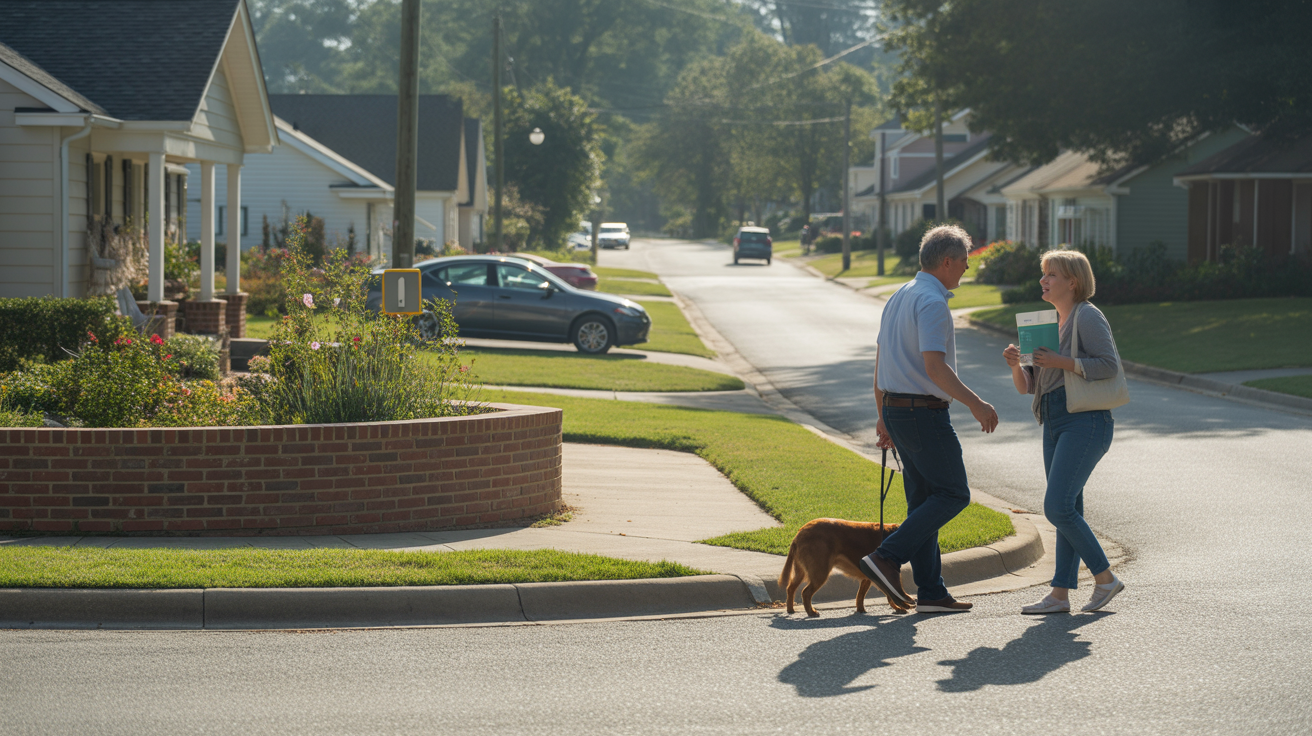
The Emotional Landscape of Holly Springs
Holly Springs sits in that transitional zone between established suburb and still-growing edge community. The tone is optimistic but pragmatic. People tend to describe it as “family-friendly” and “convenient to Raleigh” in the same breath they mention traffic, construction noise, and the feeling that amenities are always one phase behind population growth.
What feels rewarding here: newer homes, good schools within reach, parks that feel maintained, and the sense that you’re raising kids in a place designed with families in mind. The infrastructure for daily life—playgrounds, greenways, grocery clusters—exists and functions. There’s a palpable sense of safety and order that appeals to households leaving older, denser areas.
What tends to grate: the lack of spontaneity. If you want dinner out, you’re likely driving to a chain along a commercial corridor. If you want a coffee shop with personality, you’re planning a trip. The city has walkable pockets—places where sidewalks connect and the pedestrian-to-road ratio is surprisingly high—but those moments feel like exceptions rather than the rule. You can bike here, and some people do, but the overall structure still assumes you’ll default to the car for most errands.
The tradeoff that defines Holly Springs emotionally: you get newness and space, but you sacrifice depth and immediacy. If you’re in a life stage where “room to grow” matters more than “places to wander,” that tradeoff feels fair. If you’re craving texture, variety, or the ability to walk out your door and stumble into something unexpected, Holly Springs will feel like it’s missing a layer.
What People Are Talking About Online
Social media discussion around Holly Springs tends to cluster around a few recurring themes: growth management, school quality, commute tolerance, and the tension between suburban comfort and cultural variety. The tone is rarely angry, but it’s often evaluative—people weighing whether the city is keeping pace with its own expansion.
Common threads include:
- Growth fatigue: “It feels like every time I turn around, there’s another development going up. I moved here for the quiet, and now I’m sitting in traffic at intersections that didn’t exist two years ago.”
- Family satisfaction: “For raising kids, it’s hard to beat. The parks are clean, the neighborhoods feel safe, and we’re close enough to Raleigh that we don’t feel isolated.”
- Dining and nightlife gaps: “If you want anything beyond chain restaurants, you’re driving to Apex or Raleigh. It’s fine for us now, but I can see it getting old.”
The emotional tone is less “complaint” and more “adjustment.” People aren’t shocked by what Holly Springs is—they’re recalibrating expectations and deciding whether the tradeoffs still work as the city evolves.
How Local Coverage Frames the City
Local news and community coverage tend to frame Holly Springs through the lens of growth, infrastructure, and identity negotiation. The city is often portrayed as a place in transition—no longer a small town, not yet a fully realized suburb, and figuring out what it wants to be as it scales up.
Recurring topic buckets include:
- “New Amenities Arrive as Town Identity Evolves”
- “Residents Weigh Convenience Against Quiet”
- “Infrastructure Projects Aim to Keep Pace with Population”
- “Community Debates What Growth Should Look Like”
- “Schools and Parks Remain Draw for Young Families”
The framing is rarely crisis-oriented. Instead, it reflects a community trying to manage expectations and advocate for the kind of place it wants to become. The tone is forward-looking but cautious—hopeful that growth will bring benefits, wary that it might outpace livability.
Review-Based Public Perception
On platforms like Google, Yelp, and neighborhood forums, Holly Springs earns praise from people who wanted exactly what it offers: newer homes, family infrastructure, and proximity to Raleigh without living in the metro core. It earns frustration from people who expected more walkability, dining variety, or neighborhood character.
What delights:
- Clean, well-maintained parks and greenways
- Newer housing stock with modern layouts
- Low crime and a “safe” feeling that parents value
- Access to grocery stores and big-box retail without long drives
What disappoints:
- Limited local dining—”everything feels like a chain”
- Car dependency for nearly all errands, despite pockets of walkable infrastructure
- Lack of nightlife or cultural venues
- Construction noise and traffic congestion in growth corridors
Neighborhood variation exists but is often described in broad strokes: newer planned communities with HOAs and amenities versus older pockets with more established trees and varied architecture. The newer areas tend to feel more polished but less distinct; the older areas offer more character but fewer modern conveniences.
The recurring theme in reviews: Holly Springs works best for people who know what they’re getting and have made peace with the tradeoffs. It frustrates people who moved here expecting urban-adjacent convenience or small-town charm and found neither.
How Holly Springs Compares to Nearby Cities
| Dimension | Holly Springs | Apex | Fuquay-Varina |
|---|---|---|---|
| Overall Vibe | Newer suburban growth, family-focused | More established, slightly denser feel | Small-town roots, slower growth pace |
| Walkability | Pockets of high walkability, mostly car-dependent | More consistent walkable areas, better-connected | Limited walkability, very car-oriented |
| Dining & Nightlife | Chain-heavy, limited local variety | More local restaurants, better variety | Sparse, mostly chains and fast food |
| Commute Tolerance | Moderate to Raleigh, traffic growing | Similar commute, slightly better transit access | Longer commute, more rural feel |
| Family Appeal | High—parks, schools, safety | High—more established infrastructure | Moderate—quieter, fewer amenities |
Holly Springs sits between Apex’s more established suburban texture and Fuquay-Varina’s slower, small-town pace. If you want a bit more walkability and dining variety without leaving the suburbs, Apex might feel more complete. If you want even more space and quiet, and don’t mind driving farther for amenities, Fuquay-Varina offers that tradeoff. Holly Springs occupies the middle: newer, growing, family-oriented, but still figuring out its identity as it scales.
None of these cities will satisfy someone hunting for urban density or nightlife. The question is which version of suburban tradeoffs feels most tolerable—or most aligned with your priorities.
What Locals Are Saying
Young family, moved from Raleigh: “We wanted a yard, good schools, and a neighborhood where the kids could ride bikes. Holly Springs checked all those boxes. Yeah, we drive more now, but we’re not dodging traffic on our street anymore. It’s a fair trade for us.”
Remote worker, early 30s: “It’s fine if you work from home and don’t need much social stimulation. But if you want to meet people organically or grab a drink after work, you’re driving to Raleigh or Apex. It feels a little isolating sometimes.”
Retiree, moved from out of state: “We like the quiet and the newness, but we miss having a real downtown. Everything here feels like a shopping center. We’re close enough to Raleigh that we can get our fix, but it’s not the same as having it in your backyard.”
Long-time local: “It’s not the Holly Springs I grew up in. The growth has been overwhelming. I get why people move here, but it’s hard to watch the character disappear under all the new construction.”
Commuter, works in RTP: “The commute is manageable most days, but it’s getting worse. If you’re okay spending 30–40 minutes in the car, it’s doable. If you hate commuting, this isn’t the place.”
Parent of school-age kids: “The schools are solid, the parks are great, and our neighbors are friendly. It’s not exciting, but it’s stable. That’s what we needed.”
Young professional, single: “I moved here thinking it would be a good base near Raleigh, but it’s way too quiet for me. There’s nothing to do unless you drive somewhere else. I’ll probably move closer to downtown when my lease is up.”
Does Holly Springs Feel Like a Good Fit?
Holly Springs works for people in specific life stages: families with young kids, commuters willing to trade drive time for space, and households that prioritize safety and newness over spontaneity and texture. It’s a place where you can build a predictable, comfortable routine—but you have to accept that most of that routine will involve a car and that “going out” means planning ahead.
It frustrates people who want walkable access to variety, who crave cultural venues or nightlife, or who feel stifled by the homogeneity of newer suburban development. The city has infrastructure in place—parks, greenways, pockets of walkable streets—but the overall structure still assumes you’ll drive for most needs. That’s not a flaw; it’s a design choice. The question is whether it’s the right choice for you.
If you’re deciding whether Holly Springs fits, ask yourself: Do I value space and safety more than spontaneity and variety? Am I comfortable with a car-dependent lifestyle, even in areas with decent pedestrian infrastructure? Do I see growth as opportunity or disruption? Your answers will tell you whether Holly Springs feels like home—or just a place you’re passing through.
For more insight into what daily life costs and how your income translates into comfort here, explore a month of expenses in Holly Springs or dive into whether you can feel comfortable on your income. And if you’re weighing housing tradeoffs, that’s worth understanding before you commit.
How this article was built: In addition to public economic data, this article incorporates location-based experiential signals derived from anonymized geographic patterns—such as access density, walkability, and land-use mix—to reflect how day-to-day living actually feels in Holly Springs, NC.
The perspectives shown reflect commonly expressed local sentiment and recurring themes in public discussion, rather than individual accounts.