
How much is enough to feel at ease? In Holly Springs, that question doesn’t have a single answer—but it does have a pattern. Comfort here isn’t about hitting a magic number. It’s about whether your income absorbs the specific pressures this place creates, and whether the tradeoffs feel manageable or constant.
Holly Springs sits in the Raleigh metro with a median household income well above the national line, a housing market that reflects growth and demand, and a commute reality that shapes daily life for nearly half the workforce. The same income that feels spacious for one household can feel tight for another, depending on how many people share it, how far they drive, and what they expect from weeknights and weekends.
This article explains where income pressure shows up first, how comfort shifts by household type, and how to judge whether your earnings and expectations actually fit the way Holly Springs works.
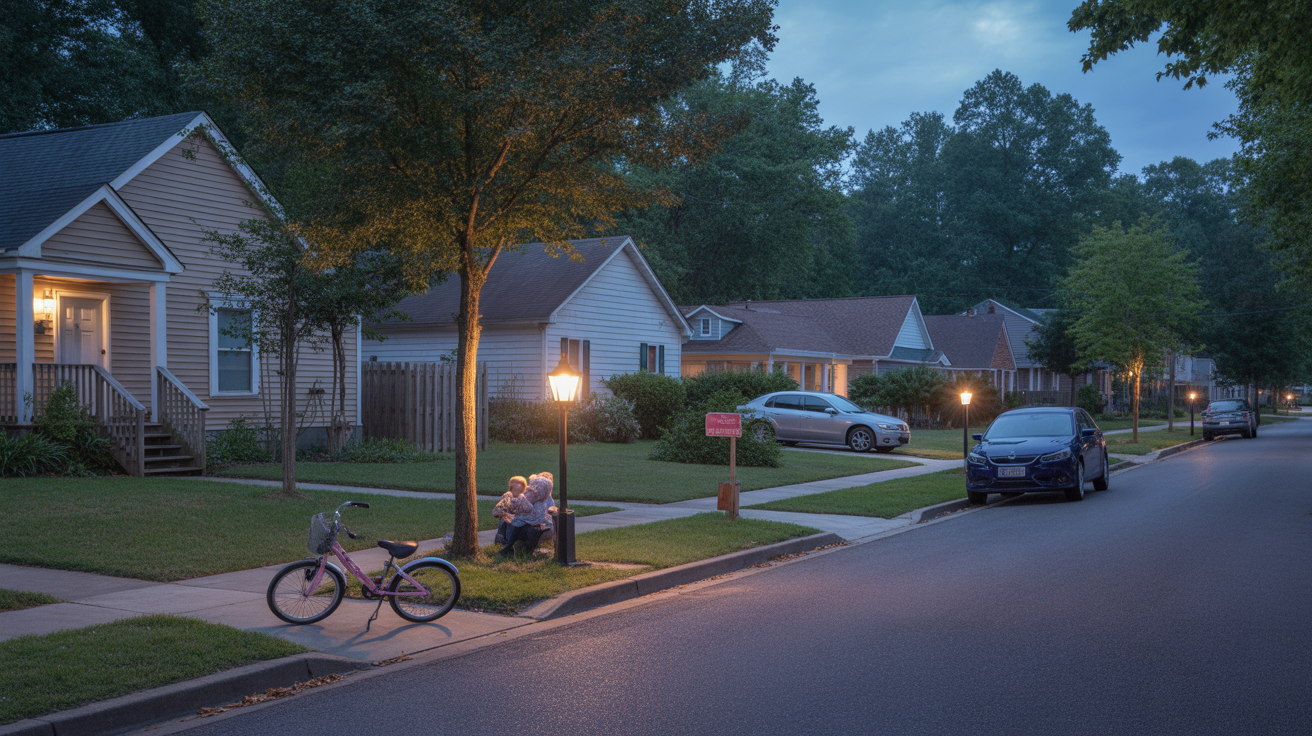
What “Living Comfortably” Means in Holly Springs
Comfort in Holly Springs is tied to space, time, and predictability. It means securing housing that doesn’t force you into a longer commute or a neighborhood that feels like a compromise. It means absorbing seasonal utility swings—hot, humid summers drive cooling costs—without renegotiating other spending. It means your commute doesn’t dictate when you eat dinner or whether you have energy left for anything else.
For many households, comfort also means choice: the ability to eat out without checking the budget first, to replace a car repair without panic, to say yes to weekend plans without running math. It’s not luxury. It’s the absence of monthly negotiation over ordinary decisions.
Expectations matter as much as income. Holly Springs attracts households who want suburban space, good schools, and access to Raleigh’s economy without urban density. Those expectations—around square footage, yard size, school quality, and convenience—create baseline costs that feel non-negotiable to many residents. If your definition of comfort requires those things, your income has to support them here, not somewhere cheaper.
Comfort is contextual. What feels easy in a smaller, slower-cost town might feel tight in Holly Springs, even at the same income level, because the cost structure and lifestyle norms are different.
Where Income Pressure Shows Up First
Housing dominates the financial structure in Holly Springs. The median home value sits at $449,600, and median gross rent runs $1,745 per month. Whether you’re buying or renting, monthly expenses start with a large, fixed obligation that doesn’t flex when other costs rise.
For buyers, that means not just the mortgage but property taxes, insurance, and maintenance on newer or larger homes. For renters, it means less control over annual increases and fewer ways to reduce costs if income tightens. Either way, housing is the first place households feel pressure when income isn’t sufficient.
Transportation adds a second layer. The average commute is 28 minutes, but 49.7% of workers face long commutes—a signal that many people live farther from work than they’d prefer, often because of housing costs or preferences elsewhere. Gas prices in the area run $3.90 per gallon, and despite some walkable pockets and notable bike infrastructure, car ownership remains essential. Food and grocery options are corridor-clustered rather than broadly accessible, which means even local errands often require driving.
For families, the pressure compounds. School density is low, and family infrastructure is limited, meaning parents often coordinate multiple destinations—school, activities, groceries, healthcare—across a car-dependent layout. That creates both time costs and fuel costs that single adults and couples without kids don’t face as intensely.
Utility volatility is another friction point. Electricity rates stand at 13.68¢ per kWh, and extended cooling seasons in hot, humid summers mean households that want consistent indoor comfort face seasonal bill swings that can surprise newcomers. Natural gas prices run $17.89 per MCF, relevant for heating months, though the cooling load tends to dominate annual exposure.
The combination—high fixed housing costs, meaningful transportation time and expense, and seasonal utility swings—means income pressure shows up not in one dramatic expense, but in the steady accumulation of non-negotiable costs that leave less room for everything else.
How the Same Income Feels Different by Household
A single adult earning a solid salary in Holly Springs faces a different reality than a couple at the same combined income, and both face a different reality than a family of four. The income number matters less than how many people depend on it and what demands they create.
Single adults absorb the full weight of rent or mortgage on one income. A $1,745 monthly rent or equivalent mortgage payment doesn’t split. Commute time—especially for the half of workers facing long commutes—compounds after-work freedom. A 28-minute average commute becomes nearly an hour of your day, and if you’re managing a household alone, that hour isn’t offset by a partner handling errands or cooking. Car dependency limits flexibility; even in walkable pockets, most daily needs require driving, which adds time and cost that can’t be shared.
For single adults, comfort often arrives when income is high enough that housing and transportation don’t crowd out social life, dining, or savings. But that threshold is higher here than in many peer suburbs because the baseline costs are substantial and non-divisible.
Couples without kids benefit from splitting fixed costs, which immediately eases housing pressure. A $1,745 rent or mortgage becomes more manageable on two incomes. But coordination becomes critical. If both partners commute—and nearly half of workers here face long commutes—schedules tighten, and the time cost of car dependency doubles. Dining out, weekend trips, and convenience spending rise with dual income, but so do expectations. Couples in Holly Springs often expect space, privacy, and access to Raleigh’s amenities, which keeps spending elevated even when income supports it.
Comfort for couples tends to mean flexibility: the ability to absorb one partner’s job change, to save for a home purchase without sacrificing lifestyle, to handle car repairs or medical bills without stress. That threshold is reachable here for dual-income households, but it requires that both incomes remain stable and that lifestyle expectations don’t expand faster than earnings.
Families face compounding logistics. School density is low, so parents may drive farther for preferred schools or coordinate pickups across multiple locations. Family infrastructure is limited—playgrounds and family-oriented amenities exist but aren’t broadly distributed—so activities often require planning and driving. Grocery runs, healthcare visits, and errands stack up, and with corridor-clustered food access, even routine tasks require intentional trips.
Families also face larger housing needs. A couple might accept a two-bedroom rental; a family of four typically seeks three or four bedrooms, a yard, and proximity to good schools. That pushes housing costs higher, often well above the median. Add multiple commutes, higher utility usage, and the inability to split errands efficiently, and the same household income that feels comfortable for a couple can feel stretched for a family.
For families, comfort means housing that doesn’t force compromise on schools or space, enough income to absorb activity costs and summer camps without monthly recalculation, and the ability to save despite higher baseline spending. That threshold is meaningfully higher than for other household types, and it’s why families often feel income pressure in Holly Springs even at income levels that seem objectively strong.
The Comfort Threshold (Qualitative)
Comfort doesn’t arrive at a specific income figure. It arrives when certain pressures ease.
You cross into comfort when housing pressure stops dictating where you live. When you can choose a home based on fit rather than affordability ceiling. When your commute feels like a known cost rather than a daily negotiation between time and money. When utility bills fluctuate with the season but don’t threaten other spending. When discretionary choices—eating out, replacing worn furniture, taking a weekend trip—don’t require advance planning or budget reshuffling.
For some households, that threshold arrives when income significantly exceeds the median. For others, it arrives earlier because expectations are modest, household size is small, or lifestyle preferences favor simplicity over space. For families, especially those expecting large homes, multiple cars, and private school or extensive activities, the threshold may never feel fully reached because expectations scale with income.
The transition point isn’t about wealth. It’s about margin. Comfort is the presence of enough financial cushion that ordinary months don’t require active management, and unexpected expenses don’t cascade into other decisions.
In Holly Springs, that margin is harder to reach than in slower-cost suburbs because the baseline—housing, transportation, utilities—is high and relatively fixed. But it’s more reachable than in urban centers because space, safety, and school quality are accessible without premium pricing.
Why Online Cost Calculators Get Holly Springs Wrong
Most cost-of-living calculators reduce Holly Springs to a set of averages: median rent, typical utilities, standard transportation. They spit out a total and call it the cost of living. But totals don’t explain pressure, and averages don’t predict experience.
Calculators miss the reality that nearly half of workers here face long commutes, which means transportation costs aren’t just about gas prices—they’re about time, vehicle wear, and the daily erosion of flexibility. They miss that food and grocery access is corridor-clustered, so convenience depends on where you live, not just whether you have a car. They miss that school density is low, so families face logistics that don’t show up in a budget line item but absolutely show up in daily stress.
Calculators assume static costs, but utility bills swing with the season, rents rise annually, and home maintenance doesn’t average out—it arrives in lumps. They assume household types are interchangeable, but a single adult, a couple, and a family of four experience the same income completely differently.
Most importantly, calculators ignore expectations. They don’t ask whether you expect a yard, a short commute, walkable errands, or access to Raleigh’s amenities. They don’t ask whether you’re willing to trade space for cost, or time for money. Those tradeoffs determine whether Holly Springs feels comfortable or constantly tight, and no calculator captures them.
People feel surprised after moving because they trusted a total instead of understanding the structure. The number looked manageable, but the daily experience—long commutes, car dependency despite walkable pockets, seasonal utility swings, family logistics—didn’t match the spreadsheet.
How to Judge Whether Your Income Fits Holly Springs
Instead of asking “Is my income enough?”, ask whether your income and expectations align with how Holly Springs actually works.
How sensitive are you to housing tradeoffs? If you need a specific amount of space, a yard, or proximity to top-rated schools, your housing cost will likely exceed the median. Can your income absorb that and still leave margin for everything else?
Can you absorb seasonal utility swings? Hot, humid summers mean extended cooling seasons. If a $50–$100 summer bill increase feels threatening rather than annoying, your income may be too tight for comfort here.
Is time or money your limiting factor? Nearly half of workers face long commutes. If your income requires a distant job, are you prepared for 28 minutes or more each way, plus the fuel cost and vehicle wear? If you value time over money, can you afford housing close to work?
How much driving feels sustainable? Even with walkable pockets and bike infrastructure, most errands require a car. Grocery access is corridor-clustered, schools are spread out, and healthcare is local but not always nearby. If car dependency feels like a burden rather than a given, Holly Springs may create friction you didn’t expect.
How much flexibility do you expect month to month? If your budget requires everything to go as planned—no surprise repairs, no rent increases, no medical bills—you’re operating without margin. Holly Springs rewards households with cushion, because the baseline costs are high and the unexpected still happens.
For families: Can you handle compounding logistics? Low school density and limited family infrastructure mean more driving, more coordination, and more time spent managing the household. If both parents work and face long commutes, who handles pickups, grocery runs, and activity schedules? If the answer is “we’ll figure it out,” make sure your income supports help, flexibility, or reduced work hours.
Your income fits Holly Springs if it supports your housing expectations, absorbs your transportation reality, leaves room for seasonal cost swings, and still provides enough margin that ordinary life doesn’t require constant financial negotiation.
FAQs About Living Comfortably in Holly Springs
Is the median household income in Holly Springs enough to live comfortably?
The median household income is $127,755 per year, which is well above national levels. For many households—especially couples without kids—that income supports a comfortable life. But comfort depends on household size, housing expectations, and commute reality. Families seeking large homes and managing multiple commutes may find the median income stretched. Single adults absorbing full housing costs on one income may feel pressure despite solid earnings. The median reflects what many households earn, not necessarily what all households need to feel at ease.
What income level do most families need to avoid financial stress in Holly Springs?
There’s no universal figure, because stress depends on expectations and logistics. Families expecting large homes, private schools, or extensive activities need significantly more than families with modest space needs and public school plans. Low school density and limited family infrastructure mean more driving and coordination, which adds time and fuel costs that aren’t always visible in budgets. Financial stress eases when income provides enough margin to absorb housing, transportation, utilities, and family logistics without monthly recalculation—but that threshold varies widely by household.
Can a single income support a family in Holly Springs?
It depends on the income level and the family’s expectations. A single high income can absolutely support a family, but a single median income will feel tight once housing, transportation, utilities, and family logistics are accounted for. The median home value is $449,600, and nearly half of workers face long commutes, which limits housing location flexibility. Single-income families often face harder tradeoffs around home size, commute length, and discretionary spending than dual-income families.
Does living in Holly Springs require a higher income than nearby areas?
Holly Springs’ cost structure—especially housing—is elevated compared to some nearby areas, but it’s not the most expensive suburb in the Raleigh metro. The tradeoff is space, growth, and access to good schools without urban density. Whether it requires “higher” income depends on what you’re comparing it to and what you expect. Some nearby towns offer lower housing costs but longer commutes or fewer amenities. Others offer similar costs with different tradeoffs around walkability or school access. Income requirements depend on how those tradeoffs align with your priorities.
How do I know if I’m earning enough before I move to Holly Springs?
Look at your current budget and stress-test it against Holly Springs’ structure. Can you absorb $1,745+ in monthly rent or an equivalent mortgage? Can you handle a 28-minute or longer commute, plus the fuel and time cost? Can you manage seasonal utility swings and car dependency? If your income leaves margin after those fixed costs, and if your expectations around space and convenience match what Holly Springs offers, you’re likely earning enough. If your budget requires everything to go perfectly, or if you expect walkable urban convenience, your income may not provide the comfort you’re hoping for.
Holly Springs can work well for households with strong income, realistic expectations, and a tolerance for car dependency and commute time. But comfort here isn’t guaranteed by income alone—it’s determined by whether your earnings, household size, and lifestyle priorities align with the specific pressures this place creates. If they do, Holly Springs offers space, growth, and access without urban intensity. If they don’t, the same income that feels comfortable elsewhere may feel constantly tight here.
How this article was built: In addition to public economic data, this article incorporates location-based experiential signals derived from anonymized geographic patterns—such as access density, walkability, and land-use mix—to reflect how day-to-day living actually feels in Holly Springs, NC.