
Is Holly Springs expensive to live in? Holly Springs is considered expensive in 2026, with a median home value of $449,600 and median rent of $1,745 per month. The value proposition depends on housing entry cost versus commute exposure and whether walkable pockets within the city reduce your need for constant driving.
Over the last five years, cost of living trends in fast-growing North Carolina suburbs have been shaped by rapid home price appreciation, rising rents tied to regional migration, and persistent transportation costs driven by commute-dependent development patterns. Holly Springs reflects this trajectory: housing dominates the cost structure, and the decision to rent or buy determines nearly every other financial tradeoff.
Overall Cost of Living Snapshot
Holly Springs operates at a regional price parity index of 103, meaning the overall cost of goods and services runs slightly above the national baseline. But that modest index masks significant internal variation. Housing costs—whether ownership or rental—claim the largest share of household budgets, followed by transportation expenses driven by a 28-minute average commute and a car-dependent commute pattern for most residents. Utilities and groceries add moderate, predictable pressure, but they don’t define affordability here.
The primary cost driver is housing entry and ownership. The median home value of $449,600 requires substantial upfront capital and sets a high bar for monthly carrying costs, even at current interest rates. Median gross rent of $1,745 per month offers an alternative to ownership but still represents significant recurring expense. The secondary driver is transportation: nearly half of all workers (49.7%) face long commutes, and only 5.8% work from home, meaning most households depend on at least one vehicle—and often two—for daily function.
Surprises come not from groceries or utilities, but from the interaction between housing location and commute length. Holly Springs has pockets with substantial pedestrian and bike infrastructure, and errands are clustered along commercial corridors rather than scattered across isolated strip centers. That means some residents can reduce trip frequency and consolidate errands without driving across town, while others—especially those in newer subdivisions farther from these corridors—face more fragmented daily logistics and higher vehicle dependence.
Driver verdict: Housing affordability dominates, but transportation exposure amplifies or dampens that pressure depending on where you live within the city and how far you commute.
Housing Costs (Primary Driver)
Housing is the single largest cost factor in Holly Springs, and the rent-versus-own decision carries long-term financial consequences. The median home value of $449,600 reflects a market shaped by regional growth, school quality, and proximity to the Research Triangle employment corridor. Ownership requires a substantial down payment, property taxes, homeowners insurance, and maintenance reserves. Even for households earning the median income of $127,755 per year (approximately $10,646 per month gross), a home at this price point represents a significant financial commitment.
Renting offers flexibility and lower entry cost. At $1,745 per month median gross rent, renters avoid property tax exposure, maintenance surprises, and the opportunity cost of a large down payment. But rent provides no equity accumulation, and lease renewals can introduce volatility in markets experiencing sustained demand pressure.
Holly Springs functions as a commuter-oriented suburb with mixed-use pockets rather than a self-contained employment center. That means housing decisions are tightly coupled to transportation tradeoffs: living closer to commercial corridors or within walkable pockets may reduce daily driving, while homes in outer subdivisions may offer more space but increase vehicle dependence and commute time.
Conclusion: Holly Springs is a buying market for households with capital and long-term plans, and a transitional rental market for those prioritizing flexibility or building savings for future ownership.
| Housing Type | Cost Anchor | What That Buys You |
|---|---|---|
| Ownership | $449,600 median home value | Equity accumulation, fixed principal, exposure to property tax and maintenance cycles |
| Rental | $1,745/month median gross rent | Flexibility, lower entry cost, no maintenance or tax exposure, no equity build |
Utilities & Energy Risk
Utility costs in Holly Springs are moderate and predictable, shaped primarily by electricity usage during the extended cooling season typical of central North Carolina. The electricity rate of 13.68¢ per kilowatt-hour sits near the middle of the regional range, and natural gas is priced at $17.89 per thousand cubic feet (MCF), which translates to roughly $0.18 per therm for heating purposes.
For illustrative context, a household using approximately 1,000 kWh per month would face a baseline electricity cost around $137 before fees and taxes. Actual usage varies with home size, insulation quality, thermostat settings, and occupancy patterns, but the rate itself doesn’t introduce volatility. Cooling dominates summer bills due to heat and humidity, while heating needs are lighter and shorter in duration during mild winters.
Natural gas, where available, is used primarily for heating, water heating, and cooking. Because winters are relatively mild, gas consumption remains modest outside of occasional cold snaps. Households with electric heating face higher winter electricity usage but avoid gas connection fees and monthly service charges.
Risk classification: minor. Utility costs are a recurring line item but not a major swing factor in overall affordability. Seasonal variation exists, but it’s manageable and predictable for most household types.
Groceries & Daily Costs
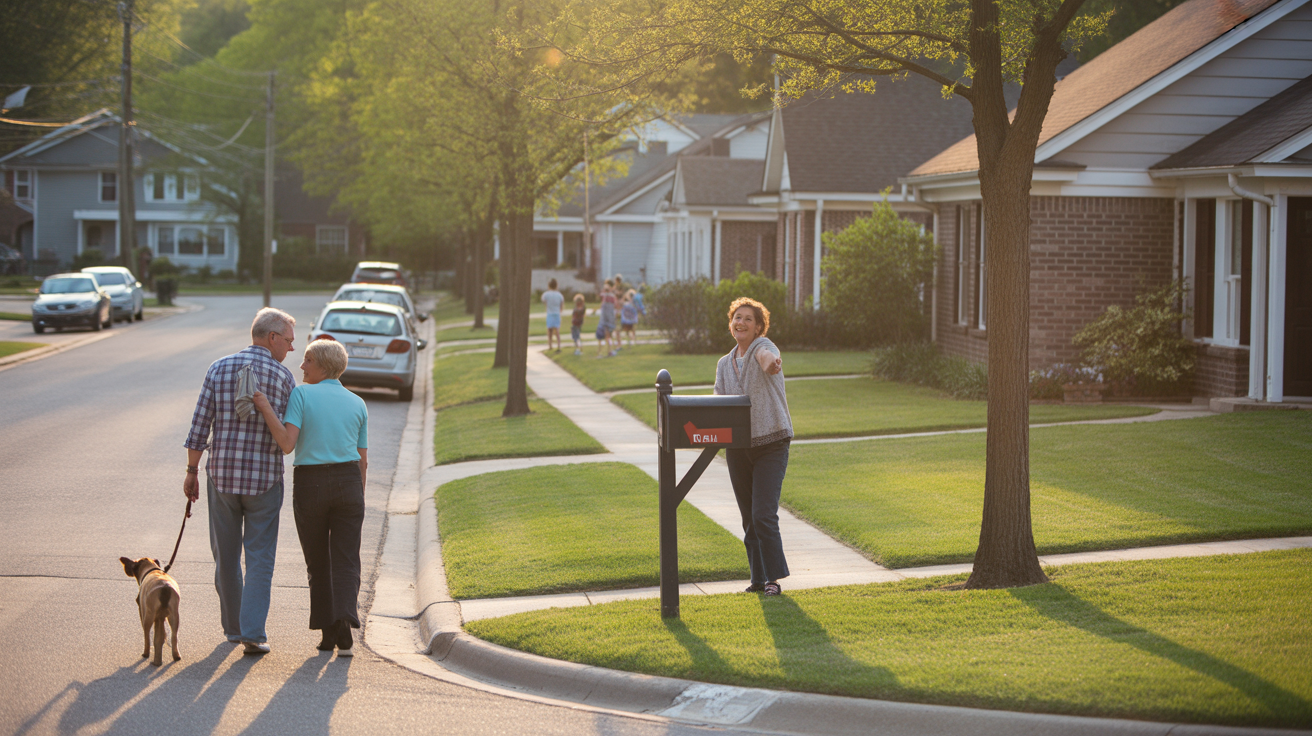
Grocery costs in Holly Springs reflect the regional price parity index of 103, meaning everyday food purchases run slightly above the national baseline. Derived estimates suggest staples like bread cost approximately $1.91 per pound, eggs around $2.58 per dozen, and ground beef near $6.94 per pound. These figures are modeled rather than observed and should be understood as directional indicators of cost pressure, not guarantees.
What matters more than individual item prices is how errands are structured. Holly Springs features corridor-clustered food and grocery options, meaning stores are concentrated along key commercial routes rather than distributed evenly across neighborhoods. For households living near these corridors or within walkable pockets, trip consolidation is easier and driving costs lower. For those in subdivisions farther from these clusters, grocery runs require more intentional planning and vehicle use.
The practical impact: grocery costs themselves are moderate, but the friction of access—how far you drive, how often, and whether you can combine trips—varies significantly depending on where you live within the city. Households with flexible schedules and proximity to commercial corridors face lower logistical burden; those farther out or with rigid work hours face more driving and less spontaneity.
Transportation Reality
Transportation is the second-largest cost exposure in Holly Springs, driven not by gas prices alone but by the structural requirement to own and operate at least one vehicle—and often two—for most households. The average commute is 28 minutes, and nearly half of all workers (49.7%) face long commutes, defined as travel times that exceed typical suburban norms. Only 5.8% of workers have the option to work from home, meaning the vast majority depend on personal vehicles for employment access.
Current gas prices sit at $3.90 per gallon. For a household commuting 25 miles round trip in a vehicle averaging 25 miles per gallon, that’s one gallon per day, or roughly $20–$25 per week in fuel alone—before accounting for insurance, maintenance, registration, or depreciation. Households with two commuters or longer distances face proportionally higher exposure.
Holly Springs does offer bus service, but transit functions as a supplemental option rather than a primary commute mode for most residents. The city’s development pattern—low-rise, mixed-use in pockets, but car-oriented overall—means that even with notable bike infrastructure and walkable areas, most daily travel still requires a vehicle.
Transportation is best understood as a recurring exposure tied to housing location. Choosing a home closer to employment centers or within reach of commercial corridors reduces this burden; choosing a home farther out increases it. Unlike rent, which resets annually, transportation costs compound daily and are harder to adjust once a housing decision is made.
Cost Exposure Profiles
Cost exposure in Holly Springs is shaped by three primary factors: housing entry method, commute structure, and household composition. These factors interact to create distinct exposure profiles, and understanding which profile applies to your situation clarifies where financial pressure will concentrate.
Low-exposure situations: Established homeowners with significant equity face stable housing costs, predictable property tax cycles, and control over maintenance timing. Dual-income households with short commutes or remote work options reduce transportation costs and gain schedule flexibility. Living near commercial corridors or within walkable pockets allows trip consolidation, reduces driving frequency, and lowers wear on vehicles.
High-exposure situations: First-time buyers entering at current home values face large down payment requirements, higher monthly carrying costs, and sensitivity to interest rate changes. Single-income households or those with variable earnings have less margin to absorb housing cost increases or unexpected transportation expenses. Long-distance commuters, especially those requiring two vehicles, face compounding fuel, insurance, and maintenance costs that are difficult to reduce without relocating or changing employment.
The interaction between housing location and errands accessibility matters more in Holly Springs than in many suburban markets. Because food and grocery options are corridor-clustered rather than broadly distributed, and because the city has pockets with substantial pedestrian infrastructure, where you live within the city determines how much you drive for daily needs. A household in a walkable pocket near a commercial corridor may drive half as often as a household in an outer subdivision, even though both face similar commute distances to work.
Renters face different exposure than owners: they avoid property tax increases and maintenance surprises, but they lack control over lease renewal terms and build no equity. For renters planning to stay short-term or build savings, this tradeoff favors flexibility. For those planning to stay long-term, ownership—despite higher entry cost—offers more predictability and wealth accumulation.
How this article was built: In addition to public economic data, this article incorporates location-based experiential signals derived from anonymized geographic patterns—such as access density, walkability, and land-use mix—to reflect how day-to-day living actually feels in Holly Springs, NC.
Frequently Asked Questions
Is Holly Springs more affordable than Raleigh in 2026? Holly Springs offers lower density and more single-family housing stock than central Raleigh, but median home values and rents are comparable to many Raleigh suburbs. The affordability difference depends more on commute tradeoffs and housing type than on cost alone.
What does a typical cost profile look like in Holly Springs? Housing dominates, followed by transportation costs tied to commuting and vehicle ownership. Utilities and groceries add moderate, predictable pressure but don’t define affordability. The profile shifts significantly depending on whether you rent or own and how far you commute.
Do utilities cost more in Holly Springs than in nearby areas? Electricity rates in Holly Springs are moderate and comparable to other parts of the Research Triangle region. Natural gas pricing is also in line with regional norms. Utility costs are not a major differentiator compared to nearby cities.
What costs tend to surprise newcomers in Holly Springs? The combination of high home values and long commute percentages surprises many newcomers who expect lower costs in a suburban setting. Additionally, the corridor-clustered layout of errands means that daily driving needs vary widely depending on which neighborhood you choose.
Are property taxes higher in Holly Springs than Cary? Property tax rates vary by municipality and county, and both Holly Springs and Cary are subject to Wake County assessments. Differences in effective tax burden depend more on assessed home value than on rate differences alone, so comparing taxes requires looking at specific properties rather than city-level averages.
Can you live in Holly Springs without a car? While Holly Springs has bus service and pockets with notable bike infrastructure and walkable corridors, the low work-from-home percentage and high long-commute percentage indicate that most residents depend on personal vehicles for employment and daily errands. Car-free living is possible in limited situations but not practical for most households.
How does the cost of living in Holly Springs compare to other North Carolina suburbs? Holly Springs sits in the higher range among North Carolina suburbs due to proximity to the Research Triangle and sustained regional growth. It tends to be more expensive than outer or rural suburbs but comparable to other fast-growing communities in Wake County.
What’s the biggest financial tradeoff when [finding a place](https://indexyard.com/best-moving-companies-guide/) in Holly Springs? The biggest tradeoff is between housing entry cost and commute exposure. Choosing a less expensive home farther from employment centers or commercial corridors increases transportation costs and time burden, while choosing a home closer to these areas reduces driving but requires higher upfront or monthly housing expense.
—