

Here’s the myth: Apex and Holly Springs cost about the same because they’re both Raleigh suburbs with similar incomes and nearly identical utility rates. The reality? Cost pressure shows up in completely different places depending on where you live, what you drive, and how your household actually moves through the day. In 2026, the decision between these two Wake County towns isn’t about which one is cheaper—it’s about which cost structure fits the way your household already works.
Both cities sit in the Raleigh metro, share the same regional price environment, and attract similar household profiles: dual-income professionals, young families, and commuters looking for space without sacrificing access. But housing stock, commute patterns, park access, and the density of daily errands create friction in different categories. For some households, Holly Springs’ rental market and commute reality dominate the cost experience. For others, Apex’s home values and tighter green space integration shift where predictability and flexibility show up. The better fit depends entirely on which expenses your household can control—and which ones control you.
This article breaks down where cost pressure concentrates differently in Holly Springs and Apex, using 2026 data on housing, utilities, transportation, groceries, and taxes. It explains how the same gross income feels stable in one city and stretched in the other, and it offers a decision matrix to help you identify which town aligns with your household’s non-negotiable costs and flexibility zones.
Housing Costs: Entry Barriers and Ongoing Obligations
Holly Springs’ median home value sits at $449,600, while Apex’s reaches $458,200—a difference that matters more for down payment planning than monthly mortgage exposure. Both cities reflect the same regional price environment (RPP index of 103), meaning the gap isn’t about affordability in a vacuum; it’s about how much cash you need upfront and what kind of housing stock that cash unlocks. In Holly Springs, median gross rent runs $1,745 per month, compared to Apex’s $1,668 per month. The rental market in Holly Springs skews slightly higher, likely reflecting newer apartment complexes and single-family rental inventory that appeals to families who aren’t ready to buy but want space and school access.
For renters, Holly Springs introduces more ongoing housing pressure, especially for households stretching to afford three-bedroom units or single-family rentals in neighborhoods with strong school ratings. Apex’s lower median rent suggests a rental market with more variety—older townhomes, smaller apartments, and units that don’t command the same premium for newness or proximity to parks. But for buyers, Apex’s higher home values mean a larger down payment and slightly higher property tax exposure over time. First-time buyers in Holly Springs may find more inventory in the $400,000–$450,000 range, while Apex buyers often face bidding pressure in the same price band, pushing final purchase prices higher.
Housing stock also shapes cost predictability. Holly Springs’ low-rise character (average building levels below the low threshold) means most housing is single-family or low-density townhomes, which typically come with higher utility exposure and maintenance obligations. Apex’s mixed building height profile suggests a blend of single-family homes, newer townhomes, and some mid-rise apartment options, offering more flexibility for households prioritizing lower utility bills or minimal upkeep. Both cities show mixed residential and commercial land use, meaning walkable errands are possible in pockets—but neither city eliminates car dependency entirely.
Housing takeaway: Renters face higher ongoing costs in Holly Springs, particularly families seeking space without buying. Buyers face higher entry costs in Apex, with property tax and maintenance exposure rising over time. Households prioritizing rental flexibility may find Apex’s lower median rent more forgiving, while those ready to buy may prefer Holly Springs’ slightly lower home values and clearer inventory in the mid-$400,000s. The primary difference isn’t magnitude—it’s timing and structure.
Utilities and Energy Costs: Predictability vs. Exposure
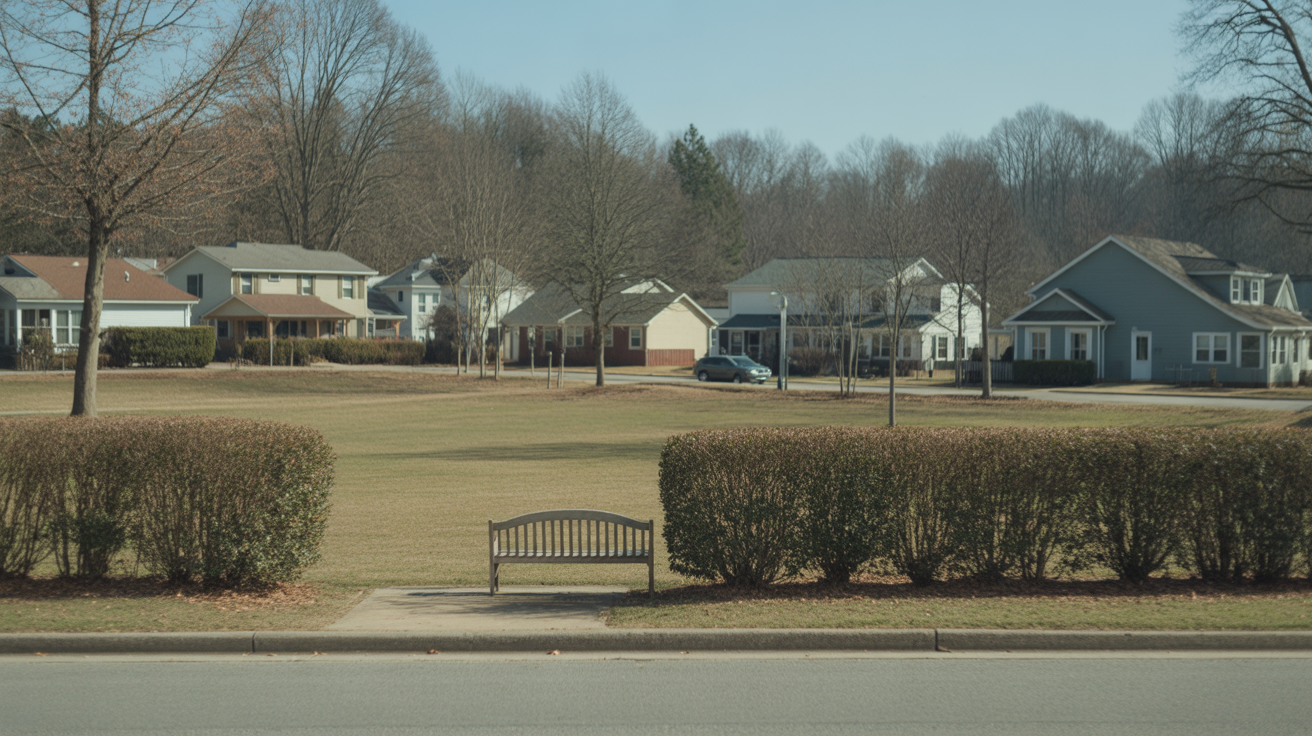
Both Holly Springs and Apex share identical electricity rates (13.68¢/kWh) and natural gas prices ($17.89/MCF), meaning the cost per unit of energy is the same. What differs is how much energy households actually use—and that’s driven by housing form, building age, and seasonal exposure. Holly Springs’ exclusively low-rise housing stock means most residents live in single-family homes with larger square footage, more exterior wall exposure, and higher heating and cooling demands. Apex’s mixed building height profile includes townhomes and apartments that share walls, reducing thermal loss and lowering baseline energy consumption for households in attached units.
In North Carolina’s humid subtropical climate, cooling dominates summer utility bills, and heating creates moderate winter exposure. Households in larger, detached homes—more common in Holly Springs—experience higher seasonal volatility, especially if the home was built before modern insulation standards became routine. Apex’s newer construction and denser housing forms offer more predictability: smaller footprints, shared walls, and Energy Star–rated HVAC systems reduce the risk of bill spikes during extreme weather. For families in older Holly Springs homes, utility costs become less predictable, with summer bills rising sharply during extended heat and winter bills climbing during cold snaps.
Household size amplifies these differences. A single adult in a one-bedroom Apex apartment may see stable utility bills year-round, rarely exceeding baseline usage. A family of four in a 2,500-square-foot Holly Springs home faces higher exposure: multiple bedrooms to cool, a larger HVAC system cycling more frequently, and water heating demands that scale with occupancy. Utility cost pressure in Holly Springs is more about managing volatility and planning for seasonal peaks, while in Apex it’s more about baseline predictability and lower risk of surprises.
Utility takeaway: Holly Springs households—especially those in larger, detached homes—experience more seasonal volatility and higher cooling exposure. Apex households benefit from denser housing forms that reduce thermal loss and stabilize bills. Families in single-family homes should expect higher utility costs in Holly Springs, while couples or individuals in attached units may find Apex’s mixed housing stock more forgiving. The primary difference is predictability, not price per kilowatt-hour.
Groceries and Daily Expenses: Access, Habits, and Price Sensitivity
Both Holly Springs and Apex show corridor-clustered food and grocery accessibility, meaning most options concentrate along major roads rather than spreading evenly across neighborhoods. In Holly Springs, food establishment density sits in the medium band, with grocery density also in the medium range—enough to avoid long drives, but not enough to support true walkable errands for most households. Apex shows similar food density but higher grocery density (exceeding the high threshold), suggesting more supermarket options, discount grocers, and specialty stores within a tighter radius. For households managing weekly shopping trips, Apex’s grocery concentration reduces drive time and offers more flexibility to compare prices or switch stores based on sales.
Price sensitivity matters more than access density for most households. A family of four buying staples—milk, eggs, bread, chicken, ground beef—will spend roughly the same per item in both cities, since they share the same regional price parity index. But Apex’s higher grocery density means more opportunities to shop at discount chains, warehouse clubs, or ethnic grocers that undercut mainstream supermarket pricing. Holly Springs households may rely more heavily on one or two anchor stores, reducing flexibility and increasing the risk of convenience spending creep—grabbing prepared foods, last-minute items, or higher-margin products because alternatives require a longer drive.
Dining out and convenience spending follow similar patterns. Both cities have bus service and walkable pockets, but neither supports true car-free living for most residents. Households in Holly Springs may find themselves driving more frequently for errands, coffee, or takeout, adding small but recurring transportation costs on top of the purchase itself. Apex’s denser grocery infrastructure and slightly more integrated park access (park density exceeding the high threshold) create more opportunities for combined trips—grocery run, park visit, coffee stop—without multiple car starts. For single adults or couples, this difference is minor. For families juggling school pickups, weekend activities, and weekly shopping, the cumulative time and fuel cost of fragmented errands becomes more noticeable in Holly Springs.
Grocery takeaway: Apex’s higher grocery density offers more price flexibility and shorter drive times, reducing both cost and time friction for families managing large weekly shops. Holly Springs households face slightly more reliance on anchor stores and longer drives for specialty items, increasing convenience spending risk. The primary difference isn’t grocery prices—it’s access structure and the time cost of comparison shopping.
Taxes and Fees: Predictability and Long-Term Exposure
Property taxes in both Holly Springs and Apex reflect Wake County’s assessment and rate structure, meaning the primary driver of tax exposure is home value, not location. Apex’s higher median home value ($458,200) translates to higher annual property tax bills for homeowners, even if the millage rate remains identical. Holly Springs homeowners, with a median home value of $449,600, face slightly lower baseline tax obligations—but the difference is modest and grows more meaningful over time as home values appreciate and reassessments occur. For households planning to stay five or more years, Apex’s higher entry price compounds into higher cumulative tax exposure, especially if the home’s value rises faster than inflation.
Sales taxes, local fees, and service charges operate identically in both cities, since they share the same county and state tax framework. The real difference in fee exposure comes from housing type and neighborhood structure. Holly Springs’ low-rise, single-family-dominated landscape often includes HOA fees for newer subdivisions, covering landscaping, amenity access, and sometimes trash or water services. Apex’s mixed building height profile means more households live in townhomes or condos with mandatory HOA fees, but these fees may bundle more services—exterior maintenance, insurance, shared utilities—reducing variability and simplifying budgeting. For renters, fee exposure is minimal in both cities, typically limited to utilities and renter’s insurance.
Homeowners in both cities should anticipate rising property tax exposure as home values climb, but Apex buyers start from a higher baseline, meaning each percentage-point increase in assessed value translates to a larger dollar impact. Holly Springs buyers gain a modest cushion—lower entry price, lower initial tax bill—but lose some of that advantage if their home appreciates faster than the county average. Households sensitive to long-term tax predictability may prefer Holly Springs’ slightly lower starting point, while those prioritizing bundled HOA services and lower maintenance friction may find Apex’s fee structure more manageable.
Tax and fee takeaway: Apex homeowners face higher baseline property tax exposure due to higher median home values, with cumulative impact growing over time. Holly Springs offers a lower entry point for property taxes but similar long-term exposure as values rise. HOA fees vary by neighborhood in both cities, with Apex’s denser housing stock sometimes bundling more services. The primary difference is starting magnitude, not structure or predictability.
Transportation and Commute Reality
Holly Springs households face documented commute friction: the average commute runs 28 minutes, with 49.7% of workers experiencing long commutes (typically defined as 30 minutes or more). Only 5.8% work from home, meaning the vast majority of employed residents drive daily, often to Raleigh, Cary, or Research Triangle Park. At $3.90 per gallon, gas costs add up quickly for households making round trips of 25 miles or more, five days a week. For a typical commuter driving 25 miles round trip in a vehicle averaging 25 MPG, that’s one gallon per day, or roughly $20 per week in fuel alone—before tolls, parking, or vehicle wear.
Apex lacks published commute data in the current feed, but its proximity to Raleigh and similar suburban structure suggest comparable commute patterns. Both cities offer bus service, but neither supports true transit-dependent living for most households. Holly Springs and Apex both show notable cycling infrastructure (bike-to-road ratio exceeding the high threshold) and walkable pockets (pedestrian-to-road ratio exceeding the high threshold), meaning some neighborhoods support short trips on foot or bike—but these are exceptions, not the norm. For most households, car ownership is non-negotiable, and transportation costs are driven more by commute distance and frequency than by local gas prices.
The real transportation difference is time cost. Holly Springs’ documented long commute percentage means nearly half of workers lose an hour or more per day to driving, reducing schedule flexibility and increasing childcare, errand, and meal-prep friction. Apex households likely face similar patterns, but without published data, it’s harder to quantify. For dual-income couples, long commutes compress evening routines and increase reliance on convenience spending—takeout, delivery, last-minute grocery runs—because time becomes the binding constraint. For families with kids, long commutes force earlier wake-ups, tighter pickup schedules, and less margin for unexpected delays.
Transportation takeaway: Holly Springs households face documented long commute exposure, with nearly half of workers spending 30+ minutes each way. Apex likely mirrors this pattern, but lacks published data. Both cities require car ownership for most households, with gas prices identical at $3.90/gal. The primary difference is time cost and schedule compression, not fuel expense. Households sensitive to commute friction should prioritize proximity to work over city choice, as both towns function as commuter suburbs.
Cost Structure Comparison
Housing dominates the cost experience in both cities, but the pressure shows up differently. In Holly Springs, renters face higher ongoing obligations, especially families seeking space in newer complexes or single-family rentals. In Apex, buyers face higher entry costs and long-term property tax exposure due to higher median home values. For households planning to rent long-term, Holly Springs introduces more monthly friction. For households ready to buy and stay, Apex front-loads the cost burden into the down payment and closing, then spreads it across property taxes and maintenance over time.
Utilities introduce more volatility in Holly Springs, where low-rise, single-family housing stock increases cooling and heating exposure. Apex’s mixed building heights and denser housing forms offer more predictability, especially for households in attached units. Families in larger homes should expect higher seasonal utility bills in Holly Springs, while couples or individuals in townhomes or apartments may find Apex’s housing mix more forgiving. The difference isn’t the cost per kilowatt-hour—it’s how much energy the housing stock demands and how predictable those bills remain across seasons.
Transportation patterns matter more in Holly Springs, where documented long commute exposure affects nearly half of workers. The time cost of commuting compresses schedules, increases reliance on convenience spending, and reduces flexibility for errands or childcare. Apex likely mirrors this pattern, but without published commute data, it’s harder to quantify. For households sensitive to time cost and schedule friction, proximity to work matters more than city choice, since both towns function as car-dependent commuter suburbs with limited transit alternatives.
Groceries and daily expenses show subtle differences in access structure. Apex’s higher grocery density offers more price flexibility and shorter drive times, reducing both cost and time friction for families managing large weekly shops. Holly Springs households rely more on anchor stores and longer drives for specialty items, increasing the risk of convenience spending creep. The difference isn’t grocery prices—it’s the time and fuel cost of comparison shopping and the ease of combining errands into single trips.
The better choice depends on which costs dominate your household. Households sensitive to rental costs and utility volatility may prefer Apex’s lower median rent and denser housing stock. Households prioritizing lower home purchase prices and shorter-term ownership may prefer Holly Springs’ lower median home value and slightly lower property tax starting point. For families managing tight schedules and long commutes, the decision is less about price and more about predictability: which city’s cost structure aligns with the flexibility you already have—or the rigidity you can’t afford to absorb.
How the Same Income Feels in Holly Springs vs Apex
Single Adult
For a single adult, housing becomes the first non-negotiable cost, and the difference between Holly Springs and Apex shows up in rental predictability. In Holly Springs, higher median rent means less flexibility to downsize or absorb rent increases without relocating. In Apex, lower median rent and denser housing options create more room to adjust—switching from a one-bedroom to a studio, or moving to an older complex to stabilize costs. Transportation exposure is similar in both cities, but Holly Springs’ documented long commute percentage means more single adults lose time to driving, compressing evenings and increasing reliance on convenience spending. Apex’s higher grocery density reduces the friction of running errands after work, making it easier to cook at home and avoid takeout creep. The same gross income feels more flexible in Apex because housing and errand logistics leave more margin for discretionary choices.
Dual-Income Couple
For dual-income couples, the primary cost driver shifts from housing alone to the interaction between housing, commute friction, and time cost. In Holly Springs, higher rent and long commute exposure for both partners compress schedules and increase the likelihood of convenience spending—dining out, delivery, last-minute purchases—because time becomes scarce. In Apex, lower rent and higher grocery density reduce both housing pressure and errand friction, creating more flexibility to cook, plan, and absorb small financial surprises without lifestyle cuts. Utility volatility matters more in Holly Springs for couples in single-family homes, where seasonal spikes can destabilize budgets. In Apex, denser housing forms and mixed building heights offer more predictable utility bills, reducing the risk of summer or winter surprises. The same gross income feels more stable in Apex because fewer cost categories introduce volatility, and more of the budget remains under direct control.
Family with Kids
For families, housing, transportation, and time cost converge into a single pressure system. In Holly Springs, higher rent and long commute exposure for one or both parents create tight morning and evening windows, forcing reliance on convenience spending and reducing margin for unexpected delays. Childcare, school pickups, and weekend activities require more driving in Holly Springs due to corridor-clustered grocery access and lower park density, increasing both fuel costs and schedule friction. In Apex, lower rent, higher grocery density, and integrated park access reduce the number of separate trips required each week, creating more flexibility to combine errands and absorb schedule changes without financial penalties. Utility volatility in Holly Springs hits families harder because larger homes and higher occupancy amplify seasonal exposure, while Apex’s denser housing stock stabilizes bills and reduces the risk of budget-breaking summer cooling costs. The same gross income feels stretched in Holly Springs because more cost categories are non-negotiable and less flexible, while in Apex, more categories remain under household control, leaving room for planning and adjustment.
Decision Matrix: Which City Fits Which Household?
| Decision factor | If you’re sensitive to this… | Holly Springs tends to fit when… | Apex tends to fit when… |
|---|---|---|---|
| Housing entry + space needs | You need to minimize upfront costs or prioritize rental flexibility | You’re ready to buy and prefer lower median home values with clearer inventory in the mid-$400,000s | You’re renting long-term and need lower median rent with more housing variety to stabilize costs |
| Transportation dependence + commute friction | You lose flexibility when commutes exceed 30 minutes or compress evening schedules | You work locally or from home and can avoid the documented long commute exposure affecting nearly half of workers | You prioritize shorter drive times for errands and combined trips, reducing cumulative time cost across the week |
| Utility variability + home size exposure | You need predictable bills and can’t absorb seasonal spikes without budget adjustments | You’re comfortable managing seasonal volatility in a larger, detached home with higher cooling and heating exposure | You prefer denser housing forms that stabilize utility costs through shared walls and smaller square footage |
| Grocery strategy + convenience spending creep | You need price flexibility and shorter drive times to avoid reliance on anchor stores and impulse purchases | You’re willing to drive slightly longer for specialty items and can plan weekly shops around one or two main stores | You benefit from higher grocery density that supports comparison shopping and combined errand trips without extra fuel cost |
| Fees + friction costs (HOA, services, upkeep) | You want to minimize long-term property tax exposure and avoid compounding costs as home values rise | You prioritize lower baseline property taxes due to lower median home values, accepting similar long-term growth | You prefer bundled HOA services in denser housing that reduce maintenance friction and simplify budgeting |
| Time budget (schedule flexibility, errands, logistics) | You need margin for unexpected delays and can’t afford schedule compression from long commutes or fragmented errands | You have flexible work hours or work locally, reducing the impact of documented long commute exposure on daily routines | You benefit from integrated park access and higher grocery density that reduce the number of separate trips required each week |
Lifestyle Fit: How Daily Life Shapes Costs
Both Holly Springs and Apex function as commuter suburbs with walkable pockets and notable cycling infrastructure, but neither supports true car-free living for most households. Holly Springs’ low-rise character and corridor-clustered errands mean most daily trips require driving, even for short distances. Apex’s mixed building heights and integrated park access create more opportunities for combined trips—grocery run, park visit, coffee stop—without multiple car starts. For families, Apex’s higher park density (exceeding the high threshold) reduces the need to drive to green space, while Holly Springs’ moderate park density (in the medium band) means more weekend trips to regional parks or trails outside city limits.
Both cities offer bus service, but transit functions more as a backup option than a primary commute mode. Households relying on transit for daily commutes will find both cities challenging, with limited route coverage and infrequent service outside peak hours. For households with one car and two working adults, this creates friction: one partner drives, the other relies on rideshare or carpooling, adding cost and schedule complexity. Cycling infrastructure is notable in both cities, but bike commuting remains practical only for households living near employment centers or willing to combine cycling with transit for longer trips.
Recreation and outdoor access differ subtly. Apex’s integrated park access means more households live within walking or short driving distance of green space, reducing the time and fuel cost of weekend outings. Holly Springs’ moderate park density means families often drive 10–15 minutes to reach larger parks or trails, adding small but recurring transportation costs. Both cities have water features present, offering additional outdoor options, but Apex’s higher park density creates more frequent, lower-friction access. For families with young kids, this difference compounds: more frequent park visits in Apex reduce reliance on paid activities or screen time, while Holly Springs families may find themselves driving to regional parks or paying for structured recreation to fill weekends.
Quick fact: Holly Springs shows a pedestrian-to-road ratio exceeding the high threshold, meaning walkable infrastructure exists in pockets—but most households still drive for daily errands due to corridor-clustered grocery and food access.
Quick fact: Apex’s park density exceeds the high threshold, offering more integrated green space access and reducing the need for long drives to regional parks or trails on weekends.
Frequently Asked Questions
Is Holly Springs or Apex more affordable for renters in 2026?
Apex shows lower median gross rent at $1,668 per month compared to Holly Springs’ $1,745 per month, meaning renters in Apex face slightly lower ongoing housing costs. The difference matters most for families seeking three-bedroom units or single-family rentals, where Holly Springs’ rental market skews toward newer, higher-priced inventory. Apex’s rental market offers more variety—older townhomes, smaller apartments, and units that don’t command premiums for newness—creating more flexibility to adjust housing costs without relocating. For single adults or couples, the gap is modest, but for families managing tight budgets, Apex’s lower median rent reduces monthly housing pressure and leaves more margin for other expenses.
Which city has higher utility costs, Holly Springs or Apex?
Both cities share identical electricity rates (13.68¢/kWh) and natural gas prices ($17.89/MCF), so the cost per unit of energy is the same. The difference is how much energy households actually use, which depends on housing form and building age. Holly Springs’ exclusively low-rise housing stock means most residents live in single-family homes with larger square footage and higher heating and cooling demands, increasing seasonal utility volatility. Apex’s mixed building height profile includes townhomes and apartments that share walls, reducing thermal loss and stabilizing bills year-round. Families in larger, detached homes in Holly Springs should expect higher utility costs and more seasonal variability, while households in attached units in Apex benefit from more predictable bills and lower baseline usage.
Do Holly Springs and Apex have similar commute times in 2026?
Holly Springs shows an average commute of 28 minutes, with 49.7% of workers experiencing long commutes (typically 30 minutes or more). Apex lacks published commute data, but its similar suburban structure and proximity to Raleigh suggest comparable patterns. Both cities function as car-dependent commuter suburbs, with bus service available but limited route coverage and infrequent schedules outside peak hours. The primary cost difference isn’t fuel—both cities share the same gas price at $3.90/gal—but time cost and schedule compression. Households in Holly Springs face documented long commute exposure, reducing evening flexibility and increasing reliance on convenience spending. For families managing tight schedules, proximity to work matters more than city choice, since both towns require car ownership and daily driving for most employed residents.
Which city is better for families with kids, Holly Springs or Apex, in 2026?
The better fit depends on which cost pressures your family can absorb. Holly Springs offers slightly lower median home values ($449,600 vs. Apex’s $458,200), reducing upfront costs for buyers, but higher median rent ($1,745/month vs. Apex’s $1,668/month) increases ongoing housing pressure for renters. Apex’s integrated park access (park density exceeding the high threshold) reduces the need to drive to green space, while Holly Springs’ moderate park density means more weekend trips to regional parks. Both cities show limited family infrastructure (school and playground density below thresholds), meaning families rely on driving for school drop-offs and extracurricular activities. For families prioritizing lower rental costs and easier access to parks, Apex reduces daily friction. For families ready to buy and seeking lower entry prices, Holly Springs offers a modest advantage in upfront costs.
How do grocery costs compare between Holly Springs and Apex in 2026?
Grocery prices are nearly identical in both cities, since they share the same regional price parity index (103). The difference is access structure and the time cost of shopping. Apex shows higher grocery density (exceeding the high threshold), meaning more supermarket options, discount grocers, and specialty stores within a tighter radius. This creates more opportunities to compare prices, switch stores based on sales, and avoid reliance on a single anchor store. Holly Springs shows medium grocery density, meaning fewer options and slightly longer drives for specialty items or discount grocers. For families managing large weekly shops, Apex’s denser grocery infrastructure reduces drive time and increases price flexibility, while Holly Springs households may face more convenience spending creep due to fewer nearby alternatives and longer drives for comparison shopping.
Conclusion
Holly Springs and Apex don’t differ dramatically in total cost of living—they differ in where cost pressure concentrates and which households feel it