
Transit & Mobility Overview: Golden, CO
| Mobility Dimension | Availability | Coverage Character |
|---|---|---|
| Public Transit | Bus service present | Limited to select corridors |
| Walkability | High in pockets | Concentrated near downtown core |
| Bike Infrastructure | Notable presence | Distributed throughout parts of city |
| Rail Transit | Not present | — |
| Car Dependence | High for most areas | Essential outside walkable zones |
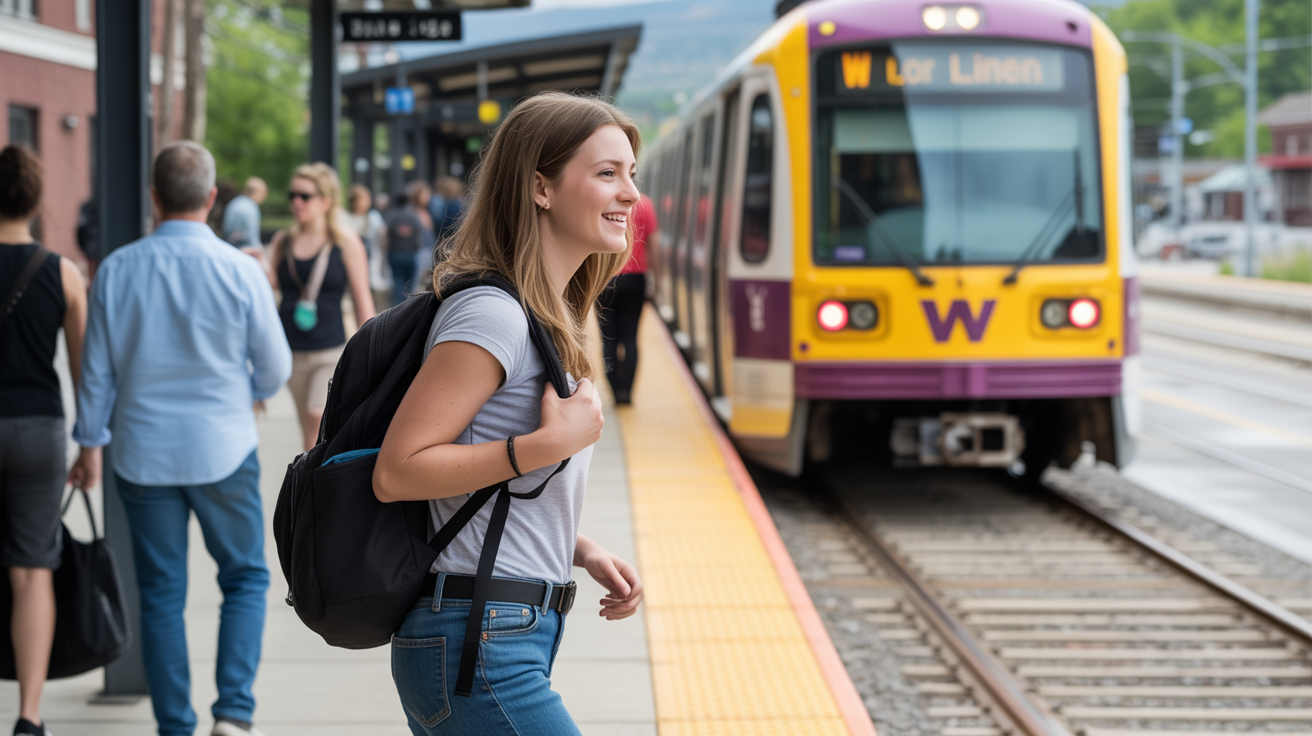
How People Get Around Golden
Understanding transportation options in Golden starts with recognizing the city’s dual character: a compact, walkable downtown core surrounded by car-oriented residential neighborhoods that stretch toward the foothills. Most newcomers expect either a fully transit-connected suburb or a purely car-dependent sprawl, but Golden operates as both depending on where you live and where you need to go.
The dominant mobility pattern here is driving. Most households rely on a personal vehicle for daily errands, work commutes, and weekend trips. But Golden’s layout creates pockets of exception—areas near downtown where sidewalks are dense, destinations cluster within walking distance, and bus service provides a viable supplement. The pedestrian-to-road ratio in these zones exceeds typical suburban thresholds, meaning the infrastructure supports foot traffic in ways that many surrounding communities don’t.
What catches people off guard is how quickly that walkability fades as you move away from the core. A mile or two out, the street grid opens up, sidewalks become intermittent, and the distance between home and grocery store or school stretches beyond comfortable walking range. This isn’t a failure of planning—it reflects Golden’s geography, with the downtown nestled against Clear Creek and the rest of the city spreading across varied terrain. But it does mean that your transportation reality depends heavily on your address.
Bike infrastructure plays a more prominent role here than in many comparable towns. The bike-to-road ratio is notably high, with dedicated lanes and multi-use paths woven through parts of the city. For residents who live near these routes and work or run errands along them, cycling becomes a practical option—at least during the warmer months. But Golden’s elevation, winter weather, and hilly topography mean that biking remains seasonal and selective for most households.
Public Transit Availability in Golden
Public transit in Golden centers on bus service. There is no rail system, no light rail extension, and no commuter train connecting Golden to Denver or other metro hubs. What exists is a network of bus routes that serve key corridors, primarily linking downtown Golden to regional destinations and providing limited coverage within the city itself.
Transit works best for people living near downtown or along the main corridors where bus stops are concentrated. If your home, workplace, and regular errands align with these routes, the system can reduce your need for a car—especially for predictable, single-destination trips. But coverage thins quickly in the residential neighborhoods that fan out from the core. Many streets see no service at all, and even where buses run, frequency and span of service limit their usefulness for households with complex schedules or multiple daily stops.
Late hours and weekends present additional constraints. Evening service tends to be sparse, and weekend schedules often run on reduced frequency, which makes transit less practical for shift workers, families coordinating activities, or anyone whose routine doesn’t align with a standard weekday commute pattern. This doesn’t mean the system is unusable—it means it works for a specific slice of Golden’s population, and falls short for many others.
The absence of rail is significant. Residents who commute to Denver or other metro employment centers can’t rely on a train to avoid highway congestion or parking costs. Instead, they face a choice: drive the full distance, carpool, or use a park-and-ride system that still requires a car for the first leg. For households weighing whether to go car-free or car-light, this gap in regional connectivity is often the deciding factor.
Driving & Car Dependence Reality
For most people in Golden, driving isn’t optional—it’s the baseline. Grocery stores, schools, medical offices, and workplaces are spread across a geography that doesn’t lend itself to walking or transit for the majority of residents. Even in neighborhoods with good sidewalks, the distances involved and the lack of transit coverage mean that a car becomes necessary for anything beyond hyper-local errands.
Parking pressure is generally low compared to denser metro areas. Most homes come with driveways or garages, and street parking is available in residential zones without the competition or permit systems common in urban cores. Downtown Golden sees tighter parking during peak hours and events, but it’s manageable with planning. This ease of parking reinforces car dependence—there’s little friction to discourage driving, and plenty of infrastructure to support it.
The tradeoff is time and exposure to congestion. Golden sits at the intersection of several regional routes, and commuters heading to Denver, Boulder, or mountain destinations pass through or near the city daily. Highway 6 and I-70 can bottleneck during rush hours and weekend recreation traffic, which means that even short commutes can stretch unpredictably. Residents who live on the edges of Golden may face longer drives to reach the core or access services, and those commuting out of town absorb both the time cost and the fuel exposure that comes with car dependency.
For families, driving becomes even more embedded in daily logistics. Shuttling kids to school, activities, and appointments requires flexibility that transit and biking can’t consistently provide. Multi-stop errands—picking up groceries, dropping off dry cleaning, swinging by the hardware store—are structured around the car. The layout of Golden rewards that pattern, but it also locks households into the costs and responsibilities that come with vehicle ownership.
Commuting Patterns & Daily Mobility
Commuting in Golden varies widely depending on where people work. Some residents are employed locally—at Coors, the Colorado School of Mines, small businesses downtown, or regional offices nearby. For them, commutes are short, often under 15 minutes, and sometimes walkable or bikeable depending on the season and route. But a significant share of Golden’s workforce commutes out of town, primarily to Denver, Boulder, or the western suburbs, which changes the transportation calculus entirely.
Outbound commuters face longer drives, highway dependency, and the unpredictability of metro traffic. The lack of rail transit means there’s no way to avoid the road, and carpooling or park-and-ride options require coordination that doesn’t fit every schedule. For households with two working adults, especially if their job sites are in different directions, the need for two vehicles becomes nearly unavoidable.
Daily mobility isn’t just about the commute to work. It’s also about how people structure errands, appointments, and social life. In Golden’s walkable core, some of this can happen on foot or by bike, especially if you live within a few blocks of downtown. But for most residents, even simple tasks—getting to the post office, picking up a prescription, meeting a friend for coffee—require a car. The city’s layout and the clustering of services along specific corridors mean that proximity matters enormously. A household living two miles from downtown faces a fundamentally different mobility reality than one living two blocks away.
Flexibility is another factor. People with predictable schedules and fixed destinations can sometimes make transit or biking work. But households juggling multiple jobs, childcare, eldercare, or irregular hours find that only driving offers the control and adaptability they need. Golden’s infrastructure accommodates that, but it also means that reducing car dependence requires not just willingness, but a specific alignment of where you live, where you work, and how your day is structured.
Who Transit Works For — and Who It Doesn’t
Public transit in Golden serves a narrow but real slice of the population. It works best for people who live near downtown or along the main bus corridors, work at destinations that are also transit-accessible, and have schedules that align with service hours. College students, downtown employees, and some retirees fit this profile, especially if they’re willing to plan trips around the bus schedule rather than expecting on-demand mobility.
Renters in the core neighborhoods—particularly those in smaller units or older buildings close to downtown—are more likely to benefit from transit than homeowners in the outer residential zones. The density and walkability of these areas mean that even when the bus isn’t an option, walking or biking can fill the gap. For households in this position, going car-free or car-light becomes feasible, though it still requires trade-offs in convenience and range.
Transit doesn’t work well for families with complex logistics. Parents coordinating school drop-offs, after-school activities, and grocery runs can’t rely on a system with limited frequency and coverage. The same applies to shift workers whose hours fall outside peak service times, and to anyone whose job or errands require stops in multiple locations across town. For these households, the bus might serve as an occasional backup, but it can’t replace the car as the primary mode of transportation.
Peripheral neighborhoods see the least benefit. Residents in the hillside subdivisions or the areas farther from downtown often have no bus service within walking distance, and even if they do, the routes may not connect to their daily destinations. For them, transit isn’t a question of preference or convenience—it’s simply not a viable option. The infrastructure isn’t there, and the distances involved make walking or biking impractical for most trips.
Transportation Tradeoffs in Golden
Choosing between transit and driving in Golden isn’t about comparing two equally viable options—it’s about understanding which mode fits your specific situation and what you’re willing to give up. Transit offers predictability in the sense that you’re not exposed to parking hassles or fuel price swings, but it sacrifices flexibility, speed, and coverage. Driving gives you control, convenience, and the ability to reach any destination on your own schedule, but it comes with the ongoing costs of ownership, maintenance, insurance, and fuel.
For households that can make transit work, the primary benefit is reducing vehicle dependency. That might mean going from two cars to one, or eliminating car ownership entirely if you live in the right part of town. But the tradeoff is real: you’re constrained by bus schedules, limited in where you can easily go, and dependent on walking or biking to bridge the gaps. In Golden’s climate, that means winter months become harder, and any trip outside the core requires more planning.
Biking occupies a middle ground. The infrastructure is better than in many comparable towns, and for people who live and work along the bike network, it can replace some car trips during the warmer months. But it’s not a year-round solution for most households, and it doesn’t solve the problem of reaching destinations that aren’t on the bike routes. It’s a supplement, not a substitute, for the majority of residents.
Driving remains the default because it’s the only mode that works everywhere, all the time, for every type of trip. The cost of that convenience is financial—vehicle payments, insurance, fuel, maintenance—and logistical, in the form of time spent in traffic and the need to manage parking. But for most households in Golden, especially those with kids, irregular schedules, or jobs outside the city, those costs are unavoidable. The infrastructure and geography of the city are built around the car, and opting out requires both proximity to the core and a lifestyle that fits within transit’s limitations.
FAQs About Transportation in Golden (2026)
Is public transit usable for daily commuting in Golden?
It depends on where you live and where you work. If you’re near downtown or along a bus corridor and your job is also transit-accessible, the system can support a daily commute. But for most residents—especially those in outer neighborhoods or commuting to dispersed job sites—transit doesn’t offer the coverage or frequency needed for reliable daily use. It’s a viable option for a specific subset of households, not a universal solution.
Do most people in Golden rely on a car?
Yes. The majority of households in Golden depend on a personal vehicle for daily transportation. The city’s layout, the distances between home and common destinations, and the limited reach of public transit make driving the default mode for most residents. Even in the walkable core, many people still own a car for trips outside the immediate area or for errands that require hauling groceries, kids, or gear.
Which areas of Golden are easiest to live in without a car?
The neighborhoods closest to downtown offer the best chance of reducing or eliminating car dependency. These areas have the highest concentration of sidewalks, bus stops, and nearby services. If you live within a few blocks of the core and your work or daily routine fits within that zone, you can rely more on walking, biking, and occasional transit. Outside that radius, car-free living becomes significantly harder.
How does commuting in Golden compare to nearby cities?
Golden’s commuting reality falls somewhere between a dense urban core and a fully car-dependent suburb. It’s more walkable than many surrounding towns, especially near downtown, but it lacks the rail transit and extensive bus networks found in larger metro areas. Compared to Denver, commuting here is more car-reliant. Compared to more rural or sprawling suburbs, Golden offers better pedestrian infrastructure and some transit access, but the gaps are still significant for most households.
Can you bike year-round in Golden?
Technically yes, but practically it’s limited. Golden has notable bike infrastructure, and during spring, summer, and fall, cycling is a viable option for people who live and work along the bike network. But winter weather—snow, ice, and cold temperatures—makes biking less practical and less safe for most riders. Some dedicated cyclists continue through the winter, but for the majority of households, biking is a seasonal transportation option rather than a year-round solution.
How Transportation Fits Into the Cost of Living in Golden
Transportation in Golden isn’t just about how you get from point A to point B—it’s a structural factor that shapes where you can afford to live, how much time you spend managing logistics, and how much control you have over daily expenses. The city’s layout rewards proximity to the core with walkability and transit access, but that proximity often comes with higher housing costs. Living farther out may reduce rent or mortgage payments, but it increases car dependency and the time and fuel costs that come with it.
For households trying to understand the real monthly spending in Golden: the real pressure points, transportation is one of the variables that shifts depending on where you land. A downtown renter with bus access and walkable errands faces a different cost structure than a suburban homeowner commuting to Denver five days a week. Neither is inherently better—they’re different tradeoffs, and the right choice depends on your income, household size, work location, and tolerance for commute time versus housing expense.
The absence of rail transit and the limited reach of bus service mean that most households can’t avoid the costs of vehicle ownership. That includes not just the purchase price or lease payment, but insurance, registration, maintenance, and fuel. Gas prices in Golden currently sit at $3.91 per gallon, which matters more the farther you drive and the less fuel-efficient your vehicle is. But the bigger cost is often the time—time spent in traffic, time coordinating logistics, time that could be spent elsewhere if the city’s transportation infrastructure offered more flexibility.
For families, transportation costs compound. Two working adults often mean two cars, especially if job sites are in different directions or schedules don’t align. Kids add another layer, with school drop-offs, activities, and appointments that require coordination and mobility. The walkable core offers some relief from this, but only if you can afford to live there and only if your work and daily routine fit within that geography.
The takeaway isn’t that Golden is uniquely expensive or uniquely difficult to navigate—it’s that transportation here is inseparable from housing, work, and lifestyle decisions. Understanding how people actually get around, what works and what doesn’t, and where the infrastructure supports alternatives to driving gives you a clearer picture of what living in Golden will actually cost and how much flexibility you’ll have in managing those costs.
How this article was built: In addition to public economic data, this article incorporates location-based experiential signals derived from anonymized geographic patterns—such as access density, walkability, and land-use mix—to reflect how day-to-day living actually feels in Golden, CO.
—