
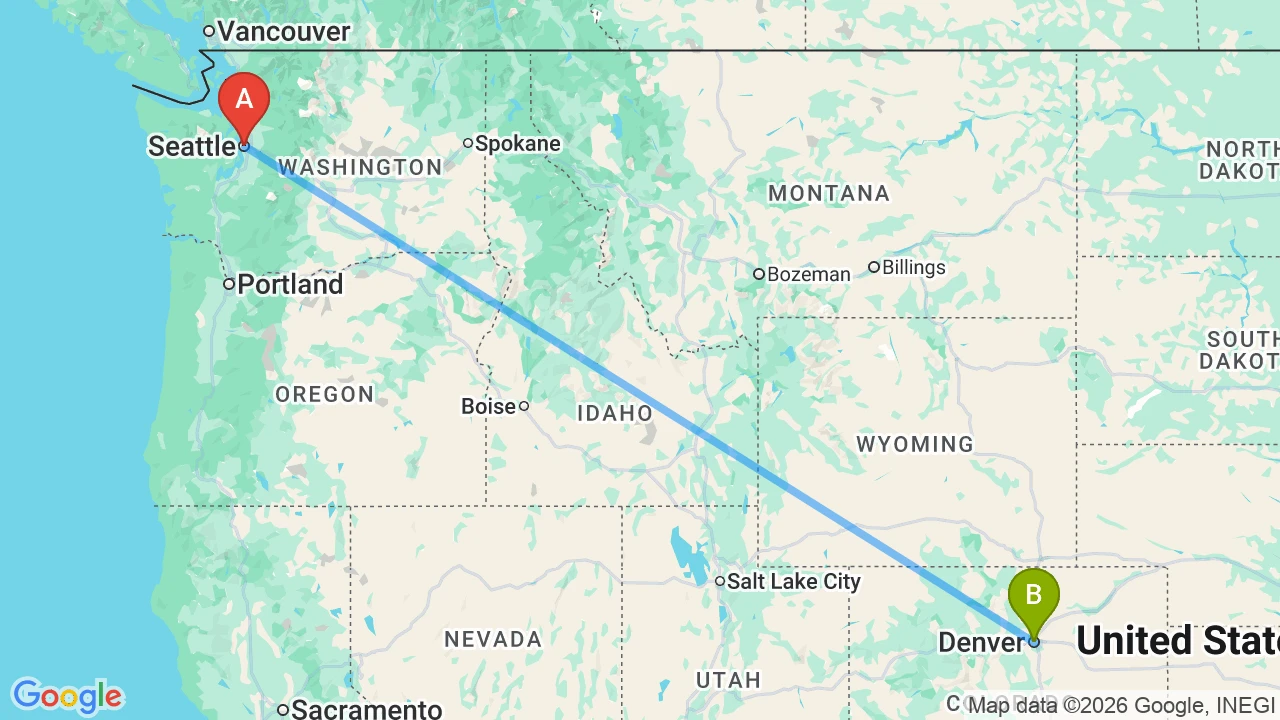
The move from Seattle to Denver represents one of the more common westward-to-mountain relocations in 2026, often driven by a mix of housing pressure relief, career opportunity, and lifestyle recalibration. Both cities share certain urban characteristics—rail transit, walkable neighborhoods, strong outdoor culture—but the way costs concentrate and daily rhythms unfold differs in ways that matter for household budgets and long-term planning.
This guide explains where cost pressure typically shifts when you leave the Puget Sound region for the Front Range, how housing markets behave differently, and which household types tend to feel the most relief—or the most friction—after the move. It does not declare Denver “cheaper” or “better,” but instead clarifies where expenses show up, how lifestyle patterns change, and what tradeoffs you’re likely to navigate.
Where Cost Pressure Concentrates Differently
Seattle’s median home value sits at $879,900, while Denver’s is $540,400—a substantial gap that reshapes entry barriers for buyers and influences how renters think about long-term housing strategy. Seattle’s median gross rent is $1,945 per month, compared to Denver’s $1,665 per month. The difference is meaningful, but it doesn’t translate into across-the-board savings; instead, it shifts where households feel the most pressure.
In Seattle, housing costs dominate household budgets so thoroughly that other expenses—utilities, groceries, transportation—often feel secondary. In Denver, housing still commands the largest share of income, but the gap narrows, and other cost categories become more visible. Denver’s electricity rate is 16.12¢/kWh, noticeably higher than Seattle’s 13.33¢/kWh, and while natural gas is cheaper in Denver ($10.41/MCF vs. $15.51/MCF), the city’s heating season is longer and more intense, which can push winter utility bills higher than many Seattle transplants expect.
Gasoline in Seattle averages $4.84/gal, while Denver sits at $3.75/gal—a difference that compounds for households that drive more frequently in Denver’s more car-dependent outer neighborhoods. Grocery costs also shift: Denver’s regional price parity index is 105, compared to Seattle’s 113, which means everyday purchases tend to feel slightly less expensive, though the difference is more noticeable over months than in individual shopping trips.
Income context matters here. Seattle’s median household income is $116,068 per year, while Denver’s is $85,853 per year. For households moving with Seattle-level compensation—remote workers, transferring employees, or those with portable income—Denver’s cost structure can feel more forgiving. For those taking Denver-market jobs, the income adjustment may offset much of the housing relief, especially in competitive neighborhoods close to downtown or transit corridors.
Housing Markets: Entry Barriers vs. Ongoing Obligations
Seattle’s housing market is characterized by high entry costs and fierce competition, particularly for single-family homes in walkable neighborhoods or those with strong school access. Denver’s market is still competitive, but the lower median home value creates more entry points for first-time buyers and households priced out of Seattle’s ownership market entirely.
Renters moving from Seattle to Denver often find more unit availability and slightly more negotiating leverage, particularly outside the immediate downtown core. Denver’s rental market has seen significant supply growth in recent years, which has tempered rent escalation compared to Seattle’s tighter inventory. However, Denver’s rental market is still sensitive to seasonal demand—spring and summer see higher competition and faster lease-up times—and neighborhoods near light rail stations or the downtown corridor retain pricing power.
For buyers, the shift is more dramatic. A household that might afford only a condo or townhome in Seattle’s outer neighborhoods could access a single-family home with a yard in many Denver suburbs at a comparable monthly payment. However, Denver’s property tax structure and HOA prevalence in newer developments mean that ongoing obligations don’t always shrink proportionally to the purchase price. Buyers should model total monthly housing costs—mortgage, taxes, insurance, HOA—rather than focusing solely on list price.
Both cities feature mixed-use neighborhoods where residential and commercial land uses coexist, but Denver’s urban form tends toward a mixed height profile, with pockets of density rather than the more consistently vertical character found in Seattle’s core neighborhoods. This affects how walkable daily errands feel and how much households rely on cars for routine tasks, even in nominally urban areas.
Lifestyle Patterns and Daily Rhythms
Seattle and Denver both support rail transit, notable cycling infrastructure, and walkable pockets with high pedestrian-to-road ratios. Both cities also feature integrated green space access, with park density exceeding high thresholds and water features woven into the urban fabric. For households prioritizing transit access, outdoor recreation, and walkable errands, the structural similarities mean the day-to-day rhythm doesn’t require a complete reset.
However, the texture of mobility shifts in subtle but meaningful ways. Denver’s transit system covers a broad geographic area, but service frequency and span vary significantly by corridor. Households accustomed to Seattle’s denser bus network and more consistent off-peak service may find Denver’s system less forgiving for spontaneous trips or late-night travel. Cycling infrastructure is present and notable in both cities, but Denver’s flatter terrain and drier climate make year-round bike commuting more predictable, while Seattle’s hills and persistent drizzle create seasonal friction.
Car dependence increases for most movers, even those settling in Denver’s walkable neighborhoods. While grocery density and food establishment access remain high in both cities, Denver’s layout often requires longer drives for specialty shopping, certain medical appointments, or social activities outside your immediate neighborhood. Seattle’s compact geography and water boundaries create natural density; Denver’s sprawl and grid structure spread destinations farther apart, even when transit is technically available.
Climate exposure changes significantly. Seattle’s mild, damp winters give way to Denver’s cold, dry conditions with more pronounced temperature swings. Denver’s average commute time is 25 minutes, slightly shorter than Seattle’s 27 minutes, but the experience of commuting differs: Denver’s roadways are wider and faster, but winter weather—snow, ice, sudden temperature drops—introduces variability that Seattle commuters rarely navigate. Summer heat in Denver is more intense, with occasional stretches of temperatures well into the 90s, which affects air conditioning costs and outdoor activity timing in ways Seattle’s cooler summers do not.
Relocation Logistics and Practical Friction
The physical move from Seattle to Denver covers roughly 1,300 miles, typically requiring professional movers or a multi-day drive. Timing matters: summer moves align with Denver’s peak rental season and better driving conditions, but also higher competition for housing and moving services. Winter moves can offer more housing inventory and lower moving costs, but weather along I-90 and I-25 can introduce delays and stress.
Households with school-age children should note that both cities feature strong family infrastructure, with school and playground density meeting medium thresholds. However, Denver’s school choice landscape is more fragmented, with a mix of traditional neighborhood schools, charter options, and magnet programs that require more research and earlier enrollment planning than Seattle’s more neighborhood-centric assignment system.
Healthcare access remains robust in both cities, with hospital facilities and pharmacies present. Denver’s healthcare market is competitive, but some transplants report longer wait times for specialist appointments and more fragmented insurance networks compared to Seattle’s more consolidated provider landscape.
Utility setup in Denver often involves more providers than Seattle, where many buildings bundle services. Denver households typically manage separate accounts for electricity, gas, water, trash, and sometimes stormwater fees, which adds administrative friction during the first few months. Some neighborhoods also have active HOAs that manage certain utilities or amenities, which can simplify billing but also introduce rules and fees that renters and new buyers don’t always anticipate.
Who This Move Tends to Favor
This relocation works best for households seeking housing cost relief without sacrificing urban infrastructure entirely. Remote workers with Seattle-level income, early-career professionals priced out of Seattle’s ownership market, and families wanting more indoor space or a yard while retaining transit access tend to feel the most benefit. Denver’s lower entry costs and slightly lower ongoing housing expenses create breathing room for savings, travel, or discretionary spending that felt impossible in Seattle.
Outdoor enthusiasts who prioritize year-round access to hiking, skiing, and mountain recreation often find Denver’s proximity to the Rockies more convenient than Seattle’s access to the Cascades, despite both cities offering strong green space within city limits. The drier climate and more predictable sunshine also appeal to households frustrated by Seattle’s gray winters, though the tradeoff is harsher cold and more volatile weather patterns.
Households that struggle most with this move are those who underestimate how much they relied on Seattle’s walkability, transit frequency, or proximity to water. Denver’s layout requires more intentional planning for errands, social life, and recreation, even in walkable neighborhoods. Families accustomed to Seattle’s neighborhood school culture may find Denver’s school choice system more complex and time-consuming to navigate. And households sensitive to income changes—those taking Denver-market salaries after earning Seattle wages—may find that the cost relief is smaller than expected once utilities, transportation, and other non-housing expenses are factored in.
Frequently Asked Questions
- Does Denver feel more or less expensive than Seattle?
- Denver’s housing costs are lower, which creates meaningful relief for renters and buyers, but other expenses—utilities, transportation, and certain services—don’t always shrink proportionally. The overall cost pressure shifts rather than disappears, concentrating less on housing and more on how you move, heat, and cool your home. Households with Seattle-level income tend to feel the most relief; those taking Denver-market jobs may find the gap narrower than expected.
- How do the housing markets differ between Seattle and Denver?
- Seattle’s market is defined by high entry barriers and intense competition, especially for single-family homes in walkable neighborhoods. Denver offers more entry points for buyers and slightly more rental availability, but ongoing costs—property taxes, HOA fees, insurance—don’t always decline in proportion to purchase price. Denver’s market is also more seasonal, with spring and summer seeing the most competition and fastest lease-up times.
- What feels different about daily life after moving from Seattle to Denver?
- Most movers notice increased car dependence, even in walkable neighborhoods, due to Denver’s broader geographic spread and less frequent off-peak transit. The climate shift is also significant: drier air, harsher winters, hotter summers, and more sunshine year-round. Errand patterns require more planning, and the rhythm of outdoor recreation shifts from water-adjacent activities to mountain-focused pursuits.
- When does this move tend to feel easiest or hardest?
- Summer moves align with better weather and easier driving conditions, but also peak housing competition and higher moving costs. Winter moves can offer more inventory and lower relocation expenses, but weather along the route and Denver’s winter conditions add complexity. Families with school-age children typically find summer moves less disruptive, though Denver’s school enrollment timelines require earlier research than Seattle’s system.
- What challenges do people encounter after relocating from Seattle to Denver?
- Common friction points include adjusting to increased car dependence, navigating Denver’s more fragmented school choice landscape, and managing higher winter utility bills than expected. Some transplants also underestimate how much they valued Seattle’s water access, consistent transit service, or proximity to the coast. The income adjustment for those taking Denver-market jobs can also feel sharper than anticipated.
- Who tends to benefit most from moving from Seattle to Denver?
- Remote workers with Seattle-level income, first-time homebuyers priced out of Seattle’s market, and families seeking more space without leaving urban infrastructure entirely tend to feel the strongest benefit. Outdoor enthusiasts who prioritize mountain access and year-round sunshine also find Denver’s geography and climate more aligned with their lifestyle. Households that struggle most are those who underestimate the importance of Seattle’s walkability, transit frequency, or proximity to water in their daily routines.
Making the Decision
The move from Seattle to Denver is not a simple cost arbitrage. It’s a shift in where expenses concentrate, how daily logistics unfold, and what tradeoffs you navigate between housing relief and other forms of friction. Denver offers lower entry barriers, more sunshine, and closer proximity to mountain recreation, but it also demands more car dependence, introduces harsher winter conditions, and requires more intentional planning for errands and transit use.
For households with portable income or those priced out of Seattle’s ownership market, the shift can create meaningful financial breathing room and lifestyle flexibility. For those taking Denver-market jobs or underestimating the importance of Seattle’s walkability and transit density, the adjustment may feel more complex and the cost relief less dramatic.
Explore the full Seattle cost guide and Denver cost guide for deeper breakdowns of housing, utilities, and daily expenses. Compare other Seattle-area cities and Denver-area suburbs to see how cost patterns shift across neighborhoods and commute zones.
How this article was built: In addition to public economic data, this article incorporates location-based experiential signals derived from anonymized geographic patterns—such as access density, walkability, and land-use mix—to reflect how day-to-day living actually feels in Denver, CO.