
Choosing between renting and buying in Golden means understanding how a small city wedged against the foothills operates differently than the sprawling Denver metro it borders. The decision isn’t just about monthly payments—it’s about exposure to property appreciation, tax volatility, and the structural limits of a compact housing market where inventory moves quickly and options narrow fast.
Golden’s median home value sits at $698,700, while median gross rent runs $1,712 per month. With median household income at $90,990 per year, the gap between rent affordability and ownership qualification is real, but so is the long-term cost predictability gap. This article breaks down what drives housing costs here, how renting and owning behave over time, and which households face the steepest tradeoffs.
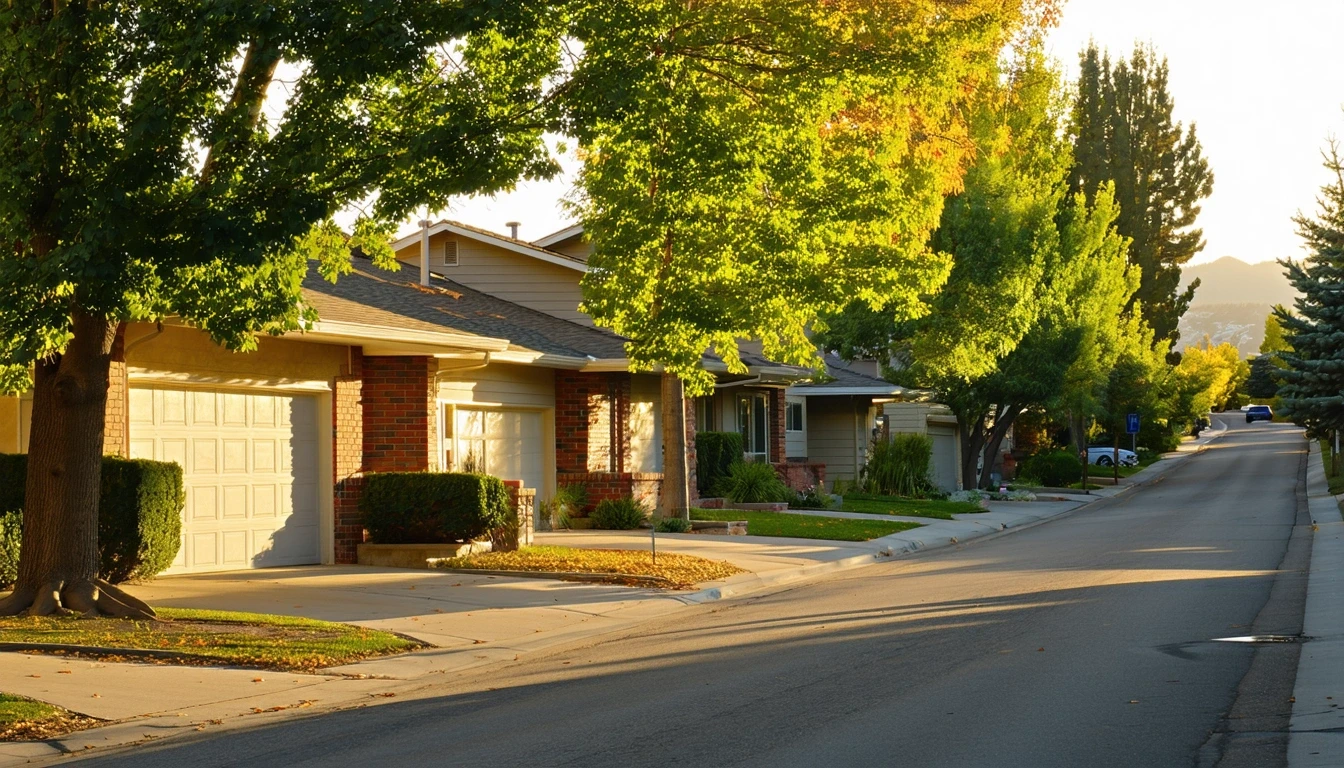
The Housing Market in Golden Today
Golden operates as a hybrid: part historic mountain town, part Denver commuter anchor, part college community. That mix creates housing demand from retirees, young professionals, Colorado School of Mines affiliates, and outdoor-focused households who want trail access without full rural isolation. The result is a seller’s market with limited turnover and home values that reflect both location premium and supply constraint.
The city’s footprint is small—hemmed in by mesas, parks, and federal land—so new construction is sparse and infill development faces geographic and regulatory limits. Homes that do come to market attract multiple offers, and buyers often compete on speed and certainty rather than price negotiation. For newcomers used to larger metro flexibility, Golden’s housing market feels tighter and less forgiving.
The regional price parity index of 105 confirms that costs here run moderately above the national baseline, but that figure understates the housing-specific pressure. Home values in Golden aren’t just elevated—they’re selective. The stock skews toward single-family homes and older construction, with fewer entry-level condos or new townhome developments than comparable Front Range cities.
Renting in Golden
At $1,712 per month for median gross rent, Golden’s rental market sits in a middle band: not as punishing as Boulder, but notably higher than Lakewood or Arvada. Renters here face two structural realities. First, rental inventory is limited. Golden has fewer large apartment complexes than neighboring suburbs, and much of the rental stock consists of smaller buildings, converted homes, or accessory units. Second, turnover is low. Renters who find a well-located unit near downtown, the School of Mines, or monthly expenses tend to stay, which tightens availability further.
Location within Golden matters significantly for renters. Units near Washington Avenue or the walkable downtown core command premiums for access to restaurants, breweries, and the Clear Creek Trail. Rentals on the eastern edge near the metro border trade some charm for highway access and slightly lower rates. Renters prioritizing outdoor access often look toward the western neighborhoods closer to trailheads, but those areas offer fewer rental options overall.
Rental increases in Golden track with Front Range metro trends but are moderated somewhat by the city’s smaller scale and older housing stock. Landlords face the same property tax and maintenance exposure as owners, and those costs eventually pass through to tenants, but the slower pace of new luxury development means rent growth isn’t driven by high-end repositioning the way it is in Denver or Boulder.
Owning a Home in Golden
Ownership in Golden begins with the $698,700 median home value, but the cost structure extends well beyond the purchase price. Property taxes, while not provided in the feed, behave like most Jefferson County jurisdictions: they’re tied to assessed value and subject to periodic reassessment. In a market where home values have appreciated significantly over the past decade, tax bills follow that trajectory, and owners should expect continued upward pressure as long as the housing market remains tight.
Maintenance exposure in Golden is shaped by the city’s climate and housing age. Homes here endure intense sun, dry air, and occasional heavy snow. Roofs, exterior paint, and deck finishes degrade faster than in more temperate climates. Older homes—common in Golden’s historic core—often require foundation work, updated electrical systems, or replumbing. Buyers attracted to character homes should budget for deferred maintenance that sellers may not have addressed.
Homeowners associations exist in some Golden neighborhoods, particularly newer developments on the eastern edge, but the city’s older core consists largely of standalone single-family homes without HOA governance. Where HOAs do exist, fees typically cover landscaping, snow removal, and shared amenities, but they add a fixed monthly cost that doesn’t fluctuate with usage.
Golden’s housing stock also includes a meaningful share of properties near flood zones along Clear Creek. Owners in these areas face higher insurance costs and, in some cases, mandatory flood coverage. That’s not universal across the city, but it’s a localized cost factor that doesn’t show up in listing prices and can surprise first-time buyers unfamiliar with the area’s hydrology.
Apartment vs House in Golden — Cost Behavior Comparison
| Expense Category | Apartment | House |
|---|---|---|
| Heating exposure | Lower per-unit exposure due to shared walls and smaller square footage | Higher exposure in winter; older homes with single-pane windows and minimal insulation face noticeable natural gas costs |
| Exterior maintenance | Managed by landlord or HOA; tenant has no direct cost or control | Owner responsibility; sun and dry air accelerate paint, roof, and deck degradation |
| Flood insurance | Not typically required; building-level coverage handled by owner | Mandatory in some Clear Creek-adjacent areas; adds recurring cost not reflected in tax or HOA bills |
| Walkability trade | More likely to be located near downtown core or transit corridors with higher pedestrian infrastructure density | More dispersed across residential zones; car dependency increases outside walkable pockets |
Why these categories: Golden’s climate, older housing stock, and proximity to Clear Creek create maintenance and insurance differences that vary by structure type. The city’s walkable core and limited apartment inventory also mean that renters and owners experience different levels of car dependency and access to daily errands. Categories like utilities or trash service were excluded because they don’t differ meaningfully by housing type in Golden’s context.
Utilities & Upkeep Differences
Electricity in Golden costs 16.44¢ per kWh, and natural gas runs $10.41 per MCF. Those rates sit near the middle of Colorado’s range, but usage intensity varies significantly by housing type and age. Apartments, especially those in newer or renovated buildings, benefit from shared-wall insulation and smaller conditioned space. A typical two-bedroom apartment might see moderate summer cooling costs and low winter heating bills.
Single-family homes, particularly older ones built before modern insulation standards, face higher seasonal swings. Golden’s location at the base of the foothills means winter temperatures drop reliably, and homes without updated windows or attic insulation can see noticeable natural gas usage during extended cold stretches. Summer cooling costs are less extreme than in lower-elevation metro areas, but homes with west-facing exposure and minimal shade still run air conditioning through July and August.
Water and sewer costs in Golden are usage-based, and homes with established landscaping or larger lots face higher bills during the dry summer months. Apartment dwellers typically see water included in rent or billed as a flat monthly fee, which smooths volatility but removes the incentive to reduce usage.
Upkeep differences extend beyond utilities. Homeowners in Golden manage their own snow removal, gutter cleaning, and exterior painting—all of which occur more frequently here than in milder climates. Renters offload that labor and cost to landlords, though they pay indirectly through rent that reflects the landlord’s maintenance burden.
Rent vs Buy: Long-Term Exposure in Golden
The structural difference between renting and owning in Golden isn’t about which costs less in year one—it’s about which risks you’re willing to carry over time. Renters face lease renewal volatility and no equity accumulation, but they avoid property tax reassessments, major repair costs, and the transaction friction of selling in a small market. Owners gain price appreciation exposure and fixed mortgage payments, but they absorb all maintenance risk, tax increases, and the opportunity cost of capital tied up in a $698,700 asset.
Golden’s housing market has shown consistent appreciation over the past decade, driven by limited supply, Denver metro spillover demand, and the city’s recreational appeal. Owners who bought five or ten years ago have seen substantial equity growth, but that past performance doesn’t guarantee future returns. A market correction, a shift in remote work patterns, or changes in local employment could alter that trajectory.
Renters in Golden maintain flexibility. If job circumstances change, if the city’s cost structure becomes unsustainable, or if household needs shift, renters can exit without selling a home in a market where buyer demand can fluctuate seasonally. Owners, by contrast, face transaction costs, timing risk, and the reality that Golden’s small inventory cuts both ways: homes sell quickly in strong markets, but liquidity can dry up fast if conditions soften.
Golden’s housing experience is also shaped by the city’s infrastructure and land use. The presence of both residential and commercial land use in the core, combined with walkable pockets and integrated green space, means that some neighborhoods offer a low-car lifestyle while others require vehicle dependency for daily errands. Homebuyers who prioritize proximity to the Clear Creek Trail, downtown restaurants, or bus service will pay a location premium, but they’ll also reduce transportation costs and time spent commuting. Renters have more flexibility to test different neighborhoods before committing to a purchase, which matters in a city where a few blocks can shift the daily cost experience significantly.
For households deciding between renting and buying, the question isn’t just affordability—it’s control. Owners control their housing stability and benefit from appreciation, but they’re locked into Golden’s tax base, maintenance climate, and resale market. Renters trade equity for liquidity and lower short-term exposure, but they remain subject to lease terms and rent growth they can’t predict or cap.
FAQs About Housing Costs in Golden
Is Golden, CO more expensive to rent or buy compared to nearby cities?
Golden’s median home value of $698,700 sits above many neighboring Jefferson County suburbs but below Boulder. Rent at $1,712 per month is moderate for the Front Range metro but reflects limited apartment inventory. Buyers and renters both face tighter markets here than in larger suburbs with more new construction.
What drives property taxes in Golden, CO?
Property taxes in Golden are tied to assessed home values, which have risen alongside the city’s housing market. Reassessments occur periodically, and owners in appreciating neighborhoods see tax bills increase even if their usage of city services hasn’t changed. The exact rate isn’t provided in available data, but the trajectory follows Jefferson County’s broader patterns.
Do most homes in Golden have HOA fees?
HOA prevalence in Golden varies by neighborhood. Older areas near downtown typically consist of single-family homes without HOA governance, while newer developments on the city’s eastern edge more commonly include HOA structures that cover landscaping, snow removal, and shared amenities. Fees add a fixed monthly cost where they apply.
How does Golden’s housing stock affect maintenance costs?
Golden’s housing stock skews older, particularly in the historic core, and the city’s high-altitude climate accelerates exterior wear. Roofs, paint, and wood finishes degrade faster due to intense sun and dry air. Buyers should budget for deferred maintenance and ongoing upkeep that exceeds what newer construction in milder climates would require.
Does renting in Golden make sense long-term?
Renting in Golden makes sense for households prioritizing flexibility, avoiding maintenance risk, or uncertain about long-term plans in Colorado. It also works for those who can’t access the $698,700 median home price or who want to test neighborhoods before committing. Renters miss equity growth but avoid the transaction costs and tax exposure that come with ownership.
Making Housing Choices in Golden
Housing costs in Golden reflect the city’s constrained geography, metro-adjacent location, and appeal to households seeking both outdoor access and walkable urban amenities. Renters face limited inventory and moderate rent levels but maintain flexibility and avoid ownership risk. Buyers gain equity exposure and housing stability but absorb property taxes, maintenance costs, and the long-term bet that Golden’s market will continue to appreciate.
The choice between renting and buying here isn’t universal. Households with stable income, long-term plans, and tolerance for maintenance exposure will find ownership rewarding, especially if they value Golden’s trail access, small-city character, and proximity to Denver. Renters who prioritize liquidity, lower short-term costs, or the ability to relocate without selling will find the rental market functional, if competitive.
For a fuller picture of where money goes beyond housing, or to understand how transportation and utilities interact with housing location decisions, exploring Golden’s broader cost structure helps clarify which tradeoffs matter most for your household. Housing is the largest cost category, but it’s not the only one that shifts based on where and how you live in this city.
How this article was built: In addition to public economic data, this article incorporates location-based experiential signals derived from anonymized geographic patterns—such as access density, walkability, and land-use mix—to reflect how day-to-day living actually feels in Golden, CO.