
Is Falls Church the kind of place you grow roots—or just pass through? This small, independent city tucked into Northern Virginia carries an unusual mix: the walkability and civic pride of a tight-knit town, the convenience and polish of an affluent suburb, and the gravitational pull of Washington, DC, just minutes away. For some, that combination feels like the best of all worlds. For others, it’s a compromise that never quite resolves.
Falls Church attracts people who want proximity without chaos, greenery without isolation, and neighborhood texture without sacrificing access to good schools and Metro rail. But it also tends to surface tension around cost, homogeneity, and the limits of small-city life. Understanding whether Falls Church feels like home depends less on what it offers and more on what you’re willing to trade.
The Emotional Landscape of Falls Church
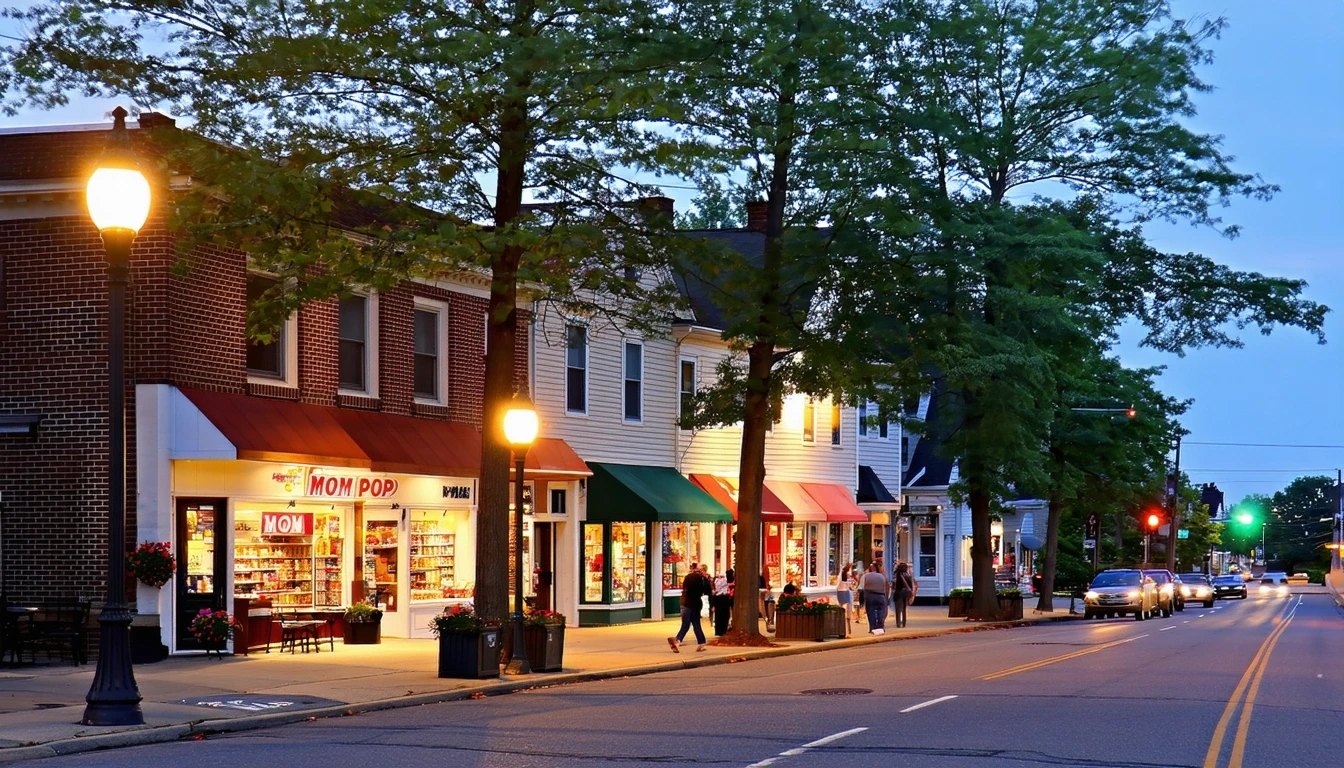
Falls Church operates on a different scale than most of Northern Virginia. As an independent city of just over two square miles, it carries a civic identity that residents notice and protect. There’s a palpable sense of place here—tree-lined streets, local shops you can walk to, parks woven into daily routines, and a government structure that feels accessible rather than distant.
For families, the appeal is clear: highly rated schools, abundant playgrounds, and a density of kid-friendly infrastructure that makes logistics easier. The city’s walkable pockets and strong errands accessibility mean you can run to the grocery store, grab coffee, or meet a friend without always defaulting to the car. Rail transit access adds flexibility for DC commuters, and the bike infrastructure supports those who want an alternative to driving.
But that convenience comes at a cost—literally. With a median home value of $938,500 and median rent at $2,074 per month, housing tradeoffs dominate the decision calculus for most newcomers. The city’s small size limits inventory, and competition is fierce. The result is a community that skews affluent, which some residents celebrate as stability and others critique as exclusivity.
The emotional tone here isn’t loud. Falls Church doesn’t have the buzz of Arlington or the sprawl of Fairfax. It’s quieter, more contained, and for many, that’s the point. But for those who crave variety, nightlife, or a broader socioeconomic mix, the city can feel limiting. The question isn’t whether Falls Church is “good”—it’s whether its particular texture matches what you need from a place.
Social Media Buzz in Falls Church
Online, Falls Church residents tend to express a protective pride mixed with pragmatic frustration. Conversations often revolve around preserving the city’s character while navigating growth, debating development proposals, and celebrating hyperlocal wins like new bike lanes or farmers market expansions.
Common themes include:
- Civic engagement: Residents frequently discuss city council decisions, zoning changes, and neighborhood planning with a level of detail that reflects genuine investment.
- Commute convenience: Metro access and proximity to DC are recurring points of gratitude, especially among professionals who value short travel times.
- Cost anxiety: Housing affordability surfaces often, with longtime residents expressing concern about pricing out diversity and younger families.
- Walkability appreciation: Many celebrate the ability to handle errands on foot or bike, contrasting Falls Church favorably with more car-dependent suburbs.
Composite sentiment from local discussion might sound like:
“It’s the kind of place where you actually know your neighbors, but you pay a premium for that.”
“I love that I can walk to dinner and the Metro, but sometimes it feels like everyone here has the same background.”
“Falls Church has everything I need day-to-day, but if I want real nightlife or culture, I’m heading into DC.”
The tone is rarely extreme. Complaints tend to be measured, and praise is specific rather than sweeping. It’s a community that knows what it has and what it lacks.
Local News Tone
Coverage of Falls Church tends to frame the city through the lens of identity preservation and incremental change. Stories often focus on how growth should happen, what development should look like, and how to maintain small-city character amid regional pressure.
Recurring headline-style themes include:
- “Community Debates What Growth Should Look Like”
- “New Amenities Arrive as Town Identity Evolves”
- “Residents Weigh Convenience vs Quiet”
- “Schools and Parks Remain Top Priority in Budget Talks”
- “Walkability Improvements Draw Mixed Reactions”
The framing is rarely alarmist. Instead, it reflects a community engaged in ongoing negotiation: how to stay accessible, how to grow without losing texture, and how to balance the needs of longtime residents with the expectations of newcomers. The tone suggests a place that takes itself seriously but isn’t paralyzed by conflict.
Review-Based Public Perception
On platforms like Google, Yelp, and neighborhood forums, Falls Church earns praise for what it delivers reliably: safety, schools, walkable errands, and green space. Families and professionals who wanted exactly that tend to express satisfaction. The frustration comes from those who expected more variety, more affordability, or more urban energy.
Common praise:
- “Everything you need is within a few blocks—grocery stores, parks, coffee shops, and the Metro.”
- “The schools are excellent, and the playgrounds are everywhere. It’s built for families.”
- “It feels safe and neighborly without being boring. You can walk at night and actually see people out.”
Common critiques:
- “It’s expensive for what you get. You’re paying for location and schools, not space.”
- “There’s not much to do after 9 p.m. If you want nightlife, you’re leaving town.”
- “It’s a little too homogeneous. Everyone seems to have similar jobs and incomes.”
- “Parking can be tight in the walkable areas, and traffic near the Metro gets congested.”
The pattern is clear: Falls Church meets expectations for those seeking suburban convenience with urban texture. It disappoints those hoping for affordability, diversity, or a broader cultural scene. The city doesn’t try to be all things—it leans into what it does well and accepts the tradeoffs.
Comparison to Nearby Cities
| Dimension | Falls Church, VA | Arlington, VA | Fairfax, VA |
|---|---|---|---|
| Overall Vibe | Small-city walkability with suburban polish | Urban density with transit-oriented energy | Sprawling suburban comfort with car dependency |
| Walkability | Strong in core areas, pockets of pedestrian texture | Highly walkable across most neighborhoods | Limited; most errands require driving |
| Transit Access | Metro rail present, supports DC commutes | Extensive Metro coverage, multiple lines | Some Metro access, but car-oriented overall |
| Nightlife & Dining | Limited; quiet evenings, local spots only | Vibrant restaurant and bar scene | Chain-heavy, scattered options |
| Family Infrastructure | Excellent schools, abundant parks and playgrounds | Good schools, but more urban feel | Strong schools, larger yards, more space |
| Cost of Entry | Very high; limited inventory | Very high; competitive market | High, but more options at lower price points |
Falls Church sits between Arlington’s urban intensity and Fairfax’s suburban sprawl. If you want walkability and Metro access but prefer a quieter, more contained setting than Arlington, Falls Church delivers. If you need more space, a yard, and don’t mind driving, Fairfax offers better value. If you want the most dining and nightlife options and can handle density, Arlington edges ahead.
The choice depends on what you’re optimizing for: Falls Church rewards those who value convenience, schools, and civic texture over space and variety.
What Locals Are Saying
“We moved here for the schools and stayed for the walkability. I can take my kids to the park, grab groceries, and meet friends without getting in the car every time. It’s not cheap, but the day-to-day ease is worth it.”
— Parent of two, moved from Fairfax
“Falls Church has everything I need for work and errands, but I still go into DC for culture and nightlife. It’s a great base, just not a full-service city.”
— Remote worker, early 30s
“I love the civic engagement here. People actually show up to city council meetings and care about what happens. It feels like a real community, not just a bedroom suburb.”
— Longtime resident, retired
“The cost is the hardest part. We’re renters, and every lease renewal feels like a gamble. I’m not sure how long we can stay unless our income changes.”
— Young professional couple
“It’s a little too quiet for me. I thought I wanted suburban peace, but I miss the energy and variety of the city. Falls Church is great if you’re settled, less so if you’re still exploring.”
— Single, late 20s, considering a move
“The Metro access is a game-changer. My commute to DC is under 30 minutes, and I don’t have to deal with parking or traffic. That alone makes the housing cost easier to justify.”
— Federal employee, mid-40s
“I appreciate the green space and the parks. Even though it’s small, it doesn’t feel cramped. You can find quiet spots and still be close to everything.”
— Empty nester, downsized from larger home
Does Falls Church Feel Like a Good Fit?
Falls Church tends to work for people who know exactly what they want: proximity to DC, walkable errands, strong schools, and a civic identity that feels tangible. It rewards those who value convenience over space, quality over variety, and stability over experimentation. The city’s small size and high cost create a self-selecting community—affluent, professional, and family-oriented.
It tends to frustrate those who need affordability, crave nightlife, or want a broader socioeconomic mix. The limits of small-city life become apparent quickly: fewer dining options, less cultural variety, and a housing market that leaves little room for flexibility.
The question isn’t whether Falls Church is happy—it’s whether its particular tradeoffs align with your priorities. If you’re willing to pay for walkability, schools, and Metro access in a quieter setting, the city delivers. If you need more space, more variety, or more breathing room in your budget, the friction will surface fast.
Falls Church doesn’t try to be everything. It leans into what it does well and accepts what it lacks. Whether that feels like home depends entirely on what you’re looking for—and what you’re willing to give up to get it.
For more on what it takes to feel comfortable here, explore how income, housing, and daily logistics shape the experience of living in this small, independent city.
How this article was built: In addition to public economic data, this article incorporates location-based experiential signals derived from anonymized geographic patterns—such as access density, walkability, and land-use mix—to reflect how day-to-day living actually feels in Falls Church, VA.
The perspectives shown reflect commonly expressed local sentiment and recurring themes in public discussion, rather than individual accounts.