
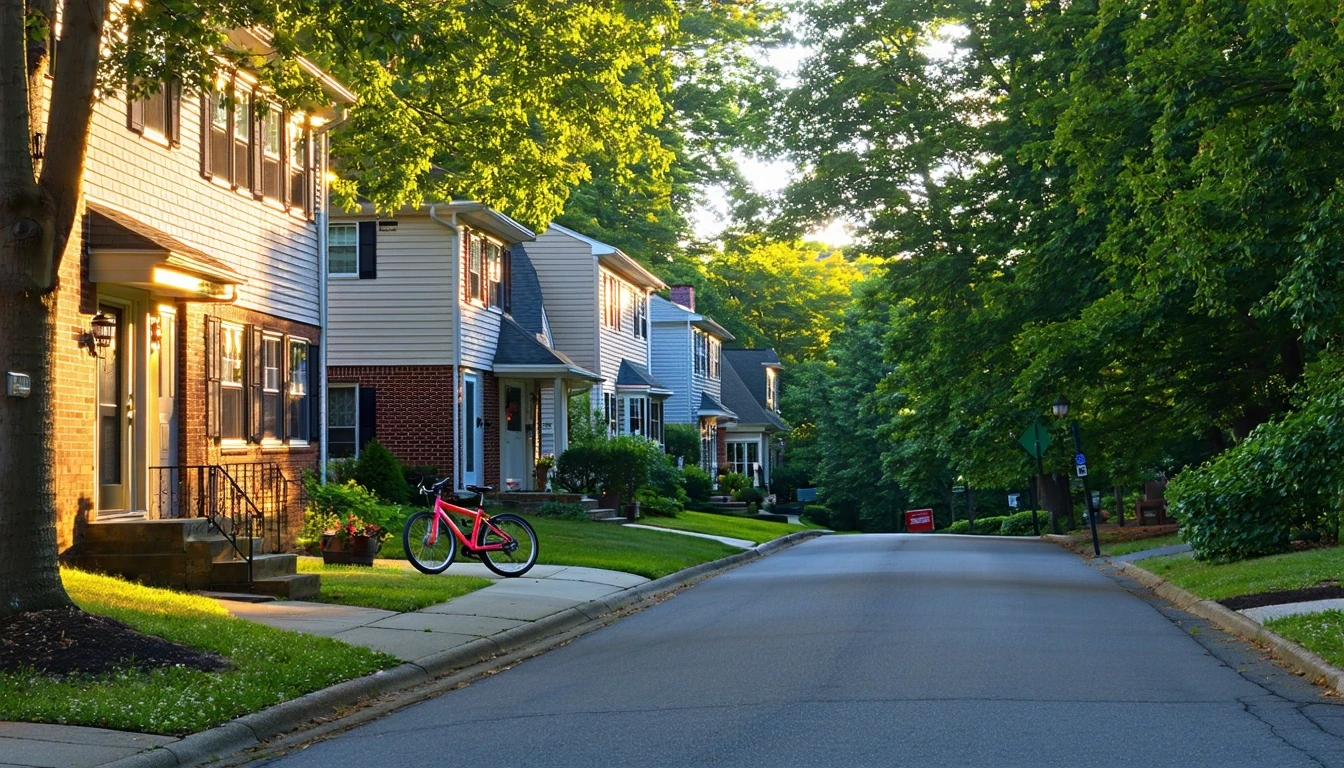
Imagine two households earning the same income, one renting in Falls Church for $2,074 per month, the other searching McLean’s market without published median benchmarks. The first stops at a grocery store on the way home from the Metro station; the second drives past sprawling lots, filling up at $2.88 per gallon instead of $3.84. Same metro area, same paycheck—but the cost pressure lands differently depending on where housing, heating, and daily errands show up in the budget.
Falls Church and McLean sit just miles apart in the Washington, DC metro, both affluent, both well-connected, both shaped by federal employment and educated households. Yet the mechanics of cost differ in ways that matter for renters navigating tight inventory, families weighing school access against space, and commuters deciding whether walkability or car dependence defines daily life. In 2026, choosing between them isn’t about finding the cheaper option—it’s about understanding which cost pressures dominate your household and which city’s structure aligns with how you actually live.
This comparison explains where costs concentrate, how predictability and volatility differ, and which households feel the tradeoffs most acutely. No universal winner exists; the better fit depends on what you’re most exposed to and what flexibility you need to preserve.
Housing Costs
Falls Church reports a median home value of $938,500 and median gross rent of $2,074 per month, reflecting the city’s compact footprint, strong school reputation, and proximity to Metro rail. These figures represent entry barriers and ongoing obligations in a market where single-family homes command premium pricing and rental inventory skews toward smaller units in walkable pockets. For renters, $2,074 per month establishes a baseline expectation before utilities, parking, or renter’s insurance; for buyers, $938,500 signals the capital required to access Falls Church’s infrastructure and amenity density.
McLean lacks published median housing values in the current dataset, but its position as an established, low-density suburb west of the Beltway suggests a different housing structure: larger lots, more single-family dominance, and less rental stock concentrated near transit. Without numeric benchmarks, the comparison shifts to mechanism—Falls Church’s housing pressure is front-loaded and tied to scarcity in a small city with limited land; McLean’s pressure likely stems from lot size expectations and the premium placed on privacy and space. Families seeking yards and separation may find McLean’s housing form more aligned with their needs, even if entry costs remain high; renters and those prioritizing walkability may find Falls Church’s density and transit access worth the documented rent levels.
The difference matters most for first-time buyers weighing down payment requirements against long-term space needs, and for renters deciding whether proximity to Metro justifies higher monthly obligations. Falls Church’s housing cost is predictable and documented; McLean’s is shaped by different priorities—space over density, driving over walking—but no less significant in total household pressure.
Housing takeaway: Falls Church imposes higher documented rent and home value entry barriers, favoring households that prioritize walkability, transit access, and smaller footprints. McLean’s housing structure likely favors families seeking larger lots and single-family space, with cost pressure concentrated in land and square footage rather than density premiums.
Utilities and Energy Costs
Electricity rates differ modestly between the two cities—Falls Church at 15.27¢/kWh, McLean at 15.94¢/kWh—but natural gas pricing diverges more sharply. Falls Church reports $15.45 per MCF; McLean shows $20.71 per MCF, a difference that compounds over heating months in larger homes. In the Washington, DC region, winters require consistent heating, and natural gas serves as the primary fuel for many single-family homes. McLean’s higher natural gas price introduces more volatility for households in older or larger homes where heating demand scales with square footage and insulation quality.
Falls Church’s mix of housing types—apartments, townhomes, and smaller single-family homes—tends to reduce per-household heating exposure. Shared walls, smaller footprints, and newer construction in walkable pockets limit the surface area losing heat. McLean’s housing stock, dominated by detached single-family homes on larger lots, increases baseline heating demand regardless of efficiency upgrades. The natural gas price difference becomes more pronounced in homes built before modern insulation standards, where older HVAC systems and larger floor plans drive higher consumption during cold snaps.
Cooling costs follow a similar pattern but with less dramatic fuel price variation. Both cities experience hot, humid summers, and air conditioning dominates warm-weather utility bills. Electricity rate differences are small enough that cooling exposure depends more on home size, window quality, and thermostat discipline than on rate structure. Families in larger McLean homes face higher absolute cooling costs due to square footage; apartment dwellers in Falls Church benefit from shared walls and smaller spaces that require less energy to maintain comfortable temperatures.
Utility takeaway: McLean households face higher natural gas costs during heating months, with exposure amplified by larger home sizes and detached construction. Falls Church’s lower natural gas pricing and denser housing mix reduce per-household heating volatility, favoring renters and those in smaller homes.
Groceries and Daily Expenses
Both Falls Church and McLean show high food and grocery establishment density, according to experiential signals derived from local infrastructure patterns. This means households in both cities have access to supermarkets, specialty stores, and prepared food options without long drives or significant friction. The difference lies not in availability but in how grocery shopping integrates with daily movement and whether car dependence shapes purchasing habits.
Falls Church’s walkable pockets and transit access allow some households to combine errands with commutes or short walks, reducing the need for dedicated grocery trips and the temptation to stock up on convenience items during frequent car-based runs. Grocery density exceeds high thresholds, meaning options are distributed throughout the city rather than concentrated in a single commercial corridor. This structure supports smaller, more frequent shopping trips and reduces reliance on bulk purchasing or warehouse clubs, which can lower per-item costs but require upfront spending and storage space.
McLean also reports high grocery density, but the city’s lower walkability and limited family infrastructure suggest a more car-oriented errands pattern. Households may consolidate trips to minimize driving, leading to larger cart sizes, more reliance on pantry staples, and greater exposure to impulse purchases during less frequent but longer shopping sessions. The presence of both discount chains and upscale grocers in the broader Tysons-McLean area introduces price flexibility, but accessing that range requires intentional route planning rather than spontaneous stops.
For single adults and couples, grocery cost pressure in both cities remains manageable as long as cooking at home dominates and dining out stays occasional. Families managing larger volumes feel the difference more acutely—Falls Church’s walkability may reduce convenience spending creep, while McLean’s car dependence may encourage bulk buying and warehouse club memberships to offset per-trip friction. Neither city imposes structural grocery cost disadvantages, but the rhythm of shopping and the ease of accessing lower-cost options differ based on mobility patterns.
Groceries takeaway: Both cities offer strong grocery access, but Falls Church’s walkability supports smaller, more frequent trips that may reduce convenience spending, while McLean’s car-oriented structure encourages consolidation and bulk purchasing to minimize driving friction.
Taxes and Fees
Both Falls Church and McLean sit within Virginia’s state tax framework, meaning income tax rates, sales tax, and vehicle registration fees follow the same baseline structure. The differences emerge at the local level—property taxes, city services, and homeowner association fees—where each jurisdiction’s revenue model and service expectations shape ongoing obligations.
Falls Church operates as an independent city, not part of Fairfax County, which gives it control over its own tax rates and service delivery. Property taxes fund schools, public safety, and infrastructure maintenance within a compact footprint. Homeowners in Falls Church pay property taxes based on assessed values that reflect the city’s high median home prices, meaning even modest homes generate significant annual tax bills. Renters don’t pay property taxes directly, but landlords pass through a portion of that cost in monthly rent, contributing to the $2,074 median gross rent figure.
McLean, as an unincorporated community within Fairfax County, follows the county’s property tax structure. Fairfax County’s tax rate applies uniformly, but assessed values vary widely depending on lot size, home age, and neighborhood. Larger homes on bigger lots generate higher absolute tax bills, even if the rate remains consistent. HOA fees are more common in McLean’s planned communities and subdivisions, where private services—landscaping, snow removal, neighborhood amenities—are bundled into monthly or annual assessments. These fees add predictability but also introduce a recurring cost layer that renters in Falls Church avoid entirely.
For long-term homeowners, property tax exposure grows with assessed value increases, which tend to track market appreciation. Falls Church’s limited land supply and strong demand create upward pressure on assessments; McLean’s larger lots and established neighborhoods may see steadier, less volatile assessment growth. Renters in Falls Church face indirect tax pressure through rent, but they avoid the direct exposure and administrative burden of annual tax bills, appeals, and reassessment cycles.
Taxes and fees takeaway: Falls Church homeowners face property tax exposure tied to high assessed values in a compact city; McLean homeowners encounter similar property tax structures but with added HOA fees common in planned communities. Renters in Falls Church avoid direct tax bills but absorb some cost through rent.
Transportation & Commute Reality
Falls Church reports an average commute time of 27 minutes, with rail transit present and high pedestrian-to-road ratios indicating substantial walkable infrastructure in parts of the city. The presence of Metro’s Orange Line provides a viable alternative to driving for commuters heading into DC or Tysons, reducing reliance on personal vehicles for work trips and lowering exposure to gas price fluctuations. At $3.84 per gallon, Falls Church’s gas price sits near regional norms, but households that can substitute transit for driving avoid that cost entirely on workdays.
McLean shows a lower gas price—$2.88 per gallon—but lacks documented commute time data in the current dataset. Experiential signals indicate rail transit is present, likely reflecting proximity to Tysons Corner Metro stations, but walkability measures fall into the medium range rather than high, and bike infrastructure is less developed than in Falls Church. This suggests McLean households rely more heavily on cars for daily errands, school drop-offs, and non-work trips, even if Metro access exists for commuting. Lower gas prices reduce per-gallon costs, but higher driving frequency and longer distances for routine errands can offset that advantage.
The commute difference matters most for households where one or both adults work in DC or Tysons and value time over fuel savings. Falls Church’s 27-minute average and strong transit access allow some households to avoid car ownership entirely or reduce vehicle use to weekends and errands. McLean’s structure—larger lots, more dispersed services, moderate walkability—makes car dependence more likely, even for households with Metro access. Time spent driving to reach groceries, schools, or parks adds friction that doesn’t show up in fuel costs but affects daily schedules and flexibility.
Transportation takeaway: Falls Church favors transit users and walkable lifestyle seekers, with documented commute times and strong pedestrian infrastructure reducing car dependence. McLean offers lower gas prices but higher car reliance for daily errands, making it better suited to households comfortable with driving as the primary mobility mode.
Where Cost Pressure Concentrates
Housing dominates the cost experience in Falls Church, where documented rent and home values establish high entry barriers but also signal access to walkability, transit, and strong family infrastructure. The $2,074 median rent and $938,500 median home value aren’t just prices—they represent the premium placed on density, school quality, and the ability to live without a car. Households that can absorb or justify that front-loaded cost gain predictability in utilities (lower natural gas exposure, smaller heating footprints) and transportation (shorter commutes, viable transit substitution).
McLean’s cost structure shifts pressure toward ongoing obligations rather than entry barriers. Higher natural gas prices—$20.71 per MCF compared to Falls Church’s $15.45—compound in larger homes during heating months, introducing seasonal volatility that scales with square footage. Lower gas prices ($2.88 vs. $3.84) provide some offset, but only for households driving frequently enough to realize meaningful savings. The absence of documented housing medians suggests a market where cost pressure is less about scarcity and more about space expectations—larger lots, detached homes, and privacy come with higher utility exposure and car dependence.
Utilities introduce more volatility in McLean, especially for families in older or larger homes where heating demand peaks during cold snaps. Falls Church’s denser housing mix and lower natural gas pricing reduce per-household exposure, making monthly bills more predictable even in winter. For renters, this difference matters less if heat is included in rent, but for homeowners, McLean’s natural gas costs represent a recurring pressure point that compounds over years of ownership.
Transportation patterns matter more in McLean, where car dependence shapes daily logistics and limits flexibility. Falls Church’s walkable pockets and Metro access allow households to substitute time and transit for fuel costs, reducing exposure to gas price swings and vehicle maintenance. McLean’s lower gas price helps, but it doesn’t eliminate the friction of needing a car for nearly every trip—groceries, schools, errands—which adds time costs and limits spontaneity.
For households sensitive to upfront costs and entry barriers, Falls Church’s documented housing figures represent a clear hurdle; for those prioritizing space and willing to manage higher ongoing utility and transportation costs, McLean’s structure may feel more sustainable. Neither city is cheaper overall—the better fit depends on which costs dominate your household and which tradeoffs you’re equipped to manage.
How the Same Income Feels in Falls Church vs McLean
Single Adult
In Falls Church, rent becomes the non-negotiable anchor—$2,074 per month leaves less room for discretionary spending but buys proximity to Metro and walkable errands. Flexibility exists in transportation, where car ownership becomes optional if work and daily needs align with transit and foot traffic. In McLean, housing costs remain significant but less documented, while car ownership and fuel become essential rather than optional, shifting the non-negotiable baseline toward vehicle expenses and parking. Utility bills stay predictable in smaller Falls Church units; in McLean, heating costs in a larger rental or condo introduce seasonal swings that require budget cushion.
Dual-Income Couple
Falls Church allows one partner to rely on Metro while the other drives, splitting transportation exposure and preserving flexibility if one job changes or commute patterns shift. The $2,074 rent figure, split between two incomes, feels more manageable, and walkable errands reduce the need for a second car. In McLean, both partners likely drive, doubling vehicle-related costs but benefiting from lower per-gallon fuel prices. Grocery and errands logistics become more consolidated—fewer spontaneous stops, more planned trips—which can reduce convenience spending but adds time friction. Heating costs in a larger home scale with square footage, making winter months less predictable than in Falls Church’s denser housing stock.
Family with Kids
Falls Church’s strong school and playground density—both exceeding high thresholds—means families can access parks, schools, and activities without long drives, reducing the time cost of managing children’s schedules. Housing costs are front-loaded and steep, but ongoing transportation and utility expenses stay contained in smaller homes with shared walls. In McLean, limited family infrastructure (school and playground density both below thresholds) means more driving to reach activities, longer trips for extracurriculars, and greater reliance on car-based logistics. Larger homes offer space for growing families but introduce higher heating exposure and less flexibility in monthly utility bills, especially during winter months when natural gas costs compound.
Decision Matrix: Which City Fits Which Household?
| Decision factor | If you’re sensitive to this… | Falls Church tends to fit when… | McLean tends to fit when… |
|---|---|---|---|
| Housing entry + space needs | Upfront costs vs. ongoing square footage flexibility | You prioritize walkability and transit access over home size and can absorb high documented rent or purchase prices | You need larger lots and detached homes and can manage ongoing costs without published median benchmarks |
| Transportation dependence + commute friction | Time cost vs. fuel cost, car ownership necessity | You can substitute Metro for driving and value shorter documented commute times and walkable errands | You’re comfortable with car dependence for most trips and benefit from lower per-gallon gas prices |
| Utility variability + home size exposure | Seasonal heating bills and predictability | You live in smaller units or shared-wall housing and benefit from lower natural gas pricing | You accept higher natural gas costs in exchange for larger detached homes with more square footage |
| Grocery strategy + convenience spending creep | Frequency of trips vs. bulk purchasing patterns | You prefer smaller, more frequent shopping trips enabled by walkable grocery access | You consolidate errands to minimize driving and rely on bulk buying or warehouse clubs |
| Fees + friction costs (HOA, services, upkeep) | Predictable recurring fees vs. direct tax exposure | You’re renting and avoid direct property tax bills or you own in a compact city with fewer HOA layers | You own in a planned community and accept HOA fees for bundled services and neighborhood amenities |
| Time budget (schedule flexibility, errands, logistics) | Spontaneity vs. planned trip consolidation | You value the ability to walk or take transit for errands without advance planning | You’re comfortable with car-based logistics and can plan trips to minimize driving frequency |
Lifestyle Fit
Falls Church’s compact footprint and high pedestrian-to-road ratio create pockets where walking replaces driving for daily errands, coffee runs, and short trips. The presence of Metro’s Orange Line allows commuters to avoid car ownership entirely if work and lifestyle align with transit schedules. Parks and green space are integrated throughout the city, with density exceeding high thresholds, meaning families and outdoor enthusiasts can access trails, playgrounds, and water features without long drives. The city’s strong school and playground density—both surpassing high thresholds—signals a built environment designed to support families with young children, where walking to school or a neighborhood park becomes routine rather than aspirational.
McLean offers a different rhythm, shaped by larger lots, more privacy, and a car-oriented structure. Experiential signals show moderate walkability and limited family infrastructure, meaning daily life requires more intentional planning and vehicle use. Parks are present and water features exist, but accessing them often involves driving rather than walking. The city’s proximity to Tysons Corner provides access to shopping, dining, and entertainment, but reaching those destinations typically requires a car. For households that value space, quiet, and separation from neighbors, McLean’s layout delivers; for those seeking spontaneous errands or walkable community interaction, Falls Church’s density and transit access offer more friction-free options.
Both cities benefit from the broader Washington, DC metro’s cultural and recreational amenities—museums, theaters, professional sports, and federal landmarks—but the ease of reaching them differs. Falls Church’s Metro access makes weekend trips into the city straightforward; McLean’s residents either drive to Metro stations or navigate traffic into DC. Outdoor recreation in both cities includes access to regional trails, the Potomac River, and nearby parks, though Falls Church’s integrated green space means shorter distances to reach nature from home.
Falls Church unemployment rate: 2.4%
McLean unemployment rate: 2.5%
Frequently Asked Questions
Is Falls Church or McLean cheaper for renters in 2026?
Falls Church reports a median gross rent of $2,074 per month, establishing a documented baseline for rental costs in a compact, transit-accessible city. McLean lacks published median rent figures in the current dataset, making direct numeric comparison impossible. The better fit depends on whether you prioritize walkability and Metro access (Falls Church) or larger living spaces and car-oriented logistics (McLean), rather than which city offers lower absolute rent.
Which city has lower utility bills, Falls Church or McLean?
Falls Church shows lower natural gas pricing at $15.45 per MCF compared to McLean’s $20.71 per MCF, a difference that compounds during heating months, especially in larger detached homes. Electricity rates are similar—15.27¢/kWh in Falls Church, 15.94¢/kWh in McLean—so cooling costs depend more on home size and insulation than rate structure. Falls Church’s denser housing mix and smaller average unit sizes reduce per-household heating exposure, favoring renters and those in townhomes or apartments.
Does Falls Church or McLean require more driving for daily errands in 2026?
Falls Church’s high pedestrian-to-road ratio and strong grocery density allow many households to walk or take Metro for errands, reducing car dependence. McLean shows moderate walkability and high grocery density, but car use dominates for reaching stores, schools, and services. Falls Church fits households seeking to minimize driving; McLean suits those comfortable with car-based logistics and benefiting from lower gas prices at $2.88 per gallon versus Falls Church’s $3.84.
Which city is better for families with young children, Falls Church or McLean?
Falls Church reports school and playground density both exceeding high thresholds, meaning families can walk to parks and schools without long drives. McLean shows limited family infrastructure, with school and playground density below thresholds, requiring more car-based trips to reach activities and extracurriculars. Falls Church’s structure reduces daily logistics friction for families; McLean offers larger homes and yards but demands more intentional planning for children’s schedules.
How do commute times compare between Falls Church and McLean in 2026?
Falls Church documents an average commute time of 27 minutes, with Metro rail access providing a viable alternative to driving for work trips into DC or Tysons. McLean lacks published commute time data, but rail transit is present near Tysons Corner Metro stations. The difference lies in daily mobility—Falls Church’s walkable pockets and transit access reduce car dependence beyond commuting, while McLean’s car-oriented structure makes driving essential for most trips, even with Metro access available.
Conclusion
Falls Church and McLean both serve affluent, educated households in the Washington, DC metro, but the mechanics of cost and daily life diverge in ways that matter for renters, families, and commuters. Falls Church imposes higher documented housing costs—$2,074 median rent, $938,500 median home value—but delivers walkability, Metro access, and strong family infrastructure that reduce ongoing transportation and utility exposure. McLean’s housing market lacks published medians, but its structure favors larger homes, more privacy, and car-oriented logistics, with cost pressure concentrated in higher natural gas pricing and vehicle dependence.
Neither city is cheaper overall. Falls Church fits households that can absorb front-loaded housing costs in exchange for predictable utilities, shorter commutes, and the ability to live without a car. McLean suits families seeking space, quiet, and detached homes, willing to manage higher heating bills and car-based errands in exchange for larger lots and neighborhood separation. The better choice depends on which costs dominate your household—entry barriers or ongoing obligations, time friction or fuel savings, walkable density or private yards—and which tradeoffs align with how you actually live in 2026.
How this article was built: In addition to public economic data, this article incorporates location-based experiential signals derived from anonymized geographic patterns—such as access density, walkability, and land-use mix—to reflect how day-to-day living actually feels in Falls Church, VA.