
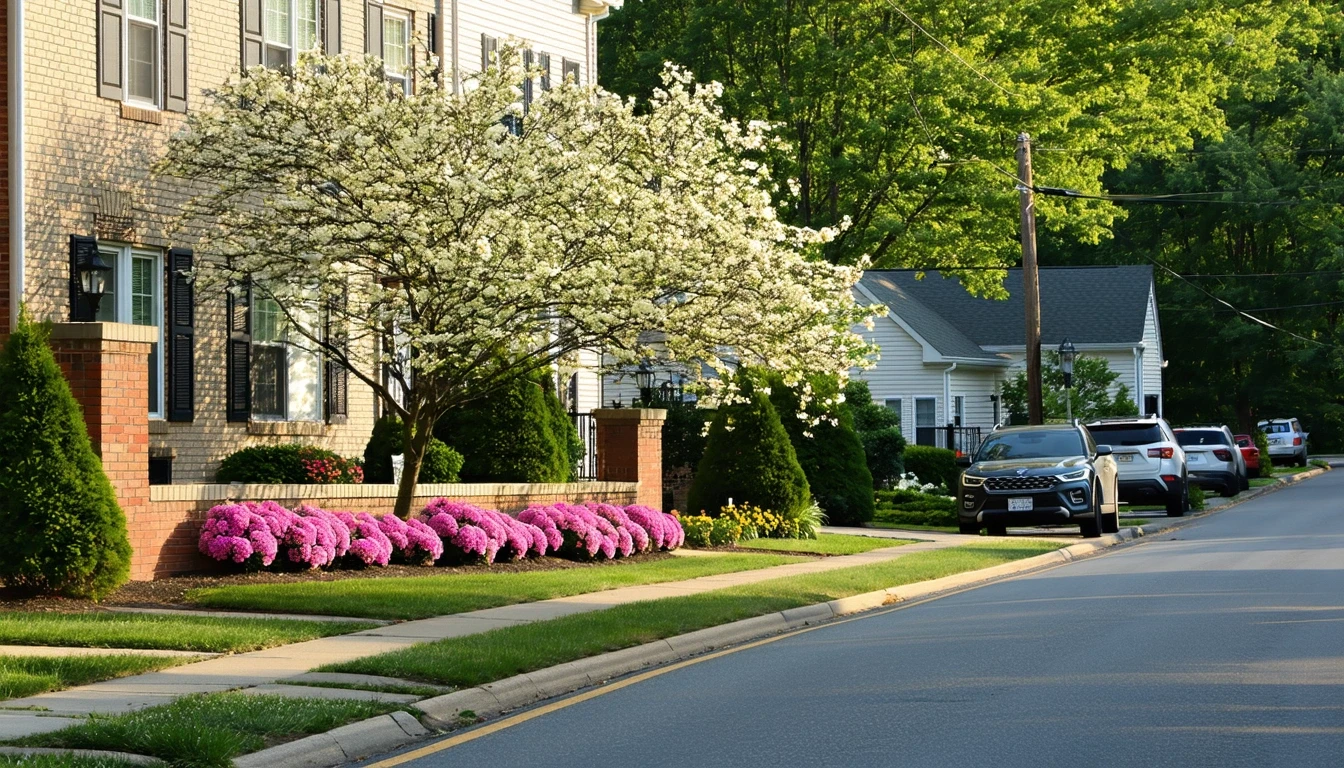
Fairfax and Arlington sit just miles apart in Northern Virginia, sharing the same metro economy, similar weather patterns, and access to Washington, D.C. employment hubs. Yet the cost experience in each city diverges in ways that matter deeply for household budgets in 2026. Both cities attract young professionals, families, and established households drawn to strong schools, walkable pockets, and integrated green space. The choice between them isn’t about finding the “cheaper” option—it’s about understanding where cost pressure concentrates, how predictably expenses behave, and which tradeoffs align with your household’s priorities and constraints.
This comparison focuses on how different costs show up, not what they add up to. Housing entry barriers, transportation dependence, utility volatility, and daily logistics all behave differently depending on whether you’re navigating Fairfax’s mixed-height neighborhoods and bus-only transit or Arlington’s more vertical form and rail access. The better choice depends entirely on which costs dominate your decision-making and which forms of flexibility or predictability you value most.
Meet the Chens, a dual-income couple with one young child, debating whether to rent in Fairfax or Arlington as they relocate for work in 2026. Both cities offer strong schools, parks, and access to the broader metro, but the Chens are trying to understand where their money will feel tightest, where they’ll gain control, and whether proximity to rail transit justifies higher rent. Their questions mirror those of many households weighing these two Northern Virginia communities.
Housing Costs
Housing dominates the cost structure in both Fairfax and Arlington, but the entry barrier and ongoing obligations differ in ways that reshape affordability for renters and buyers alike. In Fairfax, the median home value stands at $649,600, while median gross rent reaches $1,972 per month. Arlington’s housing market operates at a higher threshold: median home value climbs to $833,300, and median gross rent hits $2,227 per month. These differences aren’t marginal—they represent distinct levels of upfront capital required to enter the market and different monthly obligations once you’re in.
For renters, the gap between $1,972 and $2,227 per month translates into different levels of exposure to rent renewals, different flexibility in unit size, and different pressure on the remainder of the household budget. Fairfax’s rental market offers more breathing room for families seeking two-bedroom units or couples prioritizing savings over proximity to rail. Arlington’s rental stock skews more vertical, with more high-rise and mid-rise options that come with higher base rents but also closer access to Metro stations, reducing car dependency for some households. The tradeoff isn’t just rent—it’s rent plus transportation exposure plus time cost.
For buyers, the $183,700 difference in median home value affects down payment requirements, mortgage interest obligations, property tax exposure, and insurance premiums. Fairfax’s lower entry point makes homeownership accessible to households earlier in their wealth-building trajectory, though it still requires substantial capital. Arlington’s higher threshold selects for households with more accumulated savings or dual high incomes, and the ongoing property tax and maintenance obligations on a higher-value home create a different cost rhythm. Both cities feature mixed land use and strong family infrastructure, so the housing decision hinges less on neighborhood quality and more on financial structure: front-loaded barrier versus ongoing obligation, space versus access, car dependency versus transit viability.
| Housing Type | Fairfax | Arlington |
|---|---|---|
| Median Home Value | $649,600 | $833,300 |
| Median Gross Rent | $1,972/month | $2,227/month |
| Typical Renter Profile | Families, couples prioritizing space and savings | Professionals, couples prioritizing transit access |
| Typical Buyer Profile | First-time buyers, families seeking single-family homes | Established earners, households comfortable with vertical living |
Renters sensitive to monthly cash flow and families needing more square footage per dollar tend to find Fairfax’s structure more forgiving. Buyers with accumulated capital and households willing to trade space for transit access may find Arlington’s higher entry point worthwhile if rail proximity reduces car ownership costs or commute friction. The housing cost pressure in both cities is significant, but it manifests differently: Fairfax front-loads less and spreads obligations across a lower baseline, while Arlington demands more upfront and sustains higher monthly exposure in exchange for denser infrastructure and rail connectivity.
Utilities and Energy Costs
Utility costs in Fairfax and Arlington follow similar seasonal rhythms but diverge in rate structure and household exposure depending on housing type and energy source. Fairfax’s electricity rate sits at 15.27¢ per kilowatt-hour, while Arlington’s rate runs slightly higher at 16.36¢/kWh. Natural gas pricing shows a wider gap: Fairfax pays $15.45 per thousand cubic feet (MCF), compared to Arlington’s $20.71/MCF. These differences matter most during heating months, when gas-heated homes face higher baseline costs in Arlington, and during cooling season, when all-electric homes see incrementally higher bills in Arlington due to the electricity rate premium.
Both cities experience the same regional climate—hot, humid summers and cold winters—so cooling and heating needs don’t differ by location. What does differ is housing stock and building form. Fairfax’s mixed-height character includes more single-family homes, which tend to have larger conditioned square footage and older construction in some neighborhoods, leading to higher absolute energy usage. Arlington’s more vertical building form means more apartment and condo units with shared walls, reducing per-unit heating and cooling exposure. A family renting a townhouse in Fairfax may see higher summer cooling bills than a couple in an Arlington high-rise, even if the Arlington electricity rate is higher, simply because the townhouse has more exterior surface area and potentially older insulation.
Households in single-family homes—more common in Fairfax—face greater volatility in utility bills due to larger spaces, standalone structures, and variable home age. Families with kids, remote workers running HVAC all day, or households in older construction should expect utility costs to spike during temperature extremes. In Arlington, where more residents live in newer, vertically stacked units, utility costs tend to be more predictable and lower in absolute terms, even if the per-unit rate is higher. The tradeoff is space versus efficiency: Fairfax offers more room but higher energy exposure; Arlington offers tighter, more efficient living but at a higher per-square-foot cost for housing itself.
Both cities likely offer utility efficiency programs, time-of-use rate options, and weatherization incentives at the state or provider level, though specifics aren’t detailed in available data. Households planning to stay long-term in either city can reduce exposure through programmable thermostats, air sealing, and strategic energy use during off-peak hours. The key difference is that Fairfax’s lower natural gas price provides a cushion for gas-heated homes, while Arlington’s higher gas cost makes all-electric or heat-pump systems relatively more attractive. Renters have less control over these variables, so utility predictability becomes more about unit type and building age than rate shopping.
Utility takeaway: Families in larger, standalone homes experience more volatility and higher absolute costs in Fairfax, even with lower rates. Households in Arlington’s vertical housing stock benefit from shared-wall efficiency and newer construction, though they pay incrementally more per unit of energy. Heating cost exposure is higher in Arlington due to natural gas pricing, making all-electric or heat-pump homes more cost-stable there. Utility pressure is driven more by housing form than by city-level rate differences.
Groceries and Daily Expenses
Grocery and daily expense pressure in Fairfax and Arlington operates within the same regional price environment—both cities share an identical Regional Price Parity index of 97, meaning consumer goods cost roughly the same across the two locations. Derived grocery estimates for staples like bread, chicken, eggs, and milk show near-identical pricing: bread runs about $1.78–$1.79 per pound, chicken $1.96–$1.99 per pound, and eggs $2.42–$2.63 per dozen. These figures are modeled estimates, not observed prices, but they confirm that grocery price differences between Fairfax and Arlington are negligible. The real cost variation comes from access, shopping behavior, and convenience spending patterns shaped by each city’s infrastructure.
Both cities show broadly accessible food and grocery options, with high density of both food establishments and grocery stores exceeding density thresholds. This means residents in either city can reach multiple grocery options without long drives, and competition among stores helps keep prices in check. However, the shopping experience differs. Fairfax’s mixed land use and car-oriented mobility texture mean most households drive to grocery stores, often consolidating trips to big-box retailers or regional chains. Arlington’s rail transit and more vertical form encourage smaller, more frequent trips to neighborhood markets or urban-format grocers, which can increase per-item costs if convenience stores or specialty shops replace bulk buying.
Daily expense creep—coffee runs, takeout, prepared foods—tends to run higher in Arlington due to denser commercial corridors, more walkable access to cafes and restaurants, and a built environment that makes grabbing lunch or dinner out frictionless. Fairfax’s structure requires more intentional trips, which can reduce impulse spending but also increases reliance on meal planning and home cooking. Single adults and couples in Arlington may find themselves spending more on convenience without realizing it, while families in Fairfax face pressure to manage larger grocery volumes and meal prep with less spontaneous access to quick options.
Household size drives grocery sensitivity more than location. A family of four buying in bulk at a Fairfax big-box store will spend less per meal than the same family making smaller, more frequent trips in Arlington’s walkable corridors. Conversely, a single professional in Arlington may spend more per meal but save time and reduce food waste by buying only what’s needed for a few days. The cost structure isn’t about one city being cheaper—it’s about whether your household benefits from bulk efficiency or pays a premium for convenience and reduced planning burden.
Grocery takeaway: Staple prices are nearly identical, but shopping patterns differ. Fairfax rewards bulk buying and meal planning; Arlington enables convenience at a premium. Families managing large volumes feel less pressure in Fairfax; single adults and couples may prefer Arlington’s walkable access despite incrementally higher per-item costs. Grocery cost sensitivity is driven more by habits and household size than by city-level price differences.
Taxes and Fees
Tax and fee structures in Fairfax and Arlington both reflect Northern Virginia’s reliance on property taxes to fund schools, infrastructure, and services, but the magnitude and predictability of these obligations differ due to housing values and local fee environments. Property taxes are calculated as a percentage of assessed home value, so Arlington’s higher median home value ($833,300 versus Fairfax’s $649,600) translates directly into higher annual property tax bills for homeowners, even if the millage rates were identical. Renters don’t pay property taxes directly, but landlords pass through a portion of that cost in rent, making Arlington’s higher rent partly a function of higher underlying tax obligations.
Both cities also levy local fees for services like trash collection, water, and stormwater management, though specifics aren’t detailed in available data. In many Northern Virginia jurisdictions, these fees are bundled into monthly or quarterly bills and can add several hundred dollars per year to homeownership costs. Renters in multi-unit buildings often see these fees absorbed into rent, while renters in single-family homes or townhouses may pay them separately. The predictability of these fees varies: water and sewer costs fluctuate with usage, while trash and stormwater fees are typically flat rates that increase periodically with local budget adjustments.
Homeowners in Arlington face higher absolute tax and fee exposure due to higher property values, but they also benefit from proximity to Metro, which can reduce transportation costs and increase property value appreciation over time. Fairfax homeowners pay less in property taxes but may face higher transportation costs if car dependency is unavoidable. The tradeoff is front-loaded tax obligation versus ongoing transportation expense—both are real costs, but they show up in different parts of the household budget and affect different types of households differently.
Long-term residents in either city should expect property taxes to rise as home values appreciate, though the rate of increase depends on local assessment cycles and budget pressures. Recent movers face immediate exposure to current tax rates, which can be a shock if relocating from a lower-tax state. Renters are insulated from direct property tax volatility but not from rent increases driven by landlords’ rising tax bills. The key structural difference is that Arlington’s higher baseline creates more absolute exposure, while Fairfax’s lower baseline offers more breathing room for households sensitive to ongoing obligations.
Tax and fee takeaway: Arlington homeowners face higher property tax exposure due to higher home values; Fairfax homeowners pay less but still carry significant obligations. Renters in both cities see tax costs embedded in rent, with Arlington’s higher rent partly reflecting higher underlying taxes. Predictability is similar in both cities, but magnitude differs. Households planning to stay long-term should model tax exposure based on current home values and expect incremental increases over time.
Transportation & Commute Reality
Transportation costs and commute friction diverge sharply between Fairfax and Arlington, driven primarily by transit infrastructure rather than distance or traffic patterns. Fairfax offers bus-only transit service, with a pedestrian-to-road ratio that exceeds high thresholds and notable bike infrastructure, creating walkable pockets within the city. However, the absence of rail transit means most commuters rely on personal vehicles for trips to D.C. or other regional employment centers. The average commute in Fairfax runs 28 minutes, with 51.0% of workers experiencing long commutes and only 7.8% working from home. Gas prices in Fairfax sit at $3.37 per gallon, adding to the cost burden for car-dependent households.
Arlington, by contrast, offers rail transit service, fundamentally altering the transportation calculus for many households. The city also shows high pedestrian-to-road ratios and notable bike infrastructure, but the presence of Metro stations means commuters can avoid car ownership entirely if their work and daily errands align with transit corridors. Arlington’s average commute is slightly shorter at 27 minutes, with 45.9% facing long commutes and 5.6% working from home. Gas prices are lower in Arlington at $2.87 per gallon, though this matters less for households that don’t own cars. The real difference isn’t commute time—it’s commute mode and the resulting cost structure.
For households that must drive, Fairfax’s higher gas price and longer commute percentages create steady, ongoing transportation costs: fuel, insurance, maintenance, parking, and vehicle depreciation. A household commuting 25 miles round trip daily at 25 MPG would burn roughly one gallon per day, translating to over $80 per month in fuel alone at Fairfax’s $3.37/gallon rate, before accounting for insurance or upkeep. Arlington’s lower gas price reduces that exposure slightly, but the real savings come from households that can substitute rail for driving, eliminating or reducing car ownership altogether.
Single adults and couples without kids are most able to leverage Arlington’s rail access, especially if they work in D.C. or along Metro corridors. Families with kids face more complexity: school drop-offs, extracurriculars, and grocery runs often require a car regardless of transit access, reducing the practical benefit of rail proximity. In Fairfax, car ownership is essentially non-negotiable for most households, but the lower housing cost can offset transportation expenses if the household was planning to own a car anyway. The tradeoff is predictable: Arlington offers the possibility of lower transportation costs through rail substitution, while Fairfax assumes car dependency but compensates with lower housing entry barriers.
Transportation takeaway: Fairfax assumes car ownership for most households, with higher gas prices and longer commute exposure. Arlington enables rail-based commuting for some households, potentially eliminating car costs entirely. Families with kids face similar car dependency in both cities, reducing the transit advantage. The decision hinges on whether your household can realistically substitute rail for driving—if yes, Arlington’s higher housing cost may be offset by transportation savings; if no, Fairfax’s lower housing cost and car-dependent structure may be more transparent and predictable.
Cost Structure Comparison
Housing pressure dominates the cost experience in both Fairfax and Arlington, but the intensity and form of that pressure differ in ways that reshape the rest of the household budget. Arlington’s higher median home value and rent create a steeper entry barrier and higher ongoing obligation, selecting for households with more accumulated capital or dual high incomes. Fairfax’s lower housing costs provide more breathing room upfront, though the gap narrows when transportation costs are factored in. Renters face a $255 per month difference in median rent, which compounds over a year into over $3,000 in additional housing exposure in Arlington. Buyers face a $183,700 difference in median home value, affecting down payment, mortgage interest, and property tax obligations. The housing difference isn’t subtle—it’s the primary cost driver that determines which households can enter each market and how much flexibility remains for other expenses.
Utilities introduce more volatility in Fairfax due to the prevalence of single-family homes with larger conditioned spaces and older construction in some neighborhoods. Arlington’s more vertical building form and newer housing stock reduce per-unit energy exposure, even though electricity and natural gas rates run slightly higher. Families in standalone homes—more common in Fairfax—should expect seasonal utility swings that exceed those in Arlington’s apartment-heavy stock. The difference is less about rates and more about housing form: Fairfax trades space for efficiency, while Arlington trades efficiency for higher baseline housing cost.
Transportation patterns matter more in Fairfax, where car dependency is nearly universal and gas prices run higher. Arlington’s rail access creates a meaningful cost fork: households that can substitute transit for car ownership reduce transportation costs significantly, while those who still need a car pay slightly less for gas but gain little from rail proximity. For single adults and couples working along Metro corridors, Arlington’s higher housing cost can be partially offset by eliminating car payments, insurance, and fuel. For families with kids or households working outside transit corridors, the transportation advantage disappears, leaving only the higher housing cost.
Daily living and grocery costs are nearly identical in both cities due to the same regional price environment, but shopping behavior differs. Fairfax rewards bulk buying and meal planning, while Arlington enables convenience spending through walkable access to cafes, restaurants, and neighborhood markets. Families managing large grocery volumes feel less pressure in Fairfax; single adults and couples may prefer Arlington’s frictionless access despite incrementally higher per-item costs. The difference isn’t price—it’s structure and habit.
The better choice depends entirely on which costs dominate your household’s decision-making. Households sensitive to housing entry barriers and ongoing rent or mortgage obligations may find Fairfax more accessible, especially if car ownership is already assumed. Households that can leverage rail transit to reduce or eliminate car costs may find Arlington’s higher housing cost offset by transportation savings and time recovered from shorter, less stressful commutes. For families with kids, the transportation advantage narrows, making Fairfax’s lower housing cost and more spacious housing stock more appealing. For single adults and couples prioritizing walkability and transit access, Arlington’s higher cost may be justified by reduced car dependency and denser infrastructure. Neither city is universally cheaper—each concentrates cost pressure differently, and the right fit depends on which tradeoffs align with your household’s income, priorities, and constraints.
How the Same Income Feels in Fairfax vs Arlington
Single Adult
For a single adult, housing becomes the first non-negotiable cost, and the $255 per month rent difference between Fairfax and Arlington determines how much flexibility remains for everything else. In Fairfax, lower rent leaves more room for savings or discretionary spending, but car ownership is essentially required, adding insurance, fuel, and maintenance as ongoing obligations. In Arlington, higher rent tightens the budget upfront, but rail access creates the possibility of eliminating car costs entirely, freeing up cash flow if work and errands align with transit corridors. Flexibility exists in Arlington if you can live without a car; in Fairfax, flexibility comes from lower housing cost but assumes car dependency as a fixed expense.
Dual-Income Couple
A dual-income couple faces similar housing pressure but with more capacity to absorb Arlington’s higher rent or home price if both incomes are stable. The decision hinges on commute patterns: if both partners work along Metro corridors, Arlington’s rail access reduces time cost and may eliminate the need for a second car, creating meaningful savings. If one or both partners work outside transit coverage, the higher housing cost in Arlington offers little return, and Fairfax’s lower baseline becomes more attractive. Predictability matters more here—Fairfax’s cost structure is more transparent (housing plus car), while Arlington’s structure depends on whether transit substitution is realistic. The same combined income feels tighter in Arlington if car ownership remains necessary, and more flexible in Fairfax if the couple prioritizes space and savings over transit access.
Family with Kids
For families, housing space needs and school access become non-negotiable first, followed by transportation logistics for school drop-offs, extracurriculars, and errands. Arlington’s higher housing cost buys access to strong schools and parks, but the more vertical building form means less space per dollar, and car dependency persists despite rail access due to kid-related logistics. Fairfax offers more spacious housing options at a lower entry point, with equally strong schools and family infrastructure, but assumes car ownership and higher transportation costs. Flexibility disappears faster in Arlington because housing takes a larger share of income and space constraints limit options. In Fairfax, the same income stretches further in housing, though transportation and utility costs for larger homes offset some of that advantage. The time cost of managing errands and logistics is similar in both cities, but Arlington’s higher baseline housing cost leaves less cushion for unexpected expenses or long-term savings.
Decision Matrix: Which City Fits Which Household?
| Decision factor | If you’re sensitive to this… | Fairfax tends to fit when… | Arlington tends to fit when… |
|---|---|---|---|
| Housing entry + space needs | Down payment size, monthly rent or mortgage obligation, square footage per dollar | You need lower upfront cost and more space, or you’re a first-time buyer building equity | You have accumulated capital and prioritize proximity to rail over square footage |
| Transportation dependence + commute friction | Car ownership costs, commute time, transit viability, parking hassles | You already own a car and work outside Metro corridors, or you have kids requiring frequent trips | You can substitute rail for car ownership and work along transit corridors |
| Utility variability + home size exposure | Seasonal bill swings, energy efficiency, heating and cooling costs | You accept higher utility volatility in exchange for more space and single-family living | You prefer predictable, lower utility bills in a smaller, vertically stacked unit |
| Grocery strategy + convenience spending creep | Bulk buying, meal planning, impulse spending on takeout or coffee | You plan meals, buy in bulk, and drive to big-box stores to minimize per-item cost | You value walkable access to groceries and cafes even if per-item costs run slightly higher |
| Fees + friction costs (HOA, services, upkeep) | Property taxes, HOA fees, maintenance obligations, predictability of recurring costs | You want lower property tax exposure and more control over maintenance timing | You accept higher property tax and potential HOA fees in exchange for denser infrastructure |
| Time budget (schedule flexibility, errands, logistics) | Commute length, errand consolidation, school drop-offs, weekend logistics | You have flexible work hours or work from home, reducing commute friction | You prioritize shorter, rail-based commutes and walkable errands over driving time |
Lifestyle Fit
Fairfax and Arlington both offer strong quality-of-life infrastructure, but the texture of daily living differs in ways that indirectly affect costs and household logistics. Both cities feature integrated green space, with park density exceeding high thresholds and water features present, making outdoor recreation accessible without long drives. Both also show strong family infrastructure, with high school and playground density supporting households with kids. Walkable pockets exist in both cities, with pedestrian-to-road ratios that exceed high thresholds, and both have notable bike infrastructure. The similarities are real—these aren’t radically different environments—but the differences in transit mode, building form, and commercial density create distinct day-to-day experiences.
Arlington’s rail transit access and more vertical building form create a denser, more urban feel, even in residential neighborhoods. Errands, dining, and entertainment options are often within walking distance or a short Metro ride, reducing the need for car trips and creating more spontaneous access to amenities. This convenience comes at a cost—higher rent, higher home values, and more exposure to impulse spending on takeout, coffee, and prepared foods. For single adults and couples, this structure can feel liberating, reducing planning burden and freeing up time. For families, the denser environment can feel constraining, with less yard space, fewer single-family options, and more logistical complexity managing kids’ schedules without the buffer of a car-centric suburb.
Fairfax’s mixed-height character and bus-only transit create a more suburban rhythm, where most errands require a car but housing options include more single-family homes with yards and driveways. The trade-off is more space and lower housing cost in exchange for more driving, more planning, and less spontaneous access to urban amenities. Families with kids often find this structure more forgiving—school drop-offs, grocery runs, and weekend activities are easier to manage with a car and a garage. Single adults and couples may find it less convenient, especially if they work in D.C. and face long bus commutes or must own a car solely for work trips. The lifestyle fit isn’t about one city being “better”—it’s about whether your household benefits from density and transit or from space and car-based flexibility.
Quick fact: Both Fairfax and Arlington have unemployment rates below 2.5%, reflecting the strong regional economy and tight labor market in the Washington, D.C. metro area.
Quick fact: Arlington’s hospital presence provides more comprehensive healthcare access locally, while Fairfax residents rely on clinics and pharmacies for routine care, with hospital services available in nearby jurisdictions.
Frequently Asked Questions
Is it cheaper to live in Fairfax or Arlington in 2026?
Neither city is universally cheaper—the cost structure differs in ways that matter more for some households than others. Fairfax has lower median rent and home values, creating a lower housing entry barrier and ongoing obligation. Arlington has higher housing costs but offers rail transit, which can reduce or eliminate car ownership costs for some households. Families with kids and households working outside Metro corridors tend to find Fairfax more affordable overall, while single adults and couples who can leverage rail access may find Arlington’s higher housing cost offset by transportation savings. The decision depends on which costs dominate your household budget and which tradeoffs you’re willing to make.
How do transportation costs compare between Fairfax and Arlington in 2026?
Transportation costs depend heavily on whether your household can substitute rail for car ownership. Fairfax assumes car dependency for most residents, with higher gas prices ($3.37/gallon) and longer commute exposure. Arlington offers rail transit, enabling some households to eliminate car costs entirely, though gas prices are lower ($2.87/gallon) for those who still drive. Families with kids face similar car dependency in both cities, reducing the transit advantage. Single adults and couples working along Metro corridors benefit most from Arlington’s rail access, while households working outside transit coverage see little transportation cost difference between the two cities.
What are the main cost differences between renting in Fairfax versus Arlington in 2026?
Median gross rent in Fairfax is $1,972 per month, compared to $2,227 per month in Arlington—a $255 monthly difference that compounds to over $3,000 per year. Arlington’s higher rent buys proximity to rail transit and denser commercial corridors, which can reduce transportation costs and increase convenience