
Owning a home in Mesa means managing more than the mortgage. Property taxes adjust with assessed values, insurance responds to desert exposure and regional risk pools, and maintenance costs reflect the wear patterns of extended cooling seasons and low-humidity aging. HOA fees, where present, bundle services but also introduce governance layers that renters avoid entirely. These hidden ownership costs don’t appear on the listing price, but they shape the long-term financial experience of living here.
Mesa sits in the Phoenix metro, where housing costs reflect both regional price pressure and local infrastructure. The median home value is $327,700, and median gross rent is $1,352 per month. Median household income is $73,766 per year. These figures frame the baseline, but the cost experience depends on how housing type, location within the city, and household logistics interact with Mesa’s climate and built environment.
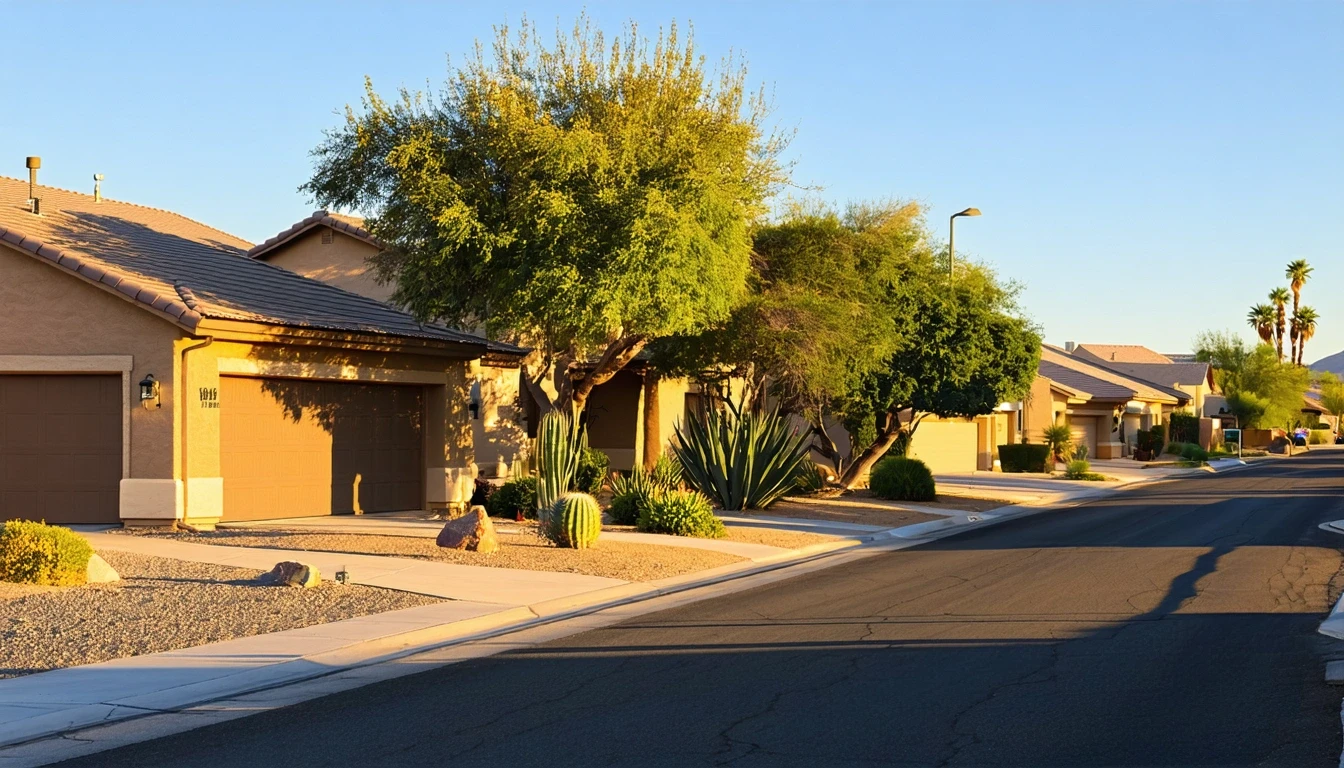
The Housing Market in Mesa Today
Mesa’s housing market reflects its dual identity as both a college city and a retirement destination. This creates rental demand from transient student populations and retirees downsizing or relocating, alongside ownership demand from families and long-term residents. The result is a market where rental stock serves diverse household types, and ownership appeals to those seeking stability in a region where home values remain accessible relative to metro-wide income levels.
The city’s infrastructure supports this diversity. Rail service connects Mesa to the broader Phoenix metro, and walkable pockets with mixed land use reduce the need for car-dependent errands in parts of the city. Groceries and food establishments are broadly accessible, which lowers the logistical friction that often defines suburban life. These structural features make Mesa distinct from purely car-oriented suburbs, even as much of the housing stock remains low-rise and spread across quieter residential blocks.
Newcomers often misunderstand Mesa’s position within the metro. It’s not the urban core, but it’s also not isolated. The combination of rail access, cycling infrastructure, and integrated parks creates pockets where daily life doesn’t require constant driving. For renters and buyers alike, this means where money goes depends heavily on which part of the city you choose and how your household moves through it.
Renting in Mesa
At $1,352 per month, median gross rent in Mesa sits below the extremes of the Phoenix metro core but above what you’d find in more distant exurbs. Rental pressure here is shaped by proximity to Arizona State University’s Polytechnic campus, healthcare employment clusters, and retiree-focused housing developments. Student renters compete for affordability near transit and campus access, while retirees often seek managed communities with bundled services.
Rental availability varies by neighborhood. Areas near rail stations and walkable commercial corridors tend to have higher turnover and more competition, especially for units that allow residents to reduce car dependency. Renters who prioritize errands accessibility and transit access pay a premium for that convenience, while those willing to drive for groceries and services find more options at lower price points.
The rental experience in Mesa also reflects the city’s climate. Cooling costs dominate summer utility bills, and renters in older buildings without efficient HVAC systems face higher exposure. Landlords don’t always upgrade systems between tenants, so renters inherit the efficiency profile of the unit. This makes utility predictability harder to assess than rent alone, and it’s a cost layer that doesn’t show up in the lease.
Owning a Home in Mesa
Ownership in Mesa means taking on the full cost structure of desert living. Property taxes adjust with assessed values, and while specific rates aren’t available in the data, the assessed value of a home at $327,700 sets the baseline for annual tax exposure. Taxes here fund schools, infrastructure, and municipal services, and they rise as home values appreciate, creating a cost layer that renters avoid entirely.
Insurance costs in Mesa respond to regional risk pools and desert-specific exposures. Wind, dust storms, and occasional hail create claims patterns that insurers price into premiums. Homeowners also face maintenance costs tied to the climate: HVAC systems work harder and fail sooner, exterior paint and sealants degrade faster under intense UV exposure, and landscaping requires either desert-adapted plants or persistent irrigation. These aren’t one-time expenses—they’re recurring exposures that compound over years of ownership.
HOAs are common in newer developments and managed communities, especially those targeting retirees. Fees vary widely, but they typically bundle landscaping, exterior maintenance, and sometimes water or trash service. For some households, this reduces unpredictability; for others, it introduces governance constraints and mandatory spending that limits financial flexibility. Ownership in Mesa often means choosing between older homes with lower HOA exposure but higher maintenance volatility, or newer developments with bundled services but less control.
Apartment vs House in Mesa — Cost Behavior Comparison
| Expense Category | Apartment | House |
|---|---|---|
| Cooling Costs | Shared walls and smaller square footage reduce cooling load; older buildings may lack efficient systems | Full exposure to desert heat; larger square footage and standalone structure increase cooling dominance |
| Exterior Maintenance | Landlord or HOA handles roof, paint, and structural upkeep | Owner absorbs all costs; UV degradation and dust storms accelerate wear |
| Water & Landscaping | Often included in rent or managed by property; minimal tenant control | Owner pays directly; desert landscaping or irrigation both carry costs |
| Mobility & Parking | Often near walkable corridors or transit; parking may be limited or assigned | Typically car-dependent; driveways and garages standard but location may require longer drives for errands |
Why these differences matter in Mesa: The city’s extended cooling season and low-humidity climate make HVAC efficiency and building envelope quality the primary cost differentiators. Apartments near rail and walkable pockets reduce car dependency, which matters in a region where gas prices and commute distances add up. Houses offer control and space but transfer all climate-related maintenance exposure to the owner. Categories like heating, snow removal, and flood insurance were excluded because they don’t meaningfully vary in Mesa’s desert environment.
Utilities & Upkeep Differences
Electricity in Mesa costs 16.03¢/kWh, and cooling dominates summer consumption. Apartments with shared walls and smaller square footage use less electricity than standalone houses, but the gap narrows in older buildings where insulation and HVAC systems haven’t been upgraded. Houses face full exposure: larger spaces, more windows, and standalone construction mean higher baseline usage even with efficient systems.
Natural gas, priced at $17.73/MCF, plays a minor role in Mesa. Heating needs are limited to occasional winter mornings, so gas exposure is minimal compared to cooling. Water costs, however, differ sharply. Apartment complexes often include water in rent or spread costs across units, while homeowners pay directly and must manage landscaping irrigation or accept the aesthetic and resale consequences of desert-bare yards.
Maintenance exposure in Mesa is driven by climate intensity. HVAC systems in houses require more frequent filter changes, coil cleaning, and eventual replacement due to extended run times. Exterior surfaces—paint, stucco, sealants—degrade faster under UV exposure and dust infiltration. Apartment renters avoid these costs entirely, while homeowners must budget for them as recurring, not occasional, expenses. The difference isn’t just magnitude; it’s predictability and control.
Rent vs Buy: Long-Term Exposure in Mesa
Renting in Mesa offers cost predictability within the lease term but exposes tenants to renewal volatility. Rent can adjust annually, and tenants have no control over landlord decisions to sell, renovate, or shift to short-term rentals. Cooling costs remain variable, but renters avoid property tax increases, insurance adjustments, and the compounding maintenance costs that homeowners face as systems age.
Ownership shifts the risk profile. Monthly housing costs become more predictable if the mortgage is fixed, but property taxes adjust with assessed values, insurance responds to regional claims experience, and maintenance costs rise as the home ages. Cooling exposure persists regardless of tenure, but owners can invest in efficiency upgrades to reduce long-term usage, while renters depend on landlord decisions. Over time, ownership in Mesa means absorbing more volatility in exchange for control and the potential for home value appreciation.
The tradeoff isn’t financial in isolation—it’s structural. Renters maintain flexibility and avoid long-term exposure to Mesa’s climate-driven maintenance cycle. Owners gain stability and control but must manage the compounding costs of desert homeownership. Neither path is universally better; the fit depends on how long you plan to stay, how much control you need over your living environment, and whether you’re prepared to manage the recurring costs that come with owning in a desert climate.
FAQs About Housing Costs in Mesa
Is renting or buying more affordable in Mesa, AZ?
Affordability depends on time horizon and household priorities. Renting at $1,352 per month avoids property taxes, insurance, and maintenance, but offers no equity accumulation or control. Buying at a median home value of $327,700 requires upfront capital and exposes owners to long-term costs tied to Mesa’s climate, but provides stability and potential appreciation. Neither is universally cheaper—each fits different financial situations and lifestyle needs.
How do cooling costs affect housing decisions in Mesa?
Cooling dominates utility bills during Mesa’s extended summer season. Apartments with shared walls and smaller square footage use less electricity than standalone houses, but efficiency depends on HVAC system quality and insulation. Homeowners can invest in upgrades to reduce long-term exposure, while renters inherit the efficiency profile of the unit. Cooling costs are a persistent, recurring expense that shapes both rental and ownership budgets.
What hidden costs do homeowners face in Mesa, AZ?
Beyond the mortgage, homeowners in Mesa pay property taxes, insurance, HOA fees (where applicable), and climate-driven maintenance. HVAC systems require more frequent service and replacement due to extended cooling seasons. Exterior surfaces degrade faster under UV exposure and dust. Landscaping requires either irrigation or desert-adapted plants. These costs compound over time and are less predictable than the mortgage itself.
Does Mesa’s rail and walkability reduce housing costs?
Rail access and walkable pockets in Mesa reduce car dependency for some households, which lowers transportation costs and can offset higher rent or home prices in those areas. Broadly accessible groceries and mixed land use reduce the need for long drives, cutting fuel and vehicle wear. However, much of Mesa remains car-dependent, so the cost benefit depends on where you live within the city and how your household manages daily errands.
Are property taxes in Mesa, AZ lower than other Phoenix metro cities?
Specific property tax rates aren’t available in the data, but taxes in Mesa are based on assessed home values. At a median home value of $327,700, tax exposure is moderate relative to the metro. Taxes fund schools, infrastructure, and services, and they adjust as home values change. Comparing Mesa to other Phoenix metro cities requires examining both tax rates and assessed values, which vary by jurisdiction.
Making Housing Choices in Mesa
Housing costs in Mesa are shaped by climate, infrastructure, and household logistics. Renters gain flexibility and avoid long-term maintenance exposure but face renewal volatility and no control over efficiency upgrades. Owners absorb property taxes, insurance, and the compounding costs of desert living but gain stability and the ability to invest in their environment. The city’s rail access, walkable pockets, and broadly accessible errands reduce car dependency in some areas, which changes the cost calculus for households that prioritize mobility and convenience.
The decision between renting and buying isn’t purely financial—it’s about how you live and how long you plan to stay. Mesa’s housing market serves diverse household types, from students and retirees to families and long-term residents. Understanding how monthly expenses interact with housing type, location, and climate exposure helps you choose the path that fits your priorities and risk tolerance.
How this article was built: In addition to public economic data, this article incorporates location-based experiential signals derived from anonymized geographic patterns—such as access density, walkability, and land-use mix—to reflect how day-to-day living actually feels in Mesa, AZ.