
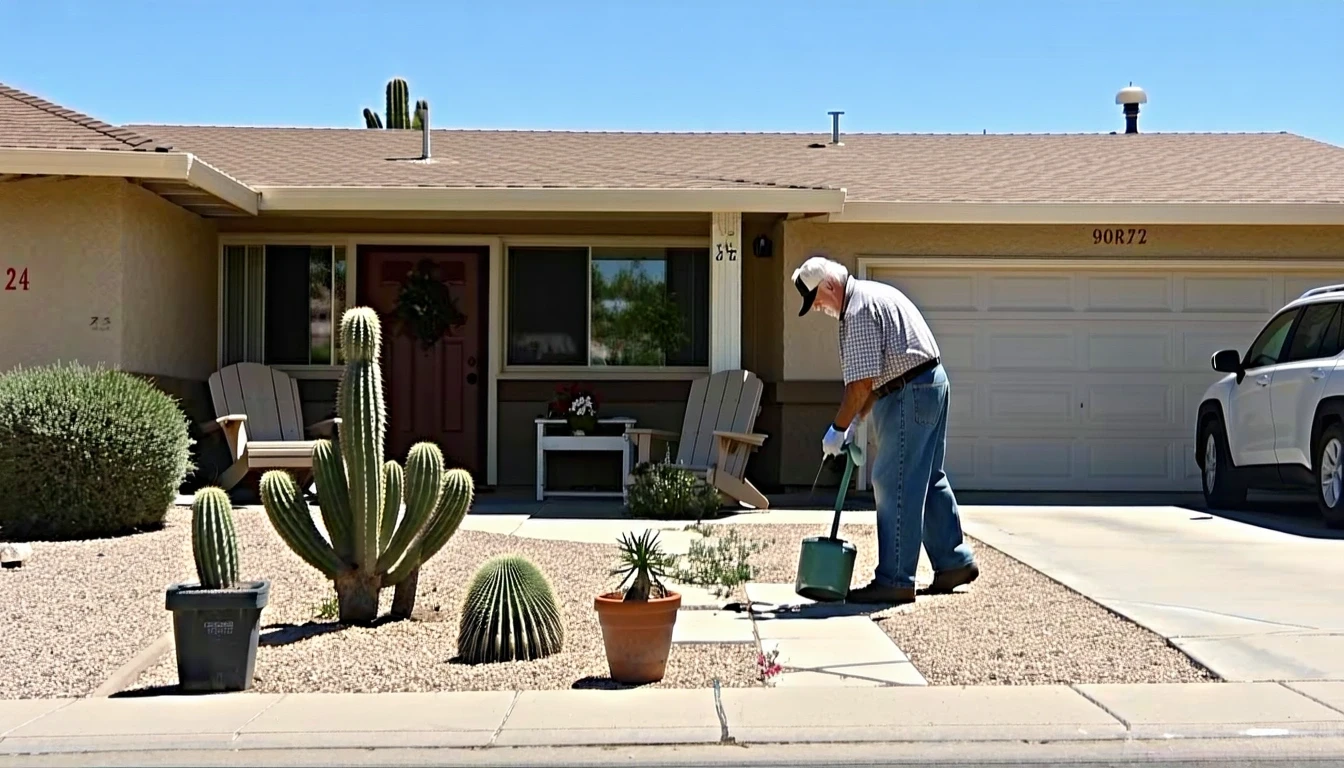
Retirement-Friendly Amenities in Mesa: A Quick Checklist
Before diving into what makes Mesa work for retirees, here’s what the city offers right now:
- Hospital access: Local hospital facilities and pharmacies confirmed
- Parks and outdoor spaces: High park density with water features throughout the city
- Grocery and food access: Broadly accessible, reducing the need for long drives
- Public transit: Rail service available, offering a car alternative for some trips
- Walkability: Pockets of pedestrian-friendly infrastructure in parts of the city
- Climate: Year-round warmth, minimal heating costs, extended outdoor season
- Mixed-use neighborhoods: Residential and commercial areas integrated in many parts of Mesa
Now, let’s explore what these amenities mean for day-to-day retirement living.
Why Retirees Choose Mesa
What draws retirees to Mesa, and is it living up to the hype? For many, the answer comes down to a combination of warm weather, accessible healthcare, and a cost structure that doesn’t require a pension from a Fortune 500 company. Mesa has earned its reputation as a retirement destination, and the infrastructure backs that up: hospital facilities are present locally, parks are woven throughout the city, and grocery stores are broadly accessible rather than clustered in distant commercial zones. The median home value sits at $327,700, while renters pay a median of $1,352 per month—figures that reflect a metro-area market but remain more approachable than coastal alternatives.
The city’s retirement suitability score of 78 out of 100 reflects several key strengths: confirmed hospital and pharmacy access, integrated green spaces with water features, rail transit that reduces car dependency for certain errands, and a climate that eliminates the expense and physical burden of snow removal, ice management, and sustained heating costs. The extended outdoor season means retirees can walk, garden, and socialize outside for much of the year, though the trade-off is triple-digit summer heat that shifts activity to early mornings and evenings. Mesa’s mixed land use and walkable pockets mean that in many neighborhoods, daily errands don’t require long drives—a meaningful advantage as driving becomes less appealing or feasible with age.
That said, Mesa isn’t a one-size-fits-all retirement haven. The summer cooling season is long and intense, which drives electricity costs higher than in temperate climates. While rail transit exists, a car is still necessary for most errands and appointments. And while parks are plentiful, playground density is low, suggesting fewer multigenerational gathering spaces where retirees might naturally cross paths with younger families. For retirees prioritizing healthcare access, outdoor activity, and year-round warmth, Mesa delivers. For those seeking a walkable urban core or a completely car-free lifestyle, expectations need adjustment.
Healthcare Access for Seniors
Healthcare infrastructure can make or break a retirement destination, and Mesa’s setup provides meaningful reassurance. The city has a hospital facility present locally, along with confirmed pharmacy access—two essentials that reduce the need to travel outside the city for emergency care, inpatient services, or prescription fulfillment. This isn’t just about convenience; it’s about response time during a health crisis and the ability to maintain continuity of care without long drives or logistical complexity.
Beyond the hospital, Mesa’s established neighborhoods—reflected in medium school density—suggest the presence of medical office clusters, specialist practices, and outpatient services that tend to locate near residential areas with stable populations. While the data doesn’t enumerate every clinic or specialist, the structural signals point to a city that has built out healthcare infrastructure in step with its retirement population. For retirees managing chronic conditions, this means local options for physical therapy, cardiology, orthopedics, and other specialties that become more relevant with age.
Medicare acceptance is generally strong across Arizona, and Mesa’s healthcare providers reflect that norm. Prescription access is straightforward, with pharmacies distributed throughout the city rather than concentrated in a single commercial district. For retirees weighing whether Mesa can support aging in place, the healthcare picture is solid: emergency care is local, routine care is accessible, and the infrastructure supports long-term medical management without requiring relocation as health needs evolve.
Senior-Friendly Amenities and Services
Mesa’s amenity landscape reflects its identity as a retirement city. The integrated park access—with park density exceeding high thresholds and water features present—creates a network of outdoor spaces that support walking groups, casual exercise, and social gatherings. These aren’t just decorative green spaces; they’re functional infrastructure for retirees who want to stay active without joining a gym or driving to a trailhead. The presence of water features adds variety and visual interest, making daily walks feel less repetitive.
Transportation options extend beyond the car. Mesa has rail transit service, which offers a viable alternative for trips to certain destinations—medical appointments, shopping districts, or social events—without the stress of driving or parking. While the system doesn’t eliminate the need for a car, it does reduce car dependency for retirees who prefer not to drive at night, in heavy traffic, or during the hottest parts of the day. The city’s broadly accessible grocery and food establishments mean that errands don’t require long drives, and in walkable pockets, some retirees can handle daily shopping on foot.
Libraries, community colleges, and lifelong learning opportunities are part of Mesa’s civic fabric, though specific program counts aren’t available in the current data. What is clear from the city’s structure—mixed land use, medium building heights, and integrated parks—is that Mesa has designed for a population that spends time in the community rather than isolated in residential enclaves. Senior centers, meal programs, and volunteer opportunities typically follow this kind of infrastructure, clustering near transit stops, parks, and mixed-use corridors where foot traffic and social interaction are already happening.
Cost of Living for Retirees in Mesa
Retirement budgets hinge on predictability, and Mesa’s cost structure offers both advantages and exposure points. Housing costs vary by format: the median home value of $327,700 reflects the single-family market, while median rent at $1,352 per month captures the apartment and condo segment. For retirees downsizing from larger homes, condos and 55+ communities often fall somewhere in between, offering ownership without yard maintenance or the full cost of a detached house. Property taxes in Arizona are relatively moderate compared to high-tax states, though specific senior exemptions aren’t detailed in the available data.
Utility costs are shaped by climate. Electricity in Mesa runs 16.03¢ per kWh, and with an extended cooling season, summer bills can climb significantly. A typical household using around 1,000 kWh per month would see a base cost near $160 before fees and taxes, but retirees running air conditioning from May through October often exceed that usage. Natural gas, priced at $17.73 per MCF, plays a smaller role—heating needs are minimal, and many retirees find their gas bills stay low year-round. The trade-off is clear: Mesa eliminates the high heating costs common in colder climates but replaces them with sustained cooling expenses.
Transportation costs depend on driving habits. Gas sits at $4.74 per gallon, and while the average commute is 24 minutes, retirees no longer commuting daily will see lower fuel expenses than working households. However, errands, medical appointments, and social activities still require a car for most residents, even with rail transit available. Grocery costs reflect the city’s regional price parity index of 121, meaning prices run about 21% above the national baseline. For retirees on fixed incomes, this affects the purchasing power of Social Security, pensions, and retirement account withdrawals.
Arizona does not tax Social Security benefits, which provides meaningful relief for retirees whose income is primarily Social Security. Other retirement income—pensions, 401(k) distributions, IRA withdrawals—is subject to state income tax, though rates are moderate compared to high-tax states. Medicare supplement costs, prescription expenses, and out-of-pocket healthcare spending vary by individual health status and plan selection, so retirees should budget conservatively and review coverage options annually.
Monthly Retirement Budget in Mesa
Here’s what a typical monthly retirement budget might look like in Mesa:
| Category | Modest Lifestyle | Comfortable Lifestyle |
|---|---|---|
| Housing (rent or mortgage + insurance) | $1,350 | $1,800 |
| Utilities (electric, gas, water, trash) | $180 | $220 |
| Groceries | $350 | $500 |
| Transportation (gas, insurance, maintenance) | $250 | $400 |
| Healthcare (premiums, co-pays, Rx) | $300 | $450 |
| Entertainment & Dining | $150 | $350 |
| Miscellaneous (personal care, clothing, gifts) | $120 | $200 |
| Total | $2,700 | $3,920 |
Estimates based on average senior spending patterns and local costs; figures are illustrative and exclude property taxes, HOA fees, and irregular expenses.
Community and Social Opportunities
Retirement isn’t just about managing costs and accessing healthcare—it’s about staying connected. Mesa’s structure supports that goal. The city’s integrated parks and water features create natural gathering points for walking groups, birding clubs, and casual social interaction. Mixed land use means coffee shops, libraries, and community spaces sit near residential areas rather than isolated in distant commercial zones, which makes spontaneous social activity easier and less car-dependent.
Faith communities, volunteer opportunities, and hobby clubs tend to cluster in cities with stable, long-term populations, and Mesa fits that profile. The presence of rail transit and broadly accessible errands suggests a civic infrastructure that supports regular participation in community life without requiring a car for every outing. For retirees who value intergenerational connection, the city’s moderate school density indicates established neighborhoods where families and older adults share parks, sidewalks, and local events.
Proximity to family is a major factor in retirement location decisions, and Mesa’s position within the Phoenix metro area makes it accessible for visiting relatives flying into Sky Harbor or driving from other parts of Arizona. The city’s walkable pockets and mixed-use corridors mean that when family visits, there are places to go on foot—parks, cafes, local shops—rather than defaulting to car-based outings or staying inside to avoid the heat.
Aging in Place Considerations
Aging in place requires more than a paid-off house—it requires a city that supports independence as mobility and health needs change. Mesa’s walkable pockets mean that in certain neighborhoods, retirees can handle some errands on foot, reducing reliance on driving. The rail transit system offers a backup option for trips when driving feels less safe or appealing. And the broadly accessible grocery and food options mean that even if a retiree stops driving, delivery services and nearby stores remain viable.
Home modification services—ramps, grab bars, widened doorways—are standard offerings in retirement-heavy markets, and Mesa’s status as a designated retirement city suggests local contractors and occupational therapists familiar with aging-in-place needs. In-home care availability typically follows demand, and cities with established senior populations tend to have robust networks of caregivers, visiting nurses, and therapy providers. While specific provider counts aren’t available, the healthcare infrastructure signals—hospital present, pharmacies confirmed—suggest a market that supports aging in place rather than forcing relocation to access care.
Climate plays a dual role. The year-round warmth eliminates ice, snow, and the physical demands of winter maintenance, which is a major advantage for retirees with limited mobility. However, the extended cooling season and triple-digit summer heat create a different kind of exposure: retirees must manage indoor temperatures carefully, time outdoor activity to avoid peak heat, and budget for higher electricity costs. For those with heat-sensitive health conditions, this requires planning and sometimes lifestyle adjustment.
Emergency services and disaster preparedness matter more as retirees age. Mesa’s established infrastructure and hospital presence suggest reliable emergency response, though specific response times aren’t detailed in the data. The city’s low elevation and desert location mean minimal risk of flooding or hurricanes, but summer heat waves and occasional dust storms require awareness and preparation, particularly for retirees living alone.
How Mesa’s Structure Shapes Daily Retirement Life
The way a city is built determines how retirees actually live in it, and Mesa’s infrastructure creates specific patterns. Because grocery and food establishments are broadly accessible—with density exceeding high thresholds—retirees don’t need to plan weekly mega-trips to distant supermarkets. Instead, they can shop more frequently, buying smaller quantities and avoiding the physical strain of loading and unloading a week’s worth of groceries at once. This accessibility reduces the logistical burden of meal planning and keeps retirees more connected to their neighborhoods.
The presence of walkable pockets with high pedestrian-to-road ratios means that in parts of Mesa, retirees can walk to a cafe, library, or park without navigating car-dominated arterials. This isn’t universal across the city, but where it exists, it supports daily movement and social interaction without requiring a car. For retirees managing conditions that benefit from regular walking—cardiovascular health, joint mobility, mental well-being—this infrastructure provides a low-friction way to stay active.
Rail transit availability changes the calculus for retirees who want to reduce driving but aren’t ready to give up independence entirely. Trips to medical appointments, cultural events, or visiting friends become possible without a car, which matters as night vision declines, reaction times slow, or confidence behind the wheel fades. The system doesn’t replace car ownership for most retirees, but it does reduce the frequency and stress of driving, particularly during peak traffic or extreme heat.
The integrated park network—with high density and water features—creates a rhythm of outdoor activity that doesn’t require gym memberships or planned excursions. Retirees can walk the same loop daily, vary routes to explore different parks, or meet friends at a familiar spot without logistical complexity. The presence of water features adds sensory variety and cooling effects, making outdoor time more pleasant even in a desert climate. This kind of infrastructure supports the social and physical routines that keep retirees engaged and healthy.
How this article was built: In addition to public economic data, this article incorporates location-based experiential signals derived from anonymized geographic patterns—such as access density, walkability, and land-use mix—to reflect how day-to-day living actually feels in Mesa, AZ.
FAQs About Retirement in Mesa
What’s the average cost of retirement in Mesa?
A modest retirement lifestyle in Mesa runs around $2,700 per month, covering housing, utilities, groceries, transportation, healthcare, and basic entertainment. A more comfortable lifestyle—with higher housing costs, dining out, and travel—pushes closer to $3,920 per month. These figures exclude property taxes, HOA fees, and irregular expenses, so retirees should budget conservatively and account for healthcare variability.
How good is healthcare access for seniors?
Mesa has a hospital facility present locally, along with confirmed pharmacy access, which means emergency care, inpatient services, and prescription fulfillment are available without leaving the city. The established neighborhood structure suggests medical office clusters and specialist practices are accessible, supporting long-term care management. Medicare acceptance is strong across Arizona, and the healthcare infrastructure supports aging in place.
Are there active senior communities?
Mesa’s integrated parks, broadly accessible errands, and mixed land use create an environment where retirees can stay active and connected. The city’s walkable pockets and rail transit reduce car dependency for some trips, and the high park density supports walking groups and outdoor social activity. While specific senior center counts aren’t available, the city’s infrastructure reflects its identity as a retirement destination.
What are the tax implications of retiring in Arizona?
Arizona does not tax Social Security benefits, which provides meaningful relief for retirees whose income is primarily Social Security. Other retirement income—pensions, 401(k) distributions, IRA withdrawals—is subject to state income tax, though rates are moderate compared to high-tax states. Property taxes are relatively low, though specific senior exemptions aren’t detailed in the available data. Retirees should consult a tax professional to understand their individual situation.
Making the Move: Is Mesa Right for Your Retirement?
Mesa delivers on the fundamentals: hospital access, integrated parks, broadly accessible groceries, and a climate that eliminates winter heating costs. The city’s walkable pockets, rail transit, and mixed land use support aging in place for retirees who want to reduce driving without sacrificing independence. The cost structure is approachable compared to coastal markets, and Arizona’s tax treatment of Social Security provides real financial relief.
The trade-offs are equally clear. The extended cooling season drives electricity costs higher, and triple-digit summer heat limits outdoor activity to early mornings and evenings. While rail transit exists, a car is still necessary for most errands and appointments. And while parks are plentiful, the city’s structure leans more toward active retirees who can drive and manage heat exposure than those seeking a fully walkable, temperate environment.
For retirees prioritizing warm weather, healthcare access, and outdoor activity, Mesa is worth serious consideration. For those seeking a car-free lifestyle, mild summers, or a dense urban core, other destinations may align better. The decision comes down to which trade-offs you’re willing to make—and whether Mesa’s strengths match your retirement priorities. If you’re still weighing options, consider exploring renting vs buying in Mesa to understand the housing tradeoffs in more detail.