
Deciding whether to rent or buy in Redmond means understanding how this city’s housing market actually works—not just what the sticker price says. Redmond sits in a high-cost corridor shaped by proximity to Seattle’s tech economy, strong local employment, and limited housing supply relative to demand. The result is a market where both renters and buyers face significant upfront costs, but the long-term exposure and control differ sharply depending on which path you choose.
This article breaks down housing cost structure in Redmond: what drives rent and ownership expenses, how apartment and house costs behave differently, and which tradeoffs matter most over time. Whether you’re weighing a lease renewal or considering a down payment, the goal is to clarify what you’re actually paying for—and what you’re exposed to—in this specific market.
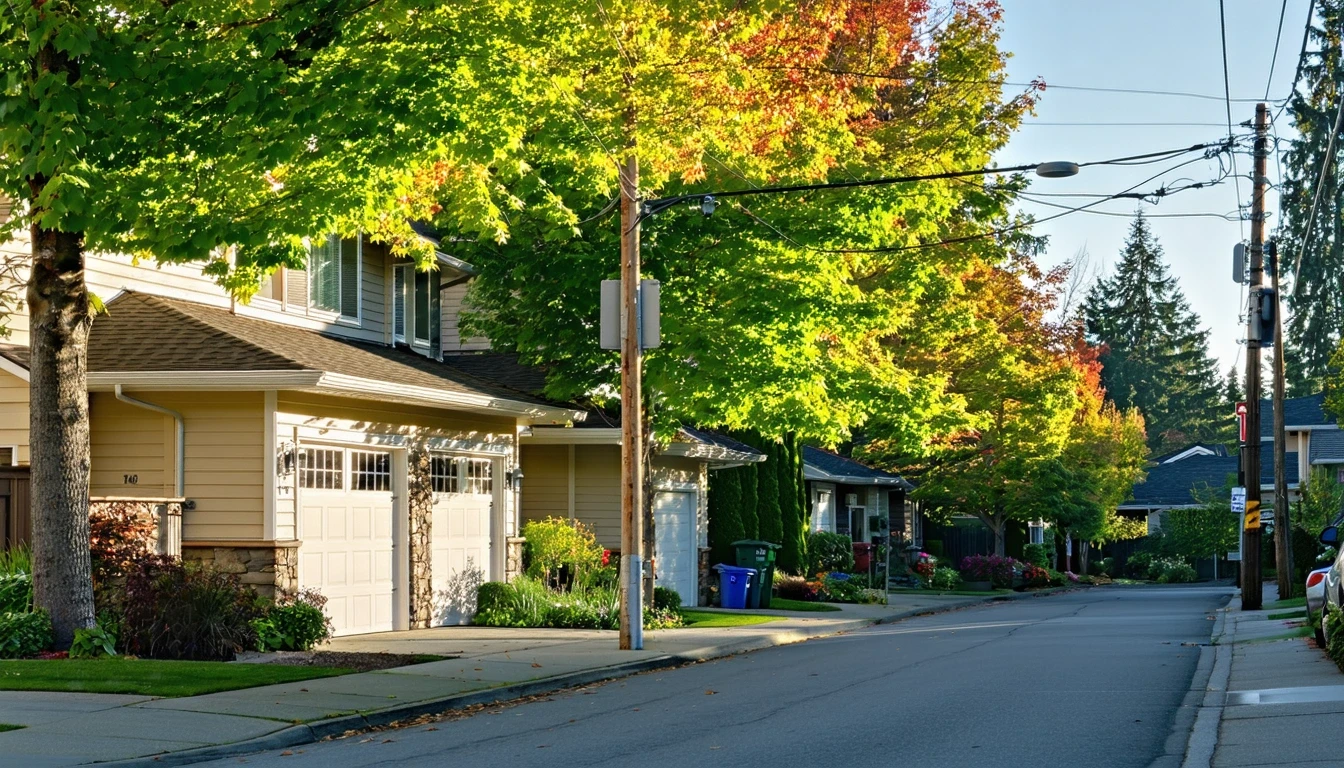
The Housing Market in Redmond Today
Redmond’s housing market reflects its role as both a suburban community and a regional employment center. The city’s median home value stands at $1,026,400, positioning it well above national norms and in line with the broader Seattle metro area’s elevated cost structure. This isn’t a market shaped by scarcity of land alone; it’s driven by sustained demand from high-earning households, many tied to the technology sector, and a housing stock that has struggled to keep pace with job growth over the past two decades.
What newcomers often misunderstand is that Redmond’s housing costs aren’t uniform across the city. Proximity to transit stations, walkable commercial corridors, and top-rated schools creates sharp cost gradients. Neighborhoods with direct rail access or integrated park systems command premiums, while areas farther from these amenities may offer lower entry points but increase transportation and time costs. The city’s mixed building character—ranging from low-rise single-family zones to mid-rise multifamily developments—means that housing pressure varies not just by price, but by the type of lifestyle infrastructure available nearby.
Median household income in Redmond is $155,287 per year, which provides meaningful support for housing costs that would be unmanageable in lower-income markets. However, this income figure also reflects the competitive nature of the market: high earners bid against each other, and housing costs adjust upward in response. The result is a market where affordability is less about absolute price and more about how much financial flexibility remains after housing is secured.
Renting in Redmond
Renters in Redmond face a median gross rent of $2,299 per month, a figure that includes base rent and tenant-paid utilities but excludes parking, storage, or other add-ons that vary by building. This rent level reflects the same demand pressures that drive ownership costs: limited supply, strong employment, and competition for units near transit, schools, and commercial amenities.
Rental availability in Redmond tends to be tightest in neighborhoods with rail access and walkable errands infrastructure. Because the city exhibits broadly accessible food and grocery density, along with substantial pedestrian and cycling infrastructure, renters who prioritize car-light living often concentrate in areas where these features overlap. This creates a bifurcated rental market: units in transit-oriented, mixed-use pockets command higher rents and lower vacancy rates, while units in car-dependent zones may offer slightly lower rents but require higher transportation spending and time investment.
Renewal volatility is a key consideration for renters. While Washington State law imposes some constraints on rent increases, Redmond’s strong demand environment means that landlords in desirable areas can push rents upward at renewal, particularly when comparable units are scarce. Renters gain predictability within a lease term but face uncertainty at renewal, and the lack of rent control means that long-term cost exposure is difficult to forecast.
For households prioritizing flexibility—whether due to job uncertainty, family planning, or a desire to test different neighborhoods—renting offers lower upfront costs and the ability to relocate without transaction friction. However, renters in Redmond should expect that staying in place over multiple years will likely involve navigating periodic rent adjustments, and that moving to avoid increases often means accepting tradeoffs in location, unit quality, or proximity to key amenities.
Owning a Home in Redmond
Ownership in Redmond begins with a substantial acquisition cost. At a median home value of $1,026,400, a conventional 20% down payment exceeds $205,000, and even households with strong incomes may find that qualifying for a mortgage in this range requires significant savings, dual incomes, or financial support from family. This entry barrier is the defining feature of Redmond’s ownership market: it’s not a question of whether ownership is expensive, but whether it’s accessible at all.
Once acquired, ownership shifts the cost structure from monthly rent to a combination of mortgage principal and interest, property taxes, insurance, maintenance, and—in many cases—homeowners association (HOA) fees. The mortgage portion is predictable if financed at a fixed rate, but the other components introduce volatility. Property taxes in Washington are subject to periodic reassessment, and in a market where home values have risen consistently, tax bills tend to increase over time. Insurance costs are influenced by regional factors, including wildfire risk in surrounding areas and the age of the housing stock, which affects replacement cost estimates.
Maintenance exposure in Redmond is shaped by the Pacific Northwest climate: mild, wet winters and dry summers. Homes require attention to moisture management—roof integrity, gutter function, and exterior sealing—to prevent long-term damage. Older homes, particularly those built before modern energy codes, may also require upgrades to insulation, windows, and HVAC systems to manage utility costs effectively. These aren’t annual expenses, but they represent episodic financial demands that renters avoid entirely.
HOA governance is common in Redmond’s multifamily and planned developments, and fees vary widely depending on what’s included. Some HOAs cover exterior maintenance, landscaping, and shared amenities; others are minimal and cover only insurance and basic upkeep. Buyers should treat HOA fees as a fixed cost with potential for increases, particularly in communities with aging infrastructure or deferred maintenance.
The primary advantage of ownership in Redmond is control and stability. Once the mortgage is locked in, the largest component of housing cost is predictable. Owners can make improvements, modify spaces, and avoid the uncertainty of lease renewals. However, this stability comes at the cost of liquidity: selling a home involves transaction costs, market timing risk, and the possibility that local market conditions have shifted since purchase.
Apartment vs House in Redmond — Cost Behavior Comparison
The table below compares cost behavior for apartments and single-family houses in Redmond, focusing only on categories where the difference is shaped by local conditions. Rows are included only where Redmond’s climate, housing stock, infrastructure, or governance creates a meaningful distinction.
| Expense Category | Apartment | House |
|---|---|---|
| Heating & Cooling | Lower exposure; shared walls reduce heat loss, smaller conditioned space | Higher exposure; standalone structure, larger square footage, older homes may lack modern insulation |
| Water & Sewer | Often included in rent or HOA; usage lower due to unit size | Billed separately; irrigation, landscaping, and larger household size increase usage |
| Exterior Maintenance | Covered by landlord or HOA; tenant has no direct cost or control | Owner responsibility; Pacific Northwest moisture requires roof, gutter, and siding attention |
| Parking | May be unbundled and charged separately, especially in transit-oriented buildings | Typically included; driveway or garage part of property |
| Property Tax | Embedded in rent; tenant has no direct visibility or control | Direct annual bill; subject to reassessment and voter-approved levies |
Why these categories? The distinctions above reflect Redmond’s climate (moisture-driven maintenance), infrastructure (transit access affecting parking costs), and housing stock (age and insulation variability). Categories like trash, internet, and renters insurance were omitted because they do not differ meaningfully by housing type in this market. The goal is to isolate where apartment vs house choice actually changes cost exposure in Redmond, not to list every possible expense.
Utilities & Upkeep Differences
Utility and maintenance costs in Redmond are shaped by the Pacific Northwest’s climate and the city’s housing stock characteristics. Winters are mild but damp, requiring consistent heating without the extreme cold that drives costs in northern climates. Summers are dry and moderate, with cooling needs limited to a few weeks of warmer weather. This creates a utility profile where heating is the dominant seasonal expense, but overall energy usage is lower than in regions with temperature extremes.
Electricity in Redmond is priced at 14.11¢/kWh, and natural gas at $17.38/MCF. These rates are elevated compared to national averages, reflecting the regional cost structure captured in the city’s price parity index of 151. For apartment dwellers, smaller conditioned spaces and shared walls reduce total consumption, and many buildings include water and sewer in rent or HOA fees. For single-family homeowners, larger square footage, standalone construction, and outdoor irrigation increase both energy and water usage.
Maintenance exposure differs sharply by housing type. Apartment residents typically have no direct responsibility for exterior upkeep, structural repairs, or landscaping; these are handled by landlords or HOA management. Homeowners, by contrast, must manage roof integrity, gutter cleaning, exterior painting, and moisture control—all of which are critical in Redmond’s wet-winter climate. Deferred maintenance on these systems can lead to costly repairs, particularly in older homes where original materials may be nearing end-of-life.
Homes built before modern energy codes may also face higher utility bills due to inadequate insulation, single-pane windows, or inefficient HVAC systems. Upgrading these systems reduces energy usage and improves comfort, but requires upfront investment that renters avoid entirely. The tradeoff is control: homeowners can choose when and how to invest in efficiency, while renters depend on landlord decisions and have no ability to capture long-term savings from improvements.
Rent vs Buy: Long-Term Exposure in Redmond
The rent-versus-buy decision in Redmond is not primarily a question of monthly cost equivalence; it’s a question of risk profile, control, and time horizon. Renters face ongoing exposure to market-driven rent increases, but they avoid property tax volatility, maintenance surprises, and the transaction costs of buying and selling. Owners lock in the largest component of housing cost—mortgage principal and interest—but take on direct responsibility for taxes, insurance, upkeep, and the risk that home values may not appreciate as expected.
Over time, ownership in Redmond has historically provided stability in monthly housing cost, particularly for households who secure fixed-rate financing. However, this stability is incomplete: property taxes adjust with assessed values and voter-approved levies, insurance premiums respond to regional risk factors, and maintenance demands are episodic but unavoidable. Renters, by contrast, face annual or biennial lease renewals where rent can increase substantially, but they retain the flexibility to relocate without selling an asset or paying transaction costs.
The decision also hinges on household priorities. Families seeking long-term stability, access to specific school zones, and the ability to modify living spaces often find ownership worth the upfront cost and ongoing exposure. Households prioritizing career mobility, testing neighborhoods, or avoiding large financial commitments may find renting a better fit, despite the lack of equity accumulation.
One factor that shapes this decision in Redmond specifically is the city’s infrastructure and amenity access. Because Redmond exhibits substantial pedestrian infrastructure, rail transit, and broadly accessible grocery and food options, households can reduce transportation costs by choosing housing near these features—whether renting or owning. This creates a tradeoff: paying more for housing in a walkable, transit-served area may reduce car dependency and commuting costs, while choosing lower-cost housing farther from these amenities increases transportation spending and time burden. The rent-versus-buy question is therefore intertwined with location choice, and the optimal answer depends on how much a household values proximity to transit, schools, parks, and daily errands infrastructure.
How Redmond’s Structure Shapes Daily Housing Decisions
Living in Redmond means navigating a city where access to daily needs varies sharply by neighborhood, and this variation directly affects housing costs and tradeoffs. The city’s pedestrian-to-road ratio exceeds high thresholds, and both food and grocery establishment density are well above baseline levels. In practice, this means that residents in certain parts of Redmond can walk or bike to supermarkets, cafes, and pharmacies without relying on a car for every errand. These neighborhoods—often near rail stations or mixed-use corridors—command higher rents and home prices, but they also reduce the need for multiple vehicles, lower fuel costs, and save time otherwise spent driving and parking.
For families, this structure matters even more. Redmond’s school and playground density both meet moderate thresholds, and park access is integrated throughout the city, with water features adding to outdoor amenity availability. Families choosing housing near these resources gain walkable access to schools, playgrounds, and green space, which reduces the logistical complexity of managing children’s schedules and outdoor time. However, these same neighborhoods are where housing competition is fiercest, and where both rent and ownership costs are highest.
The presence of rail transit and notable cycling infrastructure also creates optionality for commuters. Households with one or more workers commuting to Seattle or other regional employment centers can reduce car dependency by choosing housing near transit, which lowers fuel, parking, and vehicle maintenance costs. However, this optionality comes at a price: transit-adjacent housing is scarce and expensive, and households must weigh the upfront housing cost against long-term transportation savings.
What this means in practice is that housing tradeoffs in Redmond are not just about rent versus ownership, or apartment versus house. They’re about choosing a location that aligns with how a household actually moves through daily life—how often they drive, how much time they spend commuting, and how accessible they need grocery stores, schools, and parks to be. The city’s infrastructure makes car-light living possible in some areas, but not everywhere, and the cost difference between those areas is substantial.
FAQs About Housing Costs in Redmond
Is it cheaper to rent or buy in Redmond, WA?
Neither option is universally cheaper; the comparison depends on time horizon, household priorities, and financial capacity. Renting avoids the upfront cost of a down payment and the ongoing exposure to property taxes and maintenance, but it offers no equity accumulation and exposes households to renewal volatility. Ownership locks in mortgage cost but requires substantial savings for acquisition and introduces episodic expenses like repairs and tax increases. Over a short time horizon (1–3 years), renting is typically less costly; over a longer horizon (7+ years), ownership may provide more stability, but only if the household can manage the entry barrier and ongoing responsibilities.
What drives housing costs higher in Redmond compared to other Seattle suburbs?
Redmond’s housing costs reflect its role as a major employment center, its proximity to Seattle, and its limited housing supply relative to demand. The city’s strong job base—particularly in technology—supports high household incomes, which in turn support high housing prices. Additionally, Redmond’s infrastructure—rail transit, walkable corridors, integrated parks, and strong schools—creates demand for housing near these amenities, which drives up costs in those neighborhoods. Compared to suburbs farther from Seattle or with less developed transit and amenity infrastructure, Redmond commands a premium.
How much do utilities typically add to housing costs in Redmond?
Utility costs in Redmond are shaped by the Pacific Northwest’s mild but damp climate and by elevated regional rates. Electricity is priced at 14.11¢/kWh and natural gas at $17.38/MCF, both above national averages. For apartment dwellers, utility costs are often moderate due to smaller spaces and shared walls; for single-family homeowners, larger square footage and standalone construction increase consumption. Heating dominates winter bills, while cooling needs are limited to occasional warm periods. Water and sewer costs are higher for homeowners with irrigation or larger households, while many apartment buildings include these in rent or HOA fees.
Are property taxes in Redmond stable or do they increase over time?
Property taxes in Washington are subject to periodic reassessment and voter-approved levies, which means they can increase over time. In a market like Redmond, where home values have risen consistently, reassessments often result in higher tax bills. Additionally, local school, transit, and infrastructure levies can add to the tax burden. Homeowners should expect property taxes to be a variable cost, not a fixed one, and should budget for periodic increases rather than assuming stability.
Does living near transit in Redmond reduce overall housing costs?
Living near transit in Redmond typically increases housing costs—both rent and ownership—due to higher demand for transit-adjacent units. However, it can reduce transportation costs by enabling car-light living, which lowers fuel, parking, insurance, and vehicle maintenance expenses. Whether this tradeoff results in lower overall costs depends on household size, commute patterns, and how much the household values time savings and reduced car dependency. For single commuters or couples without children, the transportation savings may offset higher housing costs; for larger families requiring multiple vehicles regardless of location, the housing premium may not be justified.
Making Housing Choices in Redmond
Housing costs in Redmond are high, but they’re not arbitrary. They reflect the city’s role as an employment hub, its infrastructure investments in transit and walkability, and its limited housing supply relative to demand. Whether you rent or buy, the cost structure is shaped by where you choose to live within the city: proximity to rail, schools, parks, and grocery access commands a premium, while areas farther from these amenities offer lower entry costs but higher transportation and time burdens.
Renters in Redmond gain flexibility and avoid the upfront and episodic costs of ownership, but they face ongoing exposure to market-driven rent increases and have no control over long-term housing cost. Owners lock in mortgage payments and gain stability, but they take on property tax volatility, maintenance responsibility, and the risk that home values may not appreciate as expected. Neither path is inherently better; the right choice depends on financial capacity, time horizon, and how much a household values control versus flexibility.
For households trying to decide, the key is to understand what you’re paying for—and what you’re exposed to. Redmond’s housing market rewards those who can afford proximity to transit, schools, and walkable amenities, but it also offers lower-cost options for those willing to drive more and spend more time managing logistics. The tradeoff is real, and it’s worth evaluating carefully before committing to a lease or a purchase.
How this article was built: In addition to public economic data, this article incorporates location-based experiential signals derived from anonymized geographic patterns—such as access density, walkability, and land-use mix—to reflect how day-to-day living actually feels in Redmond, WA.