
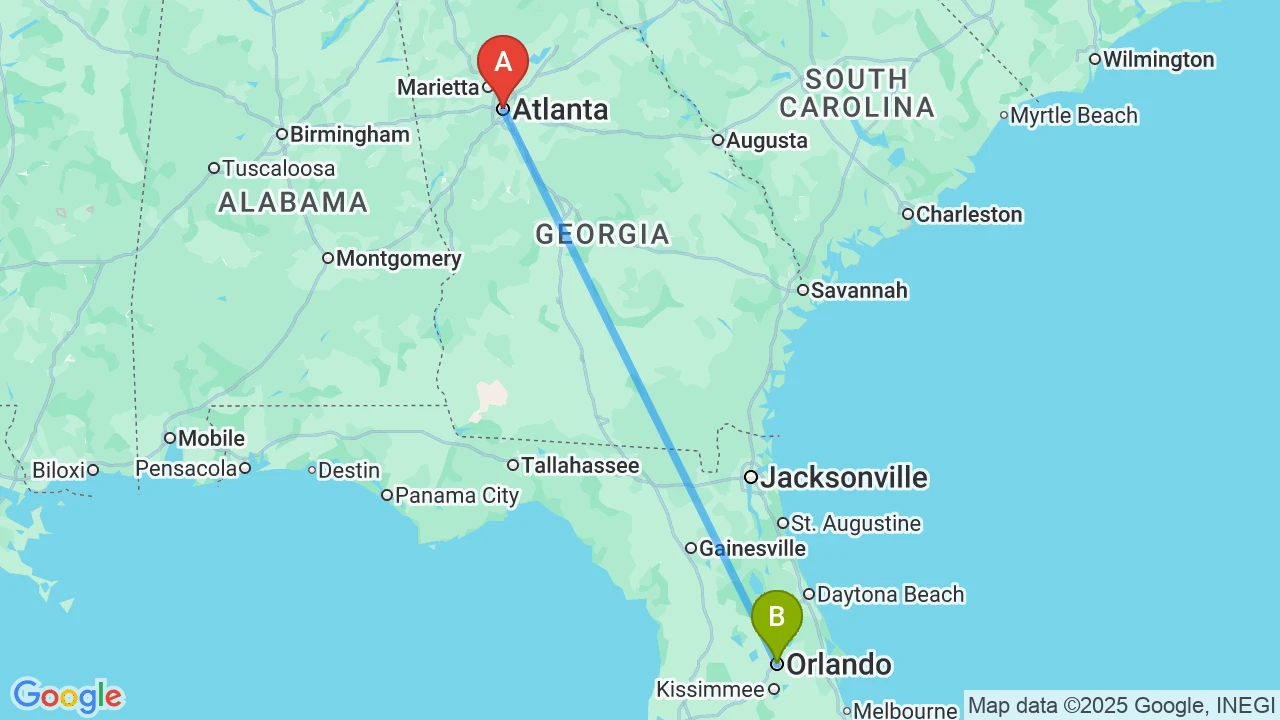
Moving from Atlanta to Orlando means trading one Southeastern metro for another—but the way costs show up in daily life shifts in ways that surprise many relocators. Both cities share humid climates and car-oriented development patterns, yet housing entry barriers, utility exposure, commute rhythms, and neighborhood access patterns differ enough to reshape household budgets and routines.
This guide explains where cost pressure moves when you relocate from Atlanta, GA to Orlando, FL in 2026—not which city is “cheaper,” but where expenses concentrate differently and which household types tend to feel relief or new friction. Understanding these shifts helps you plan for the logistics, timing, and tradeoffs that matter most during a cross-state move.
Cost Pressure Shifts: Where Money Shows Up Differently
The most immediate financial shift between Atlanta and Orlando appears in housing entry costs. Atlanta’s median home value sits at $395,600, while Orlando’s median is $332,700—a lower barrier for buyers entering the market. Median gross rent tells a nearly identical story: $1,512 per month in Atlanta versus $1,509 per month in Orlando. On the surface, this suggests comparable monthly obligations, but the income context matters: Atlanta’s median household income is $77,655 per year, compared to Orlando’s $66,292 per year. That income gap means the same rent figure consumes a larger share of household earnings in Orlando, tightening discretionary spending room for many movers.
Utility costs shift in a different direction. Orlando’s electricity rate is 15.92¢/kWh, noticeably higher than Atlanta’s 14.46¢/kWh. Given Orlando’s extended cooling season and consistently warmer climate—currently 76°F compared to Atlanta’s 68°F—air conditioning runs longer and harder, amplifying the rate difference into a more substantial monthly exposure. Natural gas pricing also diverges: Orlando’s rate is $23.62/MCF versus Atlanta’s $16.56/MCF, though natural gas plays a smaller role in Florida homes, where electric heating and cooking dominate.
Transportation costs introduce another layer of complexity. Gas prices in Orlando average $3.95/gal, compared to $3.58/gal in Atlanta—a difference that compounds over time for households driving frequently. Atlanta commuters average 27 minutes each way, with 37.6% facing long commutes and only 8.6% working from home. Orlando’s commute data isn’t available in the same granular form, but the city’s sprawling geography and limited transit coverage suggest similar or longer drive times for many residents. Both metros require cars for most daily errands, but Orlando’s tourism-driven traffic patterns and highway bottlenecks can add unpredictability to routine trips.
Grocery costs remain nearly identical between the two cities, with both sharing a regional price parity index of 101. Derived estimates suggest bread at $1.87/lb, ground beef at $6.81/lb, and eggs at $2.52/dozen in both locations. (Derived estimate based on national baseline adjusted by regional price parity; not an observed local price.) The real difference lies not in prices but in access patterns: Atlanta’s food and grocery density exceeds high thresholds across the metro, while Orlando’s food establishments cluster more along commercial corridors, requiring slightly more planning for weekly shopping trips.
Unemployment rates favor Orlando slightly—3.3% versus Atlanta’s 3.6%—but job market dynamics differ by industry. Atlanta’s economy tilts toward corporate headquarters, logistics, and film production, while Orlando’s revolves around hospitality, healthcare, and entertainment. Movers switching industries may find Orlando’s labor market less flexible, particularly for roles outside tourism and service sectors.
Housing & Neighborhood Patterns: Entry vs. Ongoing Obligations
Orlando’s lower median home value makes ownership more accessible upfront, but the income-to-housing ratio tightens once you’re in. A household earning Orlando’s median income faces a steeper affordability challenge than a comparable household in Atlanta, even though the sticker price is lower. This dynamic matters most for first-time buyers and single-income families, who may find that qualifying for a mortgage feels easier in Orlando but sustaining monthly obligations—especially when utilities, insurance, and maintenance stack up—requires more careful budgeting.
Rental markets in both cities show similar headline figures, but the experience differs. Atlanta’s rental stock includes more high-density apartment complexes with bundled amenities, while Orlando’s rental inventory skews toward single-family homes and smaller multifamily properties, particularly in neighborhoods near the theme park corridor. Renters in Orlando often encounter separate billing for water, trash, and pest control—line items that Atlanta renters sometimes see rolled into base rent. These unbundled costs don’t necessarily total more, but they add administrative friction and month-to-month variability.
Neighborhood form shapes daily costs in both metros, but the texture differs. Atlanta’s walkable pockets—concentrated in areas like Midtown, Virginia-Highland, and parts of Decatur—offer pedestrian infrastructure that reduces car dependence for some households. Orlando’s walkable zones exist but remain smaller and more isolated, with notable cycling infrastructure emerging in downtown and around Lake Eola. Most Orlando neighborhoods require a car for errands, school runs, and social activities, which means transportation costs remain high even if housing feels more affordable.
Both cities feature mixed residential and commercial land use, but Atlanta’s integration feels more established. Orlando’s commercial corridors—International Drive, Sand Lake Road, Colonial Drive—concentrate retail and dining, leaving residential zones quieter but less convenient for spontaneous errands. Families with young children may appreciate the separation, while households prioritizing walkability and errand efficiency may feel the trade-off more acutely.
Lifestyle & Daily Rhythms: Commute, Climate, and Access
Daily life in Orlando revolves around the car even more than in Atlanta, despite both cities sharing car-oriented development. Atlanta’s rail transit system—MARTA—provides a viable alternative for some commuters, particularly those working downtown or near major stations. Orlando’s SunRail offers limited service along a single north-south corridor, but most residents rely entirely on personal vehicles. This means Orlando households should budget not just for gas and maintenance, but for the time cost of driving: errands that might take 15 minutes in a walkable Atlanta neighborhood can stretch to 30 or 40 minutes in Orlando once parking and traffic are factored in.
Climate exposure intensifies in Orlando. While both cities experience hot, humid summers, Orlando’s cooling season extends longer, with warm weather persisting well into fall and resuming earlier in spring. Air conditioning isn’t optional—it’s a year-round necessity for comfort and health. Households moving from Atlanta should expect higher electricity bills, particularly in homes with older HVAC systems or poor insulation. The lack of a true heating season means natural gas costs drop, but the electricity trade-off more than compensates.
Access to parks and green space shifts subtly. Atlanta’s park density exceeds high thresholds, with water features and greenways integrated throughout the metro. Orlando’s park density sits in the moderate range, with notable outdoor spaces like Lake Eola, Baldwin Park, and the West Orange Trail, but coverage feels less uniform. Families prioritizing outdoor recreation may need to drive farther to reach trails, playgrounds, or natural areas, adding another layer of car dependence.
Family infrastructure differs in emphasis. Atlanta’s school and playground density both meet medium thresholds, providing balanced access for households with children. Orlando’s school density matches Atlanta’s, but playground density falls below low thresholds, meaning families often rely on school grounds, private community amenities, or destination parks rather than neighborhood playgrounds within walking distance. This doesn’t eliminate access, but it changes how spontaneous outdoor play happens.
Healthcare access remains strong in both cities, with hospitals and pharmacies present throughout each metro. Orlando’s hospital presence and pharmacy network match Atlanta’s, so households with ongoing medical needs or chronic conditions won’t face new access barriers. Routine care, urgent care, and specialty services are broadly available, though specific providers and insurance networks will vary.
How this article was built: In addition to public economic data, this article incorporates location-based experiential signals derived from anonymized geographic patterns—such as access density, walkability, and land-use mix—to reflect how day-to-day living actually feels in Orlando, FL.
Relocation Logistics & Practical Friction
Moving from Atlanta to Orlando involves a roughly 450-mile drive—manageable in a single day for most households, but long enough to require planning around traffic, rest stops, and vehicle capacity. Professional movers typically complete the route in one to two days depending on load size and scheduling. DIY movers should budget for fuel costs at Orlando’s higher gas prices, plus potential overnight lodging if driving a large truck or towing a vehicle.
Timing the move around weather matters more than many relocators expect. Summer moves mean navigating intense heat and afternoon thunderstorms in both cities, but Orlando’s humidity and sun exposure can make loading and unloading physically exhausting. Late fall or early spring offers milder conditions, though Orlando’s tourist season peaks in winter and spring break, which can complicate truck rentals, hotel availability, and highway congestion.
Utility setup in Orlando often surprises Atlanta movers. Florida’s deregulated electricity market means choosing a provider rather than inheriting one, and deposit requirements vary widely based on credit history. Water and trash services may be billed separately by municipality or HOA, adding administrative steps during the transition. Atlanta movers accustomed to bundled utility billing should expect more upfront coordination and potentially higher deposits.
Neighborhood selection carries higher stakes in Orlando due to the metro’s uneven walkability and transit access. Choosing a home near work, schools, and grocery stores can dramatically reduce transportation costs and time, while a seemingly affordable home in a distant suburb may add 10 or 15 hours of driving per week. Atlanta’s MARTA system offers some flexibility to adjust commute patterns after moving; Orlando’s limited transit means the initial location decision locks in most of your daily logistics.
Social adjustment varies by household type. Families moving for jobs outside the tourism industry may find Orlando’s social fabric less rooted than Atlanta’s, where corporate and creative communities have deeper networks. Retirees and young professionals drawn to Orlando’s entertainment and outdoor lifestyle often adapt quickly, while mid-career professionals and families with school-age children may need more time to build community connections.
Frequently Asked Questions
- Does Orlando feel more or less expensive than Atlanta?
- Orlando’s lower home prices and nearly identical rent suggest easier entry, but the income gap means the same housing costs consume a larger share of earnings for many households. Utility bills run higher due to Orlando’s extended cooling season, and gas prices add friction for car-dependent routines. Costs don’t necessarily total more, but they concentrate differently—housing entry feels lighter, while ongoing expenses like utilities and transportation tighten monthly budgets.
- How do housing markets differ between Atlanta and Orlando?
- Atlanta’s higher home values and income levels create a different affordability equation than Orlando’s lower prices and tighter income-to-housing ratio. Renters face similar monthly costs in both cities, but Orlando’s rental stock includes more single-family homes with unbundled utilities, while Atlanta’s apartment complexes often roll services into base rent. Buyers find lower entry barriers in Orlando, but sustaining ownership requires careful budgeting given the income context and higher utility exposure.
- What feels different about daily life after moving to Orlando?
- Orlando’s car dependence intensifies compared to Atlanta, with fewer walkable neighborhoods and limited transit alternatives. Errands take longer, commute flexibility drops, and spontaneous trips require more planning. The climate feels warmer year-round, with air conditioning running almost constantly. Social rhythms shift too—Orlando’s tourism-driven economy and transient population create a different community texture than Atlanta’s more rooted corporate and creative networks.
- When does the move from Atlanta to Orlando feel easiest?
- Late fall and early spring offer the best balance of mild weather and manageable logistics, avoiding both summer heat and peak tourist season congestion. Moving during winter or spring break complicates truck rentals and highway traffic, while summer moves mean physical exhaustion from heat and humidity. Timing around job start dates and school calendars often matters more than weather, but building in a few weeks of buffer before major commitments helps ease the transition.
- What adjustment pressures surprise Atlanta movers most?
- Higher utility bills catch many households off guard, especially in older homes with less efficient HVAC systems. The lack of viable transit alternatives means car dependence feels absolute rather than optional, and traffic patterns around theme parks and tourist corridors add unpredictability to routine trips. Unbundled utility billing and provider selection require more administrative coordination than Atlanta’s simpler setup. Socially, Orlando’s transient population and tourism-driven economy can feel less rooted, requiring more effort to build lasting community ties.
- Who tends to benefit most from moving to Orlando, and who may struggle?
- Households prioritizing lower housing entry costs and year-round warm weather often find Orlando appealing, especially retirees, young professionals in hospitality or entertainment, and families seeking access to theme parks and outdoor recreation. Those who struggle most include mid-career professionals outside tourism industries, single-income families facing tighter income-to-housing ratios, and households expecting walkable neighborhoods or reliable transit. Movers who thrive on urban density and spontaneous access may feel Orlando’s sprawl and car dependence more acutely than Atlanta’s mixed infrastructure.
Making the Move Work for Your Household
Relocating from Atlanta to Orlando isn’t a simple trade of one Southeastern metro for another—it’s a shift in how costs concentrate, how daily routines unfold, and how much flexibility your household retains after settling in. Orlando’s lower home prices and similar rent levels offer easier entry, but the income gap and higher utility exposure mean ongoing budgets require more discipline. Car dependence intensifies, walkability drops, and the extended cooling season adds a layer of climate-driven cost pressure that Atlanta households may underestimate.
The move works best for households who value lower upfront housing costs, year-round warmth, and proximity to entertainment and outdoor recreation—and who can absorb tighter monthly budgets and longer commutes without financial strain. It works less well for those expecting urban walkability, robust transit options, or the income flexibility to offset higher utility and transportation costs. Success depends on choosing a neighborhood that minimizes driving, budgeting conservatively for electricity and gas, and understanding that Orlando’s lifestyle trades Atlanta’s density and transit access for space, warmth, and a slower, more car-dependent rhythm.
For deeper neighborhood comparisons, cost breakdowns, and household-specific guidance, explore the Atlanta, GA and Orlando, FL city hubs on IndexYard.