
Is Morgan Hill expensive to live in? Morgan Hill is considered expensive in 2026, with a median home value of $1,066,800 and median rent of $2,249 per month. The value proposition depends on housing entry cost versus transportation flexibility—walkable pockets with rail access reduce car dependence for some, but commuters face significant fuel exposure at $5.34 per gallon.
Overall Cost of Living Snapshot
Morgan Hill sits in the outer ring of Silicon Valley’s cost structure, where housing pressure remains intense but day-to-day living shows more flexibility than core metro areas. The median home value of $1,066,800 anchors the cost profile, while median household income of $152,199 per year reflects the tech-area wage premium that shapes affordability here. Renters face $2,249 per month in median gross rent—a figure that captures both the region’s housing scarcity and Morgan Hill’s position as a commuter-accessible alternative to San Jose or Palo Alto.
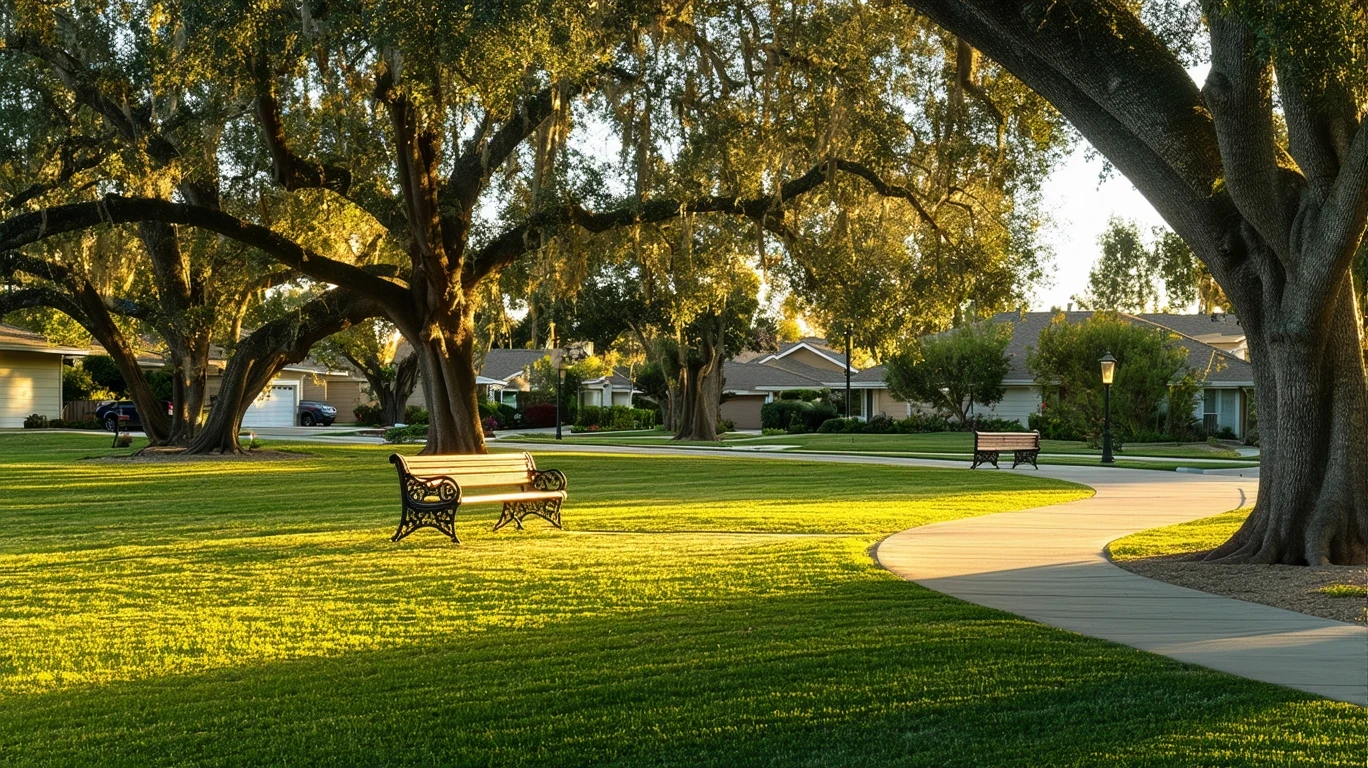
What distinguishes Morgan Hill from denser Silicon Valley cities is the texture of daily life. Grocery and food establishments exceed high-density thresholds across the city, and walkable pockets with substantial pedestrian infrastructure create neighborhoods where errands don’t always require a car. Rail service is present, and cycling infrastructure is notable throughout parts of the city. Parks and outdoor spaces are integrated at high density, with water features adding to the outdoor environment. For families, both schools and playgrounds meet or exceed density thresholds, creating strong family infrastructure.
The primary cost driver is housing entry—whether buying at over $1 million or renting at over $2,200 monthly. The secondary driver is transportation exposure: households with long commutes into Silicon Valley face recurring fuel costs that compound quickly, while those who live near rail or work locally experience much lower transportation pressure. Utility costs create moderate seasonal swings, and groceries reflect California’s elevated baseline without extreme premiums.
Driver verdict: Housing dominates, but transportation tradeoffs determine whether Morgan Hill feels manageable or financially stretched. Surprises come from property tax reassessments on high-value purchases, summer cooling bills, and fuel costs for distant commutes.
Housing Costs (Primary Driver)
At $1,066,800, the median home value in Morgan Hill represents a significant ownership threshold. Property taxes, insurance, and maintenance on a purchase at this level create ongoing obligations that extend well beyond the mortgage payment. For recent buyers, reassessment to current market value can shift annual tax bills substantially compared to long-term owners benefiting from Proposition 13 protections.
Renting at $2,249 per month offers entry without the capital requirement of ownership, but it exposes households to lease renewal volatility and limits long-term cost predictability. The rent-versus-own decision here hinges on timeline and transportation flexibility: renters near downtown or rail corridors gain access to walkable errands and transit options, while buyers in outer neighborhoods may trade lower per-square-foot costs for longer commutes and higher car dependency.
Morgan Hill functions as both a destination city for families seeking space and schools, and a transitional city for tech workers weighing commute distance against housing affordability. The mixed building height character and presence of both residential and commercial land use create pockets where urban conveniences exist alongside suburban space.
| Housing Type | Cost Anchor | What That Buys You |
|---|---|---|
| Median Home Purchase | $1,066,800 | Ownership equity, tax predictability under Prop 13, exposure to maintenance and insurance volatility |
| Median Rental | $2,249/month | Flexibility, no maintenance obligation, exposure to annual lease increases |
Conclusion: Morgan Hill is a buying city for households with capital and long timelines, and a transitional renting city for those prioritizing flexibility or evaluating commute-versus-housing tradeoffs.
Utilities & Energy Risk
Electricity in Morgan Hill is billed at 34.71¢ per kWh, a rate that reflects California’s grid costs and regulatory structure. For a household using around 1,000 kWh per month—typical for moderate air conditioning and standard appliance loads—illustrative monthly electricity costs before fees and taxes would approach $347. The extended cooling season in Morgan Hill’s warm, dry climate pushes summer usage higher than winter baseline, creating seasonal bill swings that households should anticipate.
Natural gas is priced at $23.78 per MCF (roughly 100 therms). Heating demand is modest in Morgan Hill’s mild winters, so gas costs remain minor for most of the year. Water heating and cooking dominate gas usage outside rare cold snaps.
The primary utility exposure here is summer electricity. Homes without efficient cooling systems, poor insulation, or west-facing sun exposure face higher usage and correspondingly higher bills. Efficiency upgrades—programmable thermostats, attic insulation, and strategic shading—reduce usage and help stabilize bills, though the magnitude of savings depends on baseline consumption and home characteristics.
Risk classification: Moderate. Electricity creates seasonal pressure, but it does not approach the volatility seen in extreme-heat or extreme-cold climates.
Groceries & Daily Costs
Grocery costs in Morgan Hill reflect California’s elevated food pricing, shaped by labor costs, supply chain distances, and regional price parity. Derived estimates based on national baselines adjusted for regional conditions show staples like ground beef at $6.74 per pound, milk at $4.03 per half-gallon, and eggs at $2.50 per dozen. These figures are not observed local prices but illustrative benchmarks for understanding category-level pressure.
What matters more than individual item prices is the structure of errands. Food and grocery establishments in Morgan Hill exceed high-density thresholds, meaning most households have multiple options within short distances. This density reduces the friction of comparison shopping and lowers the time cost of running errands—a meaningful advantage in a region where time is often more constrained than money.
For households accustomed to lower-cost regions, the grocery baseline here will feel elevated. For those coming from San Francisco or Palo Alto, Morgan Hill’s grocery pressure is familiar, not shocking. The key difference is accessibility: finding a place near clustered grocery options reduces the need to drive long distances for weekly shopping, which compounds savings on fuel and time.
Transportation Reality
Transportation costs in Morgan Hill split sharply between those who commute into Silicon Valley and those who work locally or remotely. At $5.34 per gallon, fuel costs for a typical 25-mile round-trip commute in a vehicle averaging 25 MPG would run roughly $2.67 per day, or over $50 per week for five commute days—illustrative context before accounting for tolls, parking, or vehicle wear.
Rail service is present in Morgan Hill, offering an alternative for commuters heading north into San Jose or beyond. For households near rail corridors, the decision to own one car instead of two, or to rely on transit for the primary commute, dramatically lowers recurring transportation exposure. Cycling infrastructure is notable throughout parts of the city, and the pedestrian-to-road ratio exceeds high thresholds in walkable pockets, meaning some daily errands and short trips don’t require a vehicle at all.
Car dependency remains the norm for most households, particularly those in outer neighborhoods or with school-age children managing multiple daily trips. The transportation question in Morgan Hill is not whether you need a car, but whether you need two, and whether your commute distance makes fuel and time costs a major recurring pressure or a minor line item.
Transportation as recurring exposure: High for long-distance commuters, moderate for local workers, low for remote workers or rail-accessible households.
Cost Exposure Profiles
Cost pressure in Morgan Hill is not uniform—it depends on which exposures a household carries. Housing entry cost is the dominant filter: buying at over $1 million or renting at over $2,200 per month sets the baseline. From there, transportation and utilities create the swing factors.
Low-exposure households rent near downtown or rail corridors, work remotely or locally, and use transit or bikes for errands. They avoid long commutes, minimize fuel costs, and benefit from broadly accessible groceries and services within walking or short driving distance. Summer electricity creates moderate seasonal bills, but overall cost structure remains predictable.
High-exposure households recently purchased homes at current market values, commute long distances into Silicon Valley by car, and run cooling systems heavily during extended summer heat. Property tax reassessments, fuel costs over $5 per gallon, and seasonal utility swings compound into significant recurring pressure. Vehicle count matters: two-car households with two commutes double transportation exposure.
The difference between these profiles is not income level—it’s structural. Renters versus owners face different volatility and predictability. Commuters versus remote workers face different time and fuel costs. Households near walkable, transit-served areas versus car-dependent outer neighborhoods experience different daily friction and transportation dependence.
Morgan Hill rewards those who can access its infrastructure advantages—rail, walkable errands, parks, and schools—while penalizing those who must drive long distances for work or rely heavily on air conditioning without efficient systems.
Frequently Asked Questions
Is Morgan Hill more affordable than San Jose in 2026? Morgan Hill’s median home value of $1,066,800 and median rent of $2,249 per month tend to be lower than core San Jose neighborhoods, but the gap narrows when comparing to South San Jose. The affordability advantage depends on commute tolerance and transportation costs.
What does a typical cost profile look like in Morgan Hill? Housing dominates, with ownership or rent setting the baseline. Transportation costs vary widely based on commute distance and vehicle count. Utilities create moderate seasonal swings, and groceries reflect California’s elevated baseline without extreme premiums.
Do utilities cost more in Morgan Hill than nearby areas? Electricity at 34.71¢ per kWh is consistent with broader California rates and creates moderate summer exposure. Natural gas at $23.78 per MCF is typical for the region. Utility costs are not a major differentiator compared to nearby cities.
What costs tend to surprise newcomers in Morgan Hill? Property tax reassessments on high-value home purchases, summer electricity bills during extended cooling seasons, and fuel costs for Silicon Valley commutes at $5.34 per gallon are the top three surprises. Many newcomers also underestimate the recurring cost of maintaining two vehicles.
Are property taxes higher in Morgan Hill than Gilroy? Property tax rates in Santa Clara County are consistent across cities, but Morgan Hill’s higher median home value of $1,066,800 results in higher absolute tax bills for recent buyers compared to Gilroy’s lower median values.
Is Morgan Hill a good value for families in 2026? Morgan Hill offers strong family infrastructure, with schools and playgrounds meeting or exceeding density thresholds, and integrated parks and outdoor spaces. The value proposition depends on whether housing entry cost and commute exposure fit within a household’s long-term financial structure.
How much does commuting into Silicon Valley cost from Morgan Hill? Fuel costs for a typical commute depend on distance and vehicle efficiency, but illustrative context for a 25-mile round trip at $5.34 per gallon in a 25-MPG vehicle would run over $50 per week. Rail service offers an alternative for some commuters, reducing fuel and vehicle wear exposure.
Does Morgan Hill require two cars per household? Not always. Households near rail corridors or with walkable errands access can manage with one vehicle, especially if one adult works remotely or locally. Outer neighborhoods and families managing school and activity schedules typically require two cars, which doubles transportation exposure.
How this article was built: In addition to public economic data, this article incorporates location-based experiential signals derived from anonymized geographic patterns—such as access density, walkability, and land-use mix—to reflect how day-to-day living actually feels in Morgan Hill, CA.
—