
A first-time renter moving to Mustang faces a monthly housing cost of $1,147 before utilities or parking—roughly 16% of the city’s median household income. A first-time buyer looking at the median home value of $212,200 enters a market where ownership is accessible relative to income, but where the low-rise suburban form and sparse commercial density create ongoing exposure to transportation, maintenance, and utility costs that renters can sometimes avoid. The difference between renting and owning in Mustang isn’t just about monthly payments—it’s about which costs you control, which ones grow over time, and how the structure of the city itself shapes your household logistics.
The Housing Market in Mustang Today
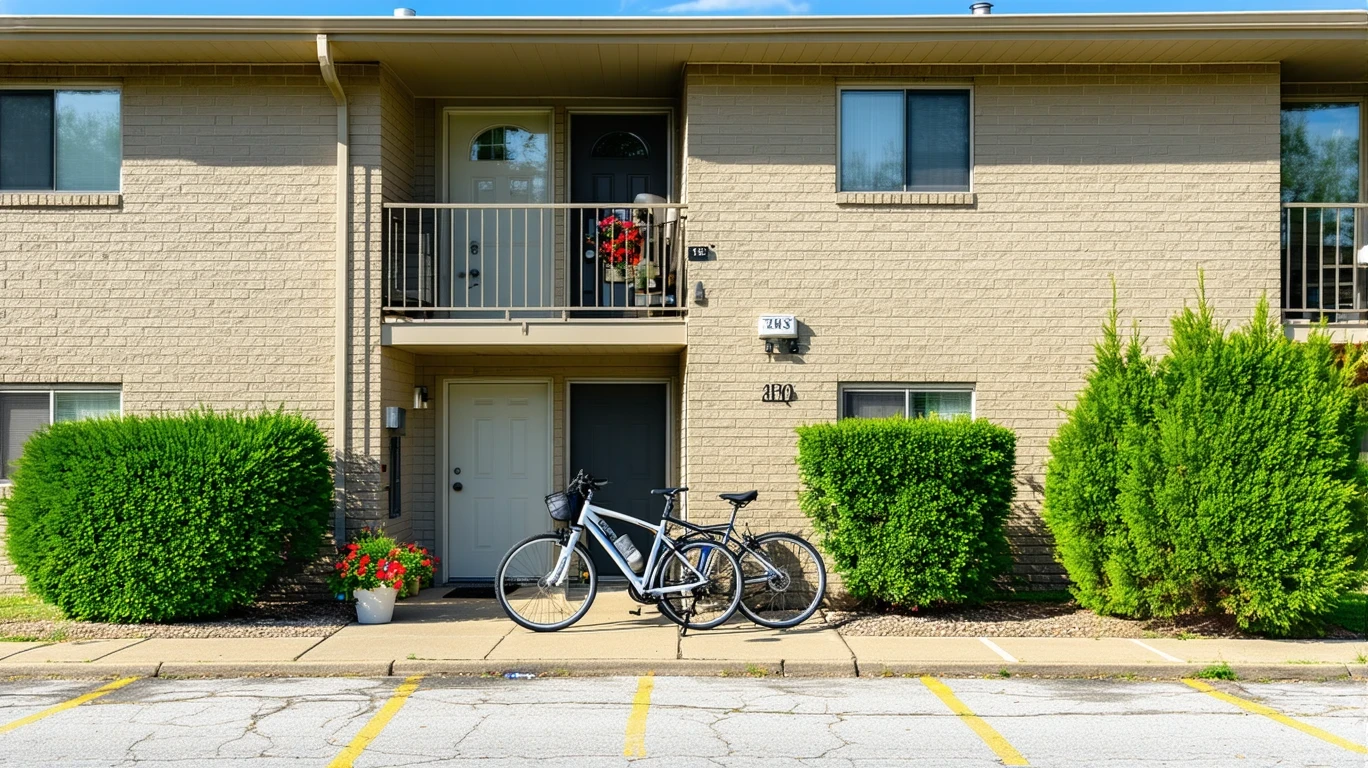
Mustang functions as a commuter suburb within the Oklahoma City metro, and that role shapes its housing market in specific ways. The city’s low-rise building character and sparse food and grocery density mean that most housing is detached or low-density attached, and most households depend on cars for daily errands. The regional price level sits at 91% of the national baseline, which makes both rent and ownership costs lower in absolute terms than in many metro areas—but the tradeoff is that convenience infrastructure is thin. You’re not paying for walkable access to services; you’re paying for space and relative affordability in a car-oriented environment.
The median home value of $212,200 is moderate relative to the median household income of $84,162 per year, which gives Mustang a different ownership profile than higher-cost suburbs where income and home prices diverge more sharply. The unemployment rate of 2.8% signals a stable local labor market, which supports housing demand without the volatility seen in economically fragile areas. What newcomers often misunderstand is that Mustang’s housing affordability comes with a structural requirement: you need to budget not just for the home, but for the transportation, time, and utility exposure that come with low-density suburban living.
Renting in Mustang
At $1,147 per month, the median gross rent in Mustang reflects the cost of entering a market where rental housing is less common than ownership. Renters in Mustang are typically in transition—early in their careers, new to the metro, or not yet ready to commit to ownership. The sparse accessibility of food and grocery options means that even renters face the same car dependency as owners, and the mixed pedestrian infrastructure (moderate relative to road density) offers limited relief. You can walk in some areas, but you can’t rely on walking to meet daily needs.
Rental pressure in Mustang is shaped by the broader Oklahoma City metro rental market, and availability tends to cluster near major corridors rather than being distributed evenly. Because the city’s urban form is low-rise and land use is less mixed, rental properties are often single-family homes or small multifamily buildings rather than large apartment complexes. This can mean more space per dollar, but it also means fewer included amenities and less flexibility in lease terms. Renters should expect that their monthly budget will include not just rent, but transportation costs that are higher than in denser, more transit-rich environments.
Owning a Home in Mustang
Ownership in Mustang centers on detached single-family homes, and the median home value of $212,200 is within reach for households earning near the city’s median income. But ownership here is not just about the purchase price—it’s about taking on the full cost structure of a low-rise suburban home in a climate with hot summers and cold enough winters to require heating. Cooling costs dominate in summer, driven by extended heat exposure, and natural gas heating (priced at $11.08 per MCF) is common in winter. These are predictable seasonal expenses, but they’re larger in a detached home than in a multifamily unit where some thermal load is shared.
Property taxes, insurance, and maintenance are the other major ownership exposures. While property tax rates are not provided in the data, Oklahoma’s tax structure generally includes homestead exemptions and voter-approved levies that vary by school district and municipality. Owners should expect that taxes will adjust over time as assessed values change, and that insurance costs in Oklahoma reflect exposure to severe weather, particularly wind and hail. Maintenance in a suburban home is both more frequent and more expensive than in an apartment: you’re responsible for the roof, the HVAC system, the yard, and any structural issues that arise.
Ownership in Mustang also means navigating a governance environment where homeowners’ associations may or may not be present, depending on the subdivision. When HOAs exist, they can add monthly fees in exchange for amenities or exterior maintenance, but they also introduce rules and assessment risk. When they don’t exist, you have more control but also more direct responsibility for upkeep.
Apartment vs House in Mustang — Cost Behavior Comparison
| Expense Category | Apartment | House |
|---|---|---|
| Cooling (Summer) | Moderate; shared walls reduce load | Dominant; full exposure to heat, larger square footage |
| Heating (Winter) | Lower; partial thermal buffering | Higher; detached structure, natural gas common |
| Maintenance Responsibility | Limited to interior; landlord handles structure | Full responsibility for roof, HVAC, yard, exterior |
| Transportation Dependency | High; sparse errands accessibility requires car | High; same infrastructure, often farther from corridors |
| Severe Weather Exposure | Lower; building structure managed by owner | Higher; direct responsibility for wind/hail damage, landscaping |
Why these categories: The differences shown reflect Mustang’s climate (hot summers, cold winters), its low-rise suburban form (detached homes dominate), and its sparse commercial density (both renters and owners depend on cars). Categories like water/sewer or trash were excluded because they don’t vary meaningfully by housing type in this market. The table focuses on costs that behave differently because of structure, not just tenure.
Utilities & Upkeep Differences
Utility exposure in Mustang is driven primarily by climate and housing type. The electricity rate of 12.25¢ per kWh is moderate, but consumption in summer is not—extended cooling seasons and triple-digit heat mean that air conditioning dominates household electricity use from June through September. In a detached house, that can mean cooling 1,500 to 2,500 square feet of space with full sun exposure on all sides. In an apartment, shared walls and smaller square footage reduce the load, though top-floor units still face significant exposure.
Heating costs in winter are typically lower than cooling costs in summer, but they’re still noticeable. Natural gas heating is common, and at $11.08 per MCF, a cold month can add meaningful expense. Apartments benefit from partial thermal buffering—heat from neighboring units reduces the need to run your own system constantly. Houses don’t have that advantage, and older or poorly insulated homes face higher heating costs.
Upkeep differences are structural, not seasonal. In an apartment, the landlord handles roof leaks, HVAC failures, and exterior damage. In a house, you pay for all of it, and in Oklahoma, severe weather accelerates the replacement cycle for roofs and siding. Wind and hail are recurring risks, and even if insurance covers major damage, deductibles and premium increases are part of the long-term cost profile. Yard maintenance is another ongoing expense that doesn’t exist for renters—mowing, irrigation, and storm cleanup are all owner responsibilities.
Rent vs Buy: Long-Term Exposure in Mustang
The structural difference between renting and owning in Mustang is not about monthly cost—it’s about predictability, control, and exposure to change over time. Renters face lease renewals that can adjust quickly in response to metro-wide demand, but they avoid property tax changes, insurance increases, and major maintenance events. Owners lock in their purchase price and gain control over improvements and modifications, but they take on every category of cost that renters can walk away from.
Over time, ownership in Mustang means managing several categories of cost that grow independently. Property taxes adjust as assessed values change and as local jurisdictions seek revenue for schools, infrastructure, and services. Insurance premiums respond to statewide severe weather losses, and even if your home is never damaged, you pay for the risk pool. Maintenance is episodic but inevitable—HVAC systems fail, roofs age out, and water heaters don’t last forever. These costs don’t follow a predictable schedule, but they’re part of the ownership structure.
Renters avoid that complexity, but they give up control. You can’t modify the property, you can’t benefit from any appreciation in home values, and you’re subject to the landlord’s decisions about rent increases and lease renewals. In a market like Mustang, where ownership is accessible and the rental stock is limited, many households treat renting as a short-term position rather than a long-term strategy. The question isn’t whether ownership is cheaper—it’s whether you’re ready to manage the cost categories that come with it.
FAQs About Housing Costs in Mustang
Is $1,147 per month typical for rent in Mustang, OK?
$1,147 per month is the median gross rent, meaning half of renters pay more and half pay less. Actual rent depends on unit size, location within Mustang, and proximity to major corridors. Renters should expect that this figure does not include utilities, parking, or pet fees, and that the sparse errands accessibility means transportation costs will be a significant additional expense.
How much does it cost to own a home in Mustang beyond the purchase price?
Ownership costs include property taxes, homeowners insurance, maintenance, utilities, and possibly HOA fees. In Mustang’s climate, cooling costs are the dominant utility expense in summer, and natural gas heating adds cost in winter. Severe weather exposure means that insurance and roof/exterior maintenance are recurring concerns. Owners should budget for episodic repairs and expect that these costs grow over time.
Does Mustang’s low-rise housing make utilities more expensive?
Yes, indirectly. Low-rise housing in Mustang is predominantly detached single-family homes, which have full exposure to heat, cold, and weather on all sides. This increases both cooling and heating costs compared to multifamily housing where shared walls provide thermal buffering. The electricity rate is moderate, but consumption in a detached home during summer heat is not.
Is renting or buying a better fit for families in Mustang, OK?
Families in Mustang face limited family infrastructure density—school and playground density are both below thresholds—but a hospital is present and green space access is moderate. Ownership offers stability and control, which matters for families planning to stay long-term, but it also means taking on maintenance and utility exposure that renters avoid. Renting offers flexibility but less space per dollar and less control over housing stability. The fit depends on how long you plan to stay and whether you’re prepared to manage the full cost structure of a suburban home.
How does Mustang’s housing cost compare to the rest of the Oklahoma City metro?
Mustang’s regional price level is 91% of the national baseline, which reflects below-average costs overall. Within the Oklahoma City metro, Mustang functions as a suburban option with lower home values than some inner-ring suburbs but similar car dependency and infrastructure. The tradeoff is that you pay less for housing but more for transportation and time, because the sparse commercial density means most errands require driving.
Making Housing Choices in Mustang
Housing costs in Mustang are shaped by the city’s role as a low-density, car-dependent suburb within the Oklahoma City metro. Renters pay moderate rent but face the same transportation dependency as owners, and the limited rental stock means that ownership is often the more stable long-term option. Owners gain control and benefit from accessible home values relative to income, but they take on the full cost structure of a detached suburban home in a climate with hot summers, cold winters, and recurring severe weather risk.
The decision between renting and owning in Mustang isn’t about which is cheaper—it’s about which cost structure fits your household’s timeline, risk tolerance, and willingness to manage complexity. Renters avoid property taxes, insurance volatility, and maintenance surprises, but they give up control and face lease renewal uncertainty. Owners lock in their housing cost at purchase but take on every category of expense that renters can walk away from. Both paths require planning for transportation costs, because Mustang’s sparse errands accessibility and mixed pedestrian infrastructure mean that car dependency is not optional—it’s structural.
For a fuller picture of how housing costs fit into the broader financial landscape, see where your money goes in Mustang.
How this article was built: In addition to public economic data, this article incorporates location-based experiential signals derived from anonymized geographic patterns—such as access density, walkability, and land-use mix—to reflect how day-to-day living actually feels in Mustang, OK.