
Is Laguna Niguel expensive to live in? Laguna Niguel is considered expensive in 2026, with a median home value of $1,052,800 and median rent of $2,736 per month anchoring the cost structure. The value proposition depends on housing entry cost versus car dependence and whether you can absorb California’s elevated fuel and electricity rates.
Trying to figure out if your budget can handle a move to Laguna Niguel means confronting a simple reality: housing dominates everything else. Before you start adding up groceries or gas, you need to know whether the $1 million–plus entry point for ownership—or nearly $2,800 a month for rent—leaves enough room for the rest of your life. This isn’t a city where you can offset high rent with cheap utilities or skip car ownership to save money. The cost structure here is shaped by Orange County’s coastal premium, California’s energy and fuel costs, and a layout that rewards walkability in pockets but still expects you to drive for most errands.
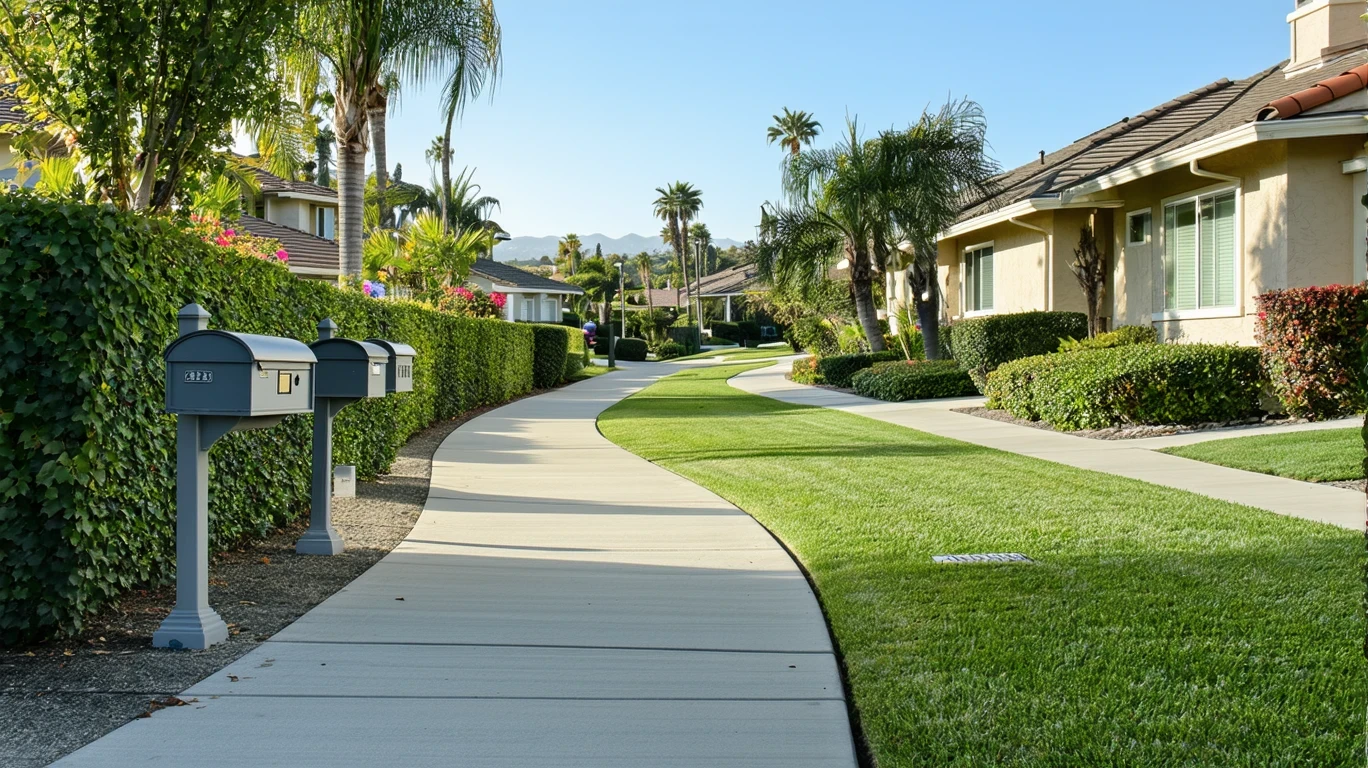
Overall Cost of Living Snapshot
Laguna Niguel’s cost profile is defined by housing pressure, transportation fuel exposure, and utility seasonality. The regional price parity index of 103 signals costs slightly above the national baseline, but that modest figure understates the intensity of specific categories. Housing—whether you rent or buy—claims the largest share of household budgets. Transportation costs layer on top, driven by $5.90-per-gallon gas and a street network that mixes walkable residential pockets with corridor-clustered grocery and retail access. Electricity rates of 30.29¢ per kilowatt-hour add seasonal swings during summer cooling months, while natural gas at $22.96 per thousand cubic feet plays a smaller role in this mild coastal climate.
The unemployment rate of 3.9% reflects a stable local economy, and median household income of $135,822 per year provides context for the affordability equation—but income alone doesn’t determine fit. What matters more is how your household’s specific exposures (commute length, home size, cooling needs) align with the city’s cost drivers. Compared to inland Southern California cities, Laguna Niguel trades some transportation convenience for coastal access and integrated green space. Compared to more urban parts of Orange County, it offers lower-density living and mixed building heights, but you’ll pay for that space in both purchase price and ongoing transportation costs.
Driver verdict: Housing dominates, transportation amplifies, and utilities create seasonal variability. Surprises come from the cumulative weight of California-specific premiums—fuel, electricity, and property values—that don’t show up in a single headline number.
Housing Costs (Primary Driver)
The median home value of $1,052,800 sets the baseline for ownership. That figure reflects single-family homes in a coastal Orange County suburb with integrated parks, water features, and a mix of low-rise and mid-rise building stock. Buyers face not only the purchase price but also property taxes, insurance (including wildfire and earthquake considerations in California), and maintenance on homes that may include yards, pools, or HOA obligations. Ownership here is a long-term commitment that assumes you can absorb both the entry cost and the ongoing expenses tied to California homeownership.
Renting offers a different tradeoff. The median gross rent of $2,736 per month buys access to the same neighborhood amenities—parks, schools, proximity to the coast—without the capital outlay or maintenance risk. But rent at this level still represents significant monthly pressure, and renters face the possibility of lease renewals that reflect broader Orange County market trends. There’s no “budget” tier in Laguna Niguel’s rental market; the floor is high, and the ceiling reflects the premium for newer construction or desirable locations near green space.
The renting-versus-owning decision here isn’t about finding affordability—it’s about choosing your exposure. Renters trade flexibility and lower upfront costs for less control over long-term housing expenses. Owners trade liquidity and higher entry barriers for stability and the ability to lock in a fixed mortgage payment (though taxes, insurance, and maintenance remain variable). This is an ownership-oriented market where renting is a transitional or lifestyle choice, not a cost-saving strategy.
| Housing Type | Cost Anchor | What That Buys You |
|---|---|---|
| Median Home Value | $1,052,800 | Single-family ownership in coastal Orange County with park access, mixed building character, and long-term cost control |
| Median Gross Rent | $2,736/month | Access to neighborhood amenities without capital outlay; flexibility with exposure to lease renewal market dynamics |
Conclusion: Laguna Niguel is a buying market. Renting is viable but reflects comparable pressure and less long-term cost certainty.
Utilities & Energy Risk
Electricity in Laguna Niguel costs 30.29¢ per kilowatt-hour, a rate that sits well above national norms and reflects California’s energy policy, infrastructure costs, and renewable mandates. For a household using around 1,000 kWh per month—typical for a home with air conditioning, standard appliances, and moderate usage—that translates to roughly $303 per month before fees or taxes in illustrative context. Actual bills vary widely based on home size, insulation quality, thermostat habits, and whether you’re running central AC during extended summer heat. Coastal Orange County’s climate moderates the cooling season compared to inland areas, but July through September can still drive meaningful spikes.
Natural gas, priced at $22.96 per thousand cubic feet (MCF), plays a smaller role here. Heating demand is minimal in this mild climate, so gas costs tend to center on water heating and cooking rather than furnace operation. A household using 1 MCF per month during cooler months (roughly 100 therms) would see a gas cost around $23 before fees in illustrative context—a minor line item compared to electricity.
The real risk isn’t the baseline rate; it’s the seasonal swing. Electricity costs can double or more during peak summer months if your home lacks efficient cooling, modern insulation, or behavioral controls like programmable thermostats. Renters in older buildings face this exposure without the ability to upgrade infrastructure. Owners can mitigate through efficiency investments, but those upgrades require upfront capital and time to pay off through lower usage.
Risk classification: Moderate. Electricity rates create meaningful exposure during cooling season, but the coastal climate and mild winters prevent year-round utility pressure. Households with efficient cooling systems and modest square footage face lower risk; those in larger, older homes with poor insulation face higher seasonal volatility.
Groceries & Daily Costs
Grocery costs in Laguna Niguel reflect California’s broader price environment, shaped by the regional price parity index of 103 and the state’s labor, transportation, and regulatory costs. Derived estimates suggest staples like bread ($1.86/lb), chicken ($2.09/lb), and rice ($1.09/lb) sit slightly above national baselines, while items like ground beef ($6.90/lb) and cheese ($4.93/lb) show more pronounced premiums. These aren’t outlier prices—they’re the texture of shopping in coastal Southern California, where even routine purchases carry a markup.
The impact varies by household type. A single person or couple shopping for fresh ingredients and cooking at home will notice the premium but can manage it through planning and flexibility. Families feeding multiple people, especially those relying on convenience foods or frequent grocery runs, face compounding pressure. The difference between a $150 weekly grocery bill and a $200 bill isn’t dramatic in isolation, but over a year it adds up—and it layers on top of housing and transportation costs that already claim the majority of household budgets.
Errands accessibility in Laguna Niguel is corridor-clustered, meaning grocery stores and food options concentrate along specific routes rather than spreading evenly across neighborhoods. That pattern works fine if you live near a corridor or don’t mind a short drive, but it reinforces car dependency for most households. You’re not walking to the store with bags of groceries unless you’re in one of the walkable pockets identified by local infrastructure signals.
Transportation Reality
Laguna Niguel’s transportation costs are driven by car dependency, even in a city with walkable pockets and notable cycling infrastructure. The pedestrian-to-road ratio exceeds high thresholds in parts of the city, and bike-to-road ratios signal meaningful cycling presence, but the overall street network still expects you to drive for most errands. Grocery stores and daily services cluster along corridors rather than distributing evenly, and transit options are limited to bus service—no rail. That means most households rely on personal vehicles for commuting, errands, and accessing anything beyond their immediate neighborhood.
Gas prices of $5.90 per gallon make that dependency expensive. A household driving 25 miles round-trip per day in a vehicle averaging 25 miles per gallon would burn about 30 gallons per month, costing $177 before maintenance, insurance, or parking in illustrative context. Add a second vehicle, a longer commute, or lower fuel efficiency, and transportation quickly becomes a major recurring expense. Unlike housing, which you pay once per month, transportation costs accumulate every time you leave the driveway.
The city’s layout offers some relief: integrated green space and water features mean you can walk or bike for recreation without driving to a park. Mixed land use in certain areas supports short trips on foot or by bike. But those benefits don’t eliminate the need for a car—they just reduce how often you use it. If you work remotely or have a very short commute, transportation pressure drops significantly. If you’re commuting to another part of Orange County or Los Angeles County, fuel costs become a persistent drain.
Transportation is a recurring exposure, not a one-time cost. The longer your commute and the more vehicles your household operates, the more this category compounds. Laguna Niguel’s street character supports active transportation in pockets, but it doesn’t replace the car—it supplements it.
Cost Exposure Profiles
Cost pressure in Laguna Niguel isn’t uniform—it’s shaped by how your household intersects with the city’s specific structure. Housing entry cost dominates for new buyers and renters, but long-term owners with paid-off mortgages face only taxes, insurance, and maintenance. Transportation dependence hits hardest for households with long commutes or multiple vehicles, while those working from home or living near a transit corridor see lower fuel exposure. Utility volatility affects everyone, but the intensity depends on home size, cooling efficiency, and behavioral habits during summer months.
Low-exposure situations: You own your home outright or have a low fixed mortgage; you work remotely or have a short commute; your home has efficient cooling and modest square footage; you live in or near a walkable pocket with access to parks and errands on foot. In this scenario, your ongoing costs center on property taxes, insurance, maintenance, and moderate utility bills. You benefit from the city’s green space integration and mixed land use without absorbing the full weight of California’s transportation and energy premiums.
High-exposure situations: You’re a new renter or buyer facing the full weight of current housing prices; you commute long distances or operate multiple vehicles; your home is older, larger, or poorly insulated, driving up summer cooling costs; you rely entirely on driving for errands and daily logistics. In this scenario, housing, transportation, and utilities all layer on top of each other, and the cumulative pressure is significant. You’re paying the California premium across every major category, with limited ability to offset one cost against another.
The difference between these profiles isn’t income—it’s structure. A household earning $150,000 per year can struggle in Laguna Niguel if they’re financing a $1 million home, commuting 50 miles per day, and cooling a 2,500-square-foot house in July. A household earning $100,000 can manage comfortably if they bought years ago, work nearby, and live in a smaller, efficient home. The city’s cost texture rewards those who can minimize exposure across multiple categories and penalizes those who face compounding pressure.
Frequently Asked Questions
Is Laguna Niguel more affordable than Irvine or Mission Viejo in 2026? Laguna Niguel’s median home value of $1,052,800 sits in the same range as other coastal Orange County cities, though specific neighborhoods vary. The cost difference between these cities is less about overall affordability and more about housing stock, commute tradeoffs, and proximity to employment centers.
What does a typical cost profile look like in Laguna Niguel? Housing claims the largest share, followed by transportation (driven by car dependency and $5.90/gal gas) and utilities (shaped by 30.29¢/kWh electricity and summer cooling). Groceries and daily costs reflect California’s broader premium but remain secondary to housing and transportation pressure.
Do utilities cost more in Laguna Niguel than in nearby inland cities? Electricity rates are consistent across Southern California Edison’s service area, but cooling costs tend to be lower in coastal areas like Laguna Niguel compared to hotter inland cities. The rate is the same; the usage intensity differs.
What costs tend to surprise newcomers in Laguna Niguel? Transportation costs accumulate faster than expected due to California’s gas prices and the need for a car despite walkable pockets. Utility bills also spike during summer months if your home lacks efficient cooling, and property taxes on a $1 million–plus home add up quickly.
Are property taxes higher in Laguna Niguel than in other Orange County cities? California’s Proposition 13 caps property tax increases for existing owners, so the effective rate depends on when you bought. New buyers pay taxes based on current assessed value, which is high across all of coastal Orange County, not just Laguna Niguel.
Can you live in Laguna Niguel without a car? The city has walkable pockets, notable bike infrastructure, and bus service, but errands and groceries cluster along corridors rather than distributing evenly. Most households rely on a car for daily logistics, though you can reduce vehicle usage if you live near a walkable area and work remotely.
How much does summer cooling typically add to electricity bills in Laguna Niguel? Coastal Orange County’s mild climate moderates cooling demand compared to inland areas, but homes with central AC and poor insulation can still see bills double during July through September. Efficient systems and behavioral controls (programmable thermostats, strategic ventilation) reduce seasonal swings.
Is Laguna Niguel a good value compared to Los Angeles County coastal cities? Laguna Niguel offers lower density, integrated parks, and a suburban layout at a price point comparable to other coastal Southern California suburbs. Whether it’s a “good value” depends on your priorities—proximity to employment, school quality, and tolerance for car dependency all factor in.
How this article was built: In addition to public economic data, this article incorporates location-based experiential signals derived from anonymized geographic patterns—such as access density, walkability, and land-use mix—to reflect how day-to-day living actually feels in Laguna Niguel, CA.