
When you ask locals how they feel about living in Huntington Beach, the answer often starts with “the beach” and ends with “but.” It’s a city where 74 out of 100 residents say they’re happy—a number that reflects real affection for the coastal lifestyle, but also hints at the tradeoffs that come with it. People love the access to sand, surf, and year-round outdoor activity. They appreciate the parks, the bike paths, and the sense of space that comes with low-rise suburban living. But they also talk about housing pressure, long commutes, and the feeling that convenience sometimes requires more planning than they expected.
Huntington Beach sits in a sweet spot for a certain kind of household: active, outdoor-oriented, and comfortable with car dependency. The city’s infrastructure supports cycling notably well, and park density exceeds what you’d find in many comparable suburbs. But it’s not a walkable urban neighborhood, and it’s not a transit hub. Errands cluster along specific corridors rather than spreading evenly across the city, which means day-to-day costs and logistics often hinge on how far you live from those nodes. For families, the infrastructure is present but uneven—playgrounds are accessible, but school density falls below what some parents expect. The result is a city that feels deeply rewarding to those who align with its rhythm, and subtly frustrating to those who don’t.
What the Vibe Actually Feels Like
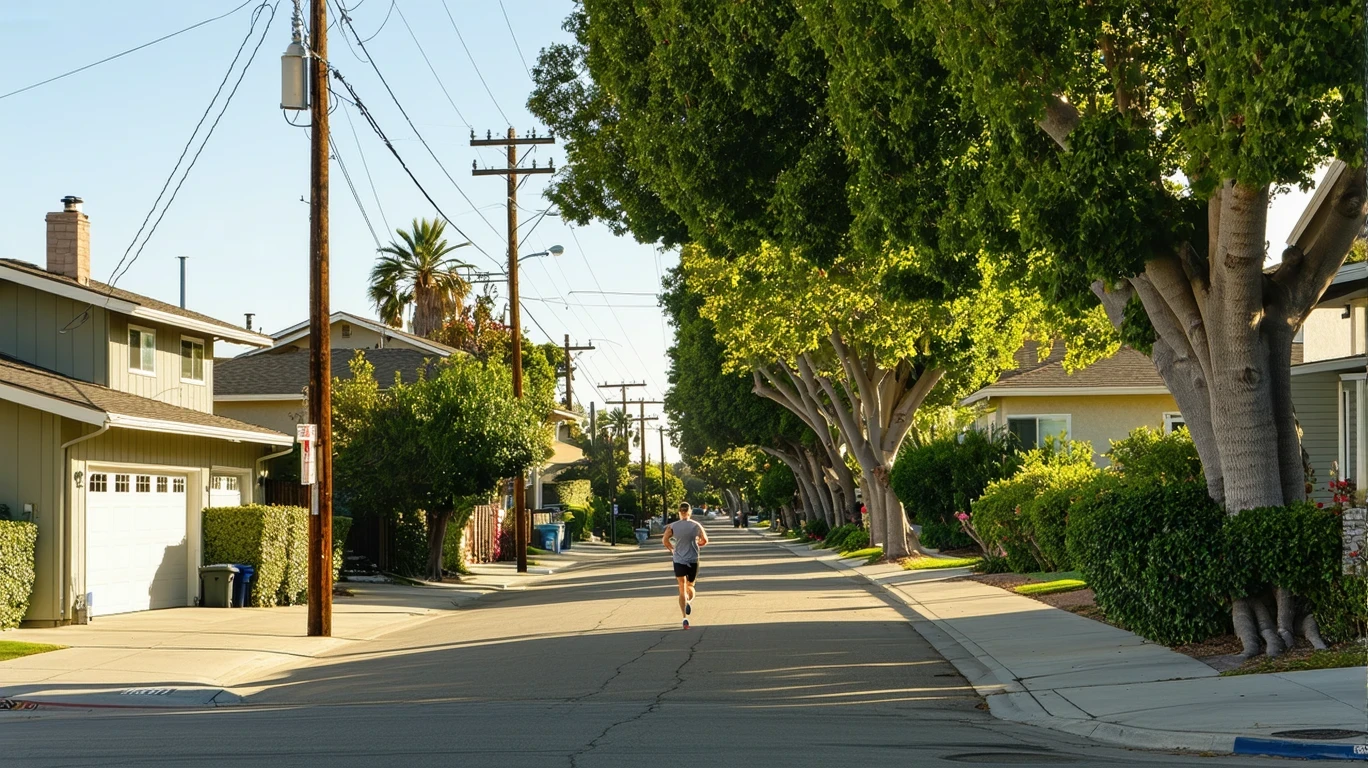
Huntington Beach carries a distinct emotional tone: pride in place, protectiveness of identity, and a persistent tension between growth and preservation. It’s a city where people feel lucky to live near the ocean, but also aware that the privilege comes with financial weight. The overall sentiment isn’t about universal happiness—it’s about alignment. If you value coastal access, outdoor recreation, and a slower suburban pace, the city tends to deliver. If you need walkable density, robust transit, or affordable rent, the friction shows up quickly.
The city’s low-rise character and mixed land use create pockets of variety, but the dominant experience is suburban: single-family homes, wide streets, and a reliance on cars. The bike infrastructure is a standout—bike-to-road ratios exceed high thresholds, and locals notice. But the pedestrian-to-road ratio sits in the middle band, meaning you can walk in some areas, but it’s not the default mode. Bus service is present, but without rail, transit feels more like a backup than a primary option. For households used to urban mobility, this can feel limiting. For those who grew up driving everywhere, it feels normal.
Social Media Buzz in Huntington Beach
On platforms like Reddit and local Facebook groups, Huntington Beach discussions tend to orbit around a few recurring themes: beach access, housing costs, traffic, and the tension between old-school surf town identity and modern suburban sprawl. The tone is often affectionate but exasperated—people love the place, but they’re tired of certain patterns.
“I moved here for the beach, and I still love waking up knowing it’s ten minutes away. But I also spend half my paycheck on rent, and the other half on gas because everything’s a drive.”
“The bike paths are genuinely great. I can ride to the beach, to the park, to a few spots downtown. But if I need groceries or want a specific restaurant, I’m still getting in the car.”
“It’s a good place to raise kids if you can afford it. The parks are solid, and there’s space to breathe. But the school situation is weird—some areas feel well-supported, others feel like you’re on your own.”
The emotional center of these conversations is tradeoff acceptance. People aren’t pretending the city is perfect, but they’re also not ready to leave. The frustration is real, but it’s the frustration of people who’ve chosen to stay.
Local News Tone
Local coverage in Huntington Beach tends to frame the city through the lens of identity negotiation: what kind of place is it becoming, and who gets to decide? Headlines and story themes don’t focus on dramatic incidents—they focus on ongoing tensions that never quite resolve.
- “Community Debates What Growth Should Look Like”
- “Coastal Access vs Development: Residents Weigh In”
- “Traffic Patterns Shift as Population Grows”
- “New Amenities Arrive as Neighborhood Character Evolves”
- “Housing Costs Push Families to Reassess Priorities”
The tone isn’t alarmist, but it’s not celebratory either. It’s watchful. The underlying message is that Huntington Beach is in a slow, ongoing negotiation with itself—between preservation and change, between affordability and exclusivity, between small-town charm and suburban density.
Review-Based Public Perception
On Google, Yelp, and Nextdoor-style platforms, Huntington Beach reviews tend to split along expectation lines. People who wanted coastal suburban comfort tend to praise the city. People who wanted urban texture or walkable convenience tend to express mild disappointment.
Positive reviews often highlight:
- Proximity to the beach and outdoor recreation
- Park access and green space integration
- Bike-friendly infrastructure
- Family-friendly feel in certain neighborhoods
- Hospital and healthcare access
Critical reviews often mention:
- High rent and home prices relative to space and amenities
- Car dependency for most errands
- Limited transit options
- Uneven school density and education access
- Corridor-clustered grocery and dining options, requiring intentional trips
The pattern is clear: Huntington Beach rewards people who align with its structure. If you’re comfortable driving, if you prioritize outdoor space over walkable density, if you value coastal identity over urban convenience, the city tends to feel like a good fit. If you need transit viability, if you expect errands to be a short walk, if you’re stretching financially to stay, the friction accumulates.
Comparison to Nearby Cities
| Dimension | Huntington Beach | Costa Mesa | Fountain Valley |
|---|---|---|---|
| Overall Vibe | Coastal suburban, active outdoor lifestyle, car-oriented | More urban density, walkable pockets, arts and dining scene | Quiet residential, family-focused, minimal nightlife |
| Mobility Feel | Bike-friendly, bus service, car-dependent for errands | More walkable corridors, better transit connections | Highly car-dependent, limited pedestrian infrastructure |
| Housing Pressure | High cost, coastal premium, space comes at a price | High cost, but more rental variety and density | High cost, but slightly more suburban affordability |
| Family Fit | Parks strong, playgrounds accessible, schools uneven | More school density, urban family tradeoffs | Strong school presence, quiet neighborhoods |
Huntington Beach sits between Costa Mesa’s urban texture and Fountain Valley’s residential quiet. If you want more walkability and dining variety, Costa Mesa offers denser corridors and better transit. If you want maximum suburban calm and stronger school infrastructure, Fountain Valley leans further in that direction. Huntington Beach offers the beach itself as the differentiator—if coastal access is central to your identity and lifestyle needs, the tradeoffs feel worth it. If the beach is just a nice-to-have, the other two cities might align better with your day-to-day priorities.
What Locals Are Saying
“We moved here from inland Orange County, and the beach access alone makes it worth it. Yes, rent is brutal, and yes, we drive everywhere. But we’re outside every weekend, and that’s what we wanted.”
“I work remotely, and Huntington Beach is perfect for that. I bike to the beach in the morning, work from home, and never deal with the commute nightmare. But if I had to drive to LA every day, I’d lose my mind.”
“The parks are genuinely great—we’re at the playground or the beach constantly. But finding a good school nearby was harder than we expected. We ended up driving our kid across town, which wasn’t the plan.”
“It’s a car city, no question. I knew that coming in. But the bike paths surprised me—I actually use them more than I thought I would. It’s not Amsterdam, but it’s better than most suburbs.”
“The cost is the hard part. We love the lifestyle, but we’re also aware that we’re one rent increase away from having to reconsider. It’s not a city where you feel financially relaxed unless you bought in years ago.”
“I grew up here, and it’s changed a lot. More crowded, more expensive, more traffic. But it’s still home, and I’m not ready to leave. You just adjust your expectations.”
“If you’re looking for walkable urban living, this isn’t it. But if you want space, outdoor access, and a slower pace near the coast, it delivers. You just have to be okay with driving and paying for the privilege.”
Does Huntington Beach Feel Like a Good Fit?
Huntington Beach works best for households that value coastal proximity, outdoor recreation, and suburban space more than they value walkability, transit access, or housing affordability. The city’s infrastructure supports an active lifestyle—cycling is notably strong, parks are abundant, and healthcare is accessible. But the structure is car-oriented, errands cluster along specific corridors, and housing costs create real financial pressure.
This tends to work for:
- Active individuals and families who prioritize beach access and outdoor time
- Remote workers or flexible schedules who can avoid long commutes
- Households comfortable with car dependency and willing to plan errands around corridors
- People who value low-rise suburban character over urban density
This tends to frustrate:
- Transit-dependent households or those who prefer not to drive daily
- Renters on tight budgets facing high costs without coastal lifestyle alignment
- Families expecting walkable school access and dense education infrastructure
- People seeking walkable neighborhoods with errands at the doorstep
The city’s emotional profile isn’t about universal happiness—it’s about alignment. If the beach is central to your identity, if you’re comfortable driving, if you can absorb the housing cost, Huntington Beach tends to feel rewarding. If those elements don’t align, the friction shows up in daily logistics, financial strain, and a persistent sense that the city wasn’t built for your rhythm. The question isn’t whether Huntington Beach is a good place—it’s whether it’s a good fit for the life you’re actually trying to live.
How this article was built: In addition to public economic data, this article incorporates location-based experiential signals derived from anonymized geographic patterns—such as access density, walkability, and land-use mix—to reflect how day-to-day living actually feels in Huntington Beach, CA.
The perspectives shown reflect commonly expressed local sentiment and recurring themes in public discussion, rather than individual accounts.