
Transit Coverage & Commute Reality in Huntington Beach
| Metric | Value |
|---|---|
| Average Commute Time | 29 minutes |
| Long Commute (60+ min) | 49.3% |
| Work From Home | 10.2% |
| Gas Price | $5.62/gal |
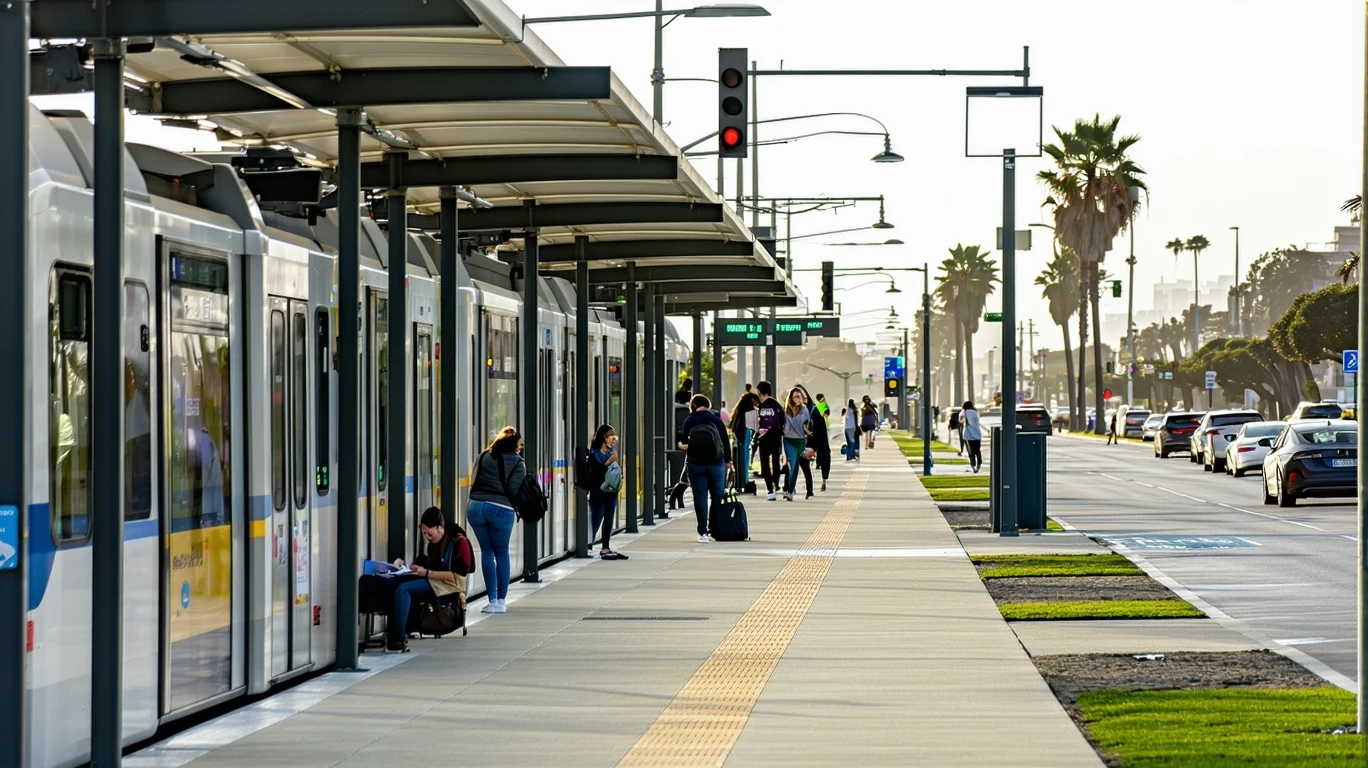
How People Get Around Huntington Beach
Transportation options in Huntington Beach reflect a coastal Orange County city built primarily around the automobile, but with more transportation variety than many suburban communities. Most residents drive for daily errands and commuting, yet the city supports bus service and has developed notable cycling infrastructure that some households use regularly. The pedestrian environment varies—certain corridors and neighborhoods offer moderate walkability, while much of the city requires a car for practical day-to-day movement.
Newcomers often assume Huntington Beach functions like a dense urban core with comprehensive transit, or conversely, that it’s entirely car-dependent with no alternatives. The reality sits in between. While driving dominates, the presence of bus routes and a strong bike network means that some residents—particularly those living near commercial corridors or employment centers—can reduce car dependence for specific trips. The city’s low-rise, mixed-use character in certain areas supports this flexibility, though it doesn’t eliminate the need for a vehicle for most households.
What shapes mobility here is the city’s layout: a sprawling coastal geography with commercial activity clustered along major corridors rather than concentrated in a single downtown. This pattern means that day-to-day costs and logistics depend heavily on where you live relative to where you work, shop, and manage errands. Proximity matters more than transit coverage for most residents.
Public Transit Availability in Huntington Beach
Public transit in Huntington Beach centers around bus service, with no rail stations within city limits. Bus routes connect residents to key corridors, shopping districts, and neighboring cities, providing a functional option for those whose daily routines align with available routes. The system works best for residents living near high-frequency corridors and commuting to destinations that are also well-served by transit.
Transit falls short in areas farther from main thoroughfares, where service frequency drops and coverage becomes sparse. Late-night and weekend service is limited compared to peak commuting hours, which constrains transit viability for shift workers or households with irregular schedules. For many residents, especially those in quieter residential neighborhoods removed from commercial corridors, transit doesn’t provide the coverage or frequency needed to replace a car.
The structure of Huntington Beach—low-rise development spread across a large area—means that even where bus service exists, the distance between stops and final destinations often requires additional walking or biking. This works for some, but it adds friction that makes driving more appealing for households managing multiple stops or tight schedules.
Driving & Car Dependence Reality
Driving remains the primary mode of transportation for most Huntington Beach residents. The city’s layout, with jobs, services, and amenities distributed across a wide area rather than concentrated in a compact core, makes car ownership nearly essential for full mobility. Parking is generally available and less constrained than in denser urban centers, which reinforces the practicality of driving for daily errands, school drop-offs, and commuting.
Car dependence here isn’t just about preference—it’s a structural reality tied to how the city developed. Many households face commutes that require freeway access, and nearly half of workers experience long commutes exceeding 60 minutes. This reflects the broader Orange County job market, where employment centers are dispersed and housing costs push some residents farther from their workplaces. The result is that most families budget for at least one vehicle, and many need two to manage work and household logistics efficiently.
The tradeoff for car reliance is control and flexibility. Drivers can manage multi-stop trips, adjust schedules on the fly, and access the full range of services and employment across the region. The cost is exposure to fuel prices, insurance, maintenance, and the time burden of long commutes—factors that shape household budgets and daily routines more than transit fares ever would.
Commuting Patterns & Daily Mobility
Commuting in Huntington Beach typically involves either local trips within Orange County or longer regional commutes to Los Angeles, Irvine, or other employment hubs. The 29-minute average commute masks significant variation: some residents work nearby and enjoy short drives, while others absorb the reality of 60-plus-minute commutes that define their daily rhythm. Only 10.2% of workers have the flexibility to work from home, meaning the vast majority must physically travel to their jobs.
The high percentage of long commutes—49.3%—signals that many Huntington Beach residents have accepted distance as part of their housing-employment tradeoff. Living in a coastal city with strong amenities and desirable neighborhoods often means commuting farther to access jobs that pay enough to support the local cost structure. This pattern is common across Orange County, where housing and employment centers don’t always align neatly.
Daily mobility extends beyond commuting. Households manage school runs, grocery trips, medical appointments, and recreational activities, all of which require coordination. The mixed pedestrian environment and corridor-clustered errands accessibility mean that some trips—particularly in well-served neighborhoods—can be handled on foot or by bike, but most households still rely on a car to stitch together a full day’s logistics efficiently.
Who Transit Works For — and Who It Doesn’t
Public transit in Huntington Beach works best for residents whose housing and employment both sit along well-served bus corridors. This includes renters in denser, mixed-use areas near commercial streets, as well as workers commuting to destinations with strong transit connections. For these households, bus service provides a viable alternative that reduces the need for a second vehicle or eliminates car ownership entirely, depending on lifestyle and flexibility.
Transit becomes less practical for families with children, especially those managing school schedules, after-school activities, and multi-stop errands. The time cost and route limitations make driving far more efficient for these households. Similarly, residents in peripheral neighborhoods—where service frequency is lower and walking distances to stops are longer—find that transit doesn’t integrate smoothly into daily routines.
Cyclists benefit from the city’s notable bike infrastructure, particularly those comfortable riding longer distances or using bikes for recreation and short errands rather than primary commuting. The bike network expands mobility options for some, but it doesn’t replace the car for most households given the distances involved and the need for weather protection, cargo capacity, and time efficiency.
Transportation Tradeoffs in Huntington Beach
Choosing between transit and driving in Huntington Beach comes down to tradeoffs in predictability, control, and exposure. Driving offers flexibility and speed, especially for households managing complex schedules or living outside transit corridors. It also exposes households to fuel price volatility, maintenance costs, and the time burden of long commutes, particularly during peak traffic hours.
Transit, where viable, reduces direct transportation expenses and eliminates parking concerns, but it constrains schedule flexibility and limits access to destinations not served by bus routes. For households able to structure their lives around transit, the tradeoff can be worthwhile. For most, the city’s layout and job distribution make driving the more practical default, even when it means absorbing higher costs and longer commute times.
Cycling occupies a middle ground—lower cost than driving, more flexible than transit, but limited by distance, weather, and the physical demands of longer trips. It works well as a supplement to driving or transit, particularly for errands and recreation, but rarely serves as a sole transportation mode for working households.
FAQs About Transportation in Huntington Beach (2026)
Is public transit usable for daily commuting in Huntington Beach?
Public transit is usable for daily commuting if your home and workplace both align with bus corridors. For residents whose routines fit available routes, bus service provides a functional option. For those in peripheral areas or with multi-stop commutes, transit becomes less practical, and driving remains the more reliable choice.
Do most people in Huntington Beach rely on a car?
Yes, most Huntington Beach residents rely on a car for daily transportation. The city’s layout, dispersed employment centers, and high percentage of long commutes make car ownership nearly essential for full mobility. Bus service and cycling infrastructure provide alternatives for some trips, but they don’t eliminate the need for a vehicle for most households.
Which areas of Huntington Beach are easiest to live in without a car?
Areas near major commercial corridors with frequent bus service and higher concentrations of grocery stores, restaurants, and services offer the most car-free viability. Residents in these neighborhoods can handle more errands on foot or by bike, though even here, most households find a car useful for accessing employment, medical care, and destinations outside the immediate area.
How does commuting in Huntington Beach compare to nearby cities?
Commuting in Huntington Beach reflects broader Orange County patterns: moderate average commute times but a high percentage of workers facing long commutes. Compared to denser urban centers with rail access, Huntington Beach offers less transit coverage but more parking availability and driving flexibility. Compared to more isolated suburban cities, it provides better bus service and cycling infrastructure, though driving still dominates.
Can you get by with just a bike in Huntington Beach?
Getting by with just a bike is possible for a small subset of residents—those living near work, comfortable with longer rides, and able to structure errands around cycling. The city’s notable bike infrastructure supports this lifestyle more than many suburban areas, but most households find that bikes work best as a supplement to driving rather than a full replacement, especially when managing family logistics or commuting longer distances.
How Transportation Fits Into the Cost of Living in Huntington Beach
Transportation in Huntington Beach is less about fare costs and more about structural exposure. The need for a car, the likelihood of long commutes, and the time burden of regional travel all shape how households allocate resources and manage daily life. For most families, where money goes includes vehicle ownership, fuel, insurance, and maintenance—costs that don’t show up on a transit pass but define household budgets nonetheless.
The tradeoff between proximity and affordability plays out in commute length. Households that prioritize shorter commutes often pay more for housing closer to work, while those willing to absorb longer travel times can access more housing options. Neither choice is inherently better—it depends on how much time, predictability, and flexibility matter to your household.
Understanding getting around in Huntington Beach means recognizing that mobility here is car-first by design, with bus service and cycling infrastructure providing meaningful but limited alternatives. The city rewards proximity and planning, but it doesn’t penalize car dependence the way denser, more congested cities do. For most residents, the question isn’t whether to own a car, but how to structure housing and employment to minimize the time and cost burden that comes with it.
How this article was built: In addition to public economic data, this article incorporates location-based experiential signals derived from anonymized geographic patterns—such as access density, walkability, and land-use mix—to reflect how day-to-day living actually feels in Huntington Beach, CA.