
How People Get Around Palm Harbor
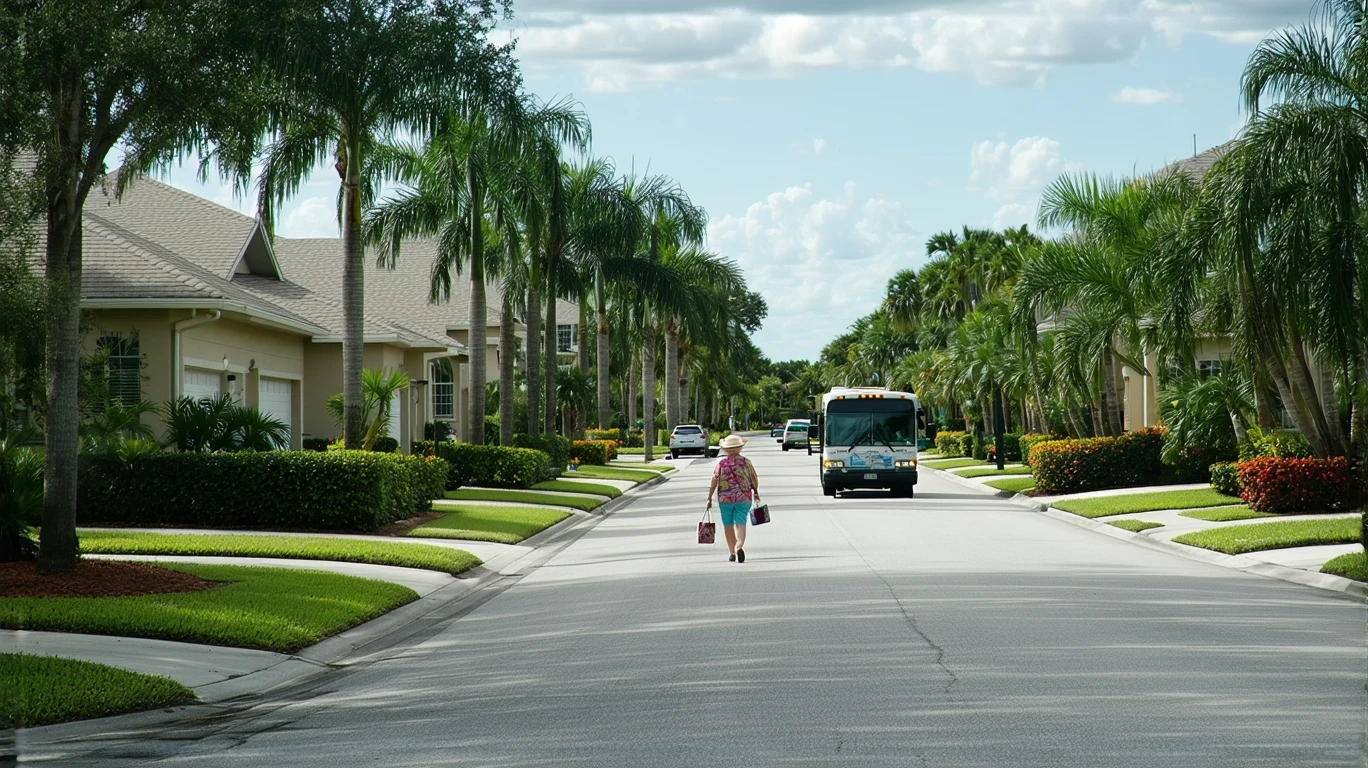
Understanding transportation options in Palm Harbor starts with recognizing the city’s suburban structure and proximity to the Tampa metro. Most residents rely on personal vehicles for daily life, but pockets of walkability and bus service create limited alternatives for specific use cases. Newcomers often expect either full car dependence or robust transit—Palm Harbor delivers neither extreme. Instead, the city offers a mixed landscape where driving dominates but isn’t always required for every errand or trip.
Palm Harbor’s layout reflects decades of suburban development: residential neighborhoods spread across a broad area, with commercial corridors clustering along major roads. This pattern creates walkable zones near those corridors, but leaves much of the city’s residential fabric car-dependent. The pedestrian-to-road ratio exceeds typical suburban norms in certain areas, meaning sidewalks and crossings exist where density supports them. But that infrastructure doesn’t extend uniformly, and the gaps matter for daily mobility.
What surprises many new arrivals is how much commute strategy depends on destination. Workers heading to jobs within Palm Harbor or nearby Clearwater face different tradeoffs than those commuting into Tampa. The average commute runs 27 minutes, a moderate duration that reflects both proximity to regional employment centers and the reality of car-based travel. Only 7.2% of workers operate from home, and 41.3% face long commutes, signaling that many residents absorb significant travel time as part of their routine.
Public Transit Availability in Palm Harbor
Public transit in Palm Harbor centers around bus service, with no rail options available. The Pinellas Suncoast Transit Authority (PSTA) operates routes that connect Palm Harbor to surrounding areas, including Clearwater, Dunedin, and Tarpon Springs. Coverage tends to work best along commercial corridors where ridership density justifies frequent stops, but thins out quickly in residential neighborhoods set back from main roads.
Transit plays a supplemental role rather than a foundational one. Riders who live near a bus line and work along a served corridor can build a functional routine, but anyone requiring multi-stop trips, off-peak travel, or access to areas outside the core network will find the system limiting. Bus service exists, but it doesn’t replace the flexibility and reach of a personal vehicle for most households.
The structure of Palm Harbor’s transit reflects broader Pinellas County patterns: a car-first region with transit designed to serve specific corridors rather than blanket the area. For retirees with flexible schedules, students, or workers commuting to a single predictable destination, the bus can reduce car dependence. For families managing school drop-offs, grocery runs, and variable work hours, it rarely does.
Driving & Car Dependence Reality
Driving remains the default mode of transportation in Palm Harbor, and the city’s infrastructure assumes it. Parking is widely available, roads are designed for vehicle flow, and most commercial development includes dedicated lots. This makes car ownership convenient but also necessary for anyone living outside the walkable pockets near commercial corridors.
The sprawl isn’t extreme by Florida standards, but it’s enough to make errands without a car time-consuming. Grocery stores, medical offices, and schools are often separated by distances that exceed comfortable walking range, especially in the heat and humidity that define much of the year. Cycling infrastructure exists in some pockets, with bike-to-road ratios in the medium band, but it’s not extensive enough to serve as a primary commuting mode for most residents.
Car dependence in Palm Harbor isn’t just about distance—it’s about predictability and control. A personal vehicle allows residents to manage multi-stop trips, adjust schedules on the fly, and avoid the exposure that comes with waiting for a bus in summer heat or afternoon thunderstorms. That control comes with costs—fuel, maintenance, insurance—but for most households, the tradeoff favors driving.
Commuting Patterns & Daily Mobility
Commuting in Palm Harbor reflects the city’s role as a residential suburb within the Tampa Bay metro. Many workers commute to jobs in Clearwater, Tampa, or St. Petersburg, while others find employment locally in retail, healthcare, or service industries. The 27-minute average commute masks significant variation: some residents enjoy short drives to nearby offices, while others face 45-minute or longer trips into Tampa during peak hours.
Daily mobility often involves more than a single commute. Parents drop children at school before heading to work, retirees run errands during mid-morning lulls, and service workers navigate shift schedules that don’t align with traditional rush hours. This complexity favors the flexibility of a personal vehicle over the fixed routes and schedules of public transit.
Proximity to the coast and the Tampa metro creates both opportunity and friction. Workers willing to commute gain access to a broader job market, but they also absorb the time and fuel costs that come with regional travel. Those who prioritize shorter commutes often accept narrower job options or lower wages in exchange for reduced travel burden.
Who Transit Works For — and Who It Doesn’t
Public transit in Palm Harbor serves a narrow but real segment of the population. Retirees who no longer commute daily but need occasional access to medical appointments or shopping can use the bus to reduce car dependence without eliminating it. Workers with single-destination commutes along served corridors—especially those heading to Clearwater or Dunedin—can build a functional routine if their schedule aligns with bus availability.
Students and younger renters living near commercial corridors sometimes rely on transit for errands and social trips, particularly if they’re trying to delay car ownership or reduce expenses. But even in these cases, transit typically supplements driving rather than replacing it entirely.
Transit doesn’t work well for families managing multiple daily stops, workers with variable hours, or anyone living in the residential neighborhoods that make up most of Palm Harbor’s footprint. The system’s limited coverage and frequency mean that a missed bus or an off-peak trip can add significant time to what would be a quick drive. For households juggling school, work, and errands, that unpredictability is a dealbreaker.
Transportation Tradeoffs in Palm Harbor
Choosing between transit and driving in Palm Harbor isn’t about affordability alone—it’s about control, predictability, and time. Driving offers flexibility: the ability to leave when you want, stop where you need, and adjust plans without waiting. Transit offers lower direct costs but requires schedule alignment, longer trip times, and acceptance of limited coverage.
For households that can structure their lives around bus routes, the tradeoff can work. A retiree running errands during mid-morning, a worker commuting to a single office along a served corridor, or a student without a car can all make transit functional. But for anyone managing multiple responsibilities, variable schedules, or destinations outside the core network, driving becomes the only practical option.
The walkable pockets near commercial corridors create a middle ground: residents in these areas can handle some errands on foot, reducing the need for constant driving without eliminating car dependence entirely. This hybrid approach works best for singles and couples without children, who can prioritize proximity to services when choosing where to live.
How this article was built: In addition to public economic data, this article incorporates location-based experiential signals derived from anonymized geographic patterns—such as access density, walkability, and land-use mix—to reflect how day-to-day living actually feels in Palm Harbor, FL.
FAQs About Transportation in Palm Harbor (2026)
Is public transit usable for daily commuting in Palm Harbor?
Public transit works for daily commuting only if your route aligns with existing bus service and your schedule allows for longer trip times. Workers commuting to a single destination along a served corridor can build a functional routine, but anyone requiring multi-stop trips or off-peak travel will find the system limiting. Most residents rely on personal vehicles for daily commuting.
Do most people in Palm Harbor rely on a car?
Yes. The vast majority of Palm Harbor residents depend on personal vehicles for daily transportation. The city’s suburban layout, limited transit coverage, and spread-out commercial development make driving the default mode for work, errands, and family logistics. Only a small segment of the population—primarily retirees, students, and single-destination commuters—can reduce car dependence using public transit.
Which areas of Palm Harbor are easiest to live in without a car?
Areas near commercial corridors with bus service and higher pedestrian infrastructure offer the best chance of reducing car dependence, though not eliminating it. Neighborhoods close to grocery stores, pharmacies, and transit stops allow residents to handle some errands on foot or by bus. But even in these areas, most households still need a car for trips outside the immediate vicinity.
How does commuting in Palm Harbor compare to nearby cities?
Palm Harbor’s average commute of 27 minutes sits in the moderate range for the Tampa Bay metro. It’s longer than some closer-in suburbs but shorter than outlying areas. The key difference isn’t duration—it’s structure. Palm Harbor residents face similar commute times to those in Clearwater or Dunedin, but with less transit coverage and more reliance on driving. Workers willing to commute into Tampa absorb longer times in exchange for access to a broader job market.
Does Palm Harbor have bike lanes or cycling infrastructure?
Palm Harbor has cycling infrastructure in some areas, with bike-to-road ratios in the medium band. This means bike lanes and paths exist but aren’t extensive enough to serve as a primary commuting mode for most residents. Recreational cycling is more common than commuting by bike, and the infrastructure works best for short trips within neighborhoods rather than longer commutes to work or errands across town.
How Transportation Fits Into the Cost of Living in Palm Harbor
Transportation in Palm Harbor isn’t just a budget line—it’s a structural factor that shapes housing choice, time allocation, and daily flexibility. Residents who prioritize walkable neighborhoods near commercial corridors pay a premium for proximity, reducing driving frequency but not eliminating car ownership. Those who choose more affordable housing farther from services absorb longer drives and higher fuel exposure in exchange for lower rent or mortgage costs.
The decision to rely on a car versus attempting to use transit affects more than monthly expenses. It determines how much time you spend commuting, how easily you can manage errands, and how much control you have over your daily schedule. For most Palm Harbor households, the tradeoff favors driving—not because transit doesn’t exist, but because the city’s layout and limited coverage make car dependence the more practical choice.
Understanding how people actually get around Palm Harbor helps clarify what living here demands. The city offers pockets of walkability and limited bus service, but it’s built for cars. Newcomers who arrive expecting robust transit or full pedestrian access will need to adjust their expectations. Those who embrace the car-first reality and plan accordingly will find Palm Harbor’s transportation landscape manageable, if not ideal.