
What does it actually feel like to live in Palm Harbor? According to composite local sentiment, roughly 74 out of 100 residents say they’re happy in this quiet, tree-lined community just northwest of Tampa. But that number tells only part of the story — because happiness here depends heavily on what you’re looking for, and whether Palm Harbor’s particular rhythm matches your expectations.
The Emotional Landscape of Palm Harbor
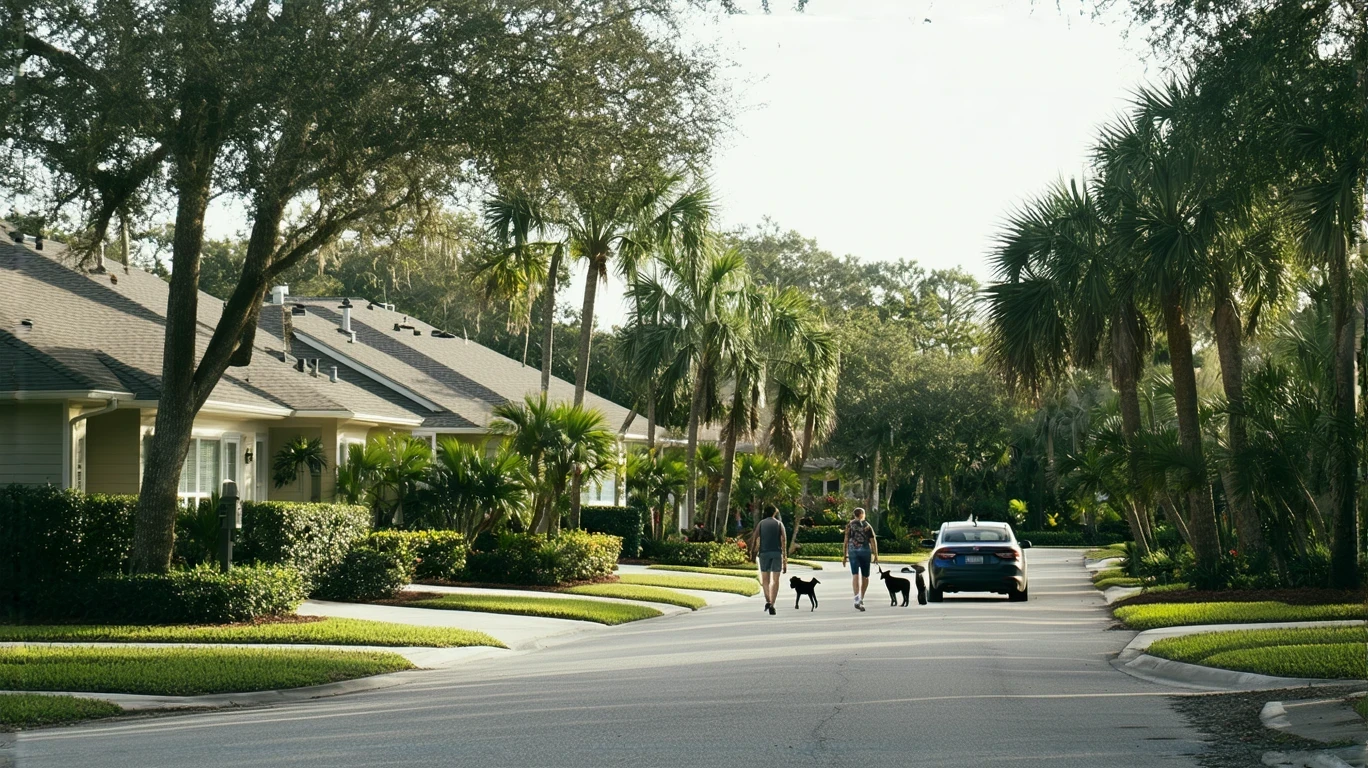
Palm Harbor sits in an interesting middle ground: it’s close enough to Tampa to feel connected to the metro, but far enough to maintain a distinctly residential, low-key character. The city attracts retirees, established families, and people who prioritize safety and quiet over spontaneity and variety. If you’re someone who finds peace in predictable routines, well-kept neighborhoods, and a slower pace, Palm Harbor tends to feel like a natural fit. If you’re energized by walkable downtowns, late-night dining options, or a thriving arts scene, you may find yourself driving to Tampa or St. Pete more often than you’d like.
The tradeoff that comes up most often in local discussion is this: comfort versus texture. Palm Harbor delivers on the former — safe streets, good schools, parks, and a strong sense of community — but it doesn’t offer much of the latter. There’s limited nightlife, few walkable commercial corridors, and a dining scene that leans toward chains and casual spots rather than chef-driven or eclectic options. For retirees and families, that’s often exactly what they want. For younger professionals or transplants from denser cities, it can feel limiting.
Another recurring theme is proximity without immersion. You’re near the Gulf Coast, near Tampa’s job centers, near Clearwater’s beaches — but Palm Harbor itself doesn’t have a beachfront identity or an urban core. That geographic positioning works beautifully for people who want a quiet home base with access to amenities elsewhere. It feels frustrating for people who hoped Palm Harbor itself would offer more variety or walkability.
Social Media Buzz in Palm Harbor
On platforms like Facebook neighborhood groups and regional Reddit threads, Palm Harbor residents tend to express pride mixed with protectiveness. There’s frequent discussion about preserving the area’s residential character, concerns about traffic as nearby areas grow, and appreciation for the school system and parks. The tone is generally positive but cautious — people like what they have and worry about losing it.
Common themes include:
- Gratitude for safety, cleanliness, and family-friendly infrastructure
- Frustration with limited dining and entertainment options
- Debate over growth, new development, and traffic patterns
- Appreciation for proximity to beaches and Tampa without the density
- Annoyance at long commutes for those working in downtown Tampa or St. Pete
Here’s how locals often describe the experience:
“It’s a great place to raise kids or retire, but if you’re in your twenties or thirties and want things to do without driving, you’ll get bored fast.”
“I love that it’s quiet and safe, but I do wish there were more local coffee shops or a real downtown area to walk around.”
“People complain about the lack of nightlife, but that’s exactly why I moved here — I wanted peace and good schools, not bars and crowds.”
The emotional tone is rarely angry or disappointed — more often, it’s content with caveats. People who chose Palm Harbor for what it is tend to be happy. People who expected something different, or who are in a different life stage, tend to feel restless.
Local News Tone
Coverage of Palm Harbor in regional outlets and community news sources tends to frame the area through a few recurring lenses: growth and change, school performance, community events, and infrastructure needs. The tone is generally steady and civic-minded, focusing on local government decisions, park improvements, and quality-of-life issues rather than crime, controversy, or dramatic shifts.
Typical headline themes include:
- “Community Debates What Growth Should Look Like”
- “New Amenities Arrive as Town Identity Evolves”
- “Residents Weigh Convenience vs Quiet”
- “Schools and Parks Remain Top Priority for Families”
- “Traffic Concerns Grow as Nearby Areas Expand”
The framing reflects a community that values stability but is aware of gradual change. There’s little sensationalism, and most coverage centers on incremental improvements and local decision-making rather than crisis or transformation.
Review-Based Public Perception
On platforms like Google Reviews, Yelp, and Nextdoor-style forums, Palm Harbor earns consistent praise for safety, schools, and neighborhood upkeep. Families and retirees tend to leave glowing reviews, emphasizing the area’s quiet streets, friendly neighbors, and strong sense of community. The parks, playgrounds, and healthcare access also receive positive mentions.
However, there’s a recurring undercurrent of mild disappointment from people who expected more variety or walkability. Common critiques include:
- Limited dining options beyond chains and casual spots
- Few walkable commercial areas or a central downtown
- Long commutes for those working in Tampa or St. Pete
- Lack of nightlife or entertainment venues
- Rental inventory that feels limited and expensive for what you get
The reviews rarely describe Palm Harbor as “bad” — instead, they frame it as a mismatch for certain expectations. If you’re looking for suburban comfort, you’ll likely be delighted. If you’re looking for urban texture, you’ll likely feel like something’s missing.
Neighborhood variation also comes up: newer planned areas tend to feel more polished and family-oriented, while older pockets offer more mature trees and established character. Both have their fans, but the overall vibe remains consistent: quiet, residential, and car-dependent.
Comparison to Nearby Cities
| Aspect | Palm Harbor | Clearwater | Dunedin |
|---|---|---|---|
| Overall Vibe | Quiet, residential, family-focused | Beachfront energy, tourist-friendly, more urban | Walkable downtown, artsy, small-town charm |
| Walkability | Limited, car-dependent in most areas | Moderate, especially near beach | High in downtown core |
| Dining & Nightlife | Chain-heavy, limited variety | More options, beach bars, tourist spots | Local restaurants, breweries, coffee culture |
| Community Feel | Stable, protective, suburban | Transient, tourist-influenced | Tight-knit, artsy, engaged |
| Best For | Families, retirees, quiet seekers | Beach lovers, tourists, social butterflies | Walkability fans, foodies, arts enthusiasts |
Palm Harbor, Clearwater, and Dunedin sit close together geographically, but they offer very different emotional experiences. Palm Harbor is the quietest and most residential — if you want a peaceful home base and don’t mind driving for entertainment, it’s ideal. Clearwater offers more energy and beachfront access, but it also comes with tourist traffic, higher density, and a more transient feel. Dunedin delivers walkable charm and local character, but it’s smaller, pricier, and can feel crowded in the downtown core.
If you prioritize safety, schools, and a low-key suburban rhythm, Palm Harbor tends to win. If you want spontaneous walkable errands, local dining variety, or a vibrant downtown, Dunedin or Clearwater may feel more aligned. None of these cities is objectively better — it’s about matching your priorities to the place’s strengths.
What Locals Are Saying
Here’s a snapshot of how different types of residents describe their experience in Palm Harbor:
“We moved here from New York for the schools and the slower pace. It’s been perfect for our kids — safe streets, good parks, and neighbors who actually know each other.”
“I’m retired and I love it here. Quiet, clean, close to everything I need. I don’t miss the noise or the crowds at all.”
“As a young professional, I find it a little boring. I end up driving to Tampa or St. Pete most weekends because there’s just not much to do here.”
“It’s a great place if you have a car and don’t mind using it. But if you’re used to walking to coffee shops or restaurants, you’ll feel isolated.”
“I appreciate the proximity to the beach without living right on it. We get the Gulf Coast lifestyle without the tourist chaos.”
“The commute to Tampa is rough, especially during rush hour. I work from home most days, so it’s manageable, but I wouldn’t want to do it five days a week.”
“It’s not flashy, but it’s solid. Good schools, safe neighborhoods, and people who care about keeping it that way. That’s what we wanted.”
The common thread across these voices is clarity about tradeoffs. People who chose Palm Harbor for its suburban strengths tend to be satisfied. People who hoped for more variety, walkability, or spontaneity tend to feel like they’re compromising.
Does Palm Harbor Feel Like a Good Fit?
Palm Harbor isn’t a place that tries to be everything to everyone — and that’s both its strength and its limitation. It excels at delivering quiet, safe, family-friendly suburban living with strong schools, parks, and healthcare access. It offers proximity to Tampa’s job market and the Gulf Coast’s beaches without the density or tourist traffic of those areas. For retirees, established families, and people who value stability over spontaneity, that combination tends to feel like home.
But Palm Harbor doesn’t offer much in the way of walkable errands, nightlife, or dining variety. If you’re energized by urban texture, local coffee culture, or a vibrant downtown, you’ll likely find yourself driving elsewhere for those experiences. The city’s car-dependent layout and limited transit options mean that day-to-day costs include fuel, maintenance, and time behind the wheel. For some, that’s a minor inconvenience. For others, it’s a daily friction point.
The emotional profile of Palm Harbor is contentment with caveats. People who align with its strengths — safety, schools, residential character, and proximity to amenities elsewhere — tend to be genuinely happy. People who expected more variety, walkability, or local culture tend to feel restless or like they’re settling.
If you’re considering a move, the question isn’t whether Palm Harbor is “good” — it’s whether its particular rhythm matches what you need. Explore quality of life factors and housing tradeoffs to see if the fit feels right for your situation.
How this article was built: In addition to public economic data, this article incorporates location-based experiential signals derived from anonymized geographic patterns—such as access density, walkability, and land-use mix—to reflect how day-to-day living actually feels in Palm Harbor, FL.
The perspectives shown reflect commonly expressed local sentiment and recurring themes in public discussion, rather than individual accounts.