
Is Hermitage the kind of place you grow roots—or just pass through? That question sits at the heart of how people experience this Nashville-area suburb. For some, Hermitage offers exactly what they’re looking for: a place close enough to the city to feel connected, but far enough out to breathe. For others, it’s a compromise—a landing spot that works logistically but doesn’t quite spark joy. Understanding which camp you’ll fall into depends less on what Hermitage is and more on what you need it to be.
The Emotional Landscape of Hermitage
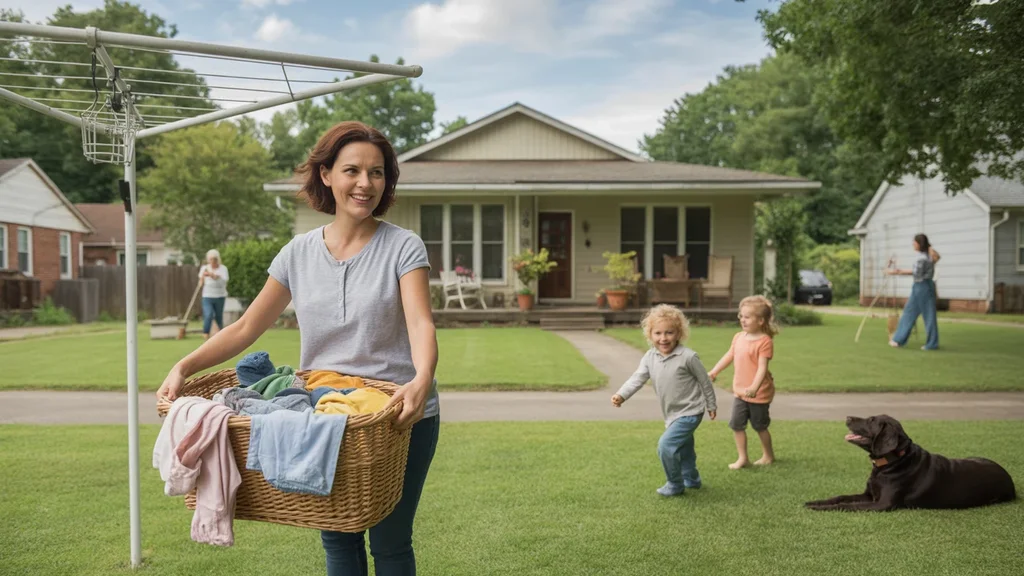
Hermitage tends to attract people drawn to suburban rhythms with a side of accessibility. It’s not trying to be downtown Nashville, and that’s precisely the appeal for many. You get single-family homes, school access, a hospital nearby, and the ability to reach the city without living in the thick of it. The unemployment rate sits at 2.9%, reflecting a stable local economy tied closely to the broader Nashville metro job market.
But there’s an underlying tension. Hermitage is evolving—slowly shedding its purely bedroom-community identity while not fully committing to dense, walkable urbanism. Some residents love this in-between zone. Others feel caught: not quite suburban enough to feel insulated, not quite urban enough to feel vibrant. The city’s structure reflects this. You’ll find pockets where sidewalks, mixed-use corridors, and even rail access suggest a more connected lifestyle. Yet much of daily life still assumes you’re driving, especially for errands that aren’t along the main commercial strips.
People who feel at home here tend to value proximity over immersion. They want Nashville’s job market, airport, and weekend options within reach, but they don’t want to pay downtown prices or deal with downtown density. Hermitage delivers that bargain. People who feel restless here often wanted more walkable texture, more spontaneous social infrastructure, or a stronger sense of local identity independent of Nashville’s gravitational pull.
What the Online Conversation Reveals
Public discussion around Hermitage—on neighborhood Facebook groups, local Reddit threads, and community pages—tends to circle a few recurring themes: affordability relative to Nashville proper, traffic during commute windows, and the question of what Hermitage is becoming.
There’s a protective tone among long-time residents who appreciate the area’s relative quiet and worry about overdevelopment. Newer arrivals, meanwhile, often express pleasant surprise at the rail access and frustration that more amenities aren’t walkable. The emotional register isn’t anger—it’s more like mild impatience mixed with pragmatic acceptance.
“It’s fine. You’re close to everything, but you’re not really in anything,” one sentiment captures. Another common refrain: “If you need Nashville, it’s right there. If you need peace, you’ve got that too—just don’t expect much in between.” A third thread runs through parents’ commentary: “Good schools, safe streets, hospital nearby. It checks the boxes, even if it’s not exciting.”
The vibe isn’t defensive or boosterish. It’s more evaluative—people weighing tradeoffs openly, aware they’ve chosen function over flair.
How Local Coverage Frames the City
Local news and community coverage of Hermitage tends to focus on a few steady topics: growth management, infrastructure updates, and Nashville’s expanding footprint. The tone is generally pragmatic, reflecting a community adjusting to change rather than resisting or celebrating it outright.
Simulated topic threads you might encounter include:
- “Residents Weigh Convenience Against Increasing Traffic”
- “New Commercial Development Brings Amenities—and Questions”
- “Community Discusses Preserving Neighborhood Character”
- “Schools and Safety Remain Top Priorities for Families”
- “Transit Access Expands, But Car Dependency Persists”
These aren’t declarations of crisis or triumph—they’re the steady hum of a suburb in transition, where people are trying to figure out whether growth is happening to them or for them.
Review-Based Public Perception
On platforms like Google Reviews, Yelp, and Nextdoor-style community boards, Hermitage earns a mix of practical praise and tempered critique. The positives cluster around safety, school access, healthcare availability, and value compared to closer-in Nashville neighborhoods. The complaints tend to focus on limited walkability outside specific corridors, a lack of distinctive local dining or entertainment, and the feeling that you’re always driving somewhere else for the “good stuff.”
Newer planned areas tend to get higher marks for curb appeal and neighborhood cohesion, while older pockets are appreciated for larger lots and established trees but sometimes critiqued for dated retail and fewer pedestrian-friendly streets. There’s little animosity in the reviews—more a sense of realistic expectation-setting.
People who moved here expecting a classic suburban enclave tend to be satisfied. People who moved here hoping for a walkable, mixed-use environment with local character tend to feel let down. The city’s infrastructure reflects this split: rail service and some walkable pockets suggest urban aspiration, but corridor-clustered errands and car-oriented design reveal suburban roots.
Comparison to Nearby Cities
| Dimension | Hermitage | Mount Juliet | Donelson |
|---|---|---|---|
| Overall Vibe | Functional suburban with Nashville proximity | Family-focused, newer development feel | Airport-adjacent, transitional urban edge |
| Walkability | Pockets exist, but car still primary | Minimal; designed for driving | More walkable near commercial nodes |
| Transit Access | Rail present, uncommon for suburbs | Limited to none | Better bus access, closer to urban core |
| Local Identity | Evolving, tied to Nashville | Established suburban identity | Blurred by airport and urban proximity |
| Family Appeal | Strong: schools, hospital, safety | Very strong: newer schools, parks | Moderate: convenient but noisier |
If you prioritize rail access and want to hedge against full car dependency, Hermitage offers something Mount Juliet doesn’t. If you want a more polished, newer suburban experience and don’t mind driving everywhere, Mount Juliet might feel more cohesive. If you want to be closer to the urban core and don’t mind airport noise or denser surroundings, Donelson pulls you further into Nashville’s orbit. None of these is objectively better—they’re different bets on what kind of suburban-to-urban gradient fits your life.
What Locals Are Saying
“We moved here for the schools and the hospital. It’s not flashy, but it’s stable. That’s what we needed.”
— Parent of two, relocated from out of state
“I love that I can take the train into Nashville when I want to, but I’m not paying downtown rent. It’s the best of both worlds if you’re okay with a quieter home base.”
— Young professional, remote worker
“Honestly, it feels a little stuck in between. Not quite suburban enough to feel like a true escape, not quite urban enough to walk to dinner. You’re always in the car.”
— Renter in early 30s
“I’ve been here twenty years. It’s changed a lot, but it’s still a good place to raise kids. I just hope it doesn’t lose what made it peaceful in the first place.”
— Long-time homeowner
“If you’re looking for nightlife or a strong local arts scene, this isn’t it. But if you want a safe, affordable base near Nashville, it works.”
— Transplant from larger metro area
“The rail station is a game-changer for me. I don’t have to drive into the city for work, and that alone makes Hermitage worth it.”
— Daily commuter
“It’s fine. That’s the best way I can describe it. It’s fine.”
— Renter, ambivalent about long-term stay
How Place Structure Shapes Daily Life
Hermitage’s infrastructure tells a story about how people actually move through their day. The presence of rail service—uncommon in suburban Nashville—means some residents genuinely can commute without a car, reducing both cost and stress. But outside that commute, daily errands still tend to cluster along commercial corridors rather than within walking distance of most homes. This creates a hybrid lifestyle: you might take the train to work, but you’re still driving to the grocery store, the pharmacy, and your kid’s soccer practice.
The mixed building heights and land-use patterns suggest a place in transition. Some blocks feel traditionally suburban—single-family homes, cul-de-sacs, front yards. Others hint at denser, more mixed development. For families prioritizing housing tradeoffs, this can mean more options than a purely residential suburb would offer. For individuals hoping to minimize car dependency, it means progress, but not arrival.
Parks and green space exist at moderate density, and water features add environmental appeal. Schools are present in numbers that support family infrastructure, though playgrounds are less densely distributed. Healthcare access is strong—hospital presence matters when you’re weighing where to settle long-term. All of this combines to create a place that works well for households with cars, school-age kids, and a pragmatic approach to suburban-urban balance. It works less well for people who want to walk to dinner, bike to the library, or feel embedded in a tight-knit neighborhood grid.
Does Hermitage Feel Like a Good Fit?
Hermitage doesn’t ask you to fall in love with it. It asks whether you value access, stability, and space more than you value spontaneity, walkability, and local texture. If your answer leans toward the former, Hermitage tends to deliver. You’re close to Nashville’s jobs and amenities, you’re in a community with strong family infrastructure, and you’re not paying the premium that comes with living closer to the urban core.
If your answer leans toward the latter, you’ll likely feel the gaps. The rail access is a bright spot, but much of daily life still assumes you’re driving. The corridors with shops and services exist, but they’re not woven into every neighborhood. The parks and schools are there, but the street life isn’t.
This tends to work for families seeking a safe, affordable base with good schools and hospital access. It tends to work for commuters who value the rail option and don’t mind driving for errands. It tends to frustrate people who wanted a walkable, culturally vibrant neighborhood, or who hoped to minimize car dependency across all parts of life.
Hermitage is a place people choose for reasons that make sense on paper—and for many, those reasons hold up in practice. Whether it feels like home or just a functional stop depends on how much weight you put on lifestyle needs that go beyond logistics. If you’re still weighing the tradeoffs, it’s worth looking at monthly expenses and how the cost structure aligns with what you’re actually getting day to day.
How this article was built: In addition to public economic data, this article incorporates location-based experiential signals derived from anonymized geographic patterns—such as access density, walkability, and land-use mix—to reflect how day-to-day living actually feels in Hermitage, TN.
The perspectives shown reflect commonly expressed local sentiment and recurring themes in public discussion, rather than individual accounts.