
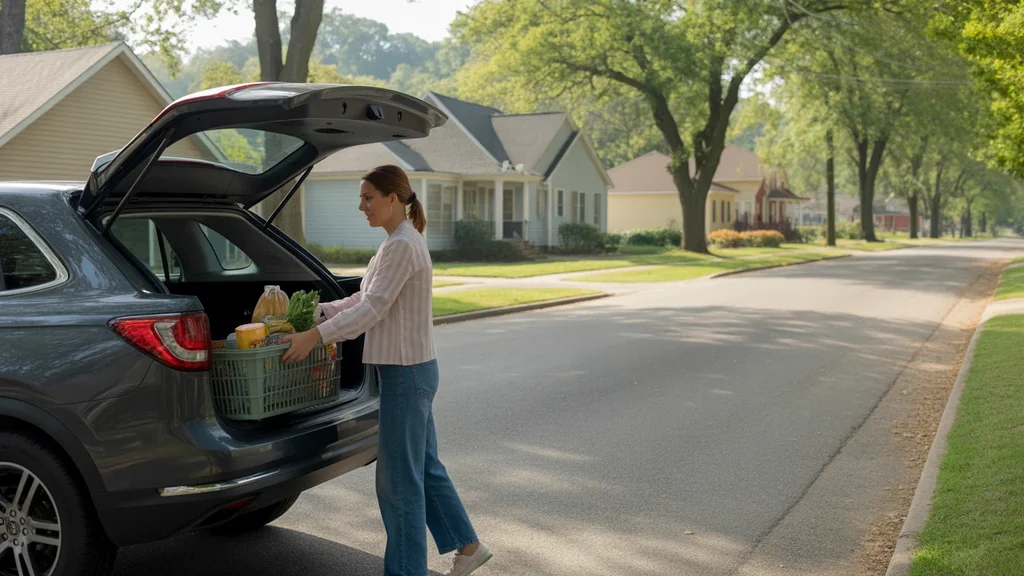
When the Ramirez family started weighing a move within the Nashville metro in early 2026, they found themselves caught between two very different visions of suburban life. Hermitage offered the promise of more space and a quieter rhythm, while Nashville itself meant tighter proximity to work, entertainment, and the urban core. Both cities sit in the same regional economy, share the same job market, and experience similar weather patterns—but the way costs show up in daily life differs in ways that matter deeply depending on what a household prioritizes.
This isn’t a question of which city is “cheaper overall.” It’s about understanding where financial pressure concentrates, which costs are predictable versus volatile, and how different household types experience the tradeoffs between space, access, and convenience. For families like the Ramirez household, the decision hinges on whether front-loaded housing costs or ongoing transportation and convenience expenses feel more manageable—and whether the texture of daily errands, commuting, and logistics aligns with their schedule and budget flexibility.
In 2026, both Hermitage and Nashville present distinct cost structures shaped by housing form, transit infrastructure, and the friction costs of getting through the week. The better choice depends entirely on which pressures a household is most sensitive to, and which tradeoffs feel sustainable over the long term.
Housing Costs
Housing markets in Hermitage and Nashville reflect their different roles within the metro. Hermitage functions primarily as a suburban residential area where single-family homes dominate the landscape, while Nashville’s urban core and inner neighborhoods offer a broader mix of apartments, condos, and older housing stock. The structural difference means that entry barriers, ongoing obligations, and housing flexibility behave differently depending on what type of home a household is seeking.
In Hermitage, the housing market tends to favor buyers and renters looking for more square footage and yard space. Single-family homes are the norm, and the suburban layout means that apartment options are more limited and often concentrated along commercial corridors. For families prioritizing space—whether for kids, home offices, or simply breathing room—Hermitage’s housing form aligns well with those needs. However, this also means that renters seeking flexibility or lower entry costs may find fewer options compared to Nashville’s denser neighborhoods, where apartment availability is broader and turnover is higher.
Nashville’s housing pressure is shaped by its role as the regional hub. Demand is higher, competition is stiffer, and the range of housing types is wider. Renters benefit from more choice, but that choice comes with trade-offs: older buildings may mean higher utility exposure, and proximity to downtown or popular neighborhoods often commands a premium. For buyers, Nashville offers access to walkable districts and shorter commutes to urban jobs, but entry costs reflect that convenience. Families willing to trade space for location may find Nashville’s housing mix more aligned with their priorities, while those who need room to spread out may feel constrained by lot sizes and home layouts.
Housing Takeaway: Hermitage tends to fit households prioritizing space, yard access, and suburban housing form, particularly families with kids or remote workers needing dedicated home office setups. Nashville fits households prioritizing proximity to urban jobs, walkable neighborhoods, and apartment flexibility, particularly singles, couples, or smaller households willing to trade square footage for access. The primary difference is not price alone—it’s whether housing pressure shows up as limited space and longer commutes (Nashville) or as fewer rental options and car dependence (Hermitage).
Utilities and Energy Costs
Utility costs in Hermitage and Nashville are shaped by similar climate exposure—hot, humid summers and mild winters with occasional cold snaps—but the way energy expenses show up depends heavily on housing type, home age, and heating fuel. Both cities experience long cooling seasons that drive air conditioning usage from late spring through early fall, but heating costs behave differently depending on whether a household relies on natural gas or electric heat.
Hermitage’s natural gas price sits at $11.31 per MCF, while Nashville’s natural gas price is notably higher at $20.33 per MCF. For households heating with natural gas—common in single-family homes—this difference translates to meaningfully lower heating exposure in Hermitage during winter months. A family in a larger, older home with gas heat will feel this gap more acutely than a couple in a newer, well-insulated apartment. Electricity rates are nearly identical (12.87¢/kWh in Hermitage versus 13.06¢/kWh in Nashville), so cooling costs during summer months behave similarly across both cities, though larger homes in Hermitage may see higher absolute usage simply due to square footage.
The predictability of utility bills also depends on housing form. Apartments in Nashville—particularly newer builds—tend to have lower baseline energy needs due to shared walls, smaller footprints, and modern insulation standards. Single-family homes in Hermitage, especially older stock, face higher exposure to both heating and cooling costs because of larger conditioned spaces and less efficient building envelopes. Families in Hermitage managing a 2,000+ square foot home will experience more seasonal volatility than a couple in a 900-square-foot Nashville apartment, even if per-unit energy rates are similar.
Utility Takeaway: Hermitage offers lower heating cost exposure for households using natural gas, which matters most for families in larger, older homes during winter months. Nashville’s utility pressure is more predictable for apartment dwellers due to smaller spaces and shared-wall efficiency, but households in older single-family homes face similar or higher exposure than Hermitage counterparts. The key difference is whether heating fuel choice and home size amplify or dampen seasonal volatility.
Groceries and Daily Expenses
Grocery and everyday spending pressure in Hermitage and Nashville is less about price per pound and more about access patterns, convenience creep, and how household routines interact with the retail landscape. Both cities fall within the same regional price parity index (RPP 97), meaning that baseline grocery costs are similar when shopping at comparable stores. The difference lies in how often households rely on convenience options, how far they travel for bulk shopping, and whether daily errands require multiple stops or can be consolidated.
Hermitage’s grocery landscape is corridor-clustered, with food and grocery options concentrated along major commercial routes rather than distributed throughout residential neighborhoods. This means that households often plan larger, less frequent shopping trips to big-box stores or regional grocery chains, which can help control costs but requires more upfront time and transportation. For families managing larger households, this structure works well—buying in bulk and meal planning around weekly trips keeps per-unit costs lower. However, single adults or couples working unpredictable schedules may find themselves relying more on convenience stores, takeout, or last-minute trips, which quietly inflate spending over time.
Nashville’s denser urban form and mixed-use neighborhoods mean that smaller-format grocery stores, specialty markets, and prepared food options are more accessible on foot or via short drives. This accessibility reduces the friction of daily errands but increases the temptation to spend on convenience—grabbing lunch out, picking up prepared meals, or stopping for coffee becomes easier and more frequent. For households sensitive to lifestyle creep, Nashville’s convenience can work against budget discipline. On the other hand, singles and couples who value time over bulk savings may find Nashville’s grocery structure more aligned with their routines, even if per-trip costs are slightly higher.
Grocery Takeaway: Hermitage fits households that can plan ahead, shop in bulk, and absorb the time cost of less frequent, larger trips—particularly families managing multiple people and predictable meal schedules. Nashville fits households that prioritize convenience, walkable access, and flexibility, even if that means higher per-trip spending and more frequent reliance on prepared foods. The cost difference is less about prices and more about how access patterns shape spending habits over time.
Taxes and Fees

Tennessee’s tax structure is consistent across both Hermitage and Nashville: no state income tax, relatively high sales taxes, and property taxes that vary by county and municipality. Because both cities sit within the Nashville metro, the broad tax framework is similar, but the way taxes and fees show up depends on housing type, ownership status, and the presence of homeowners’ associations or special service districts.
Property taxes in both cities are driven by assessed home values and local millage rates. Hermitage’s suburban, single-family housing stock means that property tax obligations are often higher in absolute terms simply because homes are larger and sit on more land. However, these costs are predictable and spread over the year, making them easier to plan for. Nashville’s urban neighborhoods may see lower per-property tax bills for smaller homes or condos, but denser areas sometimes carry additional fees for parking permits, waste collection, or neighborhood improvement districts that add friction to monthly budgets.
Homeowners’ association fees are more common in Hermitage’s newer subdivisions, where they may cover landscaping, community amenities, or shared infrastructure. These fees range widely but represent an ongoing obligation that renters avoid entirely. In Nashville, condo owners face similar or higher HOA fees, particularly in buildings with elevators, gyms, or concierge services. Renters in both cities are insulated from property taxes and HOA fees directly, though landlords pass some of these costs through in rent.
Sales taxes hit all households equally, but the impact depends on spending patterns. Households that rely heavily on retail purchases, dining out, or convenience spending will feel Tennessee’s sales tax burden more acutely. Families in Hermitage who shop in bulk and cook at home face lower cumulative sales tax exposure than urban households in Nashville who eat out frequently or rely on prepared foods.
Tax and Fee Takeaway: Hermitage homeowners face higher property tax obligations due to larger homes and land, but these costs are predictable and stable. Nashville homeowners in condos or dense neighborhoods may pay lower property taxes but face higher HOA fees and urban service charges. Renters in both cities avoid direct property tax exposure, but Nashville renters may face higher rent premiums that reflect landlords’ fee burdens. The primary difference is whether tax pressure is front-loaded and predictable (Hermitage homeowners) or distributed across rent and convenience spending (Nashville renters and urban households).
Transportation & Commute Reality
Transportation costs in Hermitage and Nashville are shaped less by fuel prices alone and more by how daily mobility patterns interact with infrastructure, commute distances, and the friction of getting through the week. Gas prices in early 2026 sit at $2.95 per gallon in Hermitage and $2.46 per gallon in Nashville, but the real cost difference emerges from how often households drive, how far they travel, and whether alternatives to car ownership exist.
Hermitage’s suburban layout and corridor-clustered commercial development mean that most households rely on cars for nearly all trips—commuting to work, running errands, and accessing services. The presence of rail transit in Hermitage offers some flexibility for commuters heading into Nashville’s urban core, but the pedestrian infrastructure is concentrated in pockets rather than distributed throughout the city. For families managing multiple drivers, multiple vehicles, and daily school or activity runs, transportation becomes a constant background cost. Fuel, insurance, maintenance, and vehicle depreciation all stack up, and the time cost of driving—even short distances—adds friction to daily routines.
Nashville’s denser urban form and mixed-use neighborhoods reduce car dependence for some households, particularly those living and working within walkable districts. Rail transit is present, and the pedestrian-to-road ratio in parts of the city supports walking or biking for errands. However, Nashville is not uniformly walkable, and households living outside the urban core still rely heavily on cars. The lower gas price in Nashville offers some relief, but the real advantage is the option to reduce vehicle reliance entirely for certain household types—singles or couples without kids, remote workers, or households willing to prioritize proximity over space.
Transportation Takeaway: Hermitage fits households that accept car dependence as a given and prioritize space over walkability, particularly families managing multiple vehicles and complex schedules. Nashville fits households that can reduce car reliance by living and working within walkable or transit-accessible districts, though this advantage is limited to specific neighborhoods. The cost difference is less about fuel prices and more about whether a household can avoid the fixed costs of vehicle ownership entirely.
Cost Structure Comparison
The cost experience in Hermitage versus Nashville is defined by where financial pressure concentrates and how predictable or volatile those pressures feel over time. Housing dominates the decision for most households, but the way housing costs interact with transportation, utilities, and daily logistics determines which city feels more sustainable.
In Hermitage, housing pressure shows up as a need for space and the acceptance of car dependence. Families prioritizing square footage, yard access, and suburban housing form will find Hermitage’s structure aligned with their needs, but they must absorb the ongoing costs of vehicle ownership, longer commutes, and the time friction of corridor-clustered errands. Utility costs are more predictable for households using natural gas heat, and grocery spending can be controlled through bulk shopping and meal planning. The tradeoff is that flexibility is lower—Hermitage rewards households that can plan ahead, manage multiple vehicles, and accept that convenience requires driving.
In Nashville, housing pressure shows up as limited space and higher competition for walkable neighborhoods. Households willing to trade square footage for proximity benefit from shorter commutes, better transit access, and the option to reduce car dependence. Utility costs are more predictable for apartment dwellers, but older homes face similar or higher exposure than Hermitage counterparts. Grocery and convenience spending creep higher due to easier access to prepared foods and dining options. The tradeoff is that Nashville rewards households that value time over space, can absorb higher rent or condo fees, and prioritize urban access over suburban breathing room.
For households sensitive to heating costs, Hermitage’s lower natural gas prices offer meaningful relief during winter months, particularly for families in larger homes. For households sensitive to transportation time and vehicle costs, Nashville’s walkable pockets and transit options reduce friction, though this advantage is limited to specific neighborhoods. For households managing tight schedules and complex logistics, the decision hinges on whether driving everywhere feels manageable (Hermitage) or whether reducing car trips feels liberating (Nashville).
The better choice is not about which city is cheaper—it’s about which cost structure aligns with a household’s priorities, flexibility, and tolerance for tradeoffs. Hermitage fits households that can absorb transportation time and vehicle costs in exchange for space and predictability. Nashville fits households that can absorb higher housing density and convenience spending in exchange for urban access and reduced car dependence.
How the Same Income Feels in Hermitage vs Nashville
Single Adult
For a single adult, housing becomes the first non-negotiable cost, and the decision between Hermitage and Nashville hinges on whether space or access matters more. In Hermitage, renting or owning means accepting car dependence for nearly every trip—work, groceries, socializing—which locks in vehicle ownership costs and time friction. In Nashville, living in a walkable neighborhood reduces transportation pressure but often means paying more for less space. Flexibility exists in Nashville through apartment turnover and proximity to urban jobs, while Hermitage offers more square footage but less optionality. The same income feels tighter in Nashville if housing eats up a larger share, but feels more constrained in Hermitage if transportation time and vehicle costs dominate the weekly rhythm.
Dual-Income Couple
For a dual-income couple, the non-negotiable costs expand to include two commutes, and the decision becomes whether both partners can reduce car dependence or whether both will drive daily. In Nashville, couples living and working within walkable districts can share one vehicle or rely on transit, which lowers fixed transportation costs and frees up time for other priorities. In Hermitage, both partners likely need cars, which doubles insurance, maintenance, and fuel exposure. Grocery and convenience spending behaves differently too—Nashville’s access to prepared foods and dining options can inflate spending quietly, while Hermitage rewards couples who cook at home and plan ahead. The same income feels more flexible in Nashville if both partners work downtown, but more stable in Hermitage if both are willing to drive and prioritize space over proximity.
Family with Kids
For families, housing and transportation costs become tightly linked to school access, activity logistics, and the need for dedicated space. In Hermitage, families gain square footage, yards, and suburban housing form, but must manage multiple vehicles, longer commutes, and the time cost of driving kids to school, sports, and appointments. In Nashville, families trade space for shorter commutes and better access to urban amenities, but face higher housing density and fewer single-family options. Utility costs in Hermitage are more predictable for families using natural gas heat, while Nashville families in older homes face similar or higher exposure. The same income feels more stretched in Nashville if housing density and convenience spending creep higher, but feels more constrained in Hermitage if transportation time and vehicle costs dominate the family schedule.
Decision Matrix: Which City Fits Which Household?
| Decision factor | If you’re sensitive to this… | Hermitage tends to fit when… | Nashville tends to fit when… |
|---|---|---|---|
| Housing entry + space needs | You prioritize square footage, yards, and suburban housing form over proximity to urban core | You need room for kids, home offices, or simply breathing space and accept car dependence | You value walkable neighborhoods, apartment flexibility, and shorter commutes over square footage |
| Transportation dependence + commute friction | You want to reduce vehicle ownership costs or avoid daily driving for errands and work | You accept that nearly all trips require driving and can manage multiple vehicles | You can live and work within walkable or transit-accessible districts and reduce car reliance |
| Utility variability + home size exposure | You want predictable heating costs and lower exposure to seasonal volatility | You heat with natural gas and can absorb higher cooling costs in a larger home | You live in a smaller apartment or newer build with lower baseline energy needs |
| Grocery strategy + convenience spending creep | You want to control food costs through bulk shopping and meal planning | You can plan larger, less frequent shopping trips and cook at home consistently | You value walkable access to groceries and prepared foods even if per-trip costs are higher |
| Fees + friction costs (HOA, services, upkeep) | You want to avoid ongoing fees or prefer predictable property tax obligations | You own a single-family home and accept higher property taxes in exchange for space | You rent or own a condo and can absorb HOA fees or urban service charges |
| Time budget (schedule flexibility, errands, logistics) | You want to minimize time spent driving and consolidate errands efficiently | You can absorb the time cost of driving everywhere and manage complex family schedules | You prioritize reducing commute time and can walk or bike for daily errands |
Lifestyle Fit
Lifestyle differences between Hermitage and Nashville extend beyond costs into how daily life feels, how much time households spend in transit, and what kind of social and recreational infrastructure is accessible without significant planning. Hermitage offers a quieter, more residential rhythm where families can spread out, enjoy yards, and settle into suburban routines. The presence of rail transit and walkable pockets in parts of Hermitage provides some flexibility for commuters heading into Nashville’s urban core, and the mixed-use land development means that residential and commercial areas coexist, though access still requires driving for most trips. Parks and green space are present, and family infrastructure—schools and playgrounds—supports households with kids, though playground density is lower than in more urbanized areas.
Nashville’s urban core and inner neighborhoods offer a faster-paced, more socially dense environment where walkability, dining, live music, and cultural amenities are woven into daily life. For singles and couples who thrive on spontaneity and proximity to entertainment, Nashville’s lifestyle structure reduces friction—grabbing dinner, meeting friends, or attending events doesn’t require advance planning or long drives. However, this convenience comes with tradeoffs: noise, parking challenges, and less private outdoor space. Families in Nashville can access urban parks and cultural institutions easily, but may feel constrained by smaller homes and less yard access compared to Hermitage.
The lifestyle fit also affects costs indirectly. Hermitage’s suburban layout means that social activities often require driving, which adds time and fuel costs to weekends and evenings. Nashville’s walkable districts reduce transportation friction but increase exposure to convenience spending—dining out, entertainment, and impulse purchases become easier and more frequent. For households managing tight schedules, the decision hinges on whether driving everywhere feels sustainable (Hermitage) or whether reducing car trips and gaining walkable access feels worth the higher housing density (Nashville).
Quick Fact: Hermitage’s rail transit presence offers commuters a viable alternative to driving into Nashville’s urban core, reducing some of the transportation pressure typical of suburban areas.
Quick Fact: Nashville’s mixed-use neighborhoods and hospital presence mean that healthcare access, grocery options, and daily services are often within walking or short driving distance, reducing the time cost of routine errands.
Frequently Asked Questions
Is Hermitage or Nashville better for families with kids in 2026?
Hermitage tends to fit families prioritizing space, yards, and suburban housing form, particularly those willing to accept car dependence and manage multiple vehicles for school and activity logistics. Nashville fits families who value shorter commutes, walkable neighborhoods, and urban access to cultural amenities, though housing density and limited yard space may feel constraining. The better choice depends on whether space or proximity matters more to the family’s daily rhythm.
How do utility costs differ between Hermitage and Nashville in 2026?
Hermitage offers lower natural gas prices, which reduces heating cost exposure for households using gas heat during winter months. Electricity rates are nearly identical, so cooling costs behave similarly in both cities. The bigger difference is housing form—larger single-family homes in Hermitage face higher absolute energy usage, while smaller apartments in Nashville benefit from shared-wall efficiency and lower baseline needs.
Can you live in Nashville without a car in 2026?
Some Nashville neighborhoods support car-free or car-light living, particularly walkable districts with rail transit access and mixed-use development. However, this advantage is limited to specific areas, and households living outside the urban core still rely heavily on cars. Hermitage requires car ownership for nearly all trips, though rail transit offers some flexibility for commuters heading into Nashville’s downtown.
Which city has lower grocery costs, Hermitage or Nashville, in 2026?
Both cities share the same regional price parity index, so baseline grocery prices are similar when shopping at comparable stores. The difference is access and convenience—Hermitage rewards households that plan bulk shopping trips and cook at home, while Nashville’s walkable grocery access reduces friction but increases exposure to convenience spending and prepared foods. The cost difference is more about spending habits than prices.
How do transportation costs compare between Hermitage and Nashville in 2026?
Hermitage requires car ownership for nearly all trips, which locks in vehicle costs regardless of gas prices. Nashville offers lower gas prices and the option to reduce car dependence in walkable neighborhoods, though this advantage is limited to specific districts. The real cost difference is whether a household can avoid vehicle ownership entirely (possible in parts of Nashville) or must manage multiple vehicles (typical in Hermitage).
Conclusion
The Ramirez family’s debate between Hermitage and Nashville ultimately came down to whether they valued space and predictability over proximity and convenience. Hermitage offered the breathing room they wanted—a yard for the kids, dedicated home office space, and lower heating costs during winter months—but required accepting that nearly every trip would involve driving. Nashville offered shorter commutes, walkable access to restaurants and entertainment, and the option to reduce vehicle dependence, but meant trading square footage for density and absorbing higher convenience spending.
Neither city is universally cheaper or better. Hermitage fits households that can absorb transportation time and vehicle costs in exchange for suburban housing form and predictable utility exposure. Nashville fits households that can absorb higher housing density and convenience spending in exchange for urban access and reduced car dependence. The decision hinges on which cost pressures a household is most sensitive to, and which tradeoffs feel sustainable over the long term. For the Ramirez family—and for any household weighing this choice in 2026—the better fit is the one where what drives expenses aligns with what matters most in daily life.
How this article was built: In addition to public economic data, this article incorporates location-based experiential signals derived from anonymized geographic patterns—such as access density, walkability, and land-use mix—to reflect how day-to-day living actually feels in Hermitage, TN.