
Households that rely on public transit instead of driving can save thousands of dollars annually in vehicle costs, insurance, and fuel—but only if the system actually reaches where they need to go. In Hermitage, that “if” matters more than the potential savings, because transit access here isn’t evenly distributed across neighborhoods. Rail service exists, and certain pockets of the city offer surprisingly strong pedestrian infrastructure, but whether public transportation works for your daily life depends almost entirely on where you live and where you’re trying to get to.
This article explains how people actually get around Hermitage in 2026: what transportation options in Hermitage look like in practice, who benefits from transit versus who depends on a car, and how the city’s layout shapes mobility and daily logistics. It won’t calculate commute costs or recommend specific passes—it’s here to help you understand the structure, so you can make decisions that fit your situation.
How People Get Around Hermitage
Hermitage operates primarily as a car-oriented community, but with notable exceptions that catch newcomers off guard. The dominant pattern is driving: most errands, most commutes, and most daily movement happen by car. But unlike purely suburban sprawl, Hermitage has rail transit infrastructure and areas where the pedestrian-to-road ratio is surprisingly high—meaning some neighborhoods support walking and transit use in ways that others simply don’t.
What people often misunderstand is that “Hermitage has transit” and “you can use transit in Hermitage” are two different statements. Rail service is present, and that’s significant, but coverage is localized. If you’re near a station and your destinations align with the transit network, the system becomes genuinely usable. If you’re outside that geography, or if your errands span multiple disconnected points, you’ll default to driving just like most residents do.
The city’s layout reinforces this split. Commercial activity and food options cluster along certain corridors rather than spreading evenly, which means some areas support car-free errands while others require intentional planning or multiple stops by vehicle. Hermitage isn’t a place where you accidentally end up without a car and find it easy—but it’s also not a place where transit is purely theoretical.
Public Transit Availability in Hermitage
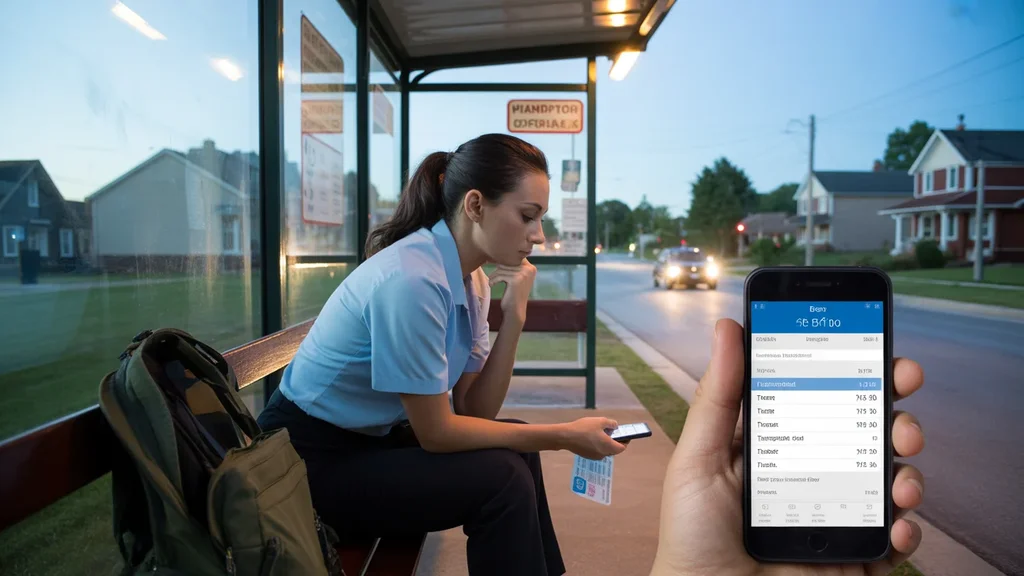
Public transit in Hermitage often centers around systems such as WeGo Public Transit, the regional provider serving Nashville and surrounding areas including Hermitage, though coverage varies significantly by neighborhood. Rail service is present and represents the most reliable backbone of the transit network here. For residents near stations, rail offers a structured, predictable way to reach employment centers and regional destinations without the variability that often plagues bus-only systems.
Bus service also operates in Hermitage, providing additional coverage in areas the rail network doesn’t directly serve. However, the practical role of buses here tends to be supplementary rather than primary. Routes connect residential areas to rail stations and commercial corridors, but frequency and span of service can limit usability for households with non-traditional work hours or complex trip chains.
Transit works best in Hermitage when your home and primary destinations fall within the rail-served corridor and when your schedule aligns with service hours. It tends to fall short in the outer residential areas where density drops, during late evening or early morning hours, and for trips that require multiple transfers or movement perpendicular to the main transit spine. This isn’t a system designed for universal coverage—it’s a system designed around specific corridors, and your experience will reflect how well your geography matches that design.
Driving & Car Dependence Reality
For most residents, driving remains essential. Even in areas with decent pedestrian infrastructure or proximity to rail, a car provides the flexibility to handle errands that don’t fall neatly along transit routes: picking up groceries from multiple stores, managing household logistics that span different parts of the city, or traveling during hours when transit service thins out.
Parking in Hermitage is generally abundant and rarely a source of stress, which reduces one of the typical friction points of car ownership in denser urban settings. The tradeoff is that the built environment assumes car access. Retail centers, medical offices, and many daily destinations are designed with parking lots rather than walkable frontage, which makes car-free living possible in theory but often inconvenient in practice.
Commute flexibility heavily favors drivers. If your job requires travel to multiple sites, if you work non-standard hours, or if your household manages school pickups and activity schedules, transit’s fixed routes and schedules become limiting. The infrastructure here supports driving as the default, and most households treat car ownership not as a luxury but as a baseline requirement for managing daily life.
Commuting Patterns & Daily Mobility
Commuting in Hermitage typically follows one of two patterns: single-destination commutes that align with regional employment centers, or multi-stop routines that require a vehicle. For workers whose jobs sit along the rail corridor or in downtown Nashville, transit becomes a realistic option—especially if they live near a station and don’t need to make intermediate stops. These commuters benefit from predictability and the ability to avoid traffic congestion during peak hours.
For everyone else—those working in distributed office parks, managing multiple job sites, or balancing employment with caregiving responsibilities—driving is the only practical choice. Hermitage’s layout doesn’t support the kind of spontaneous, multi-modal trip-chaining that works in denser cities. Errands and work trips tend to be car-dependent by default unless your specific circumstances align with the transit network’s strengths.
Proximity matters more than the presence of infrastructure. Living three blocks from a rail station changes your transportation reality in ways that living three miles away does not, even if a bus route technically serves your neighborhood. The difference between a ten-minute walk to transit and a fifteen-minute drive to access transit is the difference between a system you use daily and a system you consider only occasionally.
Who Transit Works For — and Who It Doesn’t
Transit in Hermitage works best for renters and homeowners in the core areas near rail stations, particularly those whose work and errands align with corridor-based destinations. If you’re a single commuter or a couple without school-age children, and your job sits on a transit line, you can realistically structure a low-car or car-free life here. Your day-to-day costs drop, your commute becomes more predictable, and you avoid the maintenance and insurance burden of vehicle ownership.
Transit becomes far less practical for families managing multiple schedules, households in the outer residential zones where pedestrian infrastructure thins out, and anyone whose work requires travel across disconnected parts of the metro area. The system isn’t designed to serve every trip type equally, and trying to force transit into situations where it doesn’t fit creates friction rather than savings.
The distinction isn’t about preference—it’s about geography and logistics. A household in a walkable pocket near a rail station experiences Hermitage as a place where transit works. A household two miles farther out, in an area where errands require driving and bus service runs infrequently, experiences the same city as car-dependent. Both realities exist simultaneously, and your transportation experience will reflect which geography you occupy.
Transportation Tradeoffs in Hermitage
Choosing between transit and driving in Hermitage isn’t a simple cost comparison—it’s a tradeoff between control and predictability. Transit offers lower direct costs and eliminates the variability of traffic, but it limits spontaneity and requires that your destinations align with the network. Driving offers flexibility and the ability to manage complex logistics, but it exposes you to fuel price volatility, maintenance costs, and the ongoing burden of vehicle ownership.
For households near rail stations with straightforward commutes, transit reduces both cost and cognitive load. You don’t track gas prices at $2.95 per gallon, you don’t schedule oil changes, and you don’t navigate parking. For households managing multiple stops, irregular schedules, or errands in areas the transit network doesn’t serve well, driving provides the control needed to keep daily life manageable.
The real tradeoff isn’t financial—it’s structural. Transit works when your life fits its shape. Driving works when your life doesn’t. Hermitage offers both options, but the city’s layout and density mean that for most residents, driving remains the path of least resistance. That’s not a failure of the transit system; it’s a reflection of how the city is built and where its infrastructure investments have concentrated.
FAQs About Transportation in Hermitage (2026)
Is public transit usable for daily commuting in Hermitage?
Yes, but only if you live near a rail station and your work destination aligns with the transit network. Rail service provides reliable access to regional employment centers, particularly in Nashville. For residents outside the rail corridor or those with multi-stop commutes, transit becomes far less practical, and most people default to driving.
Do most people in Hermitage rely on a car?
Yes. The majority of residents drive for daily errands, commuting, and household logistics. While rail transit exists and certain areas support walking, the city’s layout and the distribution of services make car ownership the baseline expectation for most households.
Which areas of Hermitage are easiest to live in without a car?
Areas near rail stations with strong pedestrian infrastructure and proximity to corridor-clustered errands offer the best chance of low-car or car-free living. These pockets support walking, have better access to transit, and reduce the need for a vehicle in daily routines. Outside these zones, car dependence increases sharply.
How does commuting in Hermitage compare to nearby cities?
Hermitage offers rail access, which distinguishes it from purely car-dependent suburbs, but it doesn’t provide the transit density or walkability of urban cores. Compared to outer suburbs with no rail service, Hermitage has more options. Compared to neighborhoods closer to downtown Nashville, it requires more intentional planning to make transit work.
Can you bike for transportation in Hermitage?
Cycling infrastructure exists in some pockets, with bike-to-road ratios in the medium range, but it’s not evenly distributed. Biking works best in areas with dedicated infrastructure and shorter trip distances. For longer commutes or errands across disconnected parts of the city, biking becomes less practical, and most residents who bike do so recreationally rather than as primary transportation.
How Transportation Fits Into the Cost of Living in Hermitage
Transportation in Hermitage isn’t just a line item—it’s a structural factor that shapes where you can live, how much time you spend in transit, and what kind of flexibility your household has. Living near rail transit can reduce direct transportation costs significantly, but it also narrows your housing options and may require tradeoffs in space or rent. Living farther out often means lower housing costs but higher transportation exposure and more time spent driving.
The interaction between housing and transportation creates different cost profiles for different households. A renter near a rail station might pay more in rent but eliminate car ownership entirely. A family in a more affordable neighborhood farther from transit might pay less for housing but absorb the ongoing costs of vehicle ownership, fuel, and maintenance. Neither path is universally better—they represent different ways of balancing monthly expenses and lifestyle fit.
If you’re trying to understand how transportation costs interact with other expenses in Hermitage, the Monthly Budget article provides the numeric context this piece intentionally avoids. That resource breaks down where money actually goes and how different household types experience cost pressure across categories.
What matters most is understanding that transportation in Hermitage is geography-dependent. The city offers real transit options, but they work best in specific areas and for specific trip patterns. If your life aligns with those patterns, you gain both cost savings and predictability. If it doesn’t, you’ll rely on driving like most residents do—and that’s a perfectly functional choice, as long as you plan for it.
How this article was built: In addition to public economic data, this article incorporates location-based experiential signals derived from anonymized geographic patterns—such as access density, walkability, and land-use mix—to reflect how day-to-day living actually feels in Hermitage, TN.