
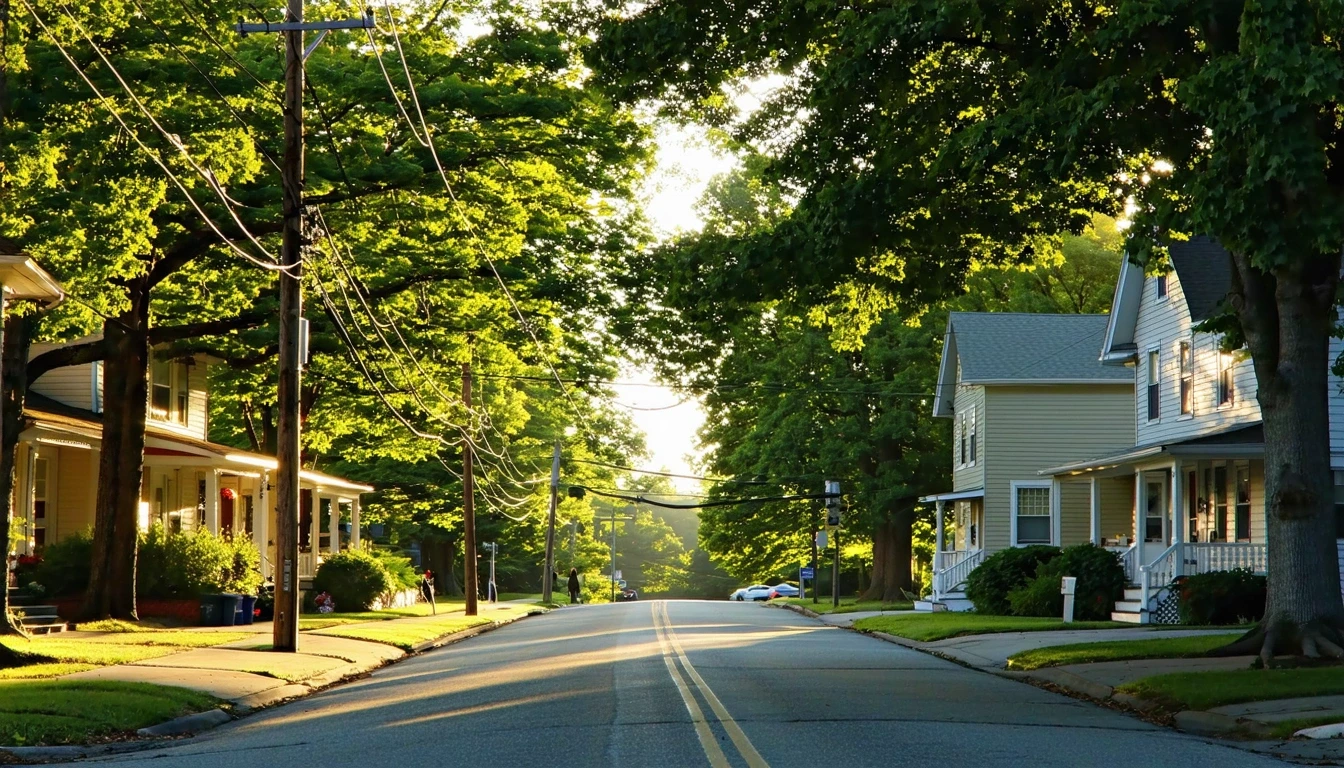
The Housing Market in Hermitage Today
Hermitage sits within the Nashville metro area, a position that shapes its housing market in ways that aren’t immediately obvious to newcomers. While the broader region has seen sustained growth driven by corporate relocations and population inflows, Hermitage functions as a commuter-accessible suburb with a mixed housing stock that includes both single-family homes and apartment complexes. The presence of rail transit distinguishes it from many Nashville-area suburbs, offering an alternative to car-only commuting for those whose work or errands align with transit corridors.
What often surprises people is how much housing experience varies by neighborhood pocket. Some areas feature walkable infrastructure and nearby errands, while others require deliberate planning to access groceries or services. This isn’t a uniform suburb—it’s a collection of residential patterns that reflect different eras of development and different assumptions about how people move through daily life. For those evaluating what shapes the cost of living in Hermitage, understanding this internal variation matters more than regional averages.
The regional price environment sits slightly below the national baseline, which can create a perception of affordability. But housing costs are less about sticker prices and more about exposure over time: how quickly rent adjusts, how property taxes respond to reassessment cycles, and how ownership transfers risk from landlord to household. Hermitage’s housing market rewards those who understand these structural differences, not just those chasing lower entry costs.
Renting in Hermitage
Rental housing in Hermitage spans a wide range, from older garden-style complexes to newer builds near transit and commercial corridors. Availability tends to cluster along major roads and near employment centers, which means renters often face a tradeoff: proximity to errands and transit versus quieter residential streets. The structure of the rental market here reflects the broader metro’s growth—landlords have adjusted expectations in response to sustained demand, and lease renewals often carry steeper increases than initial move-in rates.
For renters who rely on public transportation, Hermitage offers more viable options than many Nashville suburbs. Rail service provides a real alternative to car ownership for those whose daily patterns align with station locations and service hours. But outside those corridors, car dependency rises quickly. Grocery stores and services are corridor-clustered rather than broadly distributed, meaning renters in less connected pockets spend more time planning errands or driving to access basics.
Rental volatility in Hermitage isn’t driven by local policy—it’s driven by regional pressure. As Nashville continues to attract new residents, suburban rental markets absorb overflow demand. Renters here experience that pressure as shorter lease terms, fewer concessions, and less negotiating room. The advantage of renting remains flexibility: the ability to relocate without selling, to avoid maintenance surprises, and to sidestep property tax exposure. But that flexibility comes at the cost of less control over annual housing expense changes.
Owning a Home in Hermitage
Homeownership in Hermitage shifts the cost structure entirely. Instead of rent adjustments, owners face property taxes, insurance premiums, and maintenance cycles—expenses that don’t arrive monthly but accumulate over time and respond to external forces like reassessment schedules and weather events. Tennessee’s tax structure places more weight on property and sales taxes than income taxes, which means homeowners here feel fiscal changes through their annual tax bills rather than paycheck withholding.
Maintenance exposure in Hermitage is shaped by climate. Summers bring extended heat and humidity, which stress HVAC systems and accelerate wear on roofing and exterior materials. Homes here require proactive attention to cooling infrastructure, and deferred maintenance compounds quickly in high-humidity environments. Ownership means absorbing those costs directly, without the buffer of a landlord’s responsibility or a maintenance line item in the lease.
Homeowners also navigate governance structures that vary widely by neighborhood. Some areas have active homeowners associations with mandatory dues and architectural controls; others have minimal oversight. This isn’t a minor detail—it determines whether exterior changes require approval, whether common amenities exist, and whether monthly obligations extend beyond the mortgage. Buyers who skip this research often discover governance constraints only after closing.
The long-term appeal of ownership in Hermitage lies in predictability, not savings. A fixed-rate mortgage locks in the largest component of housing cost, insulating owners from the rental market’s annual adjustments. But property taxes, insurance, and maintenance remain variable, and those variables grow over time as homes age and local budgets shift. Ownership here works best for households that value control and stability over flexibility, and who can absorb irregular expenses without financial strain.
Apartment vs House in Hermitage — Cost Behavior Comparison
| Expense Category | Apartment | House |
|---|---|---|
| Cooling costs (summer) | Lower due to shared walls and smaller square footage; landlord often controls system efficiency | Higher due to larger space and full exterior exposure; owner controls system quality and maintenance timing |
| Heating costs (winter) | Minimal in mild Tennessee winters; shared walls reduce heat loss | Moderate; detached homes lose heat faster, but heating season is short |
| Property tax exposure | Indirect; embedded in rent but not separately visible or controllable | Direct annual bill; subject to reassessment cycles and local budget changes |
| Exterior maintenance | Landlord responsibility; renter avoids cost but also lacks control over timing and quality | Owner responsibility; includes roof, siding, HVAC replacement, and humidity-related repairs |
| Commute flexibility | More options near rail and bus corridors; easier to relocate if commute changes | More car-dependent in residential pockets; relocation requires selling |
Why these categories? The table reflects cost differences that behave distinctly in Hermitage due to climate (extended cooling season, high humidity), infrastructure (rail access in some areas, car dependency in others), and governance (property tax structure, landlord vs owner responsibility). Categories like water or trash weren’t included because they don’t vary meaningfully by housing type here—they’re typically billed separately or embedded uniformly. The focus is on what actually changes the cost experience for households choosing between apartments and houses in this specific market.
Utilities & Upkeep Differences
Utility exposure in Hermitage is dominated by cooling, not heating. Summers here are long, hot, and humid—conditions that push air conditioning systems hard and for extended periods. Apartments benefit from shared walls and smaller footprints, which reduce the volume of space that needs cooling. Houses, especially older or poorly insulated ones, face much higher seasonal exposure. The difference isn’t minor—it’s the primary driver of summer utility costs and a recurring expense that owners must plan for annually.
Heating costs, by contrast, remain modest. Tennessee winters are mild, with only occasional cold snaps. Natural gas heating, where present, sees limited use, and electric heating remains manageable. This asymmetry—high cooling costs, low heating costs—distinguishes Hermitage from northern climates where the pattern reverses. Households moving from colder regions often underestimate how much of their annual utility budget will shift to summer months.
Maintenance differences between apartments and houses in Hermitage are amplified by humidity. Exterior wood, roofing, and HVAC components degrade faster in humid climates, and houses require more frequent attention to prevent compounding damage. Apartment dwellers avoid this exposure entirely—landlords absorb the cost and timing risk. Homeowners, meanwhile, must budget for irregular but inevitable replacements: HVAC systems, water heaters, and roof repairs all arrive on schedules that don’t align neatly with monthly cash flow.
The practical implication is that apartment living in Hermitage offers more predictable monthly costs, while house ownership introduces variability that requires either cash reserves or reactive financing. Neither structure is inherently better, but they reward different financial behaviors. Renters trade control for consistency; owners trade consistency for long-term stability and the ability to manage their own maintenance priorities.
Rent vs Buy: Long-Term Exposure in Hermitage
The long-term cost difference between renting and owning in Hermitage isn’t about which is cheaper—it’s about which risks each household can tolerate. Renters face annual lease adjustments that respond to regional demand, which has been persistently upward in the Nashville metro. Owners face property tax changes, insurance premium shifts, and maintenance cycles that arrive irregularly but inevitably. Both structures expose households to external forces; they just operate on different timelines and with different triggers.
Renting preserves flexibility, which has economic value that’s easy to underestimate. When a job changes, a commute becomes untenable, or household size shifts, renters can relocate without transaction costs, staging, or market timing risk. In a region with rail transit and clustered employment centers, that flexibility allows households to optimize for commute and errands access as their circumstances evolve. Ownership, by contrast, locks households into a location and requires selling to exit—a process that introduces costs, delays, and exposure to market conditions at the moment of sale.
Ownership’s advantage lies in cost control, not cost reduction. A fixed-rate mortgage removes the largest component of housing expense from the annual negotiation cycle. Property taxes and insurance still fluctuate, but those changes are slower and more predictable than rental market swings. Over time, this stability allows owners to plan around a known baseline, even as maintenance and repair costs introduce variability elsewhere in the budget.
For households evaluating this tradeoff in Hermitage specifically, the decision hinges on how long they expect to stay and how much they value control over their housing environment. The regional cost structure sits slightly below the national average, which reduces the absolute dollars at stake but doesn’t change the underlying risk profile. Renters who stay for five or more years absorb cumulative rent increases without building equity; owners who stay for fewer than five years often lose money to transaction costs and market timing. Neither path is universally correct—it depends entirely on the household’s time horizon, financial reserves, and tolerance for different kinds of uncertainty.
How Housing Costs Shape Daily Life in Hermitage
Housing decisions in Hermitage don’t just determine monthly payments—they shape how people move through their days. The presence of rail transit creates real alternatives to car ownership, but only for households whose work and errands align with station locations and service hours. For those who live near transit corridors, commuting becomes more predictable and less expensive, reducing both fuel costs and the need for a second vehicle. But outside those corridors, Hermitage functions like most suburban areas: car-dependent, with grocery stores and services clustered along major roads rather than distributed throughout residential neighborhoods.
This infrastructure pattern means that a month of expenses in Hermitage varies significantly depending on where within the city a household settles. Renters in walkable pockets near transit and errands spend less time driving and more time accessing basics on foot or by bus. Homeowners in quieter residential areas gain space and privacy but absorb higher transportation costs and more planning friction. The housing choice isn’t just about the building—it’s about the mobility structure that comes with the location.
Family infrastructure also plays a role. Schools are present at moderate density, and a hospital is accessible, which supports households with children or medical needs. But playgrounds and parks are less evenly distributed, meaning families often need to drive to access outdoor space. This isn’t a barrier, but it’s a cost—both in time and fuel—that adds to the overall housing experience. Households that prioritize walkable access to schools and parks will find some neighborhoods in Hermitage meet that need; others will require more deliberate planning and driving.
How this article was built: In addition to public economic data, this article incorporates location-based experiential signals derived from anonymized geographic patterns—such as access density, walkability, and land-use mix—to reflect how day-to-day living actually feels in Hermitage, TN.
FAQs About Housing Costs in Hermitage
Is renting or buying more common in Hermitage, TN?
Hermitage has a mixed housing stock with both rental apartments and owner-occupied single-family homes. The choice between renting and buying here depends more on household priorities—flexibility versus long-term stability—than on market dominance of one type over the other. Both options are viable, and the decision should reflect how long you plan to stay and how much control you want over housing costs.
How does Hermitage’s location in the Nashville metro affect housing costs?
Hermitage benefits from proximity to Nashville employment centers while maintaining a suburban character. This position attracts commuters who want access to the metro without urban density, which sustains demand for both rental and ownership housing. The presence of rail transit distinguishes Hermitage from many Nashville suburbs, offering an alternative to car-only commuting for those near transit corridors.
What drives utility costs for homeowners in Hermitage, TN?
Cooling dominates utility costs in Hermitage due to long, hot, humid summers. Air conditioning runs for extended periods, and homes with poor insulation or aging HVAC systems face significantly higher bills. Heating costs remain modest because Tennessee winters are mild. Homeowners should prioritize cooling efficiency and plan for HVAC maintenance as a recurring expense.
Are there HOA fees in Hermitage, and how do they affect ownership costs?
Some neighborhoods in Hermitage have homeowners associations with mandatory dues, while others have minimal governance. HOA fees vary widely and may cover common amenities, landscaping, or architectural oversight. Buyers should research governance structures before purchasing, as these fees represent a fixed monthly cost that persists regardless of how much you use the amenities.
How does housing in Hermitage compare to other Nashville suburbs?
Hermitage offers rail transit access, which many Nashville suburbs lack, making it more viable for households seeking alternatives to car dependency. Housing costs here reflect the regional market, but the internal variation—walkable pockets versus car-dependent residential areas—means the experience depends heavily on which part of Hermitage you choose. The regional price environment sits slightly below the national average, but that advantage matters less than understanding which neighborhood structure fits your daily patterns.
Making Housing Choices in Hermitage
Housing costs in Hermitage are less about absolute prices and more about which risks and responsibilities each household can manage. Renters gain flexibility and avoid maintenance exposure but face ongoing rent adjustments tied to regional demand. Owners gain cost stability and control but absorb property taxes, insurance, and the irregular expenses that come with maintaining a home in a humid climate. Neither path is universally better—it depends entirely on time horizon, financial reserves, and how much weight you place on flexibility versus predictability.
The structure of Hermitage itself introduces another layer of choice. Rail transit and walkable pockets exist, but they’re not evenly distributed. Households that prioritize access to transit, errands, and services will find neighborhoods that support that lifestyle, while those seeking space and quiet will find residential areas that require more driving and planning. The housing decision isn’t just about the building—it’s about the infrastructure and mobility patterns that come with the location.
For those still weighing options, the most useful step is to map your daily patterns against Hermitage’s infrastructure. Where will you work? How often will you need groceries, schools, or medical care? Does rail transit align with your commute, or will you rely on a car regardless? These questions determine which housing type and which neighborhood will minimize friction and cost over time. Hermitage rewards households that match their housing choice to their actual movement patterns, not those chasing the lowest entry price.