
Most people ask “Can I afford Shepherdsville?” when the real question is “Will my income buy the kind of daily life I expect?” A household earning $65,000 might feel stretched or comfortable depending entirely on whether they’ve internalized one non-negotiable reality: nearly everything here requires a car, planning ahead, and time.
Shepherdsville sits in a lower-cost band compared to Louisville proper—median rent is $878 per month, and the regional price level runs about 21% below the national average. But comfort isn’t determined by rent alone. It’s shaped by how much friction your household can absorb when running errands, getting to work, managing healthcare appointments, or keeping kids occupied. The infrastructure here creates specific trade-offs that income alone doesn’t resolve.
What “Living Comfortably” Means in Shepherdsville
Comfort in Shepherdsville means having enough margin to handle the logistics the place demands. It’s not about luxury—it’s about whether you can absorb an extra 20-minute drive to reach a full-service grocery store, whether a second car is optional or mandatory, and whether your household can function when errands can’t be clustled into a single trip.
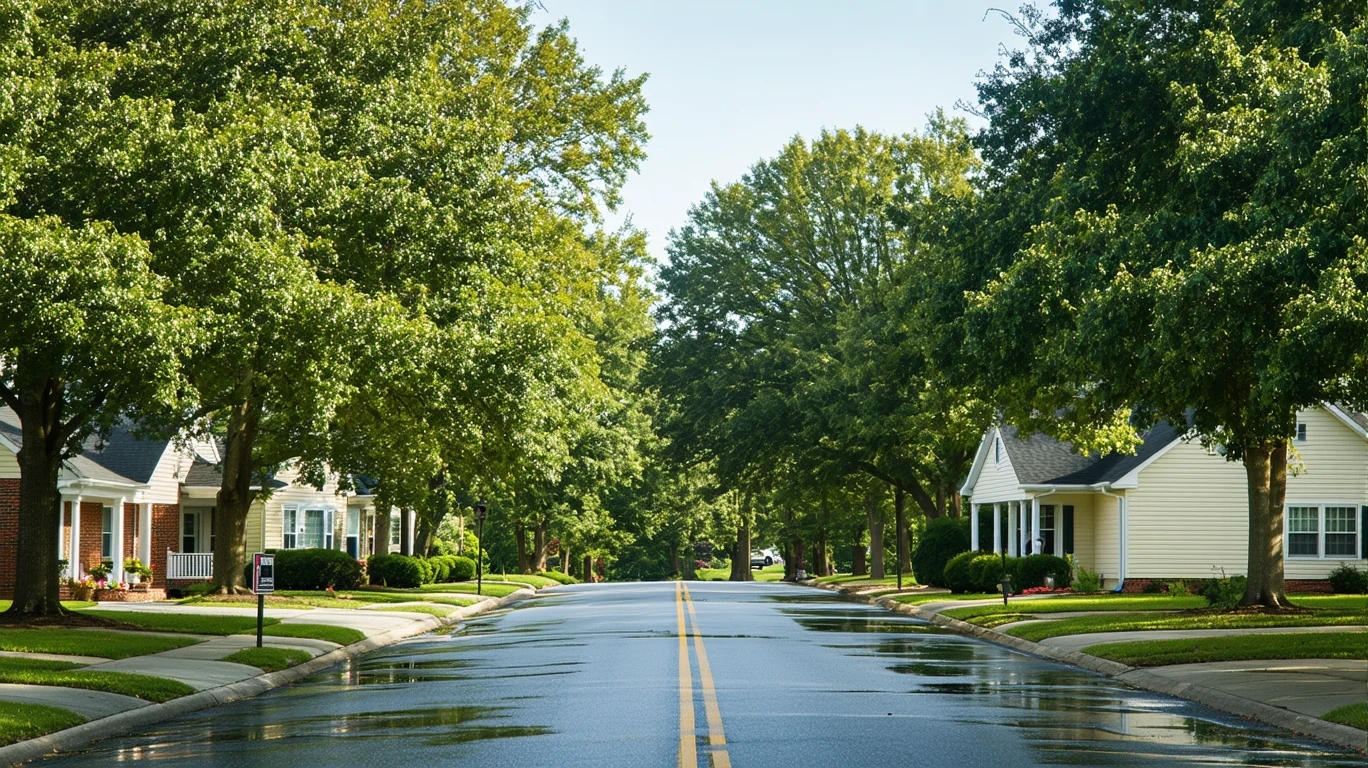
The physical layout matters more than people expect. Pedestrian infrastructure falls well below typical thresholds, and both residential and commercial land uses exist but remain separated enough that walking isn’t a practical option for daily needs. Grocery density sits below the low threshold, and while some food establishments are present, they’re not broadly accessible. This isn’t a place where you can step outside and handle three errands on foot in 30 minutes.
For many households, comfort also depends on climate control expectations. Summers here bring extended heat, and electricity rates of 14.27¢ per kWh mean that air conditioning isn’t a trivial line item. Natural gas is priced at $12.72 per MCF, and heating months add another seasonal swing. Comfort means being able to cool or heat your home without renegotiating other spending each month.
Space expectations also play a role. Median home values around $189,300 reflect low-rise, single-family housing stock. Renters paying $878 per month are typically securing more square footage than they would closer to Louisville, but that space comes with the assumption that you’ll drive to access nearly everything beyond your front door.
Where Income Pressure Shows Up First
Housing costs are visible and predictable, but transportation is where many households feel the squeeze before they realize it’s happening. Shepherdsville’s car-oriented structure means that one vehicle per adult isn’t a convenience—it’s the baseline for participating in daily life. Gas prices around $4.07 per gallon combine with the reality that work, groceries, healthcare, and errands all require separate trips, often to different parts of the area.
Errands accessibility creates a second pressure point. Because grocery establishments are sparse and food options are clustered rather than broadly distributed, households spend more time planning, consolidating trips, and driving longer distances to avoid paying convenience premiums at smaller stores. This isn’t a cost you see on a budget spreadsheet, but it’s a tax on time and flexibility that affects how your income feels day to day.
For families, the pressure compounds quickly. School density and playground density both fall below low thresholds, meaning that getting kids to activities, playdates, or even outdoor recreation requires intentional logistics. There’s no hospital or clinic presence detected locally, so any healthcare need beyond a pharmacy visit means travel. Families managing multiple schedules, multiple vehicles, and multiple errands loops face a different kind of income pressure than couples or single adults—even at the same earnings level.
Utility volatility adds another layer. Cooling costs dominate summer months, and heating expenses rise in winter. Households without enough margin to absorb a $50–$80 swing between low and high usage months often find themselves adjusting thermostats or delaying other purchases to smooth the gap.
How the Same Income Feels Different by Household
A single adult earning $50,000 annually might find Shepherdsville manageable if they’re comfortable with car dependency and don’t mind that most social or recreational activities require a drive. Monthly expenses stay lower than in denser areas, and housing costs leave room for other priorities. But the tradeoff is time: every errand is a distinct event, and spontaneity has a higher friction cost.
Couples at similar income levels—say, $70,000 combined—often experience less pressure because they can share transportation costs and split errands logistics. But dual-earner couples face a different challenge: sparse infrastructure means that coordinating two work commutes, grocery runs, and household errands requires either two vehicles or careful scheduling. The time burden doesn’t disappear; it just gets distributed.
Families feel the structure most acutely. A household earning $75,000 with two kids faces compounded logistics: school drop-offs and pickups, limited local playground access, healthcare appointments that require travel, and grocery runs that can’t easily be combined with other stops. The same income that feels spacious for a couple starts to feel tight for a family—not because housing is unaffordable, but because the daily operation of the household demands more vehicles, more fuel, more time, and more planning.
Park density is limited, and water features are present but not abundant. Families looking for regular outdoor recreation will need to drive to access it, which adds another layer of logistics to weekends and after-school hours.
The Comfort Threshold (Qualitative)
Comfort in Shepherdsville isn’t reached when income hits a specific number. It’s reached when a household has enough margin to stop making tradeoffs between time and money on a weekly basis.
That threshold shows up when:
- You can afford a second vehicle without stretching, so errands and commutes don’t require constant coordination
- Fuel costs don’t dictate whether you consolidate trips or make them as needed
- Seasonal utility swings don’t force you to adjust other spending
- You can choose convenience over price when errands accessibility is low
- Saving becomes a regular behavior, not something that happens only in low-expense months
For some households, that threshold might be $60,000. For others—especially families with multiple kids or households with healthcare needs—it might be $85,000 or higher. The difference isn’t income alone; it’s how well your household structure and expectations align with the infrastructure and layout of the place.
Why Online Cost Calculators Get Shepherdsville Wrong
Most cost-of-living calculators treat Shepherdsville as a generic low-cost suburb and stop there. They’ll show you that rent is lower than Louisville, that the regional price level is below the national average, and that housing is affordable. All of that is true, but none of it tells you how daily life actually works.
Calculators don’t account for the fact that car dependency isn’t optional here—it’s structural. They don’t measure the time cost of sparse errands accessibility, or the logistics burden that families face when schools, playgrounds, and healthcare are all below density thresholds. They don’t explain that comfort depends as much on how much friction you can tolerate as it does on how much rent you pay.
People feel surprised after moving because the budget looked fine on paper, but the daily operation of their household turned out to be more expensive—or more time-intensive—than expected. The rent was affordable, but the second car wasn’t optional. The grocery bill was reasonable, but the drive to avoid paying convenience premiums added 40 minutes to every shopping trip. The utilities were manageable in spring, but summer cooling costs were higher than anticipated.
Shepherdsville works well for households that expect car-oriented suburban life and have built their budgets and schedules around it. It works less well for households that assume proximity, walkability, or easy errands access—even at a lower income level.
How to Judge Whether Your Income Fits Shepherdsville
Instead of asking “Is my income high enough?”, ask yourself these questions:
- Can you afford and maintain two vehicles if needed? For dual-earner couples or families, this isn’t a luxury—it’s often the baseline for managing work and errands without constant coordination.
- How sensitive are you to time costs? If you value being able to walk to a coffee shop, run three errands in 20 minutes, or access parks without driving, Shepherdsville’s infrastructure will feel limiting no matter what your income is.
- Can you absorb seasonal utility swings? If a $60 difference between your lowest and highest utility month would require you to adjust other spending, you’re closer to the edge than you think.
- Do you have healthcare needs that require regular access? With no hospital or clinic presence detected locally, any non-pharmacy healthcare need means travel. Families with young kids or anyone managing chronic conditions should factor that into their logistics and fuel budgets.
- How much planning friction can you tolerate? Sparse grocery density and car-oriented errands infrastructure mean that spontaneity has a cost. If you prefer flexibility and convenience over planning, you’ll either pay for it in time or in higher prices at less-competitive stores.
Your income matters, but your answers to these questions matter more. Shepherdsville can work well for households that align with its structure. It creates persistent low-grade pressure for households that don’t.
FAQs About Living Comfortably in Shepherdsville
Is $60,000 a year enough to live comfortably in Shepherdsville?
It depends entirely on your household structure and expectations. A single adult or couple without kids might find $60,000 leaves meaningful margin, especially if they’re comfortable with car dependency and don’t mind errands logistics. A family with kids will likely feel more pressure at that income level, because the infrastructure here creates compounded time and transportation costs that aren’t obvious until you’re managing them daily.
How much does car dependency actually cost in Shepherdsville?
There’s no single answer, because it depends on how many vehicles you need, how far you drive, and how often. But the structure here makes one car per adult the functional baseline for most households. Gas prices around $4.07 per gallon combine with the reality that work, errands, healthcare, and recreation all require separate trips. Families should assume that fuel, insurance, and maintenance for two vehicles aren’t optional expenses—they’re part of the cost of participating in daily life here.
Do families feel more income pressure in Shepherdsville than other household types?
Yes, because the infrastructure creates compounded logistics. School density and playground density are both below thresholds, healthcare access requires travel, and errands can’t be clustered easily. A couple earning $70,000 might feel comfortable, while a family at the same income level feels stretched—not because housing is unaffordable, but because managing kids, errands, and schedules requires more vehicles, more fuel, and more time.
What income level do most people in Shepherdsville actually earn?
Median household income is $71,875 per year, which gives you a sense of the center point. But that doesn’t tell you whether households at that level feel comfortable or stretched—it just tells you what’s typical. Comfort depends on how well your household’s needs and expectations align with what the infrastructure here actually supports.
Are there ways to reduce cost pressure without earning more?
Yes, but they require adjusting expectations rather than finding hidden savings. Households that reduce pressure successfully tend to do a few things: they accept car dependency and budget for it explicitly, they plan errands in consolidated loops rather than making spontaneous trips, they choose housing that minimizes commute distance even if it’s not their first choice, and they build margin for seasonal utility swings rather than assuming average monthly costs. None of that makes Shepherdsville cheaper, but it reduces the friction that makes the same income feel tighter than it should.
How this article was built: In addition to public economic data, this article incorporates location-based experiential signals derived from anonymized geographic patterns—such as access density, walkability, and land-use mix—to reflect how day-to-day living actually feels in Shepherdsville, KY.
Shepherdsville can work well for some households—but only if expectations match reality. The real cost pressures here aren’t always the ones people budget for, and comfort depends as much on how you navigate the infrastructure as it does on how much you earn.