
“I tried to make it work without a second car for about three months,” says Marcus, who moved to Shepherdsville from downtown Louisville in 2023. “But between getting groceries and my wife’s job in Jeffersontown, we gave up. You just need wheels here.”
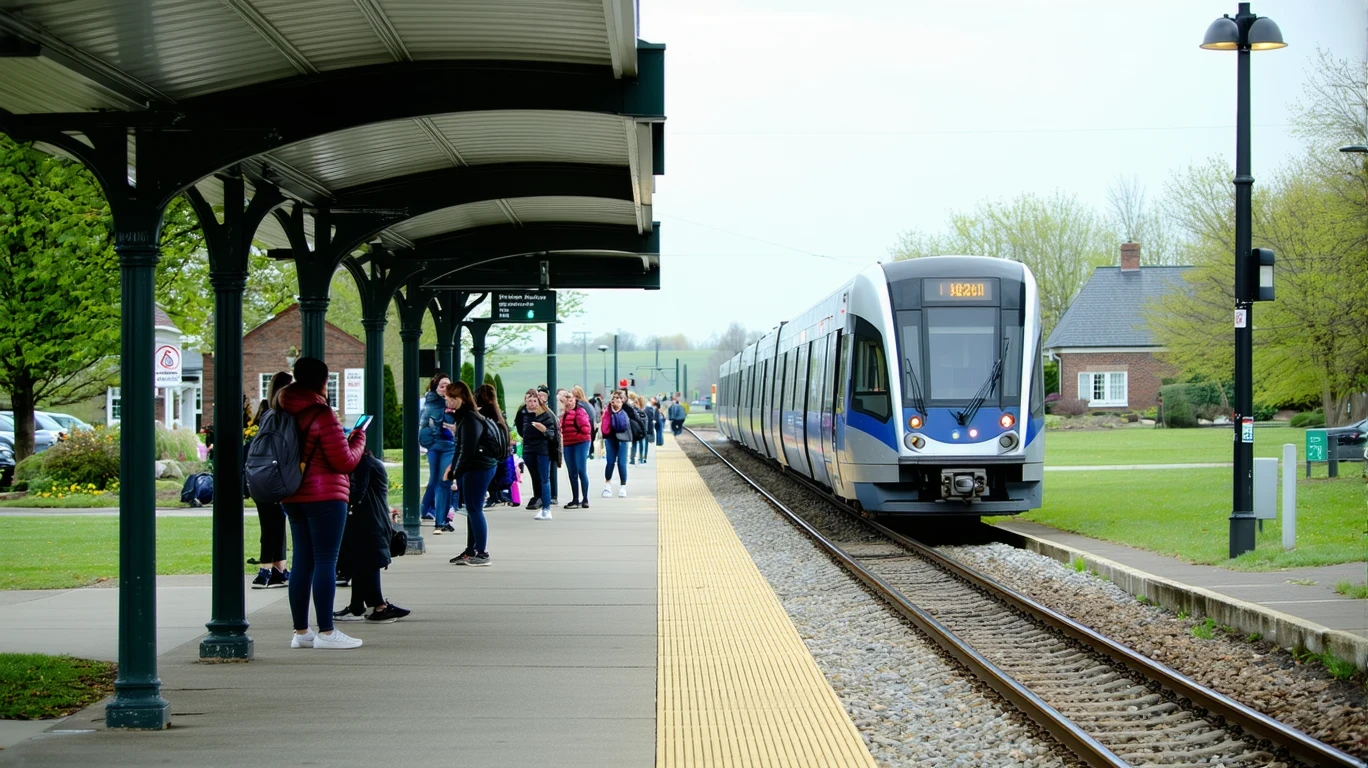
How People Get Around Shepherdsville
Understanding transportation options in Shepherdsville starts with recognizing what kind of place this is: a car-oriented community where daily life is structured around driving. The infrastructure reflects that reality clearly—pedestrian pathways are limited relative to the road network, and the physical layout of homes, stores, and services assumes vehicle access.
Newcomers sometimes expect suburban flexibility: the ability to walk to a few essentials or rely on occasional transit for longer trips. Shepherdsville doesn’t fit that model. The city’s development pattern, with residential areas separated from commercial corridors and minimal sidewalk connectivity, makes driving the default for nearly every errand, appointment, and commute.
This isn’t a judgment about lifestyle preference—it’s a structural fact. The place was built around cars, and the day-to-day rhythms of life here follow that logic.
Public Transit Availability in Shepherdsville
Public transit plays essentially no role in daily mobility for Shepherdsville residents. There is no detectable transit infrastructure serving the city—no bus stops, no rail connections, no regional service with meaningful coverage.
For households accustomed to cities where transit provides at least a backup option, this absence is significant. It means every trip requires either a personal vehicle or coordination with someone who has one. There’s no fallback for a broken-down car, no way to avoid parking costs, and no alternative during high gas prices.
Some residents may access transit by driving to park-and-ride locations closer to Louisville, but that requires owning a car in the first place—and it adds time and complexity rather than reducing it.
Driving & Car Dependence Reality
In Shepherdsville, car ownership isn’t optional for most households—it’s the only practical way to manage daily life. Grocery stores, medical appointments, schools, and workplaces are spread across distances that make walking or biking impractical, even when weather cooperates.
The city’s layout reinforces this dependence. Residential streets don’t connect seamlessly to commercial areas. Sidewalks, where they exist, often dead-end or skip entire stretches. Even short trips—picking up a prescription, dropping off dry cleaning—require getting in the car.
Parking is rarely a constraint here, which removes one friction point common in denser areas. But the tradeoff is clear: every household needs at least one vehicle, and many need two. That means registration, insurance, maintenance, and fuel costs are non-negotiable parts of the monthly budget, not optional expenses that can be minimized through transit or walkability.
For families, this often translates to coordinating multiple schedules around fewer cars than adults, or committing to multi-car ownership earlier than they might prefer.
Commuting Patterns & Daily Mobility
Shepherdsville sits within the Louisville metro area, and many residents commute to jobs in Louisville proper, Jeffersontown, or other nearby employment centers. The commute itself is car-based by necessity, and the distance means that traffic, road conditions, and fuel prices directly affect daily routines.
Commuters here don’t have the option to switch modes when gas prices spike or when weather makes driving stressful. There’s no bus to fall back on, no carpool lane advantage, no rail line to dodge highway congestion. The commute is what it is, and it’s absorbed as a fixed time and cost burden.
For households with two working adults, the commute often requires two vehicles. One partner might work locally, but “locally” in Shepherdsville still usually means driving—there’s no walkable downtown employment cluster, and even nearby jobs require a car to reach reliably.
Single-stop commutes are the norm, but multi-stop errands on the way home add time and mileage quickly. Picking up kids, stopping for groceries, or swinging by the pharmacy all require route planning and vehicle access.
Who Transit Works For—and Who It Doesn’t
Transit doesn’t work for anyone in Shepherdsville in a practical, day-to-day sense. There’s no infrastructure to use, no service to rely on, and no realistic way to structure a routine around public transportation.
This affects different household types unevenly. Young professionals who might prefer to minimize car costs and avoid the hassle of ownership face a hard stop: living here means driving. Retirees on fixed incomes can’t reduce transportation expenses by shifting to transit. Families can’t teach teenagers to navigate the city independently without also handing them car keys.
Renters and owners face the same constraint. Location within Shepherdsville doesn’t change the equation—there are no “transit-friendly” pockets, no neighborhoods where walking or busing replaces the need for a car.
The lack of transit isn’t a gap that some residents navigate around. It’s a baseline condition that shapes who moves here and how they manage their households once they arrive.
Transportation Tradeoffs in Shepherdsville
Because transit isn’t an option, the transportation tradeoff in Shepherdsville isn’t between driving and taking the bus—it’s between accepting car dependence or choosing to live somewhere else.
Driving offers control and flexibility. You’re not constrained by schedules, routes, or service gaps. You can make multi-stop trips, adjust timing on the fly, and access any part of the metro area without coordinating transfers or checking timetables.
But that control comes with exposure. Gas prices at $4.07 per gallon hit directly and unavoidably. Vehicle breakdowns aren’t inconveniences—they’re mobility crises. Insurance, registration, and maintenance costs are locked in, not optional line items that can be reduced by driving less.
For households evaluating Shepherdsville, the question isn’t whether they can make transit work. It’s whether they’re prepared to own, maintain, and rely on at least one car—and often two—as a non-negotiable part of living here.
FAQs About Transportation in Shepherdsville (2026)
Is public transit usable for daily commuting in Shepherdsville?
No. There is no public transit infrastructure serving Shepherdsville. Daily commuting requires a personal vehicle.
Do most people in Shepherdsville rely on a car?
Yes. The city’s layout and lack of pedestrian or transit infrastructure make car ownership essential for nearly all residents. Most households need at least one vehicle, and many require two.
Which areas of Shepherdsville are easiest to live in without a car?
None. There are no neighborhoods in Shepherdsville where walking or transit can replace car ownership for daily needs. Even short errands require driving.
How does commuting in Shepherdsville compare to nearby cities?
Shepherdsville functions as a car-dependent suburb within the Louisville metro area. Commutes to Louisville or other nearby employment centers are entirely car-based, with no transit alternative. Compared to denser parts of Louisville, commuting here offers fewer options but also fewer parking constraints.
Can I reduce transportation costs by living in Shepherdsville?
Not through reduced car dependence. Living in Shepherdsville requires owning and maintaining at least one vehicle, which locks in fuel, insurance, and maintenance costs. Any transportation savings would come from housing affordability or shorter commutes, not from using less expensive mobility options.
How Transportation Fits Into the Cost of Living in Shepherdsville
Transportation in Shepherdsville isn’t a flexible budget category—it’s a structural requirement. Car ownership, fuel, insurance, and maintenance are unavoidable costs for households living here, and they don’t scale down based on how much you drive or how carefully you plan routes.
This matters when evaluating overall affordability. A lower rent or mortgage payment can be offset quickly if transportation costs are higher than expected or if a second vehicle becomes necessary sooner than planned. The lack of transit doesn’t just remove an option—it removes a pressure valve that exists in other communities, where households can temporarily reduce driving or defer car purchases during tight financial periods.
For a fuller picture of how transportation expenses fit alongside housing, utilities, and other fixed costs, see the detailed breakdown in Monthly Spending in Shepherdsville: The Real Pressure Points.
If you’re considering Shepherdsville, factor in car dependence from the start. It’s not something you can optimize around or phase into gradually—it’s the baseline condition for living here, and it shapes both your budget and your daily routine from day one.
How this article was built: In addition to public economic data, this article incorporates location-based experiential signals derived from anonymized geographic patterns—such as access density, walkability, and land-use mix—to reflect how day-to-day living actually feels in Shepherdsville, KY.