
“I take the Green Line downtown three days a week—it’s easy, predictable, and I don’t think about parking. But if I need to get groceries or pick up my kid from practice? I’m in the car every time.”
That’s the reality of getting around Saint Paul in 2026. The city offers real public transit options—including rail service—but most residents still rely on a car for day-to-day life. Whether transit works for you depends less on the system itself and more on where you live, where you’re going, and how your household actually moves through the week.
This article explains how people actually get around Saint Paul, what public transit can and can’t do, and which households benefit from alternatives to driving. It won’t calculate commute costs or recommend specific passes—it’s about understanding the structure of mobility here and what that means for your daily routine.
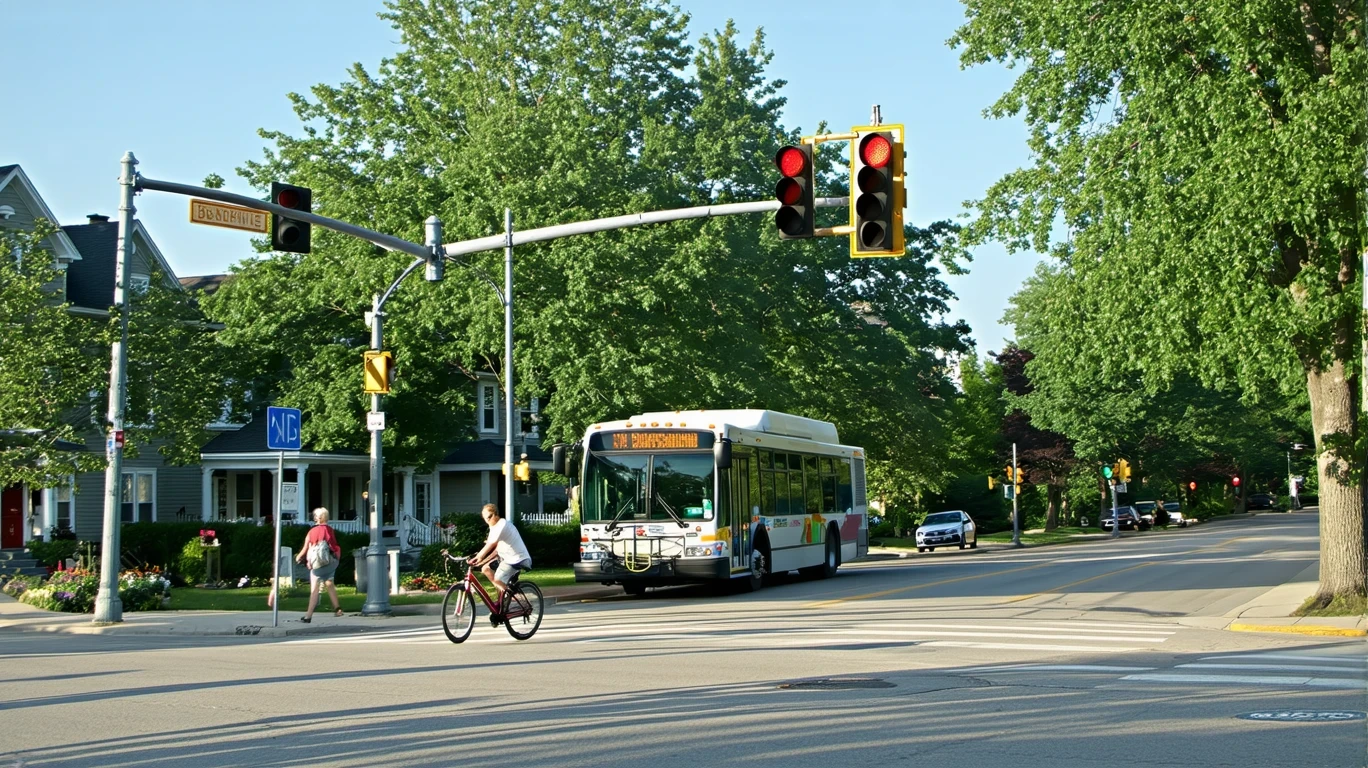
How People Get Around Saint Paul
Saint Paul is a city built around corridors. Downtown and the surrounding core neighborhoods have pedestrian-friendly streets, mixed-use blocks, and transit access that makes car-free living possible for some residents. But step outside those pockets, and the infrastructure shifts quickly. Residential streets widen, sidewalks thin out or disappear, and destinations spread farther apart.
Most people in Saint Paul drive most of the time. That’s not a failure of planning—it’s a reflection of how the metro area is structured. Jobs, schools, grocery stores, and social destinations are distributed across a sprawling region, and public transit doesn’t connect all of them efficiently. Even residents who live near rail or bus lines often keep a car for errands, weekend trips, or family logistics.
What newcomers often misunderstand is that Saint Paul isn’t uniformly car-dependent. There are real alternatives in specific areas—rail corridors, walkable commercial streets, bike-friendly routes—but those alternatives don’t scale across the entire city. If you’re evaluating whether you can live here without a car, the answer depends almost entirely on your address and your daily destinations.
Public Transit Availability in Saint Paul
Public transit in Saint Paul often centers around systems such as Metro Transit, which operates both bus and light rail service across the Twin Cities metro. The presence of rail transit—specifically the Green Line—gives Saint Paul a mobility option that many similarly sized cities lack. Rail service connects downtown Saint Paul to downtown Minneapolis and runs through the University of Minnesota campus, creating a reliable spine for commuters, students, and residents along that corridor.
Transit works best in the core. Downtown Saint Paul, the Cathedral Hill area, and neighborhoods near the Green Line stations see the most consistent service and the highest ridership. Residents in these areas can realistically structure their lives around transit, especially if their commute follows the rail line or connects to frequent bus routes.
Outside the core, transit coverage thins. Suburban neighborhoods, peripheral residential areas, and destinations not aligned with major corridors are harder to reach without a car. Bus service exists, but frequency and directness vary widely. Late-night and weekend service is limited in many areas, which narrows the window for transit dependence even further.
Transit in Saint Paul is a tool, not a replacement. It works well for specific trips—predictable commutes, downtown access, university connections—but it doesn’t eliminate the need for a car for most households.
Driving & Car Dependence Reality
Driving is the default in Saint Paul, and the city’s layout reinforces that. Parking is widely available and often free or low-cost outside downtown. Roads are designed to move cars efficiently, and most residential neighborhoods assume vehicle ownership. Grocery stores, schools, medical offices, and social destinations are spread across the metro in ways that make driving the fastest and most flexible option.
Car dependence isn’t just about commuting—it’s about how daily life is structured. Families managing school drop-offs, activity schedules, and weekend errands almost always need a car. Even single-person households find that running errands, visiting friends, or accessing services outside their immediate neighborhood is easier and faster by car.
Sprawl plays a role. The Twin Cities metro is large, and Saint Paul sits at the center of a region where jobs, housing, and services are distributed across dozens of municipalities. A commute that looks short on a map can involve multiple transfers or long waits on transit, while the same trip takes 15 minutes by car.
Parking pressure exists downtown and near the University, but it’s manageable compared to denser metros. Most residential areas have driveways, street parking, or dedicated lots. The tradeoff isn’t parking availability—it’s the time, cost, and exposure that come with owning and maintaining a vehicle in a climate with long, cold winters.
Commuting Patterns & Daily Mobility
Commuting in Saint Paul depends heavily on where you work and how flexible your schedule is. Single-destination commuters who live near the Green Line or a frequent bus route can often make transit work, especially if their employer is downtown or along the University Avenue corridor. These commutes tend to be predictable, and transit offers a way to avoid parking costs and traffic variability.
Multi-stop commuters—people who need to drop off kids, run errands, or visit multiple job sites—almost always drive. Transit doesn’t accommodate the kind of chained trips that define many households’ daily routines. The same is true for shift workers, evening commuters, or anyone whose schedule doesn’t align with peak service hours.
Proximity matters more than transit access for some households. Residents who live close to their workplace, their kids’ schools, or their regular errands can reduce car dependence not by using transit, but by shortening the distance they need to travel in the first place. Walkable neighborhoods and mixed-use corridors make this easier, but it requires intentional housing choices.
Commute flexibility is a privilege in Saint Paul. Households with one predictable commute and the ability to structure errands around it have more options. Households managing multiple schedules, irregular hours, or caregiving responsibilities face more friction and usually absorb it by driving.
Who Transit Works For — and Who It Doesn’t
Transit works best for renters in the core, especially those living within walking distance of a Green Line station or a high-frequency bus route. If your commute is downtown, to the University, or along a major corridor, and you don’t need a car for daily errands, you can realistically live without one. This setup is most common among young professionals, students, and single-person households with flexible schedules.
Families with children face more constraints. School locations, activity schedules, and the need to carry groceries or gear make car-free living much harder, even in transit-rich neighborhoods. Families who choose to live without a car usually supplement transit with ride-sharing, car rentals, or help from friends—and that works only if their housing, school, and work locations align tightly.
Suburban homeowners are almost universally car-dependent. Peripheral neighborhoods have limited transit service, longer distances between destinations, and fewer walkable errands. Homeownership in these areas assumes vehicle access, and the infrastructure reflects that.
Transit doesn’t work well for households that need geographic flexibility. If your job, social life, or caregiving responsibilities require you to move across the metro frequently or unpredictably, driving becomes necessary. Transit serves fixed routes on fixed schedules, and that rigidity doesn’t accommodate everyone’s life.
Transportation Tradeoffs in Saint Paul
Choosing between transit and driving in Saint Paul isn’t about cost alone—it’s about control, predictability, and how much friction you’re willing to absorb.
Transit offers predictability for specific trips. If you live and work along the Green Line, your commute is fixed, immune to traffic, and doesn’t require parking. You trade flexibility for simplicity. But if your trip requires a transfer, falls outside peak hours, or involves carrying cargo, transit becomes slower and less convenient.
Driving offers control. You leave when you want, stop where you need to, and adjust your route in real time. You absorb the cost of fuel, maintenance, insurance, and parking, but you gain the ability to structure your day without depending on schedules or coverage maps. In a climate with cold winters and icy roads, driving also means you’re not waiting outside for a bus that’s running late.
The tradeoff isn’t binary. Many Saint Paul residents use both—driving for errands and weekend trips, taking transit for commutes or downtown events. This mixed-mode approach works well if you live in a neighborhood with both parking and transit access, but it still requires owning a car.
For households evaluating whether to go car-free, the question isn’t whether transit exists—it does. The question is whether your specific housing location, work destination, and daily routine align with the routes and schedules that transit actually serves.
FAQs About Transportation in Saint Paul (2026)
Is public transit usable for daily commuting in Saint Paul?
Yes, if you live near the Green Line or a frequent bus route and your commute follows a major corridor. Transit works well for predictable, single-destination trips, especially to downtown Saint Paul, downtown Minneapolis, or the University of Minnesota. Outside those corridors, service is less frequent and coverage is thinner, which makes transit harder to rely on for daily commuting.
Do most people in Saint Paul rely on a car?
Yes. Most residents drive for most trips, even if they live in areas with transit access. Errands, family logistics, and multi-stop commutes are easier and faster by car, and the metro’s sprawl makes driving the default for reaching destinations outside the core.
Which areas of Saint Paul are easiest to live in without a car?
Downtown Saint Paul, Cathedral Hill, and neighborhoods along the Green Line offer the best combination of transit access, walkable errands, and mixed-use density. These areas support car-free living for single-person households or couples without children, especially if work and social life align with transit routes.
How does commuting in Saint Paul compare to nearby cities?
Saint Paul has better transit infrastructure than most Midwestern cities of similar size, largely due to the Green Line. Compared to Minneapolis, Saint Paul’s transit network is slightly less extensive, but the two cities share the same regional system. Compared to suburban municipalities in the metro, Saint Paul offers significantly more transit options and walkable density.
Can you bike year-round in Saint Paul?
Some residents do, but winter cycling requires preparation and tolerance for cold, ice, and snow. Saint Paul has notable cycling infrastructure, including bike lanes and trails, but winter conditions reduce ridership significantly. Biking works best as a seasonal option or for short, low-stakes trips during colder months.
How Transportation Fits Into the Cost of Living in Saint Paul
Transportation isn’t just a line item—it’s a structural factor that shapes where you can live, how you spend your time, and how much flexibility you have in daily life. In Saint Paul, the presence of rail transit and walkable pockets creates real alternatives to car ownership, but those alternatives work only if your housing, work, and routine align with the infrastructure.
For households that can make transit work, the savings go beyond fuel and parking. You avoid maintenance, insurance, registration, and the unpredictable costs that come with vehicle ownership. But you also accept constraints: limited geographic reach, fixed schedules, and the need to plan trips around routes and transfers.
For households that need a car, your monthly budget in Saint Paul will reflect that dependence. Fuel, insurance, and upkeep are ongoing, and winter driving adds exposure to tire changes, battery replacements, and weather-related repairs. The cost isn’t just financial—it’s also time spent in traffic, searching for parking, or managing vehicle logistics.
The best transportation decision in Saint Paul is the one that matches your actual life. If you’re a single commuter living near the Green Line with a downtown job, transit can work. If you’re a family managing school, activities, and errands across the metro, driving is almost unavoidable. The city offers both options, but it doesn’t make either one easy for everyone.
Understanding how you’ll actually move through Saint Paul—daily, weekly, across seasons—gives you a clearer picture of what living here will cost and what tradeoffs you’ll face. Transit exists, but it’s not universal. Driving is dominant, but it’s not required everywhere. The structure of your mobility shapes the structure of your budget, and both depend on where you choose to live.
How this article was built: In addition to public economic data, this article incorporates location-based experiential signals derived from anonymized geographic patterns—such as access density, walkability, and land-use mix—to reflect how day-to-day living actually feels in Saint Paul, MN.