
Understanding transportation options in Rochester Hills means recognizing a suburban landscape where cars dominate daily life, but where pockets of walkability and a notable cycling network offer alternatives for those positioned to use them. This isn’t a city where public transit shapes commute patterns or where most households can skip car ownership. Instead, Rochester Hills reflects a development pattern common to Oakland County suburbs: spread-out residential neighborhoods, corridor-based commercial clusters, and infrastructure that rewards flexibility and personal vehicles. Newcomers often assume the region’s proximity to Detroit implies robust transit connections, but the reality on the ground is different—day-to-day costs here are shaped heavily by the assumption that each working adult will drive.
What sets Rochester Hills apart from more car-dependent suburbs is the presence of substantial pedestrian infrastructure in certain areas and a bike network that exceeds typical suburban standards. These aren’t citywide features—they’re concentrated in pockets—but they do create meaningful options for households who prioritize walkability or cycling when choosing where to live. The city’s mixed land use, with residential and commercial development interwoven in places, supports this variability. Some neighborhoods allow residents to walk to grocery stores or cafes; others require a car for every errand. The distinction matters because it determines not just transportation costs, but time, convenience, and daily logistics.
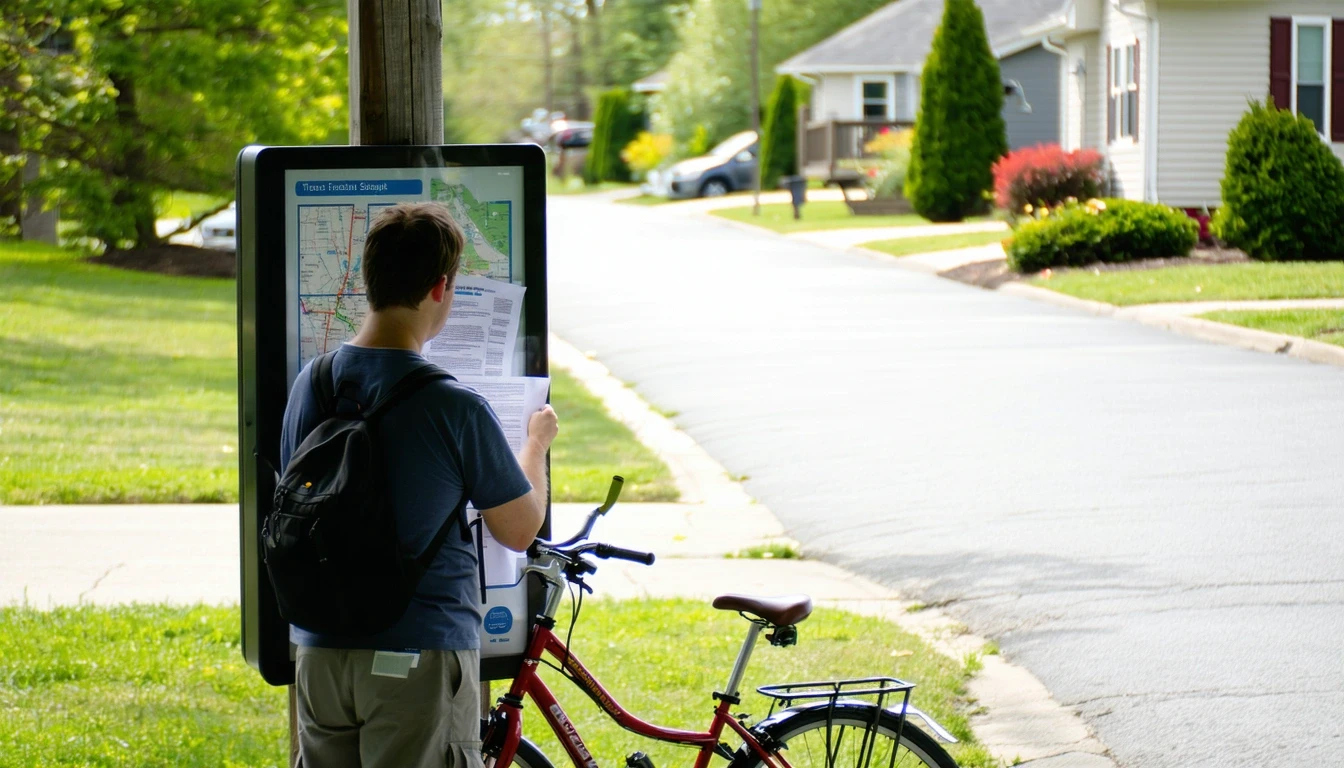
How People Get Around Rochester Hills
Most people in Rochester Hills drive. That’s the baseline assumption for work commutes, errands, medical appointments, and social activities. The city’s layout—characterized by medium-density development, separated land uses in some areas, and limited transit infrastructure—makes car ownership the default for nearly all household types. Gas prices currently sit at $3.85 per gallon, a visible line item but not the primary cost driver; the larger expense comes from vehicle ownership itself: insurance, maintenance, registration, and depreciation. These fixed costs don’t fluctuate with trip frequency, which means even households that drive less still carry the financial weight of keeping a car.
But within that car-first framework, there’s variation. Certain parts of Rochester Hills feature pedestrian infrastructure dense enough to support walking for nearby errands, and the city’s bike-to-road ratio is high enough to make cycling a practical option for those comfortable riding in a suburban environment. These aren’t alternatives to car ownership for most people—they’re supplements. A household might drive to work but bike to a weekend farmers’ market, or walk to a nearby coffee shop while still relying on a car for grocery runs. The infrastructure exists to support these mixed patterns, but only in specific areas.
The absence of a robust public transit signal in Rochester Hills is telling. While some regional bus service may connect parts of the city to nearby employment centers or Detroit, transit doesn’t function as a primary mobility option here. It’s not a system that shapes where people choose to live or work, and it’s not a fallback for households trying to avoid car ownership. For practical purposes, transit is either unavailable or too limited in coverage and frequency to serve as a reliable daily tool.
Public Transit Availability in Rochester Hills
Public transit in Rochester Hills plays a minimal role in daily life. The city lacks the density, land-use intensity, and infrastructure investment that would support frequent, widespread service. Regional systems such as SMART (Suburban Mobility Authority for Regional Transportation) may offer limited bus routes connecting Rochester Hills to other parts of Oakland County or Detroit, but coverage is sparse, and service is designed more for occasional trips than for daily commuting or errands.
Where transit exists, it tends to serve corridors rather than neighborhoods. Routes may connect commercial centers or park-and-ride lots, but they don’t penetrate residential areas deeply enough to function as a car replacement for most households. Frequency is a barrier: even where routes exist, wait times and scheduling constraints make transit impractical for time-sensitive trips or multi-stop errands. For someone working a standard 9-to-5 job in Rochester Hills or commuting to a nearby city, transit is rarely the fastest or most reliable option.
This isn’t a failure of the system—it’s a reflection of the built environment. Rochester Hills developed during an era when car ownership was assumed, and its street network, lot sizes, and commercial spacing reflect that assumption. Transit works best in dense, mixed-use environments where short distances between origins and destinations allow for efficient routing. Rochester Hills has pockets of that character, but not enough to justify the kind of transit investment that would make it a primary mobility tool.
For households considering Rochester Hills, the question isn’t whether transit is good or bad—it’s whether transit is relevant. For the vast majority of residents, the answer is no. A household moving here should plan for car ownership, and should factor that into housing location decisions: proximity to work, schools, and errands matters more when every trip requires driving.
Driving & Car Dependence Reality
Driving in Rochester Hills is the norm, and the city’s infrastructure reflects that. Parking is abundant—both on-street and in lots—and traffic congestion, while present during peak hours on major corridors, is generally manageable compared to denser metro areas. The tradeoff is distance: errands that might be walkable in a compact city require short drives here, and commutes to employment centers outside Rochester Hills can add up quickly in time and fuel consumption, even if the per-gallon cost feels stable.
Car dependence isn’t just about commuting—it’s about daily logistics. Grocery shopping, medical appointments, school pickups, and social activities all assume vehicle access. For single-adult households, this means every trip is a solo drive. For families, it often means multiple cars, especially when work schedules, school hours, and extracurricular activities don’t align. The flexibility that comes with car ownership is real, but so is the cost: insurance, maintenance, and the need to replace vehicles over time create ongoing financial pressure that doesn’t show up in a single month’s gas bill.
The city’s walkable pockets and bike infrastructure do offer some relief, but they’re neighborhood-specific. A household living near a commercial corridor with sidewalks, crosswalks, and nearby shops can reduce car trips for certain errands. A household in a more isolated subdivision will drive for everything. This geographic variation means that housing location decisions in Rochester Hills carry transportation consequences—choosing a home farther from daily destinations increases both time and cost exposure, even if the home itself is more affordable.
For retirees or remote workers, car dependence may feel less burdensome—fewer daily trips mean lower fuel costs and less wear on the vehicle. But the fixed costs remain, and the lack of transit alternatives means that losing the ability to drive, whether due to age, health, or financial strain, creates a significant mobility gap. Rochester Hills doesn’t offer the kind of infrastructure that allows people to age in place without a car, and that’s a factor worth considering for long-term planning.
Commuting Patterns & Daily Mobility
Commuting in Rochester Hills typically means driving, whether to a job within the city, elsewhere in Oakland County, or into Detroit. The city’s position in the northern Detroit metro area makes it accessible to multiple employment centers, but that accessibility depends entirely on car ownership. Commute distances vary widely depending on where someone works, and without reliable transit, there’s no fallback when a vehicle is in the shop or when a household is trying to manage with fewer cars than adults.
For households with two working adults, commuting often requires two vehicles. Carpooling is possible when work locations and schedules align, but the spread-out nature of employment in the region makes that the exception rather than the rule. Flexibility matters: a household where one or both adults work from home, even part-time, can reduce commuting frequency and the associated costs. But for those commuting five days a week, the time and fuel add up, and the lack of transit options means there’s no way to shift that burden.
Daily mobility isn’t just about work. School runs, grocery trips, medical appointments, and errands all require planning and vehicle access. In neighborhoods with walkable infrastructure and nearby services, some of these trips can be combined or done on foot, reducing the number of times someone needs to get in the car. In more car-dependent areas, every task requires a separate trip, and the logistics become more complex for families managing multiple schedules.
The presence of notable bike infrastructure in Rochester Hills does create an alternative for some trips, particularly recreational rides or short errands in areas with safe cycling routes. But cycling as a primary commuting mode is rare here—distances, weather, and the lack of protected bike lanes on major roads make it impractical for most people. It’s a supplement, not a substitute, and it works best for households already positioned in areas where cycling infrastructure is strong.
Who Transit Works For — and Who It Doesn’t
Public transit in Rochester Hills, where it exists, serves a narrow slice of the population. It’s most viable for occasional trips—someone visiting Detroit for an event, a student commuting to a regional campus, or a retiree making a planned trip to a medical appointment. It’s not a tool for daily commuting, grocery shopping, or managing household logistics. The coverage is too limited, the frequency too low, and the city’s layout too spread out for transit to function as a car replacement.
Renters in denser, more walkable parts of Rochester Hills might find transit slightly more accessible, particularly if they’re located near a bus corridor. But even then, the service is unlikely to meet the needs of someone working full-time or managing a family. Homeowners in outlying neighborhoods have even less access—transit routes don’t penetrate residential subdivisions, and the distance to the nearest stop often requires a car just to reach the bus.
Families with children face the steepest barriers. School transportation, extracurricular activities, and the need to manage multiple schedules make transit impractical even when routes exist. The time cost of waiting for buses, transferring, and walking from stops to destinations is too high when balanced against the demands of parenting. For families, car ownership isn’t optional—it’s structural.
Retirees and remote workers have more flexibility, but they still face the same infrastructure constraints. A retiree who no longer commutes might use transit for occasional trips, but the lack of frequent service and limited coverage means most errands still require driving. Remote workers can reduce commuting costs, but they can’t eliminate the need for a car when transit doesn’t serve daily destinations reliably.
Transportation Tradeoffs in Rochester Hills
The core tradeoff in Rochester Hills is between the flexibility of car ownership and the cost of maintaining that flexibility. Cars offer control—over timing, routing, and the ability to handle multi-stop trips or last-minute changes. They also create exposure: to fuel price volatility, maintenance surprises, insurance increases, and the eventual need to replace the vehicle. Transit, where available, offers lower direct costs but sacrifices speed, convenience, and coverage. For most households in Rochester Hills, that tradeoff doesn’t feel like a choice—it feels like a requirement.
Walkability and cycling infrastructure do offer a middle path, but only for households positioned to use them. Living in a walkable pocket near corridor-clustered errands reduces the number of car trips needed for daily life, which lowers fuel consumption and wear on the vehicle. It doesn’t eliminate the need for a car, but it reduces dependence for short trips. Similarly, notable bike infrastructure makes cycling a practical option for some errands or recreation, but it doesn’t replace the car for longer distances, bad weather, or trips requiring cargo.
The tradeoff between predictability and cost is also significant. Owning a car means knowing you can get where you need to go, when you need to go there. It also means absorbing the fixed costs every month, whether you drive 500 miles or 5,000. Transit, even limited transit, offers lower costs but introduces uncertainty—will the bus run on time? Will the route get you close enough to your destination? For households managing tight schedules or dependent care responsibilities, that uncertainty is often unacceptable.
Housing location decisions in Rochester Hills amplify these tradeoffs. Choosing a home in a walkable area with nearby services reduces transportation friction but may come with higher housing costs or smaller lot sizes. Choosing a home farther out may offer more space or affordability but increases commuting time and car dependence. There’s no universal answer—the right choice depends on household priorities, work locations, and tolerance for time versus cost tradeoffs.
FAQs About Transportation in Rochester Hills (2026)
Is public transit usable for daily commuting in Rochester Hills?
For most people, no. Public transit in Rochester Hills is limited in coverage and frequency, making it impractical for daily commuting or errands. Regional bus service may connect parts of the city to nearby areas, but it’s not designed to serve as a primary mobility tool. Households should plan for car ownership.
Do most people in Rochester Hills rely on a car?
Yes. The vast majority of residents depend on cars for work, errands, and daily activities. The city’s layout, limited transit options, and spread-out development make car ownership the default for nearly all household types.
Which areas of Rochester Hills are easiest to live in without a car?
Areas with walkable infrastructure and nearby corridor-clustered services offer the most flexibility for reducing car trips. These pockets allow residents to walk or bike for some errands, though car ownership is still necessary for most households. Location near commercial corridors with sidewalks and crosswalks increases the viability of non-car trips.
How does commuting in Rochester Hills compare to nearby cities?
Commuting in Rochester Hills is similar to other Oakland County suburbs: car-dependent, with distances and times varying based on work location. The city’s position in the northern metro area provides access to multiple employment centers, but that access depends entirely on driving. Transit options are more limited here than in denser parts of the Detroit metro area.
Does Rochester Hills have good bike infrastructure?
Rochester Hills has notable bike infrastructure relative to typical suburban standards, with a high bike-to-road ratio in parts of the city. This makes cycling practical for some trips, particularly recreation or short errands in areas with safe routes. However, cycling as a primary commuting mode is rare due to distances, weather, and limited protected lanes on major roads.
How Transportation Fits Into the Cost of Living in Rochester Hills
Transportation in Rochester Hills isn’t just a budget line—it’s a structural factor that shapes housing decisions, time allocation, and household logistics. The assumption of car ownership drives where people choose to live, how they organize their days, and what tradeoffs they’re willing to accept between proximity and affordability. A household that prioritizes walkability or shorter commutes may pay more for housing in a well-located neighborhood; a household that accepts longer drives may gain space or lower rent but absorbs the time and cost of commuting.
The fixed costs of car ownership—insurance, registration, maintenance, and depreciation—don’t fluctuate with usage, which means even households that drive less still carry the financial weight. Fuel costs, currently at $3.85 per gallon, are visible but not the primary driver of transportation expenses. The larger burden comes from the need to own, maintain, and eventually replace vehicles, and that burden is unavoidable in a city where transit doesn’t function as a reliable alternative.
For a fuller picture of how transportation costs interact with housing, utilities, and other expenses, see A Month of Expenses in Rochester Hills: What It Feels Like. That article breaks down where money goes and how different household types navigate the cost structure here. Understanding transportation in Rochester Hills means recognizing that mobility isn’t optional—it’s embedded in the city’s layout, and planning for it is part of planning for life here.
How this article was built: In addition to public economic data, this article incorporates location-based experiential signals derived from anonymized geographic patterns—such as access density, walkability, and land-use mix—to reflect how day-to-day living actually feels in Rochester Hills, MI.