
Is Rochester Hills expensive to live in? Rochester Hills is considered moderately priced in 2026, with a median home value of $359,800 and median rent of $1,497 per month. The main exposure is car dependence and corridor-based errands rather than housing affordability alone—ownership equity competes with transportation and trip-planning overhead.
A nurse in Rochester Hills opens her banking app every Sunday night and sees the same pattern: mortgage, car payment, gas, groceries. The numbers don’t shock her, but the structure does—everything requires a trip, and every trip requires a tank.
Overall Cost of Living Snapshot
Rochester Hills sits just below the national price baseline, with a regional price parity index of 95. That means the dollar stretches slightly further here than in many metro areas, but the advantage is modest—closer to equilibrium than discount. The median household income of $115,968 per year provides meaningful cushion relative to housing and day-to-day costs, but the city’s cost structure is shaped more by what you own and how you move than by what things cost on the shelf.
Housing dominates financial pressure, particularly for buyers navigating the $359,800 median home value. Renters face a more predictable monthly anchor at $1,497, but the city’s character—marked by ownership, green space, and low-density residential blocks—tilts structurally toward long-term equity rather than short-term flexibility. Utilities add moderate seasonal volatility, especially during Michigan’s heating months, and transportation costs are recurring and non-negotiable for most households.
Driver verdict: Housing entry cost is the primary financial gate, but car ownership and trip frequency determine ongoing cash flow. Surprises come from the gap between walkable pockets and car-dependent errands, and from winter utility swings that don’t show up in spring budgets.
Housing Costs (Primary Driver)
The $359,800 median home value defines Rochester Hills’ financial profile. This is not a city where housing is cheap, but it’s also not a market where prices have detached from regional income norms. For buyers, the entry barrier is capital and creditworthiness, not monthly affordability once locked in. Property taxes, insurance, and maintenance add recurring pressure that renters avoid, but ownership here is the structural default—this is a retirement city where aging in place is common, and turnover is slower than in younger, transient markets.
Renters pay $1,497 per month in gross rent, a figure that includes some utility and service costs depending on the lease. Renting offers predictability and lower entry friction, but the rental stock is limited relative to ownership inventory. This is not a city built for renters; it’s a city that tolerates renting as a transition phase.
The tradeoff is clear: buying locks in housing costs and builds equity, but requires navigating seasonal maintenance, property tax reassessments, and the risk of deferred repairs. Renting avoids those exposures but offers no equity accumulation and limited leverage in a market where landlords can adjust terms annually.
Conclusion: Rochester Hills is an ownership-oriented transitional city. Renting works for newcomers and short-timers, but the city’s infrastructure, demographics, and housing stock all assume you’re buying.
Housing Cost Breakdown
| Housing Type | Cost Anchor | What That Buys You |
|---|---|---|
| Median Home Value | $359,800 | Equity-building entry into ownership market; exposure to maintenance, taxes, insurance |
| Median Gross Rent | $1,497/month | Predictable monthly cost; limited inventory; no equity; lease-term flexibility |
Utilities & Energy Risk
Electricity in Rochester Hills runs 19.52¢ per kilowatt-hour, a rate that sits above many Midwest averages and translates into noticeable monthly exposure during both heating and cooling seasons. For illustrative context, a household using 1,000 kWh per month—a typical baseline—would face roughly $195 in electricity costs before fees and taxes. That figure climbs in summer when air conditioning runs longer, and in winter when electric heating supplements or replaces gas in some homes.
Natural gas is priced at $10.02 per thousand cubic feet (MCF), or roughly 10 cents per therm. Michigan winters are long and cold, and heating a home through December, January, and February can push gas usage well above baseline. For context, a household using 1 MCF per month during heating season would see approximately $10 in gas costs before distribution fees and taxes—but actual usage often runs higher during peak cold, and the bill structure includes fixed charges that add to the total.
The bigger risk isn’t the rate—it’s the seasonal swing. A household that budgets based on spring or fall utility bills will underestimate winter exposure, sometimes significantly. Heating dominates the cost curve from November through March, and cooling adds pressure from June through August. The months in between offer relief, but they’re short.
Risk classification: moderate. Utilities won’t break a budget, but they add volatility that requires planning. Households with older homes, poor insulation, or electric-heavy heating face higher exposure.
Groceries & Daily Costs
Grocery costs in Rochester Hills reflect the regional price parity index of 95, meaning food prices run slightly below the national baseline. The derived estimates—bread at $1.72 per pound, ground beef at $6.37 per pound, eggs at $2.23 per dozen—suggest a cost structure that’s neither cheap nor punishing. These figures are modeled, not observed, but they align with a market where day-to-day purchases don’t dominate financial stress.
Derived estimate based on national baseline adjusted by regional price parity; not an observed local price.
The more important factor is how you access groceries, not what they cost. Rochester Hills shows corridor-clustered errands accessibility, meaning grocery density is high along certain routes but food and service options are concentrated rather than evenly distributed. You won’t struggle to find a grocery store, but you will need to drive to it, and your choice of store may depend on which corridor you live near. This isn’t a city where you walk to the corner for milk—it’s a city where you plan a grocery run and consolidate trips.
For households that shop strategically and buy in bulk, the cost pressure is low. For households that make frequent, smaller trips or rely on convenience stores, the friction adds up—not in price, but in time and fuel.
Transportation Reality
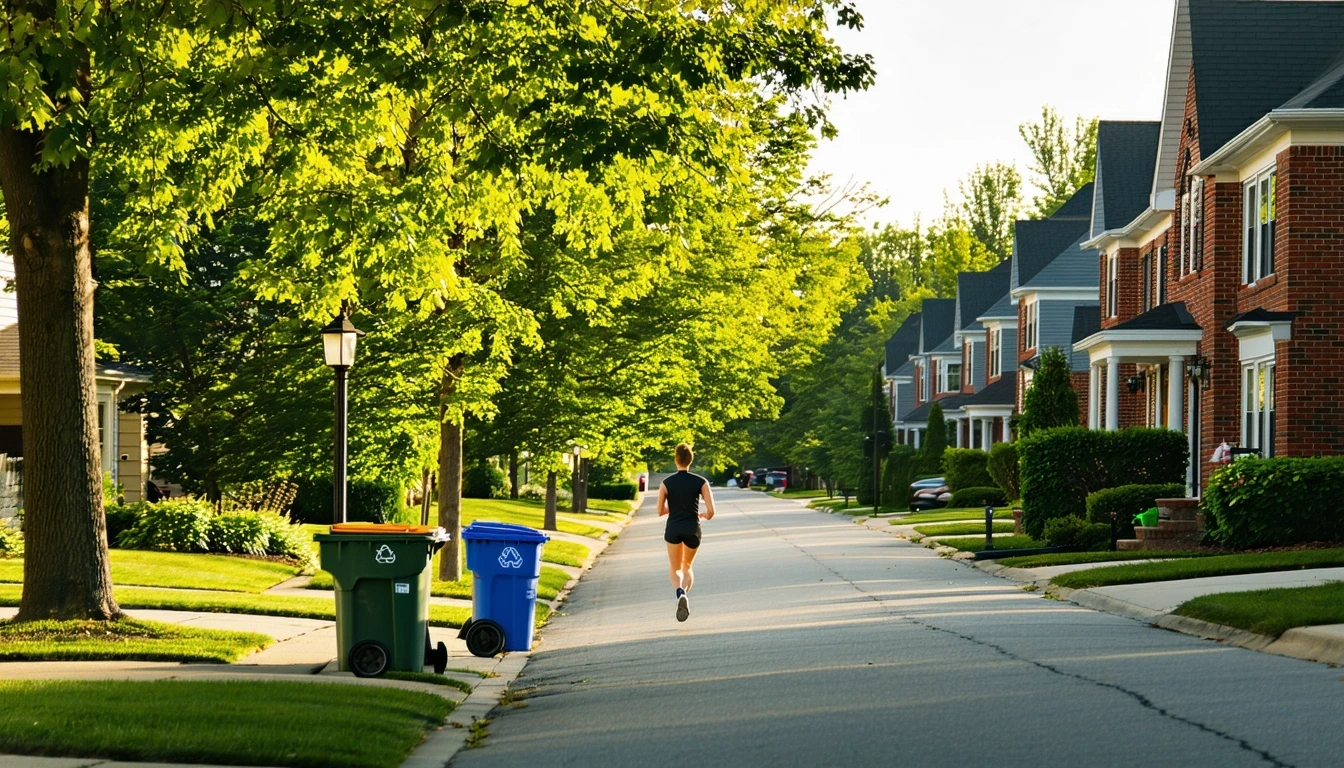
Rochester Hills is car-dependent. The city shows walkable pockets with a high pedestrian-to-road ratio and notable bike infrastructure, but those features serve recreational and local mobility within neighborhoods—they don’t replace the car for errands, work, or services. No transit signal was emitted in the location data, meaning public transportation is either absent or negligible for daily logistics.
Gas prices sit at $3.85 per gallon, a figure that fluctuates with regional and national trends but remains a recurring cost for anyone commuting, running errands, or managing a multi-stop day. For illustrative context, a household driving 25 miles round-trip daily in a vehicle averaging 25 miles per gallon would use roughly 1 gallon per day, or about $115 per month in fuel costs before accounting for longer trips, weekend errands, or multi-vehicle households.
The unemployment rate of 3.6% suggests a tight labor market, meaning most adults are working, and many are commuting. Without reliable transit, that commute happens in a personal vehicle, and the cost is both predictable and non-negotiable. Car ownership isn’t optional here—it’s infrastructure.
The transportation tradeoff is time versus distance. Walkable pockets mean you can stroll your own block, but getting around beyond your immediate neighborhood requires a car. Parks are integrated and accessible, but accessing them still often means driving to a trailhead or parking lot. The bike infrastructure is strong enough to support recreational riding, but it doesn’t eliminate car dependency for households managing work, school, and errands.
Cost Exposure Profiles
Rochester Hills creates different cost exposures depending on housing tenure, vehicle count, and trip frequency. The dominant exposures are:
Housing entry versus long-term ownership: Buyers face a steep upfront capital requirement ($359,800 median home value) but gain equity and fixed housing costs over time. Renters avoid the entry barrier but pay $1,497 per month with no equity accumulation and limited control over annual increases. Ownership is the lower-risk path for households planning to stay; renting is the lower-friction path for households in transition.
Transportation dependence: Every household needs at least one vehicle, and many need two. Fuel, insurance, maintenance, and registration are recurring costs that don’t compress easily. Households with longer commutes or multi-vehicle needs face higher exposure, while those working from home or with shorter trips see lower pressure. The city’s corridor-clustered errands mean even non-commuters drive frequently.
Utility volatility: Seasonal swings in heating and cooling create budget variability. Households in well-insulated newer homes face lower exposure; those in older homes with electric heating or poor weatherization face higher costs during Michigan’s long winters. Utility costs are moderate on average, but the range between low-use and high-use months is wide.
Low-exposure situations: single-vehicle household, short commute or remote work, newer home with efficient systems, ownership with fixed mortgage. High-exposure situations: multi-vehicle household, long commute, older home with electric heating, renting with annual lease adjustments.
The city does not exclude any income tier outright, but it rewards households that can absorb upfront capital (for ownership) and recurring transportation costs (for mobility). The cost structure is less about whether you can afford Rochester Hills and more about whether the tradeoffs—equity versus liquidity, space versus trip frequency—align with your household’s priorities.
Frequently Asked Questions
Is Rochester Hills more affordable than nearby Detroit in 2026? Rochester Hills tends to have higher housing costs than Detroit proper, but lower crime, better schools, and more green space. The tradeoff is car dependence and longer trips for services concentrated in the metro core.
What does a typical cost profile look like in Rochester Hills? Housing dominates, followed by transportation (fuel, insurance, maintenance) and utilities with seasonal swings. Groceries and daily costs are moderate and don’t drive financial stress for most households.
Do utilities cost more in Rochester Hills than nearby areas? Electricity rates at 19.52¢/kWh are higher than many Midwest cities, and natural gas exposure is significant during heating season. Utility costs are moderate overall but vary widely depending on home efficiency and seasonal usage.
What costs tend to surprise newcomers in Rochester Hills? The need for a car even in walkable pockets, the seasonal utility swings during winter heating months, and the corridor-based errands structure that requires intentional trip planning rather than spontaneous stops.
Are property taxes higher in Rochester Hills than nearby communities? Property tax rates vary by jurisdiction and assessment practices. Rochester Hills’ median home value of $359,800 means absolute tax bills can be significant even if rates are moderate, especially compared to lower-value nearby areas.
Is Rochester Hills a good fit for retirees managing fixed incomes? The city is flagged as a retirement community, and ownership allows retirees to lock in housing costs. However, car dependence, seasonal utility volatility, and maintenance costs require careful budgeting for households without flexible income.
Can you live in Rochester Hills without a car? Technically possible in limited walkable pockets near grocery corridors, but impractical for most households. No transit signal was detected, and errands, healthcare, and services require driving for the majority of residents.
How does Rochester Hills’ cost structure compare to other Michigan suburbs? Rochester Hills sits in the moderately priced range with a regional price parity index of 95. It’s less expensive than some metro Detroit suburbs but more expensive than rural Michigan, with cost pressure concentrated in housing entry and transportation rather than day-to-day purchases.
How this article was built: In addition to public economic data, this article incorporates location-based experiential signals derived from anonymized geographic patterns—such as access density, walkability, and land-use mix—to reflect how day-to-day living actually feels in Rochester Hills, MI.
—