
Quick Quiz: How Far Does $4,000/Month Actually Go in Riverview?
Before diving into the numbers, ask yourself: If you had $4,000 in monthly household income, would that cover rent, utilities, groceries, gas, and the friction costs that show up after move-in in Riverview? The answer depends less on what you earn and more on how costs stack—and which expenses you can actually control. In 2026, the monthly budget in Riverview is shaped by three dominant forces: housing anchored by a median gross rent of $1,757 per month, transportation exposure driven by a 34-minute average commute and gas at $3.95 per gallon, and utility volatility tied to Florida’s extended cooling season with electricity priced at 15.80¢/kWh. What newcomers often underestimate is not the size of any single bill, but the cumulative weight of commute-dependent logistics, corridor-clustered errands that require planning, and the administrative load of managing separate billing for water, trash, HOA dues, and seasonal HVAC upkeep in a low-rise suburban environment.
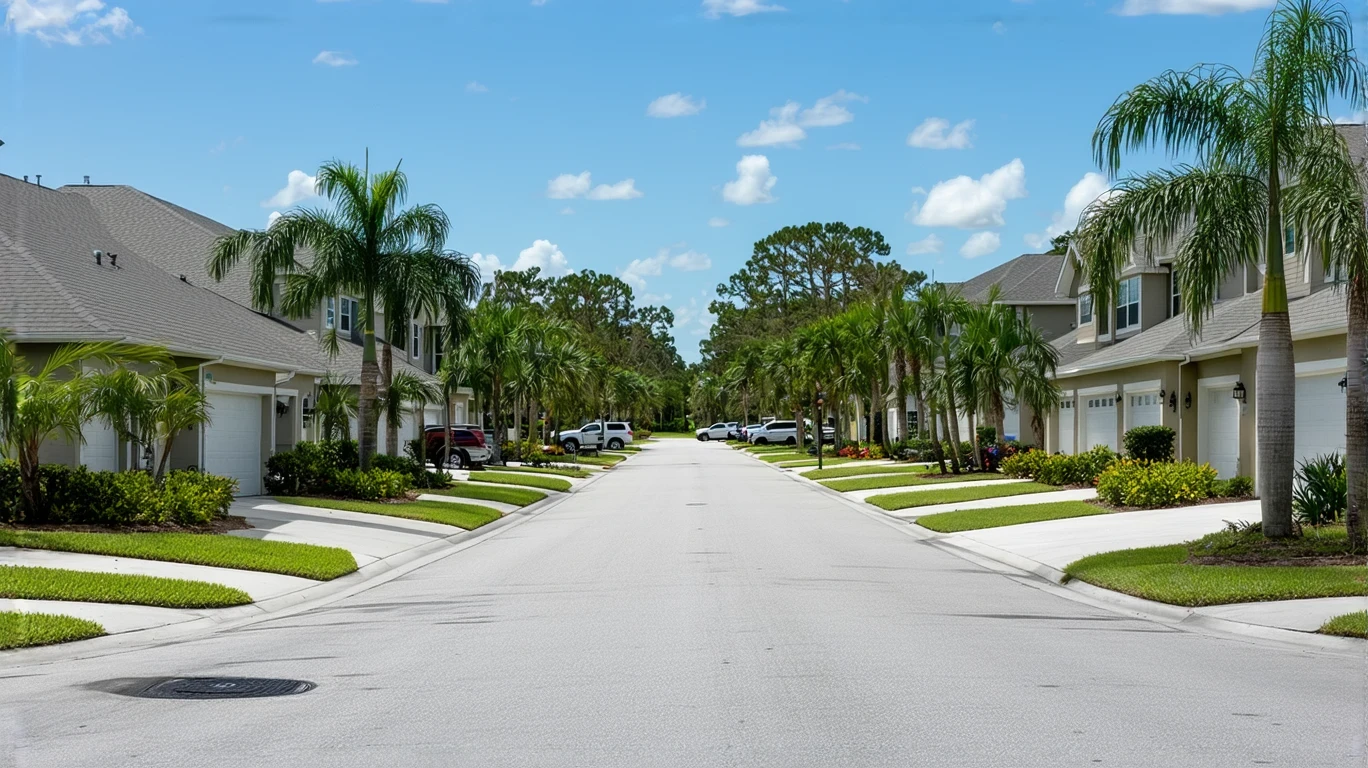
Riverview sits in the Tampa metro area with a regional price parity index of 126, meaning goods and services cost roughly 26% more than the national baseline. Median household income stands at $87,383 per year, but that figure masks the reality that 60.8% of workers face long commutes and only 14.7% work from home. The city’s infrastructure reflects a car-oriented pattern with bus service present but limited rail, and while walkable pockets exist where pedestrian-to-road ratios are high, errands and grocery access remain corridor-clustered rather than broadly distributed. For families, school density sits in the medium band, but playground infrastructure is sparse. Healthcare access is routine-local—clinics and pharmacies are present, but no hospital facility is located within city limits. This is a place where budget control comes down to understanding exposure: how far you drive, how much you cool, and how many small recurring fees you’re managing across multiple providers.
A Simple Budget Map: How Costs Behave by Household Type
The table below illustrates how cost behavior and exposure differ across three household types in Riverview. It does not estimate total spending, but instead shows which categories are stable, which are volatile, and where each household gains or loses control.
| Category | Jasmine (Single Renter) | Sam & Elena (Couple) | Ortiz Family (2 Kids, Owners) |
|---|---|---|---|
| Housing (Rent or Mortgage) | $1,757/month median rent; fixed for lease term but renewal-sensitive | $1,757/month median rent or mortgage on $292,700 median home; shared reduces per-person pressure | Mortgage on $292,700 median home; adds property tax, insurance, maintenance exposure |
| Utilities | Electricity-dominant at 15.80¢/kWh; solo occupancy limits efficiency; seasonal volatility high | Shared cooling load improves per-person efficiency; still seasonal | Larger square footage increases cooling exposure; HVAC maintenance critical; natural gas minimal at $23.62/MCF |
| Food (Groceries + Eating Out) | Solo shopping reduces bulk savings; corridor-clustered groceries require trip planning | Bulk purchasing viable; shared meal prep improves efficiency | Family-scale volume; higher baseline but per-person cost lower; errands require coordination |
| Transportation | Commute-dependent; 34-minute average + $3.95/gal gas creates material exposure; bus present but limited | Dual-commute risk if both work outside home (85.3% do); carpooling opportunity if schedules align | Multi-trip exposure (work, school, errands); 60.8% long commute rate suggests distance-driven costs; vehicle count matters |
| Fees / Friction Costs | Renter insurance, trash, water/sewer if separate; parking if applicable; admin light | Shared admin load; HOA possible if renting in managed community | HOA dues common; property tax; homeowners insurance; pest control; lawn care; HVAC servicing; admin-heavy |
| Discretionary (Life + Surprises) | Compressed by solo fixed costs; volatility from car or AC failure high-impact | Dual income creates buffer; shared discretionary spending improves flexibility | Family activity costs; school/childcare; episodic (medical, home repair); buffer critical |
| What Changes This Most | Commute distance and cooling habits | Whether both partners commute and housing tenure choice | Home size, commute footprint, and number of vehicles |
Methodology: This guide uses only city-level figures provided in the IndexYard data feed for 2026. Where exact category totals aren’t provided, categories are described directionally to show budget behavior rather than a receipt-accurate total.
The Real Cost Drivers in Riverview
In Riverview, the budget stress point is rarely one big bill—it’s the stack of small “friction” costs that show up after move-in. Housing anchors the budget: median rent of $1,757 per month sets the baseline for renters, while the median home value of $292,700 translates into mortgage, property tax, insurance, and maintenance exposure for owners. But housing is predictable. What catches households off guard is the interaction between housing pressure, transportation, and utilities in a car-oriented, low-rise suburban environment where errands are corridor-clustered and daily logistics require planning.
Transportation is exposure-driven. With 60.8% of workers facing long commutes, an average commute time of 34 minutes, and only 14.7% working from home, most households are making daily trips. Gas priced at $3.95 per gallon becomes material when combined with distance. For illustrative context, assuming a standard work schedule and a typical 25-mile round-trip commute in a vehicle averaging 25 miles per gallon, a commuter might use roughly 20 gallons per month, translating to approximately $79 in fuel costs before any errands, weekend trips, or multi-vehicle household needs. This is not a guarantee—it’s a scale reference to understand how commute footprint and fuel price interact. Households with two working adults, school drop-offs, or corridor-clustered grocery runs will see that figure rise quickly. Bus service is present, but the infrastructure reflects car dependence, and walkable pockets exist only in limited areas.
Utilities add seasonal volatility. Electricity at 15.80¢/kWh might seem moderate, but Florida’s extended cooling season means air conditioning dominates summer bills. For context, a household using a typical 1,000 kWh per month would face roughly $158 in electricity costs before fees or taxes, and that figure climbs in peak heat months or larger homes. Natural gas, priced at $23.62 per thousand cubic feet, plays a minimal role given the climate—heating demand is rare. The real budget lever is cooling efficiency: thermostat discipline, shade management, and preventive HVAC maintenance to avoid emergency repair costs.
Then come the friction costs—the recurring fees that don’t fit neatly into rent or utilities but add up across the month:
- HOA or association dues: Common in Riverview’s suburban developments; may cover landscaping, amenities, or shared infrastructure, but add a fixed monthly obligation.
- Water and sewer: Often billed separately from rent or mortgage, with usage-based variability.
- Trash and recycling: May be included in rent or HOA, or billed as a separate service depending on housing type.
- HVAC servicing: Preventive maintenance is critical in Florida’s heat and humidity to avoid costly emergency repairs or system replacement.
- Lawn care or pest control: Common in low-rise, single-family housing stock; can be DIY or contracted, but either requires time or money.
- Parking or vehicle registration: Depending on housing type and local requirements, these may add small but recurring costs.
These aren’t luxuries—they’re the operational costs of living in a place where infrastructure is spread out, services are unbundled, and households manage multiple billing relationships. The budget pressure isn’t dramatic; it’s cumulative.
How Households Keep the Budget Under Control (Without Living Like a Monk)
Budget control in Riverview isn’t about deprivation—it’s about understanding which costs are fixed and which respond to behavior. Housing and most friction fees are locked in once you sign a lease or close on a home. But transportation, utilities, and groceries in Riverview are all exposure-sensitive, meaning small changes in habit or timing can reduce volatility without eliminating comfort.
The most effective lever is trip consolidation. Because errands and grocery access are corridor-clustered rather than neighborhood-distributed, households that plan weekly shopping runs and combine errands into fewer trips reduce fuel consumption and time lost to driving. Couples and families can coordinate schedules to share vehicles or carpool when work locations align, cutting per-person commute costs. For those with flexibility, shifting work hours to avoid peak traffic doesn’t just save time—it reduces stop-and-go fuel waste.
Cooling costs respond to discipline. In Florida’s extended heat, air conditioning runs for months, and every degree on the thermostat matters. Households that use programmable or smart thermostats, close blinds during peak sun, and run ceiling fans to circulate air can lower electricity usage without sacrificing livability. Preventive HVAC maintenance—filter changes, annual servicing—keeps systems running efficiently and prevents expensive emergency repairs. These aren’t dramatic interventions; they’re small habits that compound over a billing cycle.
Here are practical tactics that Riverview households use to manage budget exposure without lifestyle compromise:
- Consolidate errands into planned weekly trips to reduce fuel use and time spent driving in a corridor-clustered environment.
- Use programmable thermostats to avoid cooling an empty home during work hours, then pre-cool before arrival.
- Coordinate carpooling or shared commutes when work schedules and locations align, especially for dual-income couples.
- Buy groceries in bulk when possible to reduce per-unit cost and trip frequency, leveraging shared household consumption.
- Schedule HVAC servicing annually to maintain efficiency and catch small issues before they become expensive failures.
- Close blinds and use fans during peak afternoon heat to reduce cooling load without raising thermostat temperature.
- Track water and electricity usage monthly to identify spikes early and adjust behavior before bills compound.
- Negotiate or prepay annual services (pest control, lawn care) to lock in rates and avoid month-to-month variability.
None of these tactics require sacrifice—they require awareness. The households that struggle in Riverview are often those that treat every cost as fixed and every bill as inevitable. The households that thrive recognize which expenses respond to planning, timing, and small behavioral shifts, then adjust accordingly.
How this article was built: In addition to public economic data, this article incorporates location-based experiential signals derived from anonymized geographic patterns—such as access density, walkability, and land-use mix—to reflect how day-to-day living actually feels in Riverview, FL.
FAQs About Monthly Budgets in Riverview (2026)
Is $3,500 per month enough to live in Riverview?
It depends on household size and housing tenure. For a single renter, $3,500 per month covers median rent of $1,757 plus utilities, groceries, and transportation, but leaves limited discretionary buffer—especially if commute distance is long. For a couple sharing costs, $3,500 becomes tighter unless both contribute income. Families or homeowners will find $3,500 insufficient to cover mortgage, utilities, transportation, and friction costs without significant tradeoffs.
What’s the biggest budget surprise for people moving to Riverview?
Most newcomers underestimate the cumulative impact of commute-dependent logistics and unbundled services. Rent or mortgage might match expectations, but the combination of $3.95/gal gas, 34-minute average commutes, corridor-clustered errands requiring trip planning, and separate billing for water, trash, HOA, and HVAC servicing creates a friction cost layer that’s easy to overlook until the first full month of bills arrives.
How much does commuting really cost in Riverview?
Commute costs scale with distance and frequency. With 60.8% of workers facing long commutes and gas at $3.95/gal, a household with one daily commuter driving a typical 25-mile round trip in a 25-MPG vehicle might spend roughly $79 per month on fuel for work alone, before errands or weekend trips. Dual-income households or families managing school drop-offs and errands will see that figure rise quickly, especially if vehicle count increases.
Are utilities in Riverview expensive compared to other Florida cities?
Electricity at 15.80¢/kWh sits in the moderate range for Florida, but the extended cooling season means air conditioning runs for months, making total usage the bigger driver than the rate itself. Natural gas at $23.62/MCF is less relevant given minimal heating demand. The budget challenge isn’t the unit price—it’s managing seasonal volatility in a low-rise suburban housing stock where larger homes and solo occupancy reduce per-person efficiency.
What income level makes Riverview feel comfortable?
Comfort is less about a single income threshold and more about alignment between earnings, housing choice, and commute footprint. Median household income in Riverview is $87,383 per year, which supports homeownership at the $292,700 median home value or rental at $1,757/month—but only if transportation in Riverview costs and friction fees are managed carefully. Single earners or single-income families will feel more pressure than dual-income households, especially if commute distance is long or home size increases cooling exposure.
Planning Your Next Step
The monthly budget in Riverview is shaped by three forces: housing that anchors spending at $1,757 median rent or $292,700 median home value, transportation exposure driven by car-dependent commutes and $3.95/gal gas, and utility volatility tied to Florida’s extended cooling season at 15.80¢/kWh. The friction costs—HOA dues, water, trash, HVAC servicing, and the administrative load of managing unbundled services—add up quietly but consistently. What separates households that thrive from those that struggle isn’t income alone; it’s understanding which costs are fixed and which respond to planning, timing, and behavioral discipline.
If you’re trying to understand how housing tenure, commute distance, and home size interact to shape your budget exposure, start with the housing pressure guide to see how rent vs. ownership tradeoffs play out in Riverview’s low-rise suburban form. For a deeper look at how electricity rates, cooling seasons, and HVAC efficiency affect monthly bills, the utilities breakdown will clarify where seasonal volatility shows up and which levers you actually control. And if you want to understand how food costs behave in a corridor-clustered environment where trip planning matters, the grocery costs guide explains what drives prices and where households gain efficiency.
You don’t need to guess at every line item or build a perfect spreadsheet. You need to know which categories dominate, which respond to behavior, and where your household type gains or loses control. That’s how you turn a budget from a source of stress into a tool for decision-making.