
“We moved here for the space and the schools, but I didn’t realize how much time I’d spend in the car just getting groceries or taking the kids anywhere. It’s not bad, just… more planning than I expected.”
That tension—between the appeal of newer suburban growth and the logistics of actually living it—captures much of what people feel about Riverview. This isn’t a city where everyone agrees on whether it’s “arrived” yet or still becoming something. It’s a place where the emotional experience depends heavily on what you’re trading off and what you’re willing to plan around.
Riverview sits in the Tampa metro area, shaped by rapid residential development, a predominantly low-rise suburban form, and a commute burden that many accept as the cost of entry. For families drawn to space, newer housing stock, and relative affordability compared to closer-in Tampa neighborhoods, it tends to deliver. For those expecting walkable spontaneity, dense amenity variety, or a short drive to work, it tends to disappoint.
Understanding whether Riverview feels like a good fit comes down to recognizing what the city asks of you daily—and whether that aligns with how you want to live.
What Riverview’s Vibe Actually Feels Like
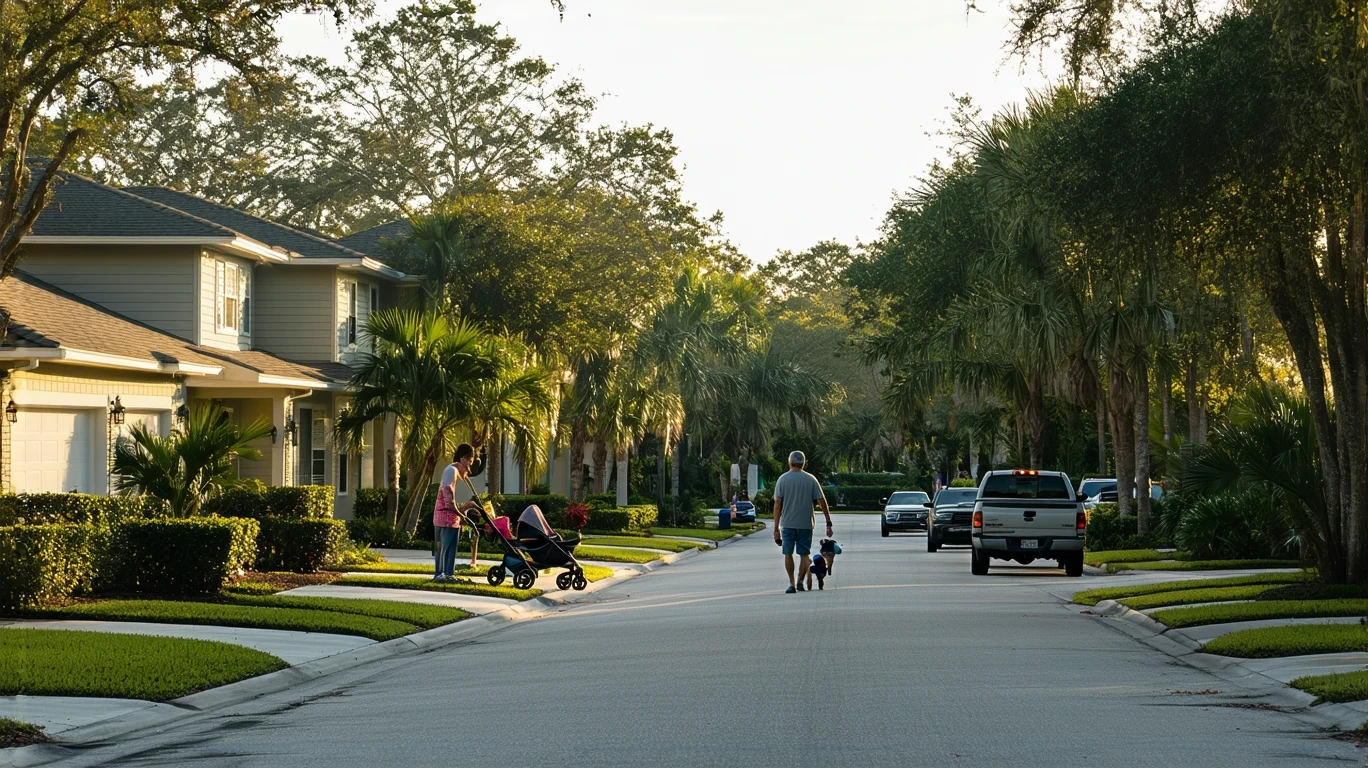
Riverview’s emotional tone is one of optimistic adjustment. People who feel at home here tend to be those who wanted suburban predictability, family-oriented infrastructure, and housing options that feel attainable. The city offers moderate school density, pockets of mixed-use development, and a low-rise character that reads as spacious and orderly.
But the tradeoffs show up in daily friction. Errands require intentional trips to specific corridors rather than spontaneous stops. The pedestrian-to-road ratio suggests some walkable pockets exist, but the overall structure still leans car-dependent. For households with young children, the limited playground density below expected thresholds means more driving to parks or planned activities rather than quick neighborhood outings.
The commute is a recurring emotional anchor. With an average of 34 minutes and over 60% of workers facing long commutes, the time-versus-affordability calculus is front and center. Remote workers and flexible schedulers tend to feel less burdened; traditional commuters describe it as “doable but draining.”
What keeps people here is often the same thing that frustrates them: Riverview is still becoming itself. Growth brings new retail, restaurants, and amenities, but it also brings construction, traffic adjustments, and debates about what the city should prioritize next.
Social Media Buzz in Riverview
Local online discussion—across neighborhood Facebook groups, Tampa-area subreddits, and community forums—tends to circle around a few recurring themes: growth management, commute stress, and the search for convenience without sacrificing space.
Tone varies widely depending on life stage and expectations. Newer residents often express pleasant surprise at the housing stock and school options. Long-time locals sometimes voice concern about losing the quieter, less-developed feel they originally moved for. Parents trade recommendations for pediatricians, activities, and the best grocery runs. Commuters vent about drive times and discuss carpool strategies or remote work negotiations.
Here’s what the conversation often sounds like:
- “It’s a great place to raise kids if you don’t mind driving everywhere. Just accept that now and you’ll be fine.”
- “I love the newer neighborhoods, but I wish there were more local spots within walking distance. Everything’s a 10-minute drive minimum.”
- “The commute to Tampa wears on you. I thought I’d get used to it, but some days it just feels long.”
Discussion about amenities tends to be pragmatic rather than celebratory. People acknowledge that day-to-day costs are manageable and options exist, but the accessibility requires planning. There’s less “hidden gem” excitement and more “you learn where to go” realism.
The emotional undercurrent is neither defensive nor dismissive—it’s adjusting. People describe figuring out routines, learning which corridors have what they need, and deciding whether the tradeoff still makes sense.
Local News Tone
Coverage of Riverview in Tampa-area outlets and hyperlocal news tends to frame the city through the lens of growth, infrastructure catch-up, and evolving identity. The tone is neither boosterish nor critical—it’s observational, focused on change and community response.
Recurring topic categories include:
- “New Development Brings Retail and Debate Over Density”
- “Commuters Weigh Housing Affordability Against Drive Times”
- “Families Drawn to Schools and Space, Navigate Activity Access”
- “Community Voices Differ on What Growth Should Prioritize”
- “Infrastructure Updates Aim to Keep Pace with Population”
The framing rarely declares Riverview “thriving” or “struggling”—it’s more interested in documenting tension points and how residents are responding. Stories about new shopping centers or restaurant openings are often paired with resident quotes about traffic or whether the additions match what people actually wanted.
There’s a persistent undertone of “becoming” rather than “arrived.” The city is treated as a work in progress, and coverage reflects that residents are both participants and critics in that process.
Review-Based Public Perception
On platforms like Google Reviews, Yelp, and Nextdoor-style community boards, Riverview’s public perception splits along expectation lines. Those who wanted suburban comfort, newer housing, and family infrastructure tend to leave positive feedback. Those who expected walkable variety, quick commutes, or dense nightlife options tend to express disappointment.
Common praise:
- Newer housing stock feels well-maintained and spacious
- Schools are accessible and meet moderate density expectations
- Relative affordability compared to closer-in Tampa neighborhoods
- Family-oriented vibe with parks and some recreational options
Common complaints:
- Errands require car trips; limited walkable spontaneity
- Commute times feel long, especially for traditional office schedules
- Playground and activity density lower than expected for a family-focused area
- Retail and dining variety still developing; some categories feel thin
Neighborhood variation exists but is often framed generically—newer planned communities versus older pockets. The planned areas tend to get higher marks for aesthetics and amenities within subdivisions, but residents note that leaving the neighborhood still requires driving. Older areas are described as quieter but sometimes lacking the newer infrastructure and retail access.
The recurring emotional note is expectation calibration. People who researched the commute, visited the grocery corridors, and understood the car dependency tend to feel satisfied. Those who assumed suburban growth would come with urban-style convenience tend to feel friction.
Comparison to Nearby Cities
| Dimension | Riverview | Brandon | Apollo Beach |
|---|---|---|---|
| Overall Vibe | Growing suburban, family-focused, commute-heavy | Established suburban, more retail density, still car-dependent | Waterfront suburban, quieter, more recreational feel |
| Errands Accessibility | Corridor-clustered, requires planning | Broader retail access, slightly more walkable pockets | Sparser, more driving required |
| Commute Feel | Long for most, trade-off for affordability | Moderate, closer to Tampa core | Long, more isolated from job centers |
| Family Infrastructure | Schools present, playgrounds limited | More established parks and activities | Outdoor-focused, fewer structured amenities |
| Housing Character | Newer developments, low-rise, spacious | Mix of older and newer, denser in parts | Waterfront appeal, lower density |
Riverview sits between Brandon’s more established suburban infrastructure and Apollo Beach’s quieter, waterfront-oriented character. If you prioritize newer housing and are willing to manage a longer commute, Riverview offers relative affordability and growth momentum. If you want slightly better retail access and a shorter drive to Tampa, Brandon may feel more convenient. If you’re drawn to water access and outdoor recreation over amenity density, Apollo Beach offers a different suburban tradeoff.
None of these cities delivers urban walkability or transit independence—they’re all car-dependent. The question is which version of suburban logistics and commute burden aligns with your daily priorities and tolerance for planning.
What Locals Are Saying
Here’s how different household types describe the experience of living in Riverview:
- “We love the space and the neighborhood feel, but I didn’t expect to spend so much time driving the kids to activities. There’s not a lot within walking distance.” — Parent of two elementary-aged children
- “The commute to downtown Tampa is rough. Some days it’s fine, other days it’s an hour each way. I’m trying to negotiate more remote days because it adds up.” — Marketing professional, traditional office schedule
- “For the price, we got a much nicer house here than we could closer in. We knew the drive would be longer, and we’re okay with it—for now.” — Dual-income household, recent transplants
- “It’s quiet, the schools are decent, and we have what we need. It’s not exciting, but that’s kind of the point.” — Long-time resident, family-focused
- “I work from home, so the commute doesn’t affect me. For us, Riverview is perfect—newer build, good value, and we’re not paying for walkability we wouldn’t use anyway.” — Remote software developer
- “I thought there’d be more to do locally. It’s fine, but you end up driving to Brandon or Tampa for most things beyond groceries.” — Young professional, renter
- “The growth is good in some ways, but it’s also changing the feel. It used to be quieter. Now there’s more traffic, more construction, more everything.” — Retiree, longtime local
The common thread across these voices is tradeoff awareness. People who feel satisfied tend to be those who understood what they were getting—and what they weren’t. Those who feel friction often describe mismatched expectations around convenience, commute burden, or lifestyle needs.
Does Riverview Feel Like a Good Fit?
Riverview doesn’t ask you to love it unconditionally—it asks you to decide whether its specific tradeoffs align with your daily life and long-term priorities.
This tends to work for:
- Families prioritizing space, newer housing, and moderate school access over walkable spontaneity
- Remote workers or flexible schedulers who can avoid or minimize the commute burden
- Households willing to trade drive time for relative affordability compared to closer-in Tampa neighborhoods
- Those who prefer suburban predictability and are comfortable with car-dependent errands
This tends to frustrate:
- Traditional commuters sensitive to long drive times and traffic variability
- Households expecting dense amenity variety or walkable daily errands
- Families with young children seeking high playground and activity density without driving
- Renters looking for lower monthly housing pressure or urban-style convenience
Riverview’s emotional profile is one of pragmatic adjustment. It rewards those who plan, accept the car dependency, and value what the growth trajectory promises. It challenges those who assumed suburban development would come with urban-level accessibility or short commutes.
If you’re considering Riverview, spend time driving the corridors where you’d run errands, test the commute during peak hours, and ask yourself whether the tradeoff between space and logistics feels sustainable—not just tolerable. The city isn’t hiding what it is; it’s asking whether that version of suburban life fits how you actually want to live.
How this article was built: In addition to public economic data, this article incorporates location-based experiential signals derived from anonymized geographic patterns—such as access density, walkability, and land-use mix—to reflect how day-to-day living actually feels in Riverview, FL.
The perspectives shown reflect commonly expressed local sentiment and recurring themes in public discussion, rather than individual accounts.