
“I thought I could ditch my car when I moved here — I was wrong within a week.” That’s a common refrain from newcomers to Redmond who arrive expecting Seattle-level transit and find something closer to selective suburban coverage. Understanding transportation options in Redmond means recognizing that this Eastside tech hub operates on a car-first foundation with transit that works well in specific corridors but fades quickly outside them. The city’s layout — a mix of low-density neighborhoods, corporate campuses, and emerging urban nodes — creates a mobility landscape where your transportation reality depends heavily on where you live, where you work, and how flexible your schedule needs to be.
Redmond sits at the intersection of suburban comfort and urban ambition, and its transportation infrastructure reflects that tension. You’ll find real transit options here, but they’re not evenly distributed, and they don’t replace driving for most households. What matters most is understanding which parts of the city support car-free or car-light living, and which parts make vehicle ownership a practical necessity.
How People Get Around Redmond
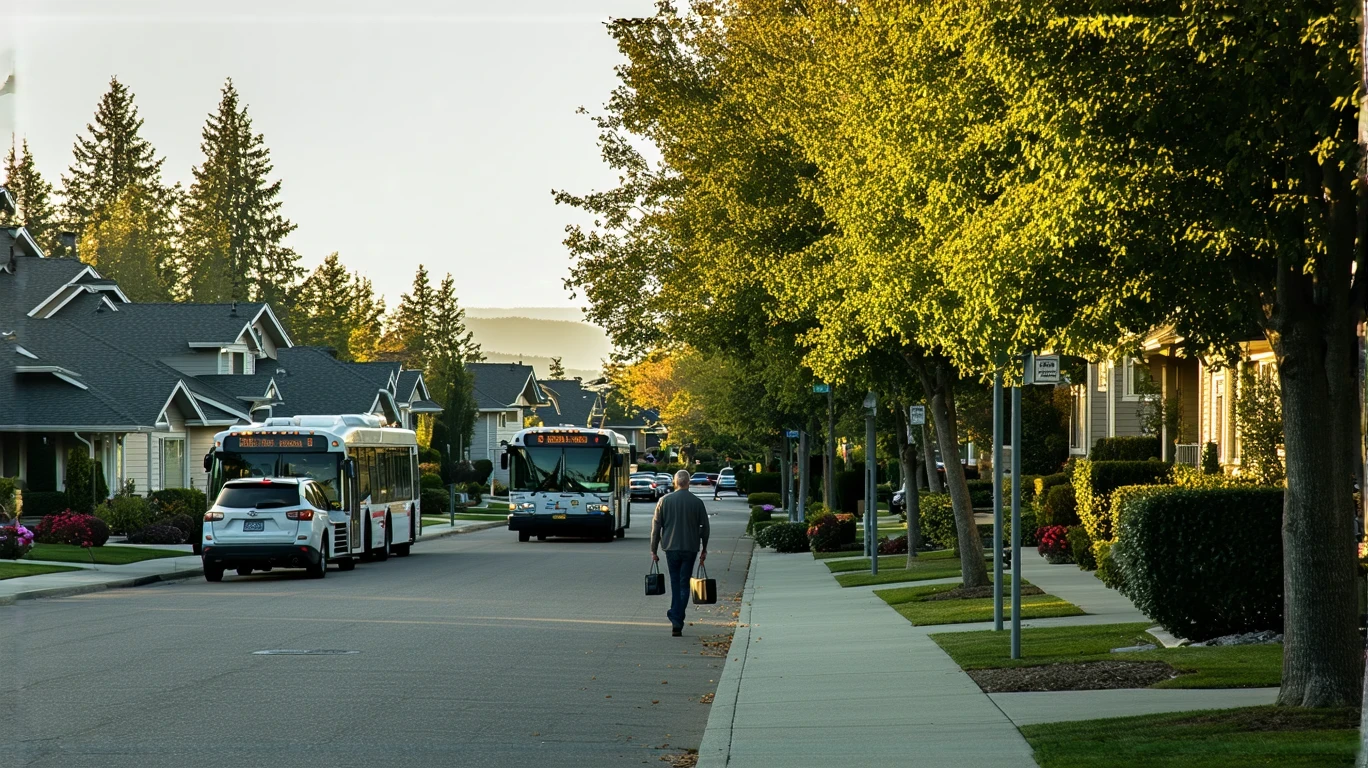
Redmond operates as a car-dominant suburb with transit that serves commuters and core residents more effectively than it serves daily errands or off-peak travel. Most people drive most of the time, but that doesn’t mean transit is irrelevant — it means transit plays a supporting role rather than a lead one. The city’s development pattern, shaped by decades of tech industry growth and single-family zoning, created a landscape where density clusters around a few key nodes (Downtown Redmond, Overlake, Marymoor) while much of the surrounding area remains low-rise and spread out.
For someone living near the urban core or along a major transit corridor, getting to work in Seattle or Bellevue without a car is realistic. For someone in a neighborhood like Education Hill or Grass Lawn, driving becomes the default for nearly everything. The difference isn’t just convenience — it’s whether your daily routine aligns with where transit actually goes.
What newcomers often misunderstand is that Redmond’s transit network is designed primarily for peak-hour commuting into and out of regional job centers, not for internal circulation within the city. If your life revolves around a predictable commute to Seattle or Bellevue, transit can work. If you need to run errands across town, pick up kids from activities, or work irregular hours, you’ll feel the gaps quickly.
Public Transit Availability in Redmond
Public transit in Redmond often centers around systems such as King County Metro and Sound Transit, though coverage varies significantly by neighborhood. Transit works best in the urban core and along major east-west corridors, where frequency and span of service support commuting patterns. Outside these zones, service becomes thinner, with longer waits and limited evening or weekend options.
The opening of light rail service connecting Redmond to Seattle has strengthened the city’s transit profile, particularly for residents living near stations in Downtown Redmond and Overlake. These areas now offer a credible alternative to driving for regional commutes, especially during peak hours when highway congestion makes driving less predictable. But light rail doesn’t solve the last-mile problem — if you live more than a comfortable walk or bike ride from a station, you’re back to needing a car or relying on less frequent bus connections.
Bus service fills in some of the gaps, with routes connecting residential neighborhoods to transit hubs, shopping districts, and employment centers. But frequency matters, and many routes operate on schedules that work for traditional commuters but not for shift workers, parents managing multiple stops, or anyone whose day doesn’t fit a nine-to-five pattern. Late-night and weekend service is limited, which narrows the window of transit viability for households with variable schedules.
Transit tends to fall short in the outer residential neighborhoods, where street networks were designed for cars and walking distances to bus stops stretch beyond what most people consider practical for daily use. Coverage exists, but it’s sparse enough that relying on it exclusively requires significant planning and time flexibility.
Driving & Car Dependence Reality
Driving is the baseline assumption in Redmond, and the city’s infrastructure reflects that. Parking is abundant, roads are wide, and most residential areas were built with the expectation that every household would own at least one vehicle. For families, professionals with irregular schedules, or anyone living outside the core, driving isn’t just convenient — it’s structurally necessary.
Car dependence here isn’t about preference; it’s about geography. Redmond’s suburban layout means that grocery stores, schools, medical offices, and recreational facilities are often separated by distances that make walking impractical and transit coverage inconsistent. Even within neighborhoods, sidewalks and bike infrastructure vary widely, with some areas well-connected and others requiring a car just to reach the nearest bus stop safely.
Commute flexibility is another factor. Driving gives you control over timing, routing, and the ability to chain errands on the way home. Transit requires you to work within fixed schedules and accept longer travel times for trips that involve transfers. For someone whose workday ends at unpredictable hours or who needs to make multiple stops, that tradeoff often doesn’t pencil out.
Parking pressure is low compared to denser cities, which removes one of the usual friction points of car ownership. You’ll find parking at home, at work, and at most destinations without the cost or hassle that makes driving prohibitive in urban cores. That ease reinforces the car-first default, even for households that might otherwise consider alternatives.
Commuting Patterns & Daily Mobility
Commuting in Redmond typically falls into one of three patterns: regional commuters heading into Seattle or Bellevue, local workers employed within the city’s tech campuses, and hybrid arrangements that mix remote work with occasional office days. Each pattern interacts differently with the city’s transportation infrastructure.
Regional commuters benefit most from transit, particularly if they live near light rail or frequent bus routes. The predictability of rail service and the ability to avoid highway congestion make transit a practical choice for peak-hour travel to downtown Seattle or other Eastside job centers. But that advantage disappears for reverse commutes, off-peak travel, or trips that require multiple transfers.
Local workers — especially those employed at large tech campuses in Overlake or downtown — often face a different calculus. Many employers provide shuttle services, but those shuttles typically run on fixed schedules and limited routes, which works for some employees and not others. Driving remains the fallback for anyone whose schedule doesn’t align with shuttle timing or who needs flexibility for mid-day errands.
Hybrid workers, who commute only a few days per week, often find that the cost and hassle of maintaining a car feels justified even if they could technically use transit for work trips. The need to drive for groceries, appointments, and weekend activities means the car is already there, and using it for commuting becomes the path of least resistance.
Daily mobility beyond commuting — getting kids to school, running errands, accessing healthcare — is where transit coverage thins out most noticeably. Households with multiple daily stops or irregular schedules find that transit adds friction rather than reducing it, which pushes even transit-friendly residents toward car dependence for non-work travel.
Who Transit Works For — and Who It Doesn’t
Transit works best for single professionals or couples without children who live in Downtown Redmond or Overlake and commute to Seattle or Bellevue during standard business hours. This group benefits from proximity to light rail, frequent bus service, and a lifestyle that doesn’t require constant multi-stop trips or off-peak travel.
Renters in the urban core have the strongest transit access, both because of where housing density concentrates and because they’re more likely to prioritize walkability and transit proximity when choosing where to live. For this group, going car-free or car-light is realistic, though it still requires accepting longer travel times and limited spontaneity compared to driving.
Families with children face a different reality. School drop-offs, activity shuttles, grocery runs with multiple bags, and the unpredictability of kid schedules all push toward car dependence. Even families living near good transit often find that the logistics of managing multiple stops and time-sensitive commitments make driving the only practical option.
Homeowners in peripheral neighborhoods — areas like Grass Lawn, Education Hill, or Sammamish Plateau — are effectively outside the transit-viable zone. Service exists, but it’s infrequent enough and coverage is sparse enough that relying on it exclusively would require significant lifestyle compromises. For these households, the question isn’t whether to own a car, but whether one vehicle per adult is sufficient.
Shift workers and anyone with non-traditional hours find that transit service doesn’t align with their schedules. Evening and weekend coverage is limited, and late-night options are nearly nonexistent. For this group, transit might work occasionally, but it can’t serve as a primary transportation mode.
Transportation Tradeoffs in Redmond
Choosing between transit and driving in Redmond isn’t about finding the cheaper option — it’s about deciding which set of tradeoffs fits your daily life. Transit offers predictability during peak hours, eliminates parking hassles, and reduces exposure to highway congestion. Driving offers flexibility, speed for multi-stop trips, and the ability to travel on your own schedule without waiting for the next bus or train.
Transit makes the most sense when your routine is stable and your destinations align with where service is strong. If you commute to the same place at the same time most days, and you live near a station or frequent bus route, transit can reduce stress and simplify your day. But that advantage erodes quickly if your schedule varies, if you need to make stops on the way home, or if you live in an area where walking to transit requires significant time or effort.
Driving provides control, but it also means absorbing the full cost of vehicle ownership, maintenance, and fuel, along with the time spent navigating traffic during peak hours. For households that need a car anyway — for weekend trips, errands, or family logistics — the marginal cost of using that car for commuting feels low, even if transit would technically work for the commute itself.
The tradeoff isn’t static. Households that start out car-free often find themselves reconsidering after a few months of dealing with limited evening service, long waits for transfers, or the hassle of grocery shopping without a vehicle. Conversely, households that default to driving sometimes discover that parking costs, traffic stress, or the appeal of reading during a commute make transit worth trying for work trips, even if they keep the car for everything else.
FAQs About Transportation in Redmond (2026)
Is public transit usable for daily commuting in Redmond?
Yes, if you live near Downtown Redmond or Overlake and commute to Seattle or Bellevue during peak hours. Light rail and frequent bus routes make car-free commuting realistic for this group. Outside these corridors, transit becomes less practical, with longer waits and limited coverage for non-commute trips.
Do most people in Redmond rely on a car?
Yes. The city’s suburban layout and the distribution of daily destinations make driving the default for most households. Transit works for specific commuting patterns, but it doesn’t replace the need for a car for errands, family logistics, or off-peak travel.
Which areas of Redmond are easiest to live in without a car?
Downtown Redmond and Overlake offer the strongest transit access and the most walkable infrastructure. These areas have proximity to light rail, frequent bus service, and a concentration of retail and services within walking distance. Living car-free elsewhere in the city requires significant compromises.
How does commuting in Redmond compare to nearby cities?
Redmond’s transit access is stronger than most Eastside suburbs but weaker than Seattle. Bellevue offers similar transit coverage in its core, but Redmond benefits from newer light rail connections. Compared to more car-dependent suburbs like Sammamish or Woodinville, Redmond provides more viable alternatives to driving, though the gap is narrower than many newcomers expect.
Can you get by with one car per household in Redmond?
It depends on your household structure and where you live. Single-income households or couples with aligned schedules can often manage with one vehicle, especially if one partner uses transit for commuting. Families with children or dual-income households with different work locations typically find that one car creates logistical friction that outweighs the savings.
How Transportation Fits Into the Cost of Living in Redmond
Transportation shapes where money goes in Redmond not just through direct costs like fuel or transit passes, but through the structural choices it forces. Living near transit costs more in rent or mortgage payments, but it opens the possibility of reducing or eliminating car ownership. Living in a more affordable neighborhood farther from transit almost always means committing to vehicle expenses, even if driving wasn’t your preference.
The tradeoff isn’t just financial — it’s about time, flexibility, and daily friction. Households that choose transit-accessible housing trade higher rent for shorter commutes and less traffic stress. Households that prioritize space or affordability in peripheral neighborhoods trade lower housing costs for longer commutes and greater car dependence. Neither choice is wrong, but both come with consequences that extend beyond the immediate price tag.
For most households, transportation in Redmond means accepting that a car is part of the baseline cost structure, even if transit works for some trips. The question isn’t whether you can avoid transportation costs entirely — it’s whether you can structure your housing and commute choices to minimize the friction and expense that come with getting around a city built primarily for driving.