
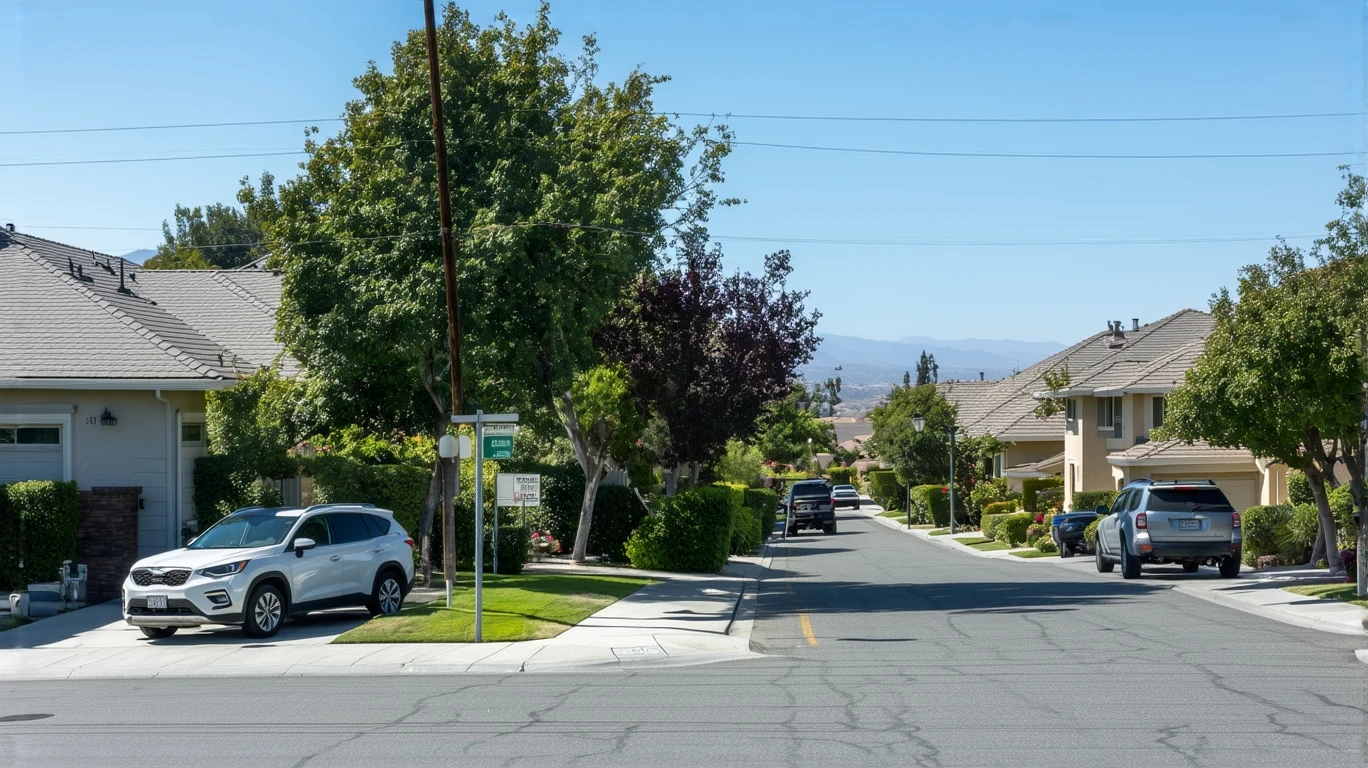
Poway and San Diego sit within the same metro area, share the same regional price environment, and face identical utility rates and gas prices—yet the cost experience in each city feels distinctly different. The decision between them isn’t about finding the cheaper option overall; it’s about understanding where cost pressure concentrates and which household routines align with each city’s infrastructure. Poway offers a suburban structure with corridor-clustered errands and medium-density residential form, while San Diego provides more walkable pockets, broadly accessible food and grocery options, and more vertical building character. For families debating the move in 2026, the question isn’t which city costs less, but which cost structure fits the way they actually live.
Both cities attract households from across the San Diego metro, but for different reasons. Poway draws families seeking space, newer housing stock, and a car-oriented routine with predictable commute patterns. San Diego appeals to renters, dual-income couples, and households that value transit access, walkable errands, and integrated park density. The trade-off isn’t between affordability and lifestyle—it’s between front-loaded housing costs and ongoing transportation friction, between predictable suburban logistics and the flexibility of urban infrastructure. Understanding how these differences show up in daily life determines which city makes sense for a given household in 2026.
This comparison explains how housing, utilities, groceries, transportation, and household logistics behave differently in Poway and San Diego. It does not calculate total monthly costs or declare a winner. Instead, it shows where cost pressure appears, which households feel it most acutely, and how different routines interact with each city’s structure. The goal is to reduce uncertainty through reasoning, not math—helping households decide which set of trade-offs aligns with their priorities, sensitivities, and long-term plans.
Housing Costs
Housing represents the most visible difference between Poway and San Diego, but the gap isn’t uniform across all housing types. Poway’s median home value sits at $911,500, while San Diego’s median home value is $783,300—a substantial difference that reflects Poway’s concentration of single-family homes, newer construction, and lower-density suburban form. For buyers, Poway’s housing market imposes a higher entry barrier, requiring larger down payments and higher monthly mortgage obligations. San Diego’s housing stock includes more condos, townhomes, and older single-family homes, creating more entry points for first-time buyers and households willing to trade space for location.
Rental markets tell a different story. Poway’s median gross rent stands at $2,165 per month, compared to San Diego’s $2,080 per month—a much narrower gap than the ownership market suggests. This reflects San Diego’s larger rental inventory, which includes everything from studio apartments in walkable neighborhoods to larger units in car-dependent areas. Poway’s rental stock skews toward single-family homes and larger apartments, meaning renters often pay similar amounts but receive more square footage and yard space. For renters prioritizing space over walkability, Poway offers better per-dollar housing value. For renters prioritizing transit access, walkable errands, and housing type diversity, San Diego provides more flexibility despite similar rent levels.
The housing difference also shapes long-term cost exposure. Poway homeowners face higher property tax obligations due to higher assessed values, though both cities operate under California’s Proposition 13 framework, which caps annual increases at 2% for existing owners. San Diego homeowners benefit from lower entry costs but may face more variability in maintenance and utility expenses due to older housing stock. Renters in both cities experience similar ongoing obligations, but Poway renters often absorb higher utility costs due to larger unit sizes and less dense building forms. For families planning to stay long-term, Poway’s housing cost pressure is front-loaded into the purchase; for renters and shorter-term residents, the ongoing cost experience feels more similar between the two cities.
Housing takeaway: Poway imposes higher entry barriers for buyers but delivers more space per dollar for renters. San Diego offers more housing type diversity, lower purchase prices, and better alignment with walkable, transit-accessible routines. Families prioritizing space and suburban form may find Poway’s housing structure worth the higher entry cost. Renters, first-time buyers, and households valuing location flexibility will find San Diego’s housing market more accommodating, even at similar rent levels.
Utilities and Energy Costs
Poway and San Diego share identical utility rate structures—33.22¢/kWh for electricity and $22.96/MCF for natural gas—but the cost experience diverges based on housing type, building age, and household routines. Poway’s housing stock skews newer and larger, with more single-family homes that require heating and cooling for greater square footage. San Diego’s housing mix includes older apartments, condos, and smaller single-family homes, many of which benefit from shared-wall construction and smaller footprints. For households living in similar-sized units, utility costs behave similarly; for households comparing a Poway single-family home to a San Diego condo, the difference in consumption can be substantial.
Both cities experience mild coastal climates with limited heating needs and moderate cooling demands, but Poway’s inland position introduces slightly warmer summer afternoons and cooler winter mornings compared to San Diego’s more moderated coastal zones. This translates to marginally higher air conditioning usage in Poway during summer months and occasional heating needs in winter. San Diego households in coastal neighborhoods may avoid air conditioning altogether in many units, while those in inland San Diego neighborhoods face similar cooling exposure to Poway. The key driver isn’t geography—it’s housing form. Larger homes with more windows, higher ceilings, and detached construction require more energy to maintain comfortable temperatures, regardless of city.
Utility cost volatility also depends on household routines and building efficiency. Newer Poway homes often include better insulation, dual-pane windows, and more efficient HVAC systems, which can offset the cost of heating and cooling larger spaces. Older San Diego units may lack these features, leading to higher per-square-foot energy costs despite smaller footprints. Families with flexible schedules can reduce exposure by shifting usage to off-peak hours, but this requires awareness of time-of-use billing structures and the ability to adjust routines. Households with rigid schedules—especially those with young children or inflexible work hours—experience less control over when energy consumption occurs, making building efficiency and housing form the dominant factors.
Utility takeaway: Poway households face higher baseline utility exposure due to larger housing stock and slightly warmer inland conditions, but newer construction can mitigate some of this through efficiency. San Diego households benefit from smaller average unit sizes and coastal moderation, though older buildings can introduce inefficiency. Families moving into larger single-family homes should expect higher utility costs in Poway; renters and condo owners in San Diego will likely experience more predictable, lower-magnitude utility bills. The difference is driven more by housing type than by city-level climate variation.
Groceries and Daily Expenses

Grocery costs in Poway and San Diego reflect the same regional price environment—both cities fall under the same Regional Price Parity index of 179—but the shopping experience and cost pressure differ based on access, density, and household routines. San Diego’s food and grocery infrastructure shows broadly accessible density, with supermarkets, specialty stores, and prepared food options distributed throughout the city. Poway’s food and grocery options cluster along commercial corridors, requiring more intentional trip planning and less spontaneous access. For households that batch errands and plan weekly shopping trips, this difference matters less. For households managing unpredictable schedules, last-minute needs, or frequent small purchases, San Diego’s denser access reduces friction and the temptation to rely on convenience spending.
The structural difference also affects how households experience price sensitivity. San Diego’s higher density of grocery options creates more competition, making it easier to compare prices, switch stores, and access discount chains alongside specialty retailers. Poway’s corridor-clustered layout means fewer stores within a given radius, reducing price flexibility and increasing reliance on a smaller set of anchor grocers. Families with time to drive to multiple stores can access similar pricing in both cities, but households constrained by time, schedule, or transportation will find San Diego’s layout more forgiving. Single adults and couples may not notice this difference as acutely; families managing larger grocery volumes and tighter schedules will feel the access gap more directly.
Prepared food and dining costs follow similar patterns. San Diego’s walkable pockets and mixed-use neighborhoods support a higher density of casual dining, coffee shops, and takeout options, which can increase convenience spending if households don’t actively manage habits. Poway’s lower dining density reduces spontaneous spending opportunities but also limits walkable access to quick meals, shifting more food preparation responsibility to the home. For households that cook most meals, Poway’s structure supports this routine without added temptation. For households that value flexibility—grabbing coffee between errands, picking up takeout after work, or meeting friends without driving—San Diego’s infrastructure makes these behaviors easier but also introduces more opportunities for incremental spending.
Grocery and daily expense takeaway: Poway and San Diego share the same regional price baseline, but access structure shapes cost behavior. San Diego’s broadly accessible grocery and dining density offers more flexibility and competition, benefiting households with unpredictable schedules or those seeking variety. Poway’s corridor-clustered layout requires more planning but reduces convenience spending temptation, fitting households with predictable routines and batch-shopping habits. Families managing large grocery volumes will find San Diego’s density more accommodating; households prioritizing routine and lower spontaneous spending may prefer Poway’s structure.
Taxes and Fees
Property taxes in both Poway and San Diego operate under California’s Proposition 13 framework, which caps annual increases at 2% for existing homeowners and reassesses properties at market value upon sale. Poway’s higher median home value of $911,500 translates to higher annual property tax obligations compared to San Diego’s median home value of $783,300, even though the tax rate structure remains consistent across the county. For new buyers, this means Poway homeowners face a larger ongoing tax obligation from day one. For long-term residents who purchased years ago, the difference narrows over time as both cities benefit from the same assessment cap. Renters in both cities don’t pay property taxes directly, but landlords’ tax obligations can influence rent-setting behavior, particularly in buildings with recent ownership changes.
Local fees and assessments vary more by neighborhood and housing type than by city. Poway’s suburban structure includes more planned communities with homeowners’ associations (HOAs), which can bundle services like landscaping, trash collection, and community amenities into monthly fees. These fees add predictability—households know exactly what they’ll pay each month—but also reduce flexibility, as opting out isn’t possible. San Diego’s housing stock includes fewer HOA-governed communities, meaning more households pay for services individually or through city utilities. This creates more variability but also more control; households can choose their own landscaping service, skip optional amenities, or adjust service levels based on budget. For families seeking predictability, Poway’s HOA prevalence offers structure. For households prioritizing flexibility and control, San Diego’s fee landscape allows more customization.
Sales tax rates apply uniformly across both cities, as they fall under the same county jurisdiction, so consumption-based tax exposure behaves identically. Utility fees, trash collection, and water charges also follow similar structures, though Poway’s newer infrastructure may result in slightly lower water and sewer maintenance fees compared to older San Diego neighborhoods with aging pipes. The difference is marginal and varies more by specific neighborhood than by city-wide policy. Parking fees, permits, and congestion-related costs appear more frequently in San Diego’s denser, more walkable neighborhoods, where street parking is limited and permit systems manage residential access. Poway’s lower-density form eliminates most parking-related fees, as driveways and private parking dominate.
Tax and fee takeaway: Poway homeowners face higher property tax obligations due to higher home values, but both cities benefit from California’s assessment cap for long-term residents. Poway’s HOA prevalence adds predictable monthly fees but reduces flexibility; San Diego’s fee structure offers more control but introduces variability. Renters in both cities experience similar indirect exposure, though San Diego’s denser neighborhoods may introduce parking-related fees absent in Poway. Households prioritizing predictability may prefer Poway’s bundled fee structure; those valuing control and customization will find San Diego’s landscape more accommodating.
Transportation & Commute Reality
Transportation costs in Poway and San Diego reflect identical fuel prices—$5.92/gal—but the commute experience and car dependence differ substantially based on each city’s infrastructure. San Diego shows rail transit service and walkable pockets with a high pedestrian-to-road ratio, making it possible for some households to reduce car reliance for daily errands, commuting, and weekend activities. Poway’s infrastructure supports walkable pockets in limited areas but relies more heavily on car-oriented routines, with food and grocery options clustered along commercial corridors rather than distributed throughout residential neighborhoods. For households with one or two cars, this difference shapes not just fuel costs but also time, maintenance exposure, and the flexibility to manage transportation needs without constant vehicle access.
San Diego’s average commute time sits at 24 minutes, with 31.1% of workers experiencing long commutes and only 5.0% working from home. This suggests that while transit infrastructure exists, many San Diego residents still rely on cars for commuting, particularly those working outside the city’s core or in industries without remote flexibility. Poway lacks detailed commute data in the feed, but its suburban form and corridor-clustered errands structure imply car dependence for most households. Families living in Poway and commuting to San Diego or other metro employment centers should expect predictable, car-based routines with limited transit alternatives. Households living in San Diego and working in walkable districts or along transit corridors can reduce car reliance, though this depends heavily on neighborhood and job location alignment.
The transportation difference also affects household logistics beyond commuting. San Diego’s broadly accessible food and grocery density means households can combine errands with walking or short drives, reducing the need for dedicated weekend shopping trips. Poway’s corridor-clustered layout requires more intentional trip planning, with most errands involving a car. For families managing school drop-offs, after-school activities, and weekend logistics, Poway’s structure assumes two-car households with predictable schedules. San Diego’s mixed-use neighborhoods and transit access offer more flexibility for one-car households or those willing to rely on rideshare, biking, or walking for some trips. The cost difference isn’t just fuel—it’s insurance, maintenance, registration, and the time cost of managing multiple vehicles.
Transportation takeaway: Poway’s car-oriented infrastructure assumes most households will drive for errands, commuting, and daily logistics, making two-car households the norm. San Diego’s walkable pockets, transit access, and broadly accessible errands density allow some households to reduce car dependence, though many residents still drive for commuting. Families prioritizing predictable, car-based routines will find Poway’s structure straightforward; households seeking flexibility to reduce car reliance or manage with one vehicle will find San Diego’s infrastructure more accommodating, particularly in neighborhoods with strong transit and walkable access.
Cost Structure Comparison
Housing dominates the cost experience in both cities, but the pressure shows up differently. Poway imposes higher entry barriers for buyers, with a median home value of $911,500 requiring larger down payments and higher monthly mortgage obligations. San Diego’s median home value of $783,300 creates more accessible entry points, though renters in both cities face similar monthly obligations—$2,165 in Poway versus $2,080 in San Diego. The difference matters most for first-time buyers and families seeking space; Poway delivers more square footage per dollar for renters, while San Diego offers more housing type diversity and lower ownership costs. Households sensitive to front-loaded costs will feel Poway’s housing pressure more acutely; those prioritizing flexibility and lower entry barriers will find San Diego more forgiving.
Utilities introduce more volatility in Poway due to larger housing stock and slightly warmer inland conditions, though both cities share identical rate structures. San Diego households benefit from smaller average unit sizes, coastal moderation, and more shared-wall construction, leading to more predictable utility bills. The difference isn’t dramatic—both cities experience mild climates—but families moving into larger single-family homes in Poway should expect higher baseline energy costs. Renters and condo owners in San Diego will likely see lower, more stable utility expenses. The key driver is housing form, not city-level climate variation.
Transportation patterns matter more in Poway, where car dependence shapes daily routines, household logistics, and the assumption of two-car ownership. San Diego’s walkable pockets, rail transit, and broadly accessible errands density allow some households to reduce car reliance, though many residents still drive for commuting. For households with rigid schedules, young children, or jobs requiring vehicle access, the transportation difference feels less significant. For households with flexible routines, willingness to rely on transit, or the ability to combine errands with walking, San Diego’s infrastructure reduces both direct fuel costs and the indirect costs of maintaining multiple vehicles.
Groceries and daily expenses reflect the same regional price baseline, but access structure shapes behavior. San Diego’s broadly accessible food and grocery density offers more spontaneous access, price competition, and convenience, which can either reduce costs through flexibility or increase them through convenience spending. Poway’s corridor-clustered layout requires more planning but reduces temptation for incremental purchases. Families managing large grocery volumes and unpredictable schedules will find San Diego’s density more accommodating; households with predictable routines and batch-shopping habits may prefer Poway’s structure.
The better choice depends on which costs dominate the household. Households sensitive to housing entry barriers and long-term ownership costs may prefer San Diego’s lower median home values and housing type diversity. Households prioritizing space, newer construction, and predictable suburban logistics may find Poway’s higher entry cost worth the trade-off. For renters, the difference is less about price and more about predictability—Poway offers more space per dollar, while San Diego offers more walkable access and transit flexibility. The decision isn’t about which city costs less overall; it’s about which cost structure aligns with the household’s routines, priorities, and tolerance for different types of financial pressure.
How the Same Income Feels in Poway vs San Diego
Single Adult
For a single adult, housing becomes the first non-negotiable cost, and the difference between Poway and San Diego shows up in what that housing delivers. In Poway, rent buys more space and often includes parking, but errands require a car and most daily needs involve intentional trips. In San Diego, rent buys access—walkable errands, transit options, and the ability to manage some routines without constant vehicle dependence. Flexibility exists in San Diego through housing type diversity and the option to trade space for location. In Poway, flexibility comes from lower utility volatility in newer construction and fewer opportunities for convenience spending. The same income feels more predictable in Poway and more adaptable in San Diego.
Dual-Income Couple
For a dual-income couple, transportation and time costs become more prominent. In Poway, both partners likely drive for commuting and errands, requiring two cars, two insurance policies, and coordination around vehicle maintenance. In San Diego, one partner may be able to rely on transit or walkable access depending on job location, reducing the need for a second vehicle and creating more schedule flexibility. Housing costs consume a similar share of income in both cities for renters, but San Diego offers more options to adjust housing type or location if one partner’s job changes. Poway’s structure assumes stable, car-based routines; San Diego’s infrastructure accommodates more variability in work patterns and household logistics.
Family with Kids
For families with children, non-negotiable costs expand to include space, school access, and the logistics of managing multiple schedules. Poway’s higher home values create a steeper entry barrier, but the housing stock delivers more bedrooms, yards, and proximity to schools in suburban neighborhoods. San Diego’s lower home values and rental flexibility make entry easier, but families often trade space for location or accept longer commutes to access similar housing. Daily logistics in Poway assume car-based routines—school drop-offs, after-school activities, weekend errands—requiring two vehicles and predictable schedules. In San Diego, families in walkable neighborhoods can reduce car dependence for some trips, but school access and park density vary more by neighborhood. The same income feels more stretched in Poway during the purchase phase but more stable once housing is secured; in San Diego, income feels more flexible but requires more active management of housing type, location, and transportation trade-offs.
Decision Matrix: Which City Fits Which Household?
| Decision factor | If you’re sensitive to this… | Poway tends to fit when… | San Diego tends to fit when… |
|---|---|---|---|
| Housing entry + space needs | You need to minimize down payment size or prioritize space per dollar for renters | You’re renting and value more square footage and yard space over walkable access | You’re buying and want lower entry costs or need housing type diversity to match budget |
| Transportation dependence + commute friction | You want to avoid two-car ownership or reduce time spent managing vehicles | You have predictable car-based routines and prefer straightforward suburban logistics | You can align housing with transit corridors or walkable errands to reduce car reliance |
| Utility variability + home size exposure | You want predictable utility bills or live in smaller housing that limits energy consumption | You’re moving into newer construction that offsets larger square footage with efficiency | You’re renting or buying a condo where smaller footprint and shared walls reduce baseline usage |
| Grocery strategy + convenience spending creep | You need spontaneous access to food options or want price competition among nearby stores | You batch errands weekly and prefer fewer spontaneous spending opportunities along daily routes | You manage unpredictable schedules and value walkable access to groceries and prepared food |
| Fees + friction costs (HOA, services, upkeep) | You want control over which services you pay for or prefer to avoid bundled monthly fees | You value predictable monthly fees that bundle landscaping and amenities without requiring decisions | You want flexibility to choose your own service providers and adjust spending based on priorities |
| Time budget (schedule flexibility, errands, logistics) | You need to combine errands with other activities or manage tight schedules without constant driving | You have stable routines and prefer car-based logistics that don’t require trip coordination | You value the ability to walk, bike, or use transit for some trips to reduce time spent managing vehicles |
Lifestyle Fit
Poway and San Diego offer distinct lifestyle experiences shaped by infrastructure, density, and the rhythm of daily routines. Poway’s suburban form supports predictable, car-oriented living with newer housing stock, corridor-clustered errands, and family-focused amenities like playgrounds and parks. San Diego’s mixed-use neighborhoods, walkable pockets, and rail transit create more variability—some neighborhoods feel urban and pedestrian-friendly, while others resemble Poway’s car-dependent layout. For families prioritizing space, school quality, and a quieter residential environment, Poway delivers consistency. For households valuing spontaneous access to dining, culture, and the ability to manage some routines without driving, San Diego offers more flexibility, though this depends heavily on neighborhood selection.
Recreation and outdoor access differ in structure but not necessarily in availability. San Diego shows integrated park density with water features and high park-to-population ratios, making green space accessible throughout the city. Poway’s park density falls in the moderate range, with parks present but requiring more intentional trips rather than walkable access from most homes. Both cities benefit from Southern California’s mild climate, supporting year-round outdoor activity, but San Diego’s coastal proximity introduces more beach access and waterfront recreation. Poway’s inland position offers hiking, trails, and open space without the coastal crowds. Families with young children may find Poway’s playground density and suburban park layouts more accommodating for routine use; active adults and couples may prefer San Diego’s variety of urban parks, waterfront paths, and recreational diversity.
Cultural amenities, dining, and social infrastructure skew toward San Diego due to its larger population and more vertical, mixed-use development. San Diego supports a higher density of restaurants, coffee shops, breweries, and entertainment venues, many of which cluster in walkable districts. Poway’s dining and entertainment options exist but require driving to commercial corridors, reducing spontaneous access. For households that prioritize weekend exploration, trying new restaurants, or attending events without planning, San Diego’s infrastructure makes these behaviors easier. For households that prefer quieter evenings, predictable routines, and less exposure to urban density, Poway’s layout supports this without requiring active avoidance of busier areas.
Poway’s median household income sits at $135,605 per year, compared to San Diego’s $98,657 per year, reflecting Poway’s concentration of families in higher-income brackets and its appeal to households seeking suburban space and newer housing. Both cities share an unemployment rate of 4.3%, indicating similar regional labor market conditions. These income and employment figures suggest that Poway attracts households with more financial capacity to absorb higher housing entry costs, while San Diego accommodates a broader income range through its diverse housing stock and rental options.
How this article was built: In addition to public economic data, this article incorporates location-based experiential signals derived from anonymized geographic patterns—such as access density, walkability, and land-use mix—to reflect how day-to-day living actually feels in Poway, CA.
Frequently Asked Questions
Is Poway or San Diego cheaper for renters in 2026?
Rental costs are nearly identical—$2,165 per month in Poway versus $2,080 per month in San Diego—but what renters receive differs. Poway renters typically get more square footage, yard space, and parking, while San Diego renters gain access to walkable errands, transit options, and more housing type diversity. The cost difference is minimal; the trade-off is between space and access. Renters prioritizing square footage per dollar may prefer Poway, while those valuing location flexibility and walkable infrastructure will find San Diego more accommodating.
How do transportation costs differ between Poway and San Diego in 2026?
Both cities face the same fuel price of $5.92/gal, but transportation pressure shows up differently. Poway’s car-oriented infrastructure assumes two-car households for most families, with errands and commuting requiring vehicle access. San Diego’s walkable pockets and rail transit allow some households to reduce car dependence, though many residents still drive for commuting. Households with predictable, car-based routines will find Poway’s structure straightforward; those seeking flexibility to manage with one vehicle or rely on transit will find San Diego’s infrastructure more supportive, particularly in neighborhoods with strong walkable access.
Which city has higher utility costs, Poway or San Diego, in 2026?
Both cities share identical utility