
“I take the train to work three days a week, but I still need my car for everything else—groceries, errands, picking up my daughter. The rail line works great for my commute, but it doesn’t cover the rest of my life here.”
That’s the reality of getting around Poway in 2026: rail service exists, but it doesn’t eliminate the need for a car. The city’s layout creates a split transportation experience where transit works well for specific trips—particularly work commutes along established corridors—but falls short for the daily logistics most households face. Understanding transportation options in Poway means recognizing that mobility here isn’t about choosing transit or driving; it’s about knowing when each one actually works.
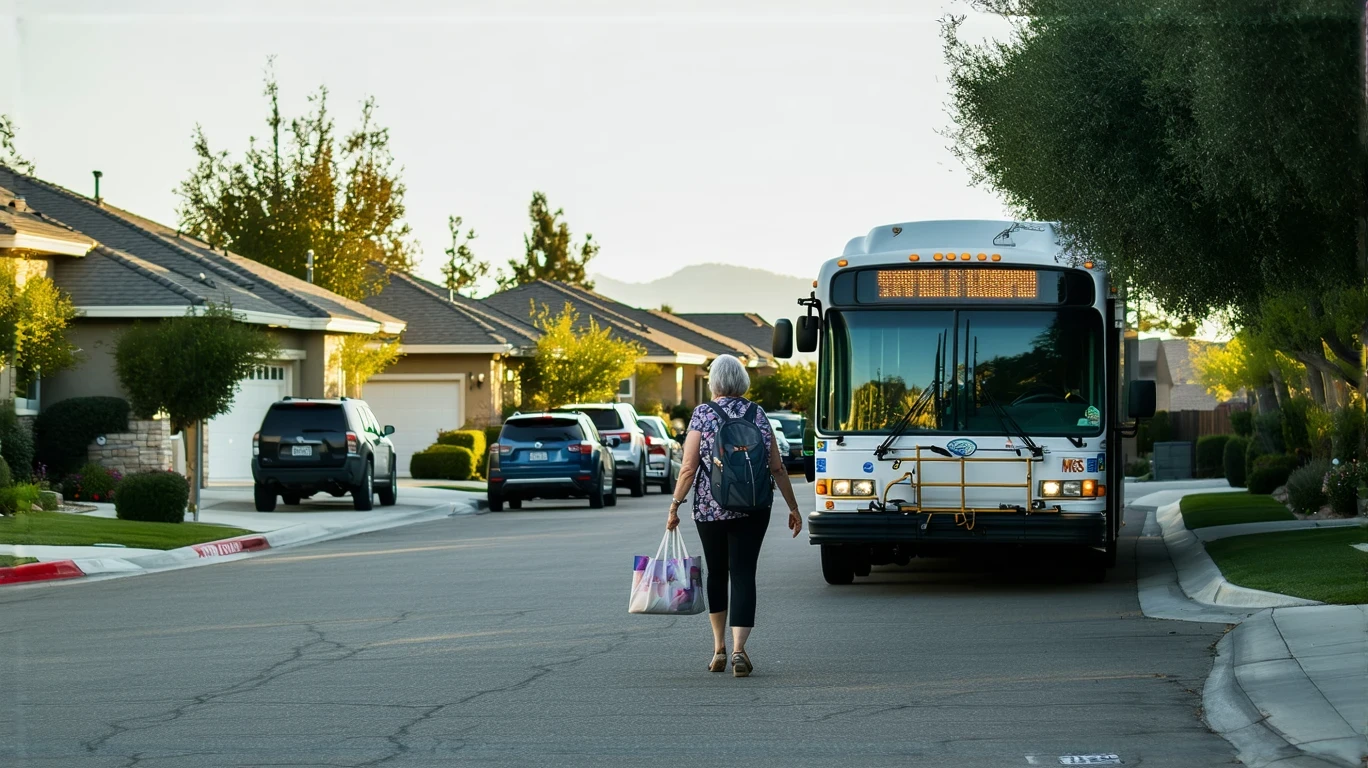
How People Get Around Poway
Poway’s transportation landscape reflects its suburban structure: a mix of residential neighborhoods, commercial corridors, and pockets of higher-density development. Rail transit is present and functional, but the city’s overall design still favors car ownership. Pedestrian infrastructure is strong in certain areas—particularly where the pedestrian-to-road ratio is high—but these walkable zones don’t blanket the entire city. Instead, they cluster near transit nodes and mixed-use corridors, leaving much of Poway reliant on driving for day-to-day movement.
Newcomers often assume that because rail service exists, they can live car-free or car-light. That assumption holds only if your home, workplace, and regular errands all align with transit coverage. For everyone else, a car remains essential. The city’s layout means that even residents who live near walkable areas typically drive for groceries, medical appointments, and weekend activities. Transit works as a commute tool for some; it rarely works as a complete mobility solution.
Public Transit Availability in Poway
Public transit in Poway often centers around systems such as the North County Transit District (NCTD), which provides regional rail and bus connections. Rail service is the most viable option for residents commuting to employment centers in San Diego or other parts of the metro area. The presence of rail infrastructure means that linear, predictable work trips can be handled without a car—assuming your schedule aligns with service hours and your destination is near a station.
Bus service supplements rail coverage, but its utility depends heavily on where you live and where you need to go. Transit tends to work best along established corridors where residential density and commercial activity overlap. In areas where land use is more separated—residential subdivisions far from shopping centers, for example—bus routes become less frequent and less practical. Late-night and weekend service is limited, which narrows the window for transit dependence even further.
Transit doesn’t fail because it’s poorly designed; it fails because Poway’s geography and development pattern create gaps that fixed-route service can’t efficiently cover. If your daily routine involves multiple stops, irregular hours, or destinations outside the main corridors, transit becomes a supplement rather than a primary option.
Driving & Car Dependence Reality
Driving remains the default mobility mode in Poway, and for good reason: the city’s layout rewards car ownership. Errands are corridor-clustered rather than neighborhood-distributed, meaning that even short trips often require a vehicle. Grocery stores, medical offices, and retail centers are accessible by car in minutes but may require significant time and planning by transit. Parking is generally available and free, which removes one of the friction points that discourages driving in denser urban areas.
Car dependence here isn’t about preference—it’s about structure. Families with children, households managing multiple jobs, and anyone with irregular schedules find that driving offers the flexibility transit can’t match. The cost exposure is real: gas prices in Poway stand at $5.92 per gallon, which adds up quickly for households making multiple trips per day. But the alternative—limiting your mobility to transit schedules and coverage zones—often isn’t viable for the routines most people actually live.
Sprawl plays a role, but it’s not the whole story. Even in areas with decent pedestrian infrastructure, the distances between home, work, and services often exceed what’s practical on foot or by bike. A car becomes the tool that closes the gap between where you are and where you need to be, on your timeline.
Commuting Patterns & Daily Mobility
Commuting in Poway typically follows one of two patterns: rail-based trips to regional employment centers, or car-based commutes to jobs within or near the city. Rail works well for professionals whose workplaces sit along transit lines and whose schedules allow for fixed departure and arrival times. For these commuters, transit reduces exposure to fuel costs and traffic variability, and it eliminates the need for downtown parking.
But many residents work in locations that aren’t well-served by transit, or they manage routines that require multiple stops—dropping off kids, running errands, attending appointments. These multi-stop patterns break transit’s linear efficiency. The result is that even households with access to rail often keep a car for non-commute trips, which means they’re covering insurance, registration, and maintenance costs whether they drive daily or not.
Proximity matters more than coverage. Living near a transit station doesn’t guarantee transit viability if your job, your children’s school, and your regular shopping destinations don’t also align with the network. The households who successfully reduce car dependence are those whose entire daily geography happens to fit within transit’s operational footprint—a narrow slice of Poway’s population.
Who Transit Works For — and Who It Doesn’t
Transit in Poway works best for single professionals or couples without children who live near rail stations and work in transit-accessible parts of the San Diego metro area. These households can structure their routines around fixed schedules and are willing to trade spontaneity for lower transportation costs. Renters in mixed-use areas near transit nodes have the best chance of making car-light living work, particularly if they’re comfortable using rideshare or occasional car rentals to fill gaps.
Transit doesn’t work well for families managing school drop-offs, extracurriculars, and weekend activities. It also falls short for households in peripheral neighborhoods where bus service is infrequent and distances to transit hubs are too far to walk comfortably. Shift workers, freelancers, and anyone with irregular hours will find that transit’s limited evening and weekend service makes it unreliable as a primary option.
Homeowners in established residential areas—particularly those outside the walkable pockets identified in Poway’s infrastructure—almost universally rely on cars. The layout simply doesn’t support transit-dependent living for households with complex logistics, and attempting to force it creates friction that most people aren’t willing to absorb.
Transportation Tradeoffs in Poway
Choosing between transit and driving in Poway isn’t about cost alone—it’s about control, predictability, and flexibility. Transit offers a stable expense structure: no fuel volatility, no surprise maintenance, no parking fees. For commuters whose trips align with rail schedules, it removes variability and simplifies budgeting. But it also removes flexibility. You can’t leave early, make an unplanned stop, or adjust your route on the fly.
Driving offers the opposite tradeoff. You control your schedule, your route, and your stops. You can handle errands, emergencies, and multi-destination days without coordinating transfers or checking timetables. But you’re exposed to fuel price swings, maintenance surprises, and the ongoing costs of insurance and registration. At $5.92 per gallon, frequent driving adds up quickly, but for many households, the alternative—restricting daily life to transit’s coverage map—isn’t realistic.
The real tradeoff isn’t transit versus driving; it’s predictability versus flexibility. Households that value routine and can structure their lives around fixed schedules benefit from transit. Households that need spontaneity, manage complex logistics, or live outside transit corridors will continue to rely on cars, regardless of fuel costs.
FAQs About Transportation in Poway (2026)
Is public transit usable for daily commuting in Poway?
Yes, if your commute follows a rail line and your schedule aligns with service hours. Rail transit is present and functional for linear trips to regional employment centers. For commutes that require multiple transfers, irregular timing, or destinations outside transit corridors, driving remains more practical.
Do most people in Poway rely on a car?
Yes. While rail service exists and some residents use it for work commutes, the majority of households depend on cars for daily errands, family logistics, and trips outside transit coverage areas. The city’s layout and corridor-clustered services make car ownership the default for most routines.
Which areas of Poway are easiest to live in without a car?
Areas near rail stations with mixed-use development and higher pedestrian infrastructure offer the best chance for car-light living. These pockets support walking for some errands and provide direct transit access for commuting. Peripheral residential neighborhoods and areas far from transit nodes require car ownership for practical daily mobility.
How does commuting in Poway compare to nearby cities?
Poway’s commute reality sits between fully car-dependent suburbs and transit-rich urban cores. Rail access gives it an advantage over purely auto-oriented communities, but its suburban layout and corridor-based services mean it doesn’t match the transit utility of denser cities in the San Diego metro. Households here typically experience a hybrid reality: transit works for some trips, driving handles the rest.
Can you get by with just a bike in Poway?
Cycling infrastructure exists in pockets, but it’s not comprehensive enough to replace a car for most households. Bike-friendly areas support recreational riding and short trips, but distances between residential areas and commercial corridors, combined with limited connectivity, make bike-only living impractical for daily logistics.
How Transportation Fits Into the Cost of Living in Poway
Transportation in Poway isn’t just a line item—it’s a structural factor that shapes where you live, how you work, and how much control you have over daily routines. Rail transit offers a way to reduce fuel exposure and simplify work commutes, but it doesn’t eliminate the need for car ownership for most households. The city’s layout, with its walkable pockets and corridor-clustered services, creates a split mobility reality where transit works for some trips and fails for others.
Understanding monthly expenses in Poway means recognizing that transportation costs aren’t just about fuel or fares—they’re about flexibility, time, and access. Households that can align their routines with transit save on fuel and parking but trade spontaneity. Households that rely on cars absorb fuel volatility and maintenance costs but gain the ability to manage complex schedules and multi-stop days.
The question isn’t whether you should use transit or drive—it’s whether your daily geography and routine fit the infrastructure that exists. Poway’s transportation options work well for specific household types and trip patterns. For everyone else, a car remains the tool that makes daily life manageable, regardless of cost.
How this article was built: In addition to public economic data, this article incorporates location-based experiential signals derived from anonymized geographic patterns—such as access density, walkability, and land-use mix—to reflect how day-to-day living actually feels in Poway, CA.