
Choosing between renting and buying in Palm Harbor means understanding how Florida’s climate, insurance landscape, and suburban infrastructure shape what you’ll actually pay—and what you’ll be responsible for—over time. The decision isn’t just about affordability at signing; it’s about which cost structure fits how you live and how long you plan to stay.
Palm Harbor’s median home value sits at $319,300, while median gross rent reaches $1,567 per month. With a regional price parity index of 126, costs here run about 26% above the national baseline. That premium reflects proximity to Tampa, access to Gulf Coast amenities, and a housing stock built around family-oriented suburban living. But the numbers alone don’t explain how housing costs behave once you’re here—or why the rent-versus-buy calculus in Palm Harbor differs from inland or northern markets.
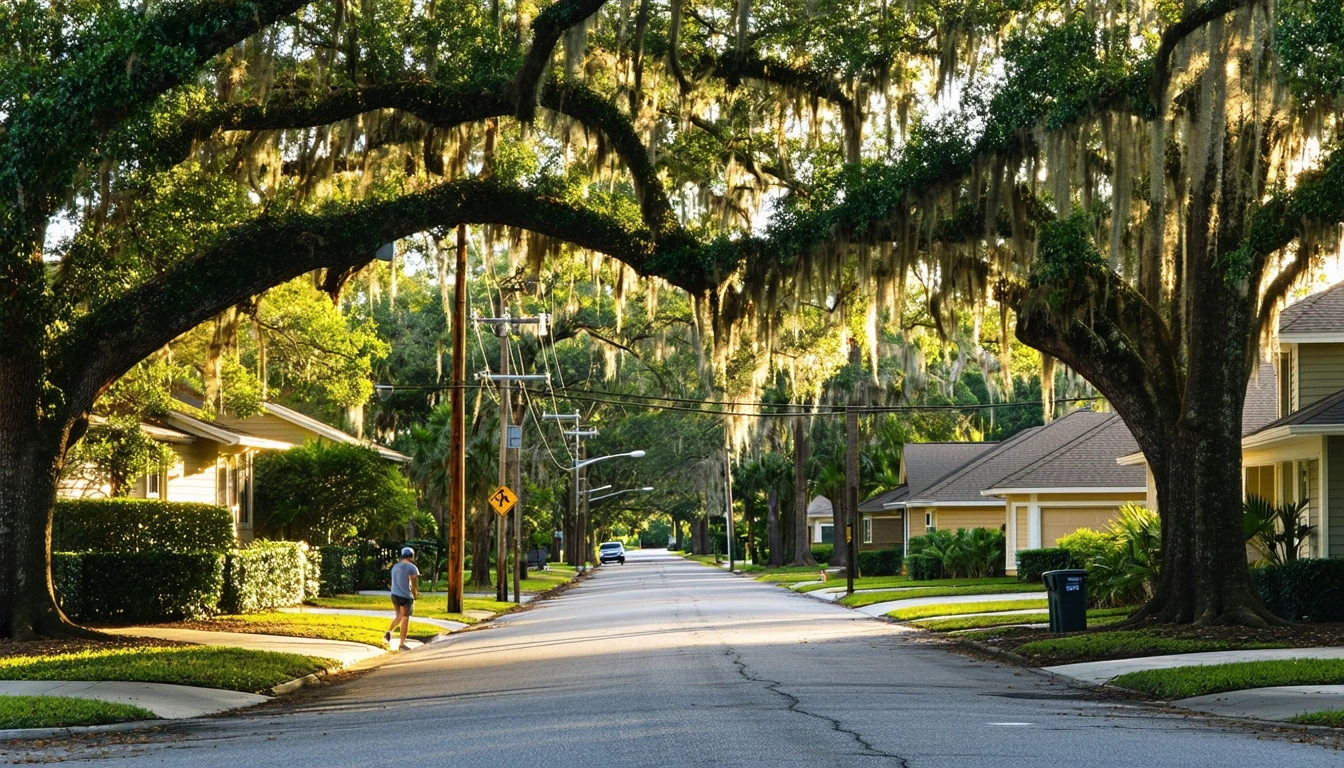
The Housing Market in Palm Harbor Today
Palm Harbor functions as a residential suburb within the Tampa metro, drawing retirees, families, and commuters who want suburban space without full rural isolation. The housing stock leans toward single-family homes, many built in the 1970s through 1990s, with pockets of newer development and some older ranch-style properties. This isn’t a rapidly densifying urban core or a master-planned exurban frontier—it’s an established community where turnover happens steadily but not frantically.
What shapes the market here is the combination of strong family infrastructure—schools and playgrounds meet density thresholds across the area—and healthcare access, including hospital presence. That makes Palm Harbor appealing to households planning to stay put, whether for school stability or aging in place. The pedestrian-to-road ratio exceeds high thresholds in parts of the city, creating walkable pockets that soften the car dependency typical of Florida suburbs. Food and grocery density falls in the medium band, clustered along corridors rather than dispersed throughout neighborhoods.
For newcomers, the most common misunderstanding is assuming that Florida’s lack of state income tax makes housing automatically cheaper. It doesn’t. The savings on income tax are real, but they don’t offset elevated home prices, hurricane and flood insurance premiums, or the ongoing cost of maintaining a structure in a hot, humid, storm-prone climate. Cost of Living in Palm Harbor: The Tradeoffs Behind the Total explains how these expenses interact, but the housing decision hinges on whether you’re willing to own that exposure or pay a landlord to manage it.
Renting in Palm Harbor
At $1,567 per month median gross rent, renters in Palm Harbor face a significant monthly obligation. Against the median household income of $70,493 per year (roughly $5,874 per month before taxes), rent alone consumes just over 26% of gross income at the median—right at the edge of traditional affordability guidelines, before accounting for utilities, transportation, or other essentials.
Rental availability in Palm Harbor skews toward single-family homes and smaller apartment complexes rather than large multifamily towers. That means renters often get more space and privacy than in denser urban markets, but it also means fewer units competing for tenants, which can limit negotiating power during lease renewals. Rent increases are less predictable here than in cities with rent control or large institutional landlords; individual property owners set terms based on market conditions, maintenance costs, and insurance premiums—all of which have climbed in Florida in recent years.
Renters avoid direct responsibility for roof repairs, HVAC replacement, and storm damage, but they’re still exposed to those costs indirectly. When a landlord’s insurance premium doubles or a hurricane forces exterior repairs, those expenses eventually flow into rent adjustments. The advantage of renting in Palm Harbor is flexibility and limited liability; the tradeoff is that you don’t control when or how much your housing pressure increases.
Owning a Home in Palm Harbor
Buying a home at $319,300 median value requires navigating Florida’s distinct ownership cost structure. Property taxes, homeowners insurance (including windstorm and flood coverage), and maintenance driven by heat, humidity, and storm exposure all layer on top of the mortgage itself. Unlike renters, owners can’t call a landlord when the AC fails during a July heatwave or when a tropical storm peels back roof shingles—they own the repair timeline and the bill.
Property taxes in Florida are shaped by Save Our Homes assessment caps for primary residents, which limit annual increases on homesteaded properties but don’t prevent jumps when you first buy. Insurance costs vary widely based on flood zone, roof age, and proximity to the coast, and they’ve become less predictable as carriers exit the state or raise premiums. Maintenance costs are elevated by the climate: exterior paint degrades faster in UV and humidity, air conditioning units run longer and harder than in temperate zones, and landscaping requires year-round attention in Florida’s extended growing season.
Homeownership in Palm Harbor also means navigating governance structures. Some neighborhoods have homeowners associations with monthly or annual fees covering common areas, deed restrictions, or shared amenities. Others don’t. The presence or absence of an HOA changes both cost predictability and autonomy—fees are usually stable, but they come with rules.
The upside of owning here is cost control over time. Once you’ve locked in a fixed-rate mortgage, your principal and interest don’t change. Property tax growth is capped if you homestead. You decide when to upgrade, repair, or defer maintenance. And you’re not subject to lease non-renewals or landlord decisions. The downside is that you absorb every dollar of storm damage, HVAC failure, and insurance volatility yourself.
Apartment vs House in Palm Harbor — Cost Behavior Comparison
| Expense Category | Apartment | House |
|---|---|---|
| Cooling costs | Shared walls and smaller square footage reduce AC load; landlord typically responsible for system replacement | Full exposure to cooling entire structure; owner pays for system failure and efficiency upgrades |
| Storm preparation and repair | Landlord or property management handles exterior protection, shutter installation, and post-storm damage | Owner responsible for securing property, replacing damaged roof/siding, and managing insurance claims |
| Exterior maintenance | No responsibility for paint, roofing, siding, or structural upkeep in humid, UV-intense climate | Ongoing exposure to humidity-driven paint degradation, mold risk, and faster material weathering |
| Yard and landscaping | None, or limited to small patio | Year-round mowing, irrigation, pest control, and storm debris removal in extended growing season |
| Insurance | Renters insurance covers personal property only; structure covered by landlord policy | Homeowners, windstorm, and flood insurance required; premiums vary by zone and claims history |
Why these categories? The differences shown reflect Palm Harbor’s climate, housing stock age, and storm exposure. Cooling dominates utility costs due to long, hot summers. Storm preparation and repair are recurring concerns in a hurricane-prone region. Exterior maintenance and landscaping costs are elevated by humidity, heat, and year-round vegetation growth. Categories like trash collection or water/sewer were excluded because they don’t vary meaningfully by housing type in this market—most are billed separately regardless of structure.
Utilities & Upkeep Differences
Utility exposure in Palm Harbor is driven primarily by cooling demand. Electricity rates sit at 15.92¢/kWh, and air conditioning dominates household usage from May through October. Apartments benefit from shared walls and smaller conditioned space, which reduces runtime. Houses, especially older or poorly insulated ones, require more energy to maintain comfort, and owners are responsible for system efficiency and replacement costs.
Natural gas is available at $23.62/MCF, but heating demand is minor—Palm Harbor experiences mild winters with rare freezing nights. Gas is more commonly used for water heating or cooking, not climate control. The imbalance between cooling and heating costs is a defining feature of ownership here: you’ll spend far more managing heat than cold.
Illustrative context: A typical household using 1,000 kWh per month would face a baseline electricity cost around $159 before fees or taxes. Actual usage varies widely depending on home size, insulation, thermostat settings, and occupancy, but the structural reality is that cooling season drives the annual peak.
Maintenance differences between apartments and houses are significant in Palm Harbor’s climate. Renters avoid responsibility for HVAC filter changes, duct cleaning, and system servicing, though some leases require tenant-performed tasks. Homeowners must manage all of it, plus roof inspections after storms, gutter cleaning during Florida’s heavy rain season, and exterior treatments to prevent mold and mildew. The heat and humidity accelerate wear on paint, caulking, and seals, meaning deferred maintenance compounds faster here than in drier or cooler climates.
Rent vs Buy: Long-Term Exposure in Palm Harbor
The rent-versus-buy decision in Palm Harbor isn’t about which option costs less in year one—it’s about which risk profile fits your household and timeline. Renting offers flexibility and transfers maintenance liability to the landlord, but it exposes you to lease renewal uncertainty and rent increases you can’t control. Buying locks in your mortgage payment and gives you control over repairs and upgrades, but it transfers all storm risk, insurance volatility, and climate-driven maintenance costs to you.
Over time, renters face the possibility that rent growth outpaces income growth, especially if landlords’ insurance or repair costs spike. Florida’s lack of rent control means there’s no regulatory ceiling on increases, only market competition. If you’re renting a single-family home from an individual owner, your renewal terms depend entirely on that owner’s financial situation and plans.
Owners, meanwhile, gain stability in their principal and interest payment, and property tax growth is capped for homesteaded properties under Florida’s Save Our Homes provision. But they’re fully exposed to insurance premium changes, which have been significant in recent years as carriers reassess hurricane risk. They also absorb the cost of aging systems—HVAC, roofing, water heaters—and any damage not covered by insurance. In a storm-prone climate, that exposure is not hypothetical.
The decision comes down to control versus liability. Ownership gives you control over your housing cost trajectory and the ability to build equity, but it requires capital, stability, and willingness to manage climate-driven risk. Renting gives you flexibility and limits your downside, but it leaves you vulnerable to someone else’s cost decisions.
FAQs About Housing Costs in Palm Harbor
Is renting or buying more common in Palm Harbor?
Palm Harbor’s housing stock is predominantly owner-occupied, reflecting its role as a family-oriented suburb with strong schools and healthcare access. Rentals are available, particularly single-family homes and smaller complexes, but the market is structured around long-term homeownership rather than transient rental populations.
How does hurricane risk affect housing costs in Palm Harbor?
Hurricane risk increases insurance premiums for homeowners and indirectly affects rent through landlords’ cost pass-through. Owners must carry windstorm and often flood coverage, and premiums vary by flood zone, roof age, and claims history. Renters avoid direct insurance costs but may see rent increases after storms if landlords face higher premiums or repair bills.
What drives the difference between apartment and house utility costs in Palm Harbor?
Cooling demand is the primary driver. Apartments benefit from shared walls and smaller square footage, reducing air conditioning load. Houses require cooling larger, often less-insulated spaces, and owners are responsible for system efficiency and replacement. The long, hot summer season makes this difference significant over the course of a year.
Are property taxes in Palm Harbor predictable for homeowners?
Florida’s Save Our Homes amendment caps annual assessment increases at 3% for homesteaded properties, providing some predictability. However, new buyers pay taxes based on purchase price, which can be significantly higher than the previous owner’s assessed value. Non-homesteaded properties, including investment or vacation homes, don’t receive the cap.
Does Palm Harbor’s suburban layout affect housing cost decisions?
Yes. The city has walkable pockets with higher pedestrian-to-road ratios, and food and grocery options are clustered along corridors rather than dispersed. This means some neighborhoods support car-light living, while others require vehicle ownership for daily errands. Transportation costs interact with housing costs—living in a more walkable area may reduce commute and errand expenses, but those neighborhoods may also command higher home prices or rents.
Making Housing Choices in Palm Harbor
Housing costs in Palm Harbor are shaped by Florida’s climate, insurance landscape, and suburban structure. Renters trade control for flexibility and avoid direct exposure to storm damage and maintenance volatility, but they face lease renewal uncertainty in a market without rent control. Owners lock in mortgage payments and gain equity, but they absorb hurricane risk, insurance premium swings, and the ongoing cost of maintaining a home in a hot, humid, storm-prone environment.
The choice depends on your timeline, capital, and tolerance for climate-driven cost variability. If you’re planning to stay long enough to weather insurance cycles and build equity, ownership offers stability and control. If you need flexibility or want to avoid repair liability, renting makes sense—but you’ll need to budget for the possibility that rent growth outpaces income growth. Neither option is universally cheaper; they’re different risk profiles, and the right one depends on what you’re optimizing for.
How this article was built: In addition to public economic data, this article incorporates location-based experiential signals derived from anonymized geographic patterns—such as access density, walkability, and land-use mix—to reflect how day-to-day living actually feels in Palm Harbor, FL.