
Is National City expensive to live in? National City is considered expensive in 2026, with a median home value of $505,800 and median rent of $1,504 per month. The value proposition depends on housing entry cost versus access to rail transit and broadly available daily errands—car dependence is lower here than in many suburban areas, but housing remains the dominant pressure point.
When Maya moved to National City in early 2026, she expected San Diego metro pricing—but not the tradeoffs that came with it. Rent for her one-bedroom was manageable compared to downtown, but the electricity bill in her first summer caught her off guard. She quickly learned that National City’s cost structure isn’t just about the sticker price on housing; it’s about how the pieces interact. Some weeks she walked to the grocery store near her apartment. Other weeks she drove to work in Chula Vista, watching the gas gauge drop faster than she’d budgeted for. Within a month, she realized the city’s expenses weren’t unusually harsh—they were just weighted differently than she’d assumed.
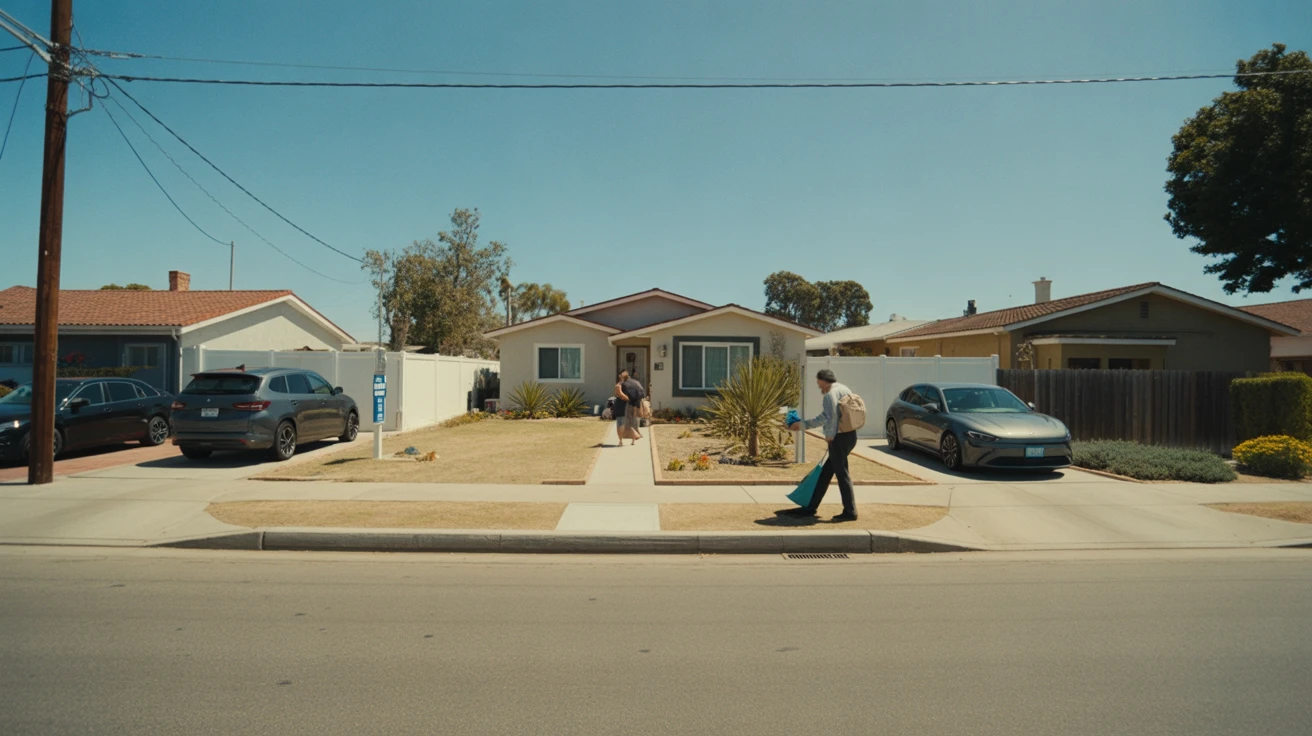
Overall Cost of Living Snapshot
National City sits in the upper tier of U.S. cost structures, with a regional price parity index of 179—meaning goods and services cost roughly 79% more than the national baseline. That premium shows up most visibly in housing, where both ownership and rental markets reflect broader San Diego metro pressure. But the cost story here isn’t one-dimensional. Unlike car-dependent suburbs where transportation quietly drains budgets, National City offers rail transit access and high grocery density, reducing some of the friction that typically accompanies expensive housing markets.
The primary cost driver is housing entry—whether buying or renting, securing shelter here requires significant upfront income allocation. Utility rates, particularly for electricity, add a secondary layer of exposure during cooling months. Transportation costs vary widely depending on whether a household can leverage the city’s transit infrastructure or remains car-dependent for work. The biggest surprise for newcomers often isn’t any single price point, but the realization that day-to-day costs are manageable if housing is solved, yet housing itself remains the gate that determines whether the rest of the budget holds together.
Driver verdict: Housing dominates, utilities create moderate seasonal swings, and transportation exposure depends heavily on whether your job and routine align with the city’s accessible errands infrastructure and rail service.
Housing Costs (Primary Driver)
With a median home value of $505,800, ownership in National City requires substantial savings and income to clear mortgage qualification hurdles. Median rent stands at $1,504 per month, positioning the city as a relatively more accessible entry point compared to coastal San Diego neighborhoods, but still expensive in absolute terms. The gap between rent and ownership cost is wide enough that many households treat National City as a transitional location—renting while building equity elsewhere, or renting long-term to avoid the leverage risk of buying in a high-value market.
Renting offers flexibility and avoids property tax exposure, but it also means facing lease renewals in a market where landlords can adjust to shifting metro demand. Ownership locks in a mortgage payment and builds equity, but it introduces maintenance costs, property tax obligations, and the risk of being underwater if the market softens. For households with stable dual incomes, buying can make sense if the plan is to stay five-plus years. For everyone else, renting is often the structurally safer choice, even if it feels like paying a premium for impermanence.
| Housing Type | Cost Anchor | What That Buys You |
|---|---|---|
| Renting | $1,504/month median | Flexibility, no maintenance risk, exposure to lease renewal increases |
| Buying | $505,800 median value | Equity build, fixed mortgage, property tax and maintenance obligations |
Conclusion: National City functions as a renting and transitional city for most households. Ownership is viable for high-income or dual-income buyers with long time horizons, but the entry cost and ongoing obligations make renting the default for everyone else.
Utilities & Energy Risk
Electricity in National City is billed at 30.29¢ per kWh, a rate that sits well above the national average and reflects California’s broader energy pricing structure. During extended cooling seasons—common in this climate—air conditioning can drive monthly usage into ranges that produce noticeable bill swings. A household running moderate AC in summer months will feel the rate premium more acutely than someone in a naturally ventilated unit or a climate with minimal cooling demand.
Natural gas is priced at $22.96 per MCF (roughly 100 therms). Gas exposure in National City is lower than in cold-weather cities, since heating demand is minimal and limited to occasional winter evenings. For most households, gas costs remain a minor line item rather than a seasonal volatility driver. The real energy risk here is electric: high rates meet high seasonal usage, and the combination can push summer utility costs significantly above winter baselines.
Risk classification: Moderate. Electricity is the primary exposure, and it’s predictable but not trivial. Households in poorly insulated units or those who cool aggressively will see the impact clearly. Those in newer construction or with behavioral flexibility can keep bills more stable, but the rate structure ensures that even efficient households pay a premium relative to most of the country.
Groceries & Daily Costs
Grocery costs in National City reflect the same regional price pressure visible in housing and utilities. Ground beef runs $12.06 per pound, eggs cost $4.47 per dozen, and milk is priced at $7.21 per half-gallon—all derived estimates based on regional price parity, not observed local prices, and all noticeably above national averages. These aren’t shock-level prices, but they do mean that a household’s weekly grocery spend will trend higher than in most mid-tier U.S. cities, even when buying the same items.
What offsets some of that pressure is access. National City shows high food and grocery establishment density, meaning residents don’t need to drive long distances or rely on a single store. Competitive options exist within walkable or short-drive range for most neighborhoods, and the presence of both budget chains and specialty grocers gives households the ability to shop strategically. The cost per item is elevated, but the friction of acquiring those items is low—a meaningful tradeoff in a region where time and transportation costs can quietly inflate the real cost of “cheap” food sold far from home.
Note: Grocery item prices listed above are derived estimates based on national baseline adjusted by regional price parity; not observed local prices.
Transportation Reality
National City offers a mixed transportation landscape. Rail transit is present, and the city shows moderate pedestrian infrastructure relative to its road network—enough to support some errands and commutes on foot or via transit, but not enough to eliminate car dependency for most households. Cycling infrastructure exists in pockets, offering another option for short trips, but the overall texture remains car-friendly rather than car-optional.
Gas is priced at $5.89 per gallon, among the highest in the nation and a reflection of California’s fuel taxes and environmental regulations. For a household commuting by car daily, that price compounds quickly. A 25-mile round-trip commute in a vehicle averaging 25 MPG burns roughly a gallon per day, translating to nearly $6 in fuel alone—before insurance, maintenance, or parking. Over a month, that’s a recurring exposure that rivals some utility bills.
The key decision point isn’t whether National City is “walkable” in the abstract—it’s whether your specific routine aligns with where the infrastructure actually exists. If your job is accessible by rail and your errands fall within the high-density corridors, car ownership can shift from necessity to occasional convenience. If your job is in a low-transit zone or requires irregular hours, the car remains essential, and the fuel cost becomes a fixed monthly drain. Transportation here isn’t uniformly expensive or cheap; it’s exposure-dependent, and the structure of your day determines which side of that line you fall on.
Cost Exposure Profiles
National City’s cost structure creates distinct exposure profiles depending on housing status, transportation needs, and household composition. The dominant pressure is housing entry cost—whether you’re clearing the income threshold to rent a unit at $1,504 per month or saving for a down payment on a half-million-dollar home. Once housing is secured, the next layer of exposure is transportation. Households that can use rail transit and walk to errands face lower recurring costs than those driving daily in a region with $5.89-per-gallon gas.
Low-exposure situations tend to involve renters in centrally located units, near transit and grocery options, with jobs accessible by rail or within biking distance. These households avoid both the leverage risk of ownership and the compounding fuel costs of long car commutes. High-exposure situations involve homeowners with long commutes, particularly those driving alone in vehicles with below-average fuel efficiency. These households face mortgage payments, property taxes, maintenance obligations, and significant monthly fuel costs—all of which are recurring and difficult to reduce without changing jobs or selling the home.
Utility volatility sits between these extremes. It’s not trivial, especially during cooling season, but it’s more controllable than housing or commute costs. A household can adjust thermostat settings, improve insulation, or shift usage patterns. You can’t thermostat your way out of a mortgage or a 40-mile commute. The structure of National City’s cost environment rewards alignment: if your housing, job location, and daily routine fit the city’s infrastructure, costs stay manageable. If they don’t, the misalignment compounds across multiple categories, and the city becomes expensive in a way that’s hard to offset.
Frequently Asked Questions
Is National City more affordable than nearby cities in 2026? National City tends to be less expensive than coastal San Diego neighborhoods but sits in a similar range to other South Bay communities. The difference is often more about housing type and transit access than dramatic price gaps.
What does a typical cost profile look like in National City? Most households allocate the majority of income to rent or mortgage, followed by transportation (if car-dependent) and utilities during cooling months. Grocery and daily costs are elevated but predictable, and the city’s high errands accessibility reduces some logistical friction.
Do utilities cost more in National City than nearby areas? Electricity rates are consistent across the San Diego metro region and reflect California’s broader pricing structure. National City’s utility costs aren’t unusually high relative to neighboring cities, but they are high relative to most of the U.S.
What costs tend to surprise newcomers in National City? Summer electricity bills and gas prices are the most common surprises, particularly for people moving from states with lower energy costs. The interaction between high rates and seasonal cooling demand catches many renters off guard in their first summer.
Are property taxes higher in National City than nearby cities? Property taxes in California are governed by Proposition 13, which caps rates and limits increases. National City’s tax obligations are comparable to other cities in San Diego County, though the high median home value means the absolute dollar amount can still be significant for new buyers.
Can you live in National City without a car? It depends on where you work and where your unit is located. Rail transit is present, and some neighborhoods have walkable access to groceries and services. If your job is on a transit line and your errands align with high-density corridors, car-free or car-light living is possible. For most households, a car remains necessary.
How does National City compare to living inland versus closer to the coast? National City sits between the coast and inland valleys, offering a climate that’s warmer than beachfront areas but cooler than true inland zones. Cost-wise, it’s less expensive than coastal neighborhoods but similarly priced to other South Bay cities. The tradeoff is access and infrastructure rather than dramatic cost differences.
Is National City a good place for renters long-term? Yes, particularly for households prioritizing flexibility and proximity to jobs in the South Bay or downtown San Diego. Renting avoids the leverage risk of buying in an expensive market, though it does mean facing periodic lease renewals and potential rent increases.
How this article was built: In addition to public economic data, this article incorporates location-based experiential signals derived from anonymized geographic patterns—such as access density, walkability, and land-use mix—to reflect how day-to-day living actually feels in National City, CA.
—