
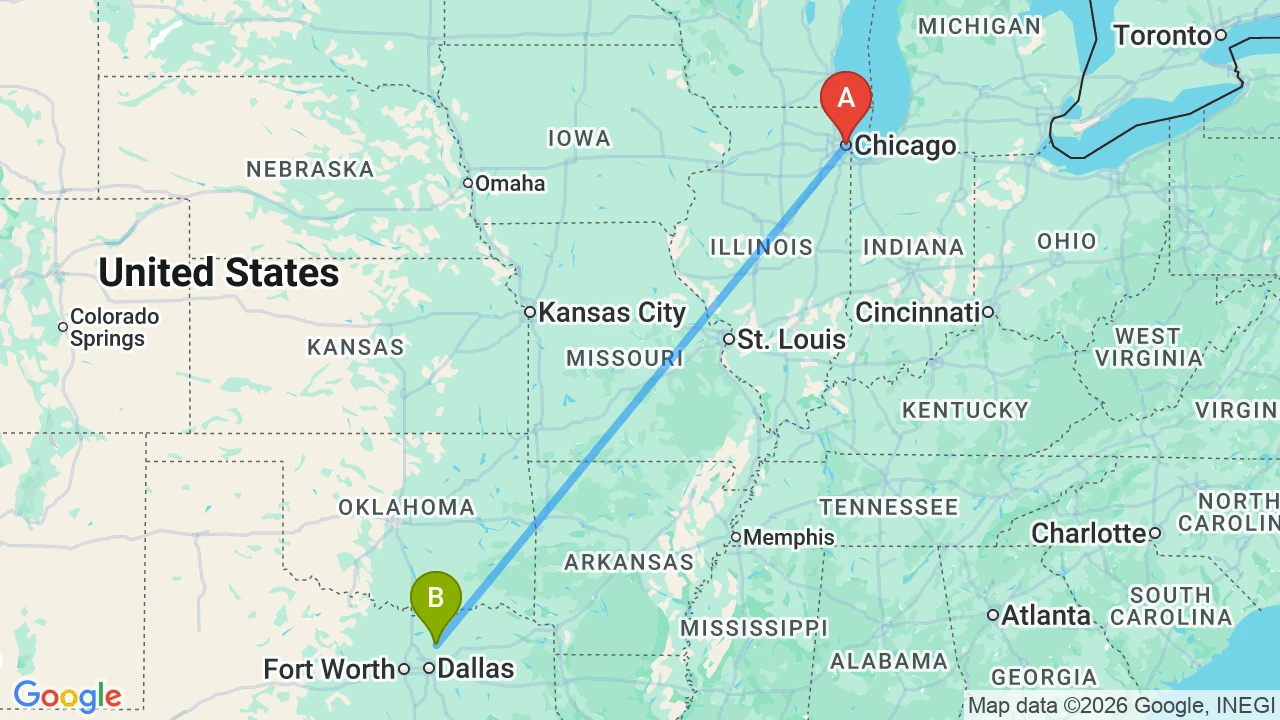
The move from Chicago to McKinney represents one of the more dramatic relocations within the American urban landscape—not just in distance, but in how daily life is structured, where costs concentrate, and what kind of household routines become possible or necessary. Chicago operates as a dense, transit-rich regional center with walkable pockets, established rail service, and integrated green space. McKinney functions as a fast-growing suburban city within the Dallas metro, characterized by newer development patterns, car-oriented infrastructure, and a different relationship between housing cost and household income.
This guide explains how cost pressure, lifestyle rhythms, and daily logistics shift when you make this move. It does not calculate affordability or declare a winner. Instead, it clarifies where expenses tend to show up differently, which household types feel more or less pressure after relocating, and what surprises movers most once they settle in. Understanding these shifts helps you prepare for the realities of McKinney, not just the advertised differences.
Cost Pressure Shifts: Where Expenses Concentrate Differently
The most immediate financial shift involves housing entry barriers and ongoing obligations. Chicago’s median home value sits at $304,500, while McKinney’s reaches $400,400—a substantial increase in upfront capital required for ownership. Median gross rent follows a similar pattern: $1,314 per month in Chicago versus $1,740 per month in McKinney. For renters, this means higher baseline housing costs before utilities, parking, or other fees enter the picture. For buyers, the gap translates into larger down payments, higher mortgage balances, and increased property tax exposure in Texas, where property taxes fund services that income taxes cover in Illinois.
However, McKinney households also report a significantly higher median household income—$113,286 per year compared to Chicago’s $71,673. This income differential changes the affordability equation for many movers, particularly those relocating for career opportunities in the Dallas metro’s corporate corridors or technology sectors. The question is not whether McKinney costs more in absolute terms, but whether the income gain outpaces the housing cost increase for your specific situation, and whether the tradeoffs in daily expenses and lifestyle friction align with your priorities.
Utility costs shift in character rather than total magnitude. McKinney’s electricity rate of 16.11¢/kWh runs lower than Chicago’s 18.74¢/kWh, but the extended cooling season in North Texas—marked by triple-digit summer heat—drives air conditioning usage far beyond what most Chicago households experience. Natural gas pricing moves in the opposite direction: McKinney pays $30.71/MCF versus Chicago’s $15.48/MCF, though heating demand remains lighter in Texas. The net effect is that utility bills become more summer-weighted, with less seasonal variation but sustained high usage during the hottest months.
Transportation costs favor McKinney in fuel pricing—$2.41/gal versus Chicago’s $2.90/gal—but this advantage is offset by increased car dependence and longer trip distances. Chicago’s rail-present transit system and walkable pockets allow some households to reduce or eliminate car ownership. McKinney’s infrastructure assumes universal car access, and most daily errands, work commutes, and social activities require driving. Households accustomed to splitting transportation costs between transit passes and occasional rideshare will find themselves budgeting for full vehicle ownership, insurance, maintenance, and parking in McKinney.
How this article was built: In addition to public economic data, this article incorporates location-based experiential signals derived from anonymized geographic patterns—such as access density, walkability, and land-use mix—to reflect how day-to-day living actually feels in McKinney, TX.
Housing & Neighborhood Patterns: Entry Barriers vs. Ongoing Obligations
Chicago’s housing stock reflects over a century of development, with a mix of building heights, older walk-up apartments, single-family homes, and high-rise towers concentrated in different neighborhoods. McKinney’s growth accelerated primarily in the last two decades, resulting in master-planned communities, newer construction, and subdivision-based development patterns. This difference affects not just aesthetics, but how housing costs behave over time.
In Chicago, renters face relatively moderate baseline rent but encounter variability in unit quality, building age, and included amenities. Lease renewals can bring sharp increases in high-demand neighborhoods, but competition and rent control discussions create some downward pressure. In McKinney, rental housing tends to be newer, with more consistent amenities (central air, in-unit laundry, parking), but landlords operate in a market with fewer regulatory constraints and strong demand from corporate relocations. Rent growth can be steady rather than volatile, but tenants have less leverage to negotiate or delay increases.
For buyers, the ownership experience diverges sharply. Chicago homeowners pay property taxes based on assessed value, with rates that vary by neighborhood and taxing district, but the state income tax provides some offsetting revenue for public services. McKinney homeowners face no state income tax, but property tax rates are higher to compensate, and these taxes apply to the home’s appraised value, which can rise quickly in fast-appreciating markets. Homeowners insurance also costs more in Texas due to weather exposure, and many McKinney neighborhoods include mandatory homeowners association (HOA) fees that cover common area maintenance, amenities, and sometimes utilities.
The result is that McKinney’s ownership model front-loads costs (higher purchase price, larger down payment) and embeds ongoing obligations (property taxes, HOA fees, insurance) that can grow independently of the mortgage. Chicago’s model spreads costs more evenly but exposes owners to maintenance unpredictability in older housing stock and higher heating expenses during long, cold winters.
Lifestyle & Daily Rhythms: How Place Structure Shapes Behavior
One of the most significant shifts involves how you move through daily life. Chicago’s pedestrian-to-road ratio exceeds high thresholds, meaning substantial pedestrian infrastructure exists in parts of the city, and rail transit service is present throughout the metro. Grocery density and food establishment density both exceed high thresholds, making it possible to run errands on foot or via short trips in many neighborhoods. Park density is integrated, and water features are present, contributing to outdoor access without requiring a car.
McKinney operates differently. While the city includes parks and green space, daily errands almost universally require driving. Grocery stores, pharmacies, schools, and healthcare facilities are accessible by car but rarely within walking distance of residential areas. This changes the texture of daily life: trips that might take 10 minutes on foot in Chicago require 10 minutes of driving in McKinney, plus parking. Households with multiple errands often chain them together into car-based loops rather than making separate walking trips.
Commute patterns also shift. Chicago’s average commute time is 34 minutes, with 14.6% of workers working from home and 59.7% experiencing long commutes. Many of these commutes occur via public transit, allowing workers to read, work, or rest during the trip. McKinney lacks comprehensive commute data in the available feed, but the city’s role as a northern suburb of Dallas means many residents commute south toward Plano, Frisco, or Dallas proper—often 30 to 45 minutes each way, entirely by car. This changes not just time spent commuting, but the cognitive and physical load of the commute, as well as the fuel, insurance, and maintenance costs tied to daily driving.
Climate exposure also changes the rhythm of daily life. Chicago experiences long, cold winters with extended heating seasons and rare but intense summer heat. McKinney faces hot, dry summers with triple-digit temperatures lasting weeks or months, making outdoor activity uncomfortable during peak afternoon hours. Air conditioning becomes non-negotiable rather than optional, and outdoor routines shift to early morning or evening. Households with children, pets, or outdoor hobbies adjust their schedules around heat exposure rather than cold.
Relocation Logistics & Practical Friction
The physical move from Chicago to McKinney covers roughly 900 miles, requiring either a multi-day drive or professional movers. Timing matters: summer moves coincide with peak heat in Texas and high demand for moving services, while winter moves avoid the worst weather but may encounter ice or snow in the Midwest. Spring and fall offer the most temperate conditions but also align with school transitions and corporate relocation cycles, which can tighten availability for rental housing and moving trucks.
Once you arrive, the adjustment period involves more than unpacking. Establishing residency in Texas requires updating your driver’s license, vehicle registration, and voter registration within 30 days. Texas vehicle registration includes title transfer fees, inspection requirements, and potentially higher insurance premiums depending on your driving record and coverage needs. Households moving from Illinois should also prepare for the absence of state income tax withholding, which changes paycheck amounts and requires different budgeting habits.
Service setup takes time. Electricity in McKinney operates on a deregulated market, meaning you choose your provider and plan rather than accepting a municipal default. This offers flexibility but requires research and comparison. Internet and cable providers vary by neighborhood, and some master-planned communities have exclusive agreements that limit choice. Water, trash, and sewer services are typically bundled through the city or HOA, but billing cycles and payment methods differ from Chicago’s systems.
Social and logistical networks take longer to rebuild. Chicago’s density and transit access mean that social plans often happen spontaneously, with friends meeting at central locations accessible by train. McKinney’s car-dependent geography requires more planning: every meetup involves coordinating driving, parking, and timing. Households with children face different school structures, extracurricular options, and parent networks. Retirees or remote workers may find McKinney quieter and more isolated unless they actively build community through clubs, religious organizations, or neighborhood groups.
Frequently Asked Questions
- Does McKinney, TX feel more or less expensive than Chicago, IL?
- McKinney concentrates costs in housing entry (higher purchase prices and rent) and car dependence, while Chicago spreads pressure across rent volatility, heating expenses, and transit. Households earning significantly more in McKinney often find the income gain offsets higher housing costs, but those moving laterally in income feel more pressure. The question is less about total expense and more about where costs show up and which household types absorb them most.
- How do housing markets differ between Chicago and McKinney?
- Chicago offers older, more varied housing stock with moderate entry costs but unpredictable maintenance and renewal pressure. McKinney features newer construction, higher purchase prices, and embedded obligations like property taxes and HOA fees. Renters in Chicago face sharper lease renewal increases in high-demand areas, while McKinney renters pay more upfront but experience steadier, less volatile rent growth.
- What feels different about daily life after moving from Chicago to McKinney?
- The most immediate shift is car dependence. Errands, socializing, and commuting all require driving in McKinney, whereas Chicago allows many households to walk, bike, or use transit for daily tasks. Climate also changes routines: summer heat dominates in McKinney, shifting outdoor activity to early morning or evening, while Chicago’s cold winters require different preparation. The pace feels slower and quieter, but requires more logistical planning.
- When does the move from Chicago to McKinney feel easiest or hardest?
- Spring and fall offer the most comfortable weather for moving and settling in, but align with high demand for housing and services. Summer moves face extreme heat in Texas, while winter moves risk cold and snow in the Midwest. Families with school-age children typically prefer summer to align with academic calendars, while remote workers and retirees have more flexibility to choose off-peak timing and avoid competition.
- What challenges surprise movers most when relocating to McKinney?
- The extent of car dependence catches many off guard, especially those accustomed to Chicago’s walkable neighborhoods and transit access. Property tax bills and HOA fees also surprise buyers who underestimate ongoing obligations beyond the mortgage. Summer heat lasts longer and feels more intense than expected, requiring budget adjustments for air conditioning. Social isolation can emerge for those who don’t actively build new networks, as spontaneous meetups are harder to coordinate in a car-dependent suburb.
- Who tends to benefit from moving to McKinney, and who may struggle?
- Households relocating for career opportunities with significant income gains—especially in corporate, technology, or healthcare sectors—often find McKinney’s housing costs manageable relative to their new earnings. Families seeking newer homes, good schools, and suburban amenities appreciate McKinney’s infrastructure and lower crime rates. Those moving laterally in income, without cars, or who value walkability, transit access, and urban density tend to feel more pressure and lifestyle friction after the move.
Conclusion: Tradeoffs, Not Totals
The move from Chicago to McKinney is not a simple cost reduction or lifestyle upgrade. It represents a fundamental shift in how daily life is structured, where expenses concentrate, and what kind of household routines become necessary. McKinney offers higher incomes, newer housing, and lower unemployment (3.8% versus Chicago’s 5.4%), but requires higher upfront housing costs, universal car ownership, and adaptation to extended summer heat. Chicago provides transit access, walkable neighborhoods, and integrated green space, but imposes rent volatility, heating costs, and longer winters.
The households that thrive in McKinney are those whose income gains outpace housing cost increases, who value suburban amenities and newer construction, and who are comfortable with car-dependent routines. Those who struggle are typically moving laterally in income, prioritize walkability and transit, or underestimate the cumulative cost of car ownership, property taxes, and HOA fees. Understanding these tradeoffs before you move allows you to prepare financially, logistically, and emotionally for the realities of McKinney, not just the marketed differences.
For deeper exploration of McKinney’s cost drivers, neighborhood patterns, and household budgets, visit the McKinney city hub. To compare McKinney with other Dallas suburbs or explore Chicago’s neighborhood-level cost variations, see the Dallas metro overview and Chicago city hub.