
What does happiness look like in a South Florida suburb where parks outnumber plazas and errands require a plan? In Miramar, 74 out of 100 residents say they’re happy—a score that reflects not universal delight, but a specific kind of alignment. This is a city that rewards those who value green space, strong schools, and a predictable suburban rhythm. It frustrates those who crave spontaneous walkability, transit flexibility, or dense urban texture. Understanding Miramar’s vibe means understanding what it optimizes for—and what it doesn’t.
The Emotional Landscape of Miramar
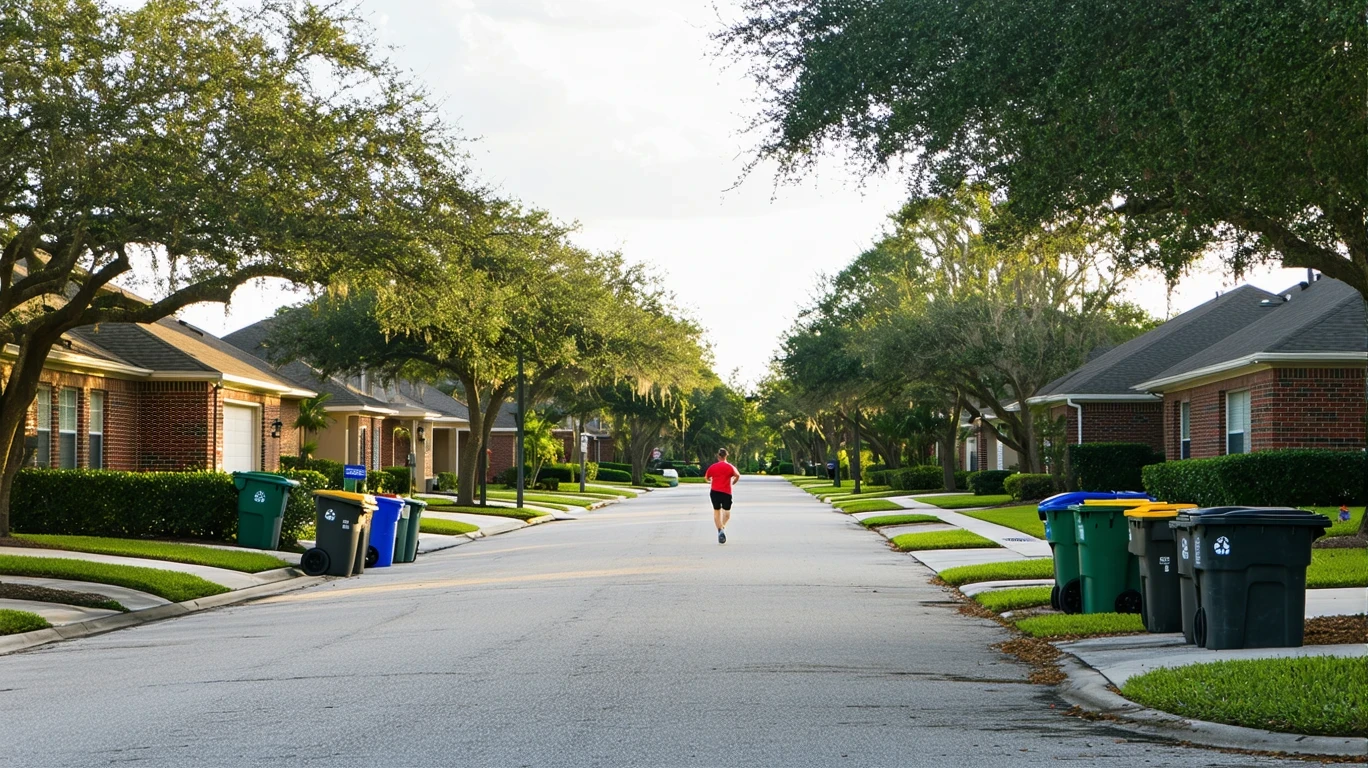
Miramar’s tone is shaped by its structure: family infrastructure is abundant, parks are woven throughout, and walkability exists in pockets rather than as a citywide feature. Schools and playgrounds meet high density thresholds, hospital and pharmacy access is strong, and green space feels integrated rather than incidental. But grocery stores and food options cluster along corridors, not corners. Bus service is present, but rail transit is not. The pedestrian-to-road ratio is high in some areas, creating pleasant walking moments—yet these moments don’t connect into a continuous pedestrian network.
This creates a specific emotional profile. Families with young children tend to feel “this fits”—the infrastructure supports their daily logistics. Households comfortable with car-based errands appreciate the balance of suburban calm and selective convenience. But those hoping to live car-light, or expecting urban-style errand access on foot, often feel the friction of planning every trip. The city doesn’t resist walkability; it just doesn’t make it effortless everywhere.
What People Talk About Online
In local Facebook groups and community forums, Miramar residents tend to focus on three recurring themes: family life, traffic and commute logistics, and the tension between growth and neighborhood character. The tone is rarely extreme—more often, it’s pragmatic, protective, and occasionally weary.
“It’s a great place to raise kids—parks everywhere, good schools, safe neighborhoods. But getting anywhere takes longer than you think.”
“I love the green space here. You can actually find quiet. But if you need something specific, you’re driving to a plaza.”
“It’s not walkable like a city, but it’s also not cookie-cutter suburban. There are pockets where you can stroll, and that’s enough for me.”
Conversations about commute times surface frequently, especially among those working in Miami or Fort Lauderdale. The average commute is 29 minutes, and nearly half of workers face long commutes. For some, this feels manageable; for others, it’s a daily source of fatigue. Remote workers, who make up a smaller share here, often express relief at avoiding that grind altogether.
How Local Coverage Frames the City
Local news and community coverage tend to frame Miramar through the lens of growth, infrastructure adaptation, and identity negotiation. Headlines don’t announce crises—they reflect ongoing conversations about what kind of place Miramar is becoming.
- “Families Flock to Miramar for Schools and Space”
- “Residents Weigh Convenience Against Calm”
- “New Development Sparks Debate Over Neighborhood Character”
- “Commute Times Shape Daily Life for Many Households”
- “Parks and Green Space Remain Central to City Identity”
The tone is rarely celebratory or alarmist—it’s observational, focused on tradeoffs. Growth is acknowledged, not cheered or mourned. Infrastructure questions linger without clear resolution. The city is framed as evolving, not arrived.
What Reviews and Public Perception Reveal
On platforms like Google Reviews, Yelp, and Nextdoor-style discussions, Miramar’s public perception splits along expectation lines. Those who wanted suburban family infrastructure tend to leave positive reviews. Those who expected urban texture or transit viability tend to express disappointment—not with quality, but with fit.
Praise often centers on parks, schools, and a sense of safety. “Great for families” appears frequently, as does appreciation for green space and relatively low crime. Newer planned areas receive compliments for cleanliness and amenities. Older pockets are described with affection by long-time residents, though newcomers sometimes note they feel less polished.
Criticism tends to focus on car dependency, limited dining variety, and the effort required to access specific services. “Everything’s a drive” is a common refrain. Those seeking nightlife, walkable downtown areas, or frequent transit options describe feeling isolated. The city doesn’t fail them—it simply wasn’t built for that lifestyle.
Neighborhood variation exists but isn’t stark. Residents distinguish between newer developments with planned amenities and older residential streets with mature trees, but the overall character remains suburban throughout. The differences are textural, not categorical.
Miramar Compared to Nearby Cities
| Dimension | Miramar | Pembroke Pines | Hollywood |
|---|---|---|---|
| Overall Vibe | Suburban family-focused with walkable pockets | Sprawling suburban with strong retail corridors | Coastal-influenced with denser downtown areas |
| Walkability Feel | Selective—pleasant in spots, not citywide | Minimal—car-dependent throughout | Stronger near beach and downtown core |
| Transit Access | Bus service only, no rail | Bus service only, limited routes | Bus and proximity to Tri-Rail stations |
| Family Infrastructure | Strong—schools and playgrounds abundant | Strong—family-oriented amenities widespread | Moderate—varies by neighborhood |
| Green Space Access | Integrated—parks woven throughout | Present but more corridor-based | Beachfront dominates outdoor identity |
| Dining and Nightlife | Limited—corridor-based, not dense | Moderate—retail plazas with chains | Stronger—beachfront and downtown options |
Miramar sits between Pembroke Pines’ sprawling car-centric layout and Hollywood’s denser, coastal-influenced texture. If you prioritize family infrastructure and green space over nightlife and transit, Miramar tends to feel like a better fit than Hollywood. If you want even more retail convenience and don’t mind sacrificing walkable moments, Pembroke Pines might align better. If you need rail access or prefer beachfront energy, Hollywood pulls ahead. None of these cities is objectively better—they optimize for different tradeoffs.
Voices from the Community
“We moved here for the schools and haven’t regretted it. The parks are fantastic, and our kids have friends on every block. But yeah, we drive everywhere—that’s just how it is.”
“I work remotely, so the commute thing doesn’t hit me. For me, Miramar is perfect—quiet, green, safe. I don’t need to be in the middle of everything.”
“It’s frustrating if you don’t have a car. The bus exists, but it’s not fast, and you can’t really get around without planning every trip. I miss being able to walk to a coffee shop.”
“The green space here is underrated. You can actually find a quiet park bench under oak trees and not hear traffic. That’s rare in South Florida.”
“I’ve been here twenty years. It’s changed, sure—more people, more traffic. But it’s still a good place to raise a family. Just not as sleepy as it used to be.”
“If you’re looking for nightlife or a walkable downtown, this isn’t it. But if you want space, good schools, and a slower pace, it works.”
“The commute to Miami wears on me. Half the time I’m sitting in traffic longer than I’m at my desk. But the tradeoff is coming home to a neighborhood that feels calm.”
Does Miramar Feel Like a Good Fit?
Miramar’s emotional profile is clear: it tends to work for families seeking strong infrastructure, households comfortable with car-based logistics, and those who value green space and suburban rhythm over urban density. It frustrates those hoping for consistent walkability, transit flexibility, or spontaneous errand access. The city doesn’t promise urban texture or car-free viability—it delivers family-friendly calm with selective pedestrian moments.
If you’re deciding whether Miramar aligns with your needs, consider what you’re optimizing for. If parks, schools, and predictable suburban structure matter more than nightlife or transit, the city tends to feel rewarding. If you need rail access, dense walkability, or minimal car dependency, the friction will likely persist. Happiness here isn’t universal—it’s alignment-specific.
For a deeper look at what a budget has to handle in Miramar, or to explore what ‘enough’ actually means in terms of quality of life, those resources can help clarify whether the city’s tradeoffs match your priorities. And if housing pressure and availability are shaping your decision, understanding those dynamics adds another layer to the fit question.
How this article was built: In addition to public economic data, this article incorporates location-based experiential signals derived from anonymized geographic patterns—such as access density, walkability, and land-use mix—to reflect how day-to-day living actually feels in Miramar, FL.
The perspectives shown reflect commonly expressed local sentiment and recurring themes in public discussion, rather than individual accounts.