
Transit Coverage & Average Ride Times in Miramar
| Transit Type | Coverage | Average Commute |
|---|---|---|
| Bus Service | Present | 29 minutes |
| Rail Service | Not Available | — |
| Work From Home | 8.7% | — |
| Long Commute (60+ min) | 47.8% | — |
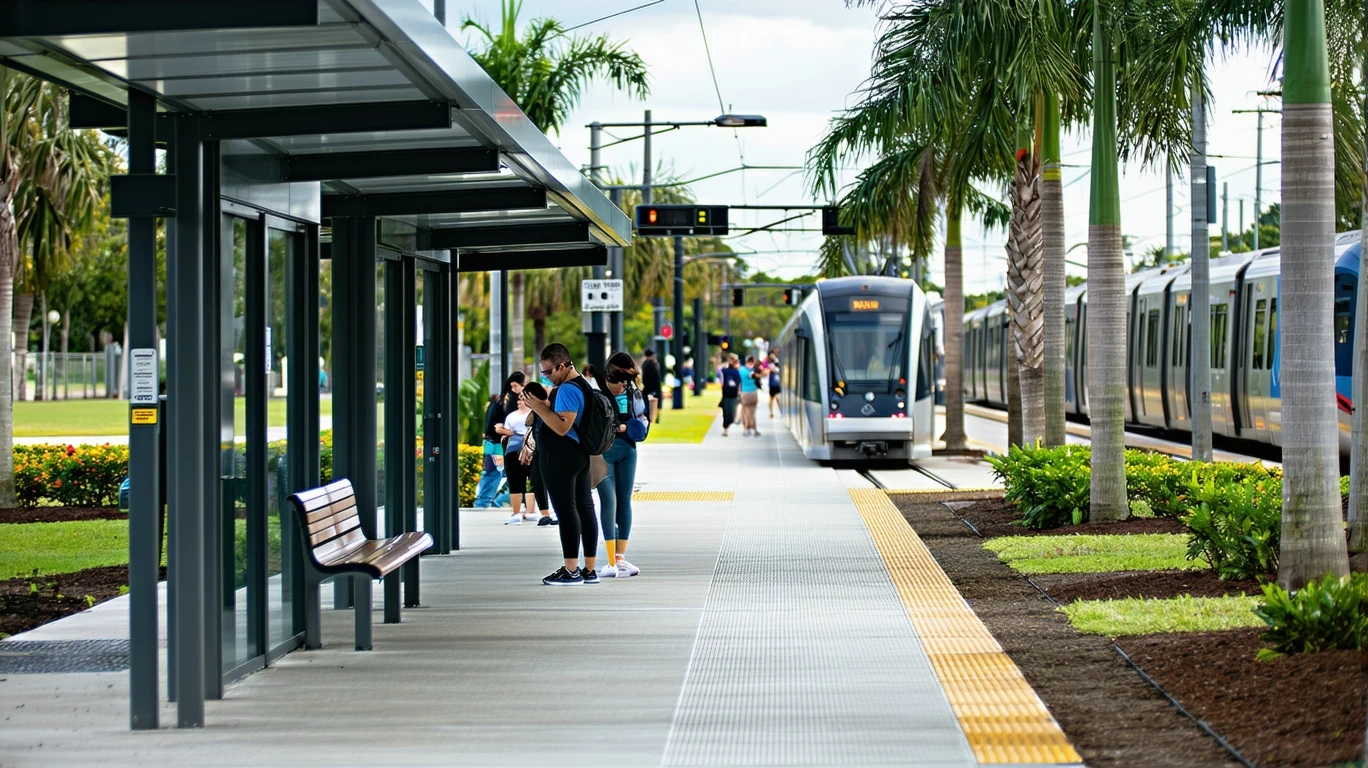
How People Get Around Miramar
Understanding transportation options in Miramar starts with recognizing that this is a city built around the car. While bus service exists and parts of the city offer surprisingly strong pedestrian infrastructure, the dominant pattern is driving. Nearly half of all commuters face trips longer than an hour, and only 8.7% work from home, meaning most residents are on the road daily, navigating a metro area where jobs, services, and social life are spread across multiple municipalities.
What newcomers often misunderstand is that Miramar’s walkability isn’t uniform. There are pockets—particularly along commercial corridors—where sidewalks, crossings, and nearby grocery stores make short errands manageable on foot. But step outside those zones, and the infrastructure shifts. Residential streets stretch longer, destinations spread farther apart, and the assumption becomes: you’re driving.
This isn’t a failure of planning. It’s the texture of a South Florida suburb that grew during an era when highways defined access and density remained low. The result is a city where your transportation experience depends heavily on where you live, where you work, and how much flexibility you need day to day.
Public Transit Availability in Miramar
Public transit in Miramar often centers around systems such as Broward County Transit, which provides bus service throughout the city and connects to neighboring areas. The network is real, the stops are present, and for certain routes—particularly those linking Miramar to regional employment hubs or retail centers—the service functions as a viable option.
But transit here plays a supporting role, not a leading one. Coverage exists, but it’s not comprehensive. If you live near a major corridor and work along a bus route, the system can handle your commute. If you live in a quieter residential neighborhood or need to make multiple stops—picking up groceries, dropping off kids, running errands across town—transit quickly becomes impractical.
The gaps aren’t just geographic. They’re temporal. Evening and weekend service tends to thin out, and if your schedule doesn’t align with posted routes, waiting times stretch. There’s no rail option to fall back on, no rapid transit to bypass traffic. What you see is what you get: buses, stops, and schedules that work well for some trips and poorly for others.
For renters living near commercial clusters, particularly younger individuals or couples without school-age children, transit can cover enough of daily life to reduce car dependence. But for families, for anyone working outside the city, or for households managing complex logistics, the bus alone won’t close the gap.
Driving & Car Dependence Reality
In Miramar, driving isn’t a luxury—it’s infrastructure. The city’s layout, the dispersal of jobs across Broward and Miami-Dade counties, and the realities of South Florida geography all point in the same direction: most households need at least one car, and many need two.
Parking is rarely a problem. Residential streets accommodate vehicles easily, and commercial areas provide ample lots. But the tradeoff isn’t convenience—it’s time and exposure. With 47.8% of commuters facing long trips, many residents spend significant portions of their day behind the wheel, navigating highways, managing traffic variability, and absorbing the costs that come with high mileage and frequent use.
Car dependence here isn’t about preference. It’s about structure. Miramar’s development pattern favors single-family homes on larger lots, commercial strips rather than walkable downtowns, and a road network designed to move people between dispersed destinations. That creates flexibility—you can live in one city, work in another, and shop in a third—but it also creates obligation. If you don’t drive, your options narrow quickly.
For families, this is especially pronounced. School drop-offs, extracurriculars, weekend activities—all of these assume car access. Even in neighborhoods with decent sidewalks, the distances involved make walking impractical for anything beyond the immediate block. The car becomes the tool that holds the household schedule together.
Commuting Patterns & Daily Mobility
The 29-minute average commute in Miramar tells only part of the story. That figure captures a middle ground between short local trips and the much longer hauls that nearly half of workers endure. The reality is that commuting here is variable, shaped by whether your job is nearby or whether you’re crossing county lines into Fort Lauderdale, Miami, or beyond.
For those working locally—in Miramar’s retail, healthcare, or service sectors—the commute can be manageable, even by car. But for professionals commuting to downtown Fort Lauderdale or Miami, the trip expands significantly, often involving highway merges, rush-hour slowdowns, and the mental load of navigating congestion daily.
Multi-stop commutes add another layer. Parents dropping kids at school before heading to work, workers running errands during lunch, households managing medical appointments or grocery runs—all of these patterns assume the flexibility that only a car provides. Transit can handle point-to-point trips, but it struggles with the branching, non-linear movement that defines daily life for many families.
Proximity matters, but it’s not everything. Even residents living close to their workplace often drive, because the infrastructure doesn’t support walking or biking for longer distances, and because the heat and humidity of South Florida make outdoor commutes uncomfortable for much of the year. The result is a commute culture that defaults to driving, regardless of distance.
Who Transit Works For — and Who It Doesn’t
Transit in Miramar works best for individuals whose lives align with the existing bus network. That typically means renters living near commercial corridors, particularly younger workers or couples without children, whose daily routines involve predictable, single-destination trips. If your job is along a major route and your errands cluster near your home, the bus can cover most of what you need.
It works less well—or not at all—for families managing school schedules, for anyone working outside the city, or for households that need to move quickly between dispersed locations. The lack of rail service limits reach, and the gaps in evening and weekend coverage mean that flexibility comes at a cost. If your schedule shifts, if you need to make an unplanned stop, or if you’re managing multiple responsibilities, transit becomes a constraint rather than a tool.
Homeowners, particularly those in lower-density neighborhoods away from the main corridors, face the steepest car dependence. These areas often lack nearby bus stops, and even when service exists, the walking distance to reach it can be prohibitive. The infrastructure supports driving, not transit use, and the household structure—larger homes, families, longer-term roots—reinforces that pattern.
There’s also a practical ceiling. Even in the best-case scenario, where transit covers your commute, it doesn’t cover everything else. Groceries, medical appointments, social obligations—these still require either a car or significant time spent coordinating rides, rideshares, or borrowed vehicles. For most households, that’s not sustainable long-term.
Transportation Tradeoffs in Miramar
The choice between transit and driving in Miramar isn’t really a choice for most people—it’s a question of how much driving you can avoid. Transit offers predictability in the sense that routes and schedules are fixed, but it sacrifices flexibility. Driving offers control and speed, but it comes with exposure to traffic, fuel costs, and the ongoing responsibility of vehicle maintenance.
For households that can make transit work, the benefit is reduced car dependence, which can mean fewer vehicles to insure, maintain, and park. But that benefit is conditional. It requires living in the right part of the city, working along a bus route, and accepting longer trip times and reduced spontaneity.
For everyone else, driving is the default, and the tradeoff becomes internal: do you live closer to work and pay more for housing, or do you live farther out and absorb a longer commute? Do you prioritize proximity to schools and parks, or proximity to highways and commercial centers? These aren’t transportation questions in isolation—they’re housing, lifestyle, and financial decisions that ripple through every part of household planning.
What makes Miramar distinct is that the city’s infrastructure supports both patterns, but only partially. You can find walkable pockets with good access to groceries and parks. You can find bus routes that connect to regional job centers. But you can’t rely on those systems alone unless your life is structured around them. For most households, the result is a hybrid approach: some driving, some walking, occasional transit use, and a constant negotiation between convenience and cost.
FAQs About Transportation in Miramar (2026)
Is public transit usable for daily commuting in Miramar?
It depends on where you live and where you work. Bus service exists and covers key corridors, but it’s not comprehensive. If your commute aligns with existing routes and you’re comfortable with longer trip times, transit can work. For most households, especially those with complex schedules or jobs outside the city, driving remains necessary.
Do most people in Miramar rely on a car?
Yes. The city’s layout, the dispersal of jobs across the metro area, and the limited reach of public transit all point toward car dependence. Nearly half of commuters face long trips, and only a small percentage work from home, meaning most residents are driving daily.
Which areas of Miramar are easiest to live in without a car?
Neighborhoods near commercial corridors, particularly those with high grocery density and strong pedestrian infrastructure, offer the best chance of reducing car dependence. Even in these areas, however, most households still own at least one vehicle for flexibility and longer trips.
How does commuting in Miramar compare to nearby cities?
Miramar’s 29-minute average commute is moderate for the region, but the high percentage of long commutes suggests significant variability. Compared to denser urban centers with rail access, Miramar offers more driving flexibility but less transit reach. Compared to more rural areas, it offers better bus coverage but similar car dependence.
Can you get by with just one car in Miramar?
Many households do, especially renters or couples without children. But for families managing school, work, and errands across multiple locations, a second car often becomes necessary. The question isn’t whether one car is possible—it’s whether the tradeoffs in time and coordination are sustainable for your household.
How Transportation Fits Into the Cost of Living in Miramar
Transportation in Miramar isn’t just about how you get from place to place—it’s a structural factor that shapes where you can live, how much time you spend commuting, and how much flexibility you have in daily life. The city’s car-oriented infrastructure means that most households face ongoing vehicle costs, but the intensity of that exposure depends on commute length, household size, and proximity to work.
For renters living near transit routes and commercial corridors, it’s possible to reduce driving and the costs that come with it. For families, for homeowners in quieter neighborhoods, and for anyone working outside the city, transportation becomes a larger, more persistent part of the household budget. The tradeoff isn’t just financial—it’s temporal. Long commutes eat into time that could be spent elsewhere, and the lack of transit alternatives means that driving is often the only way to maintain the schedule most households need.
Understanding how transportation costs interact with housing, utilities, and other expenses requires looking at what a budget has to handle in Miramar—not just the price of gas, but the cumulative effect of commute distance, vehicle maintenance, and the time cost of getting around a dispersed metro area.
The good news is that Miramar’s infrastructure supports multiple strategies. You can live closer to work and reduce commute time. You can choose neighborhoods with walkable access to groceries and parks. You can use transit for predictable trips and drive for everything else. The key is recognizing that transportation here isn’t a single decision—it’s a set of tradeoffs that interact with every other part of how you live, work, and plan your household.
How this article was built: In addition to public economic data, this article incorporates location-based experiential signals derived from anonymized geographic patterns—such as access density, walkability, and land-use mix—to reflect how day-to-day living actually feels in Miramar, FL.