
Housing in Miramar operates within the gravitational pull of South Florida’s metro economy—close enough to Miami and Fort Lauderdale to feel demand pressure, but far enough out to retain a suburban development pattern. That combination shapes what you pay, how predictable those costs remain, and which household types find stability here versus strain.
The median home value sits at $378,200, while renters face a median gross rent of $1,840 per month. With median household income at $81,812 per year, housing absorbs a significant share of earnings whether you rent or own. But the cost experience differs sharply depending on structure type, location within the city, and how you manage exposure to Florida’s climate and governance realities.
This article breaks down what a budget has to handle in Miramar, focusing on rent versus ownership tradeoffs, apartment versus house cost behavior, and the long-term volatility each path introduces.
The Housing Market in Miramar Today
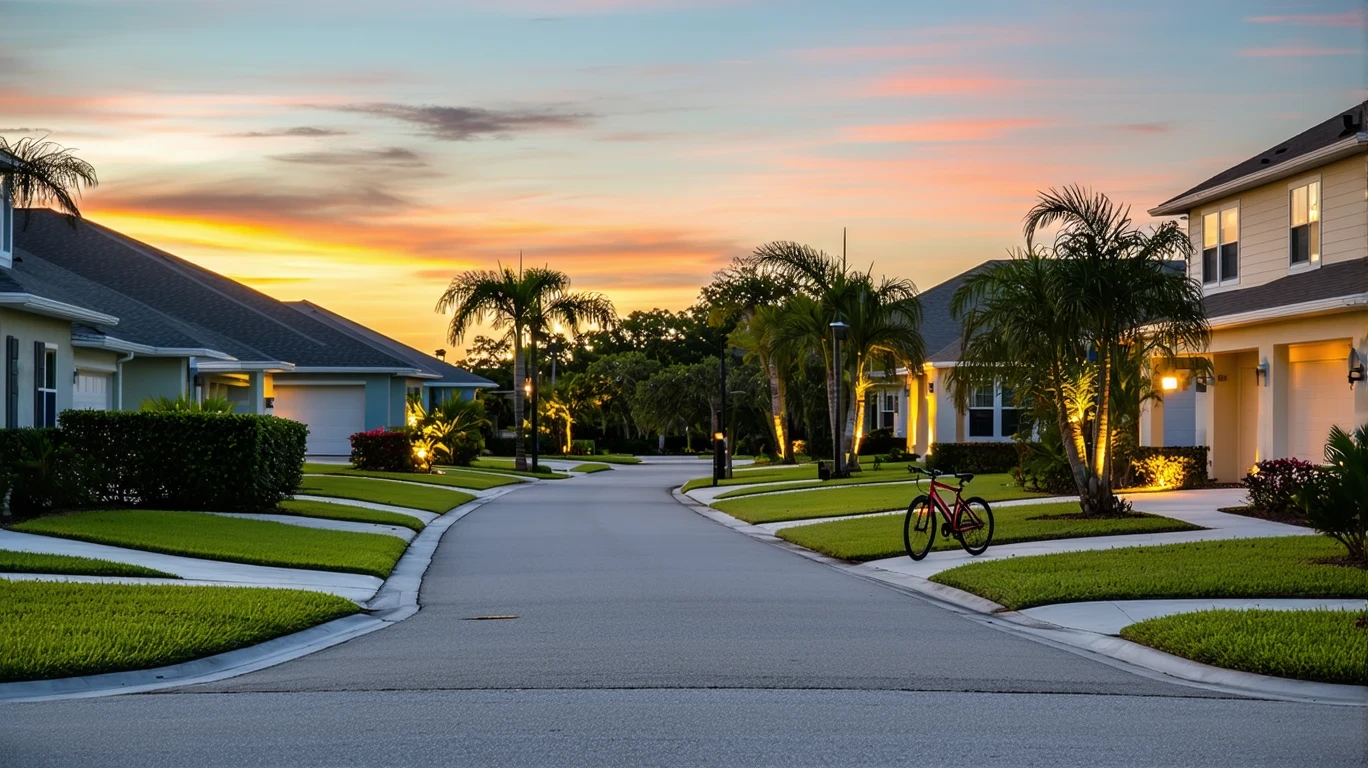
Miramar’s housing market reflects its role as a family-oriented suburban city within the broader Miami-Fort Lauderdale metro. Development here leans toward single-family homes and townhome communities, with apartment stock concentrated along commercial corridors. That pattern creates different availability dynamics depending on what you’re looking for.
Buyers face a market where $378,200 represents the median—not the floor. Entry-level inventory exists, but competition remains steady given the city’s school density, park access, and relative affordability compared to closer-in metro neighborhoods. For families prioritizing space and infrastructure over walkability, Miramar offers a value proposition that denser areas don’t.
Renters encounter tighter availability in standalone single-family homes, with most rental stock appearing in apartment complexes and smaller multifamily buildings. The $1,840 median gross rent reflects a market where demand stays consistent, driven by households who need proximity to metro employment but can’t or won’t buy at current price levels.
What newcomers often misunderstand: Miramar isn’t a low-cost alternative to the metro core—it’s a suburban market with metro-adjacent pricing. The tradeoff isn’t cheaper housing; it’s more space, stronger family infrastructure, and a car-dependent lifestyle in exchange for similar or only moderately lower costs than denser neighborhoods.
Renting in Miramar
At $1,840 per month, median gross rent in Miramar sits above national averages but reflects South Florida’s broader rental pressure. That figure typically includes basic rent but excludes utilities, parking fees, and renter’s insurance—all of which add to the true monthly obligation.
Rental availability clusters along commercial corridors where food and grocery density remains moderate. That geography means renters often face a tradeoff: live near errands and bus routes, or accept more driving in exchange for quieter residential streets. The city’s walkable pockets exist, but they don’t define the rental experience for most households.
Because Miramar’s transit network relies on bus service without rail options, renters without cars face meaningful friction. Commutes to metro employment centers stretch longer, and errands require more planning. For car-owning renters, the cost equation shifts: rent may be comparable to denser areas, but transportation expenses rise due to fuel, insurance, and maintenance needs in a car-oriented environment.
Rental increases tend to track metro-wide demand rather than Miramar-specific factors. Lease renewals can introduce volatility, especially when regional housing pressure tightens. Renters gain flexibility and avoid ownership risk, but they surrender control over long-term cost predictability.
Owning a Home in Miramar
Ownership in Miramar centers on single-family homes and townhomes, with the median home value of $378,200 serving as a realistic baseline for what buyers encounter. That price point demands a substantial down payment and mortgage commitment, but it also locks in a portion of housing cost that rent cannot.
Owners face exposure to property taxes, homeowners insurance, and maintenance—all of which behave differently in South Florida than in other regions. Insurance costs respond to hurricane risk and claims history, creating year-to-year variability that renters never see. Property taxes fund local services, and while rates aren’t provided in available data, they represent a recurring obligation that grows with assessed value over time.
Many neighborhoods include homeowners associations that bundle services like landscaping, community amenities, and exterior maintenance. These fees add predictability for some costs but introduce governance complexity and mandatory payments that owners can’t opt out of.
Maintenance exposure in Miramar skews toward climate-driven wear: air conditioning systems work year-round, roofs endure intense sun and seasonal storms, and humidity accelerates deterioration of exterior surfaces. Owners absorb these costs directly, while renters rely on landlords to manage them. That difference defines much of the ownership experience here.
The advantage of owning lies in control and stability. Mortgage payments don’t fluctuate with market rent increases, and owners can modify their homes, invest in efficiency upgrades, and build equity over time. The tradeoff is upfront cost, ongoing responsibility, and exposure to risks that renters can walk away from.
Apartment vs House in Miramar — Cost Behavior Comparison
Cost behavior between apartments and houses in Miramar diverges primarily due to climate exposure, space, and maintenance responsibility. The table below highlights categories where the difference is locally meaningful, omitting generic distinctions that apply everywhere.
| Expense Category | Apartment | House |
|---|---|---|
| Cooling Costs | Lower due to smaller square footage and shared walls reducing heat gain | Higher due to larger space, more exterior exposure, and year-round AC demand in South Florida heat |
| Exterior Maintenance | Managed by landlord or HOA; tenant pays indirectly through rent or fees | Owner responsibility; includes roof, siding, and storm-related repairs common in subtropical climate |
| Water & Sewer | Often included in rent or billed as flat fee | Billed separately based on usage; irrigation for yards increases consumption |
| Parking | May incur separate monthly fee depending on complex | Included with property; no additional cost |
| Insurance | Renter’s insurance covers personal property only; lower cost | Homeowners insurance includes structure and liability; higher cost due to hurricane exposure |
Why these categories matter in Miramar: The city’s year-round heat and humidity make cooling the dominant utility expense, and the difference in square footage between apartments and houses translates directly into cost. Exterior maintenance exposure reflects South Florida’s storm seasons and intense sun, which accelerate wear on roofs and siding. Water costs rise for houses with landscaping, a common feature in suburban neighborhoods here. Insurance and parking distinctions reflect housing stock patterns—apartments often bundle or separate these costs in ways that houses do not.
Categories like trash collection, internet, and basic electricity connection fees were omitted because they don’t vary meaningfully by structure type in Miramar. The table focuses on what actually changes the cost experience locally.
Utilities & Upkeep Differences
Utility exposure in Miramar is dominated by cooling, not heating. Electricity rates sit at 15.92¢/kWh, and air conditioning runs nearly year-round in South Florida’s extended hot season. Apartments benefit from smaller footprints and shared walls, which reduce the volume of space that needs cooling. Houses, especially older or poorly insulated ones, face noticeably higher bills due to larger square footage and greater exposure to outdoor heat.
Natural gas, priced at $23.62/MCF, plays a minimal role in most Miramar households. Heating demand is rare, and many homes rely on electric appliances rather than gas. For the subset of homes with gas water heaters or ranges, usage remains low compared to regions with cold winters.
Maintenance intensity differs sharply between apartments and houses due to climate and responsibility. Apartment dwellers rely on property management to handle HVAC servicing, roof leaks, and storm damage. House owners manage these directly, and the costs can be significant: air conditioning systems strain under constant use, roofs degrade faster in intense sun and seasonal storms, and humidity accelerates mold and exterior paint deterioration.
Yard maintenance adds another layer for house owners. Irrigation, landscaping, and pest control are common expenses in suburban Miramar, driven by the climate and neighborhood norms. Apartment renters avoid these entirely, though they may pay indirectly through higher rent or HOA fees.
The difference isn’t just dollar amounts—it’s predictability. Apartment utility bills vary with usage but stay within a narrower range. House owners face the same variability plus the risk of large, irregular expenses when systems fail or storms cause damage.
Rent vs Buy: Long-Term Exposure in Miramar
Renting and owning in Miramar represent different risk profiles, not just different monthly payments. Renters gain flexibility and avoid maintenance surprises, but they accept that rent can rise at lease renewal with little control over timing or magnitude. In a metro-adjacent market like Miramar, regional demand pressure drives those increases more than local factors.
Owners lock in a portion of housing cost through fixed-rate mortgages, but they assume exposure to insurance volatility, maintenance unpredictability, and the long-term behavior of property-related expenses. Insurance costs in South Florida respond to hurricane activity and claims trends, creating year-to-year swings that renters never experience. Maintenance costs grow as homes age, and climate-driven wear accelerates that timeline here.
Over time, ownership shifts cost composition. Early years emphasize mortgage interest and insurance; later years see maintenance and system replacement dominate. Renters face a simpler equation: rent, utilities, and renter’s insurance, with the landlord absorbing everything else. That simplicity comes at the cost of control and the inability to build equity.
For households planning to stay in Miramar long-term, ownership offers stability against rent increases and the ability to invest in efficiency upgrades that lower operating costs. For those uncertain about duration or unwilling to manage climate-driven maintenance, renting avoids the risks that come with South Florida homeownership.
The decision hinges on how much volatility you’re willing to manage and whether you value control over cost predictability. Neither path is universally cheaper—they simply distribute risk and responsibility differently.
FAQs About Housing Costs in Miramar
Is renting or buying more affordable in Miramar?
Affordability depends on time horizon and risk tolerance, not just monthly payment. Renting at $1,840 per month avoids upfront costs and maintenance risk but offers no equity or cost stability. Buying at a median home value of $378,200 requires significant upfront investment and exposes you to insurance, taxes, and maintenance volatility, but it locks in a portion of housing cost and builds equity over time. Neither is universally cheaper—renting favors flexibility, buying favors long-term stability.
How do utility costs differ between apartments and houses in Miramar?
Apartments cost less to cool due to smaller square footage and shared walls, which reduce heat exposure. Houses face higher electricity bills because of larger space and greater exterior surface area exposed to South Florida’s year-round heat. The difference is driven by climate intensity, not just size—air conditioning dominates utility costs here, and houses require more of it.
What makes housing costs in Miramar different from other South Florida cities?
Miramar’s suburban development pattern and strong family infrastructure create demand for single-family homes and townhomes, which pushes median home values higher than purely residential suburbs but lower than denser metro cores. The city’s limited transit options increase car dependency, adding transportation costs that offset any housing savings compared to more walkable areas. Housing costs here reflect metro-adjacent pricing with suburban tradeoffs.
Do homeowners in Miramar face higher insurance costs than renters?
Yes. Homeowners insurance in South Florida includes structure coverage and liability, and it responds to hurricane risk and regional claims history. Renters only need personal property coverage, which costs significantly less. Owners absorb the full volatility of insurance markets here, while renters avoid that exposure entirely.
How does Miramar’s housing market affect long-term cost predictability?
Renters face unpredictable lease renewals driven by metro-wide demand, with little control over timing or size of increases. Owners gain mortgage payment stability but accept exposure to insurance swings, maintenance surprises, and climate-driven wear that accelerates system replacement. Long-term predictability favors ownership if you can manage the risks; renting offers simpler cost structure but less control.
Making Housing Choices in Miramar
Housing costs in Miramar reflect the city’s position as a family-oriented suburban market within the Miami-Fort Lauderdale metro. At $378,200 for median home values and $1,840 for median rent, the cost of shelter here demands careful evaluation of what you gain and what you give up.
Renters avoid maintenance risk and upfront costs but accept ongoing rent volatility and car dependency in a transit-limited environment. Owners lock in mortgage payments and gain control over their living space, but they assume exposure to insurance swings, climate-driven maintenance, and the long-term costs of South Florida homeownership.
The city’s strong family infrastructure—high school density, integrated parks, and hospital presence—supports households prioritizing stability and space. But that infrastructure doesn’t reduce housing costs; it justifies them for families willing to manage the tradeoffs.
Understanding what costs people most in Miramar (and why) helps clarify whether the housing expense here aligns with your priorities. For those planning a move, reviewing moving company costs and options ensures the transition itself doesn’t undermine the housing decision.
Housing in Miramar isn’t cheap, but it’s structured. The question isn’t whether you can afford it—it’s whether the cost behavior fits how you live and how long you plan to stay.
How this article was built: In addition to public economic data, this article incorporates location-based experiential signals derived from anonymized geographic patterns—such as access density, walkability, and land-use mix—to reflect how day-to-day living actually feels in Miramar, FL.