
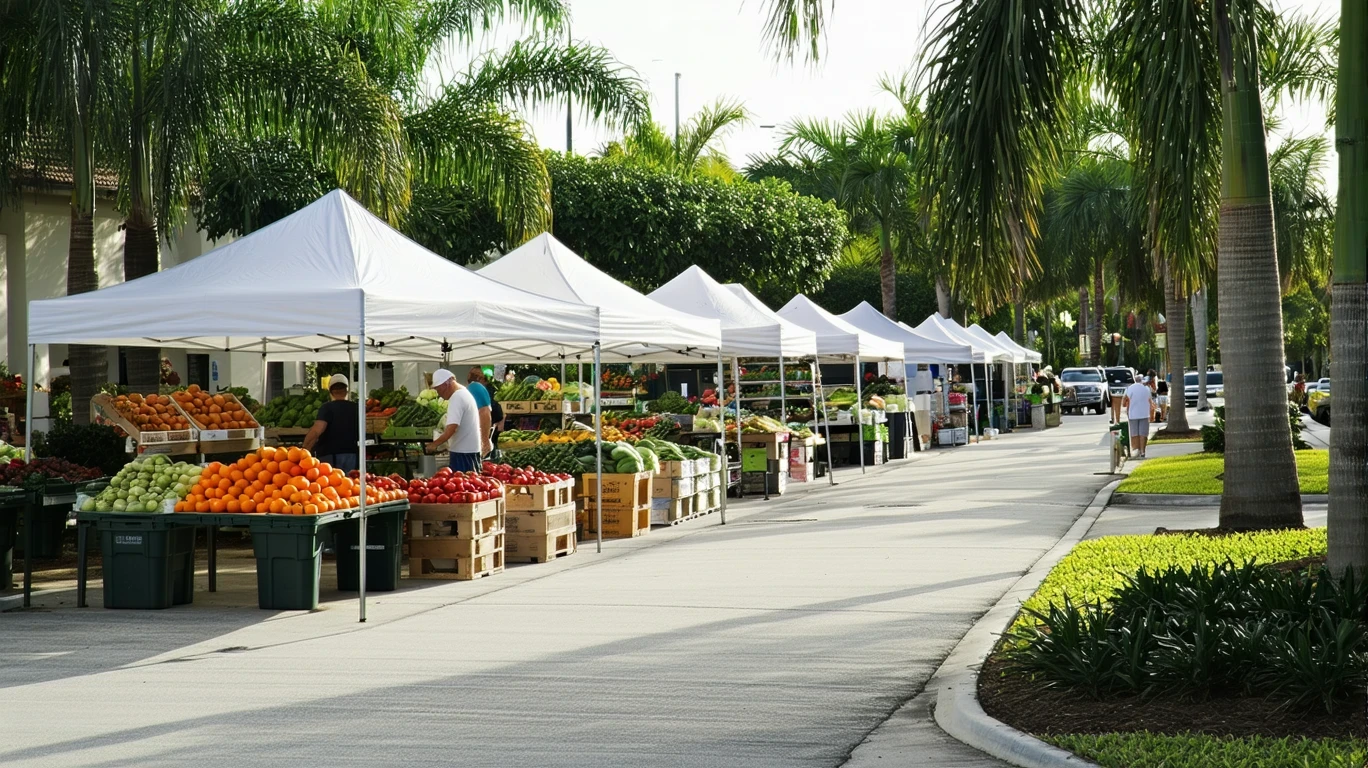
How Grocery Costs Feel in Miramar
Grocery prices in Miramar sit slightly above the national baseline, reflecting South Florida’s distribution patterns and the metro area’s position as a major import gateway. The regional price parity index of 101 suggests costs track close to the U.S. average overall, but food prices tend to carry a modest premium tied to logistics, real estate, and the year-round demand from both residents and seasonal visitors. For households moving from lower-cost metros in the Southeast or Midwest, the difference shows up quickly in weekly shopping trips—not dramatically, but enough to notice when restocking staples or feeding a family of four.
Singles and couples without children often absorb grocery costs without major lifestyle adjustments, especially if they’re accustomed to mid-tier or premium store formats. Families with multiple children, however, feel the pressure more acutely. The gap between discount and premium store tiers widens in metro Miami-Fort Lauderdale, and choosing where to shop becomes a meaningful lever for controlling monthly expenses. Store choice isn’t just about preference—it’s about managing exposure to price volatility across categories like dairy, meat, and fresh produce, which fluctuate more in coastal metros than in landlocked regions with tighter agricultural proximity.
Median household income in Miramar stands at $81,812 per year, which provides reasonable cushion for grocery spending compared to lower-income suburbs in the metro. Still, grocery costs represent a larger share of take-home pay for renters paying $1,840 per month in median gross rent, particularly when combined with utilities, transportation, and childcare. The city’s strong family infrastructure—high school density and integrated parks—attracts households with children, and those households face the steepest grocery bills. Understanding how food prices behave here, and which strategies actually reduce weekly outlays, matters most for families navigating tight budget planning.
Grocery Price Signals (Illustrative)
Item-level prices in Miramar reflect the regional adjustment applied to national baselines, offering a snapshot of how staple goods compare locally. These figures are derived estimates based on national baseline adjusted by regional price parity; not observed local prices. They illustrate relative positioning rather than exact checkout totals, and they don’t account for weekly promotions, loyalty discounts, or store-specific pricing strategies. The table below shows how common staples tend to price out in the Miramar area, providing context for comparison without implying a complete shopping list.
| Item | Illustrative Price |
|---|---|
| Bread (per pound) | $1.83/lb |
| Cheese (per pound) | $4.83/lb |
| Chicken (per pound) | $2.05/lb |
| Eggs (per dozen) | $2.37/dozen |
| Ground beef (per pound) | $6.77/lb |
| Milk (per half-gallon) | $4.11/half-gallon |
| Rice (per pound) | $1.07/lb |
Ground beef and cheese carry the highest per-pound costs, which compounds quickly for households preparing multiple meals per week with protein-heavy recipes. Chicken and rice remain relatively affordable anchors, and many Miramar families lean on these staples to stretch budgets without sacrificing nutrition. Eggs and milk prices sit in the moderate range, but both are sensitive to seasonal supply shifts and regional distribution bottlenecks, particularly during hurricane season when logistics slow and inventory tightens.
These prices don’t reflect the full spectrum of store tiers available in Miramar. Discount grocers often price staples 15–25% below these illustrative figures, while premium formats with organic selections, prepared foods, and specialty imports can run 20–40% higher. The gap between tiers is wide enough that a family of four shopping exclusively at discount stores versus premium stores could see a difference of several hundred dollars per month, even when buying similar quantities and categories.
Store Choice & Price Sensitivity
Grocery price pressure in Miramar varies significantly by store tier, and understanding these tiers helps households manage food costs more effectively than chasing individual item deals. Discount grocers focus on private-label goods, limited selection, and no-frills store formats, delivering the lowest per-item costs but requiring flexibility on brands and product variety. Mid-tier chains offer broader selection, frequent promotions, and loyalty programs, balancing price and convenience for households that value one-stop shopping. Premium stores emphasize organic produce, prepared meals, specialty imports, and higher service levels, catering to shoppers willing to pay more for quality, convenience, or dietary preferences.
Families with children—especially those managing tight budgets after covering housing and childcare—benefit most from discount and mid-tier stores. Singles and couples with higher discretionary income often gravitate toward premium formats, prioritizing convenience and quality over price optimization. The city’s grocery density sits in the medium-to-high range, with options concentrated along major corridors, meaning most residents can access multiple tiers within a short drive. However, walkable access to groceries remains limited outside specific pockets, so car ownership effectively determines store choice for most households.
Store loyalty programs and app-based promotions have become standard tools for managing grocery costs in metro Miami-Fort Lauderdale. Mid-tier chains frequently offer digital coupons, personalized discounts, and fuel rewards tied to spending thresholds, which can reduce effective prices by 5–10% for engaged shoppers. Discount grocers rarely offer loyalty programs but maintain consistently low baseline prices, making them the better choice for households that prefer predictable costs over promotional hunting. Premium stores occasionally run high-value promotions on organic or specialty items, but their everyday prices remain elevated enough that regular shopping there requires a larger grocery allocation.
What Drives Grocery Pressure Here
Income plays a defining role in how grocery costs feel in Miramar. At the median household income of $81,812 per year, food spending represents a manageable share of take-home pay for most families, but that cushion narrows quickly for renters or single-income households. Families earning below the median—particularly those with multiple children—face harder tradeoffs between food quality, variety, and budget adherence. Higher-income households can absorb price swings in categories like meat, dairy, and fresh produce without adjusting behavior, while lower-income families must respond immediately to price spikes by switching proteins, reducing portions, or shifting to shelf-stable alternatives.
Household size amplifies grocery pressure more than any other factor. A single adult or couple can navigate Miramar’s grocery landscape with minimal planning, even at mid-tier or premium stores. A family of four or five, however, burns through staples quickly, and the cumulative cost of feeding multiple children—especially teenagers—forces stricter store tier discipline and meal planning. Families with young children often face additional pressure from the need for specialty items like formula, baby food, or allergen-free products, which carry higher per-unit costs and limited availability at discount stores.
Regional distribution patterns in South Florida introduce seasonal variability that’s less pronounced in other parts of the country. Hurricane season disrupts supply chains, tightens inventory, and occasionally triggers temporary price spikes on shelf-stable goods, bottled water, and canned proteins. Produce prices fluctuate based on Florida’s own agricultural cycles and import flows from Latin America, creating windows of affordability for tropical fruits and vegetables that aren’t available year-round elsewhere. Households that adjust shopping habits seasonally—buying local citrus in winter, stocking up on shelf-stable goods before storm threats—can smooth out some of this volatility without sacrificing nutrition or variety.
Practical Ways People Manage Grocery Costs
Meal planning remains the most effective behavioral tool for controlling grocery spending in Miramar. Households that plan weekly menus before shopping avoid impulse purchases, reduce food waste, and buy only what they’ll actually use. Planning also enables strategic use of sales and promotions, allowing families to stock up on discounted proteins or pantry staples when prices dip. Cooking in bulk and freezing portions extends the value of ingredients, particularly for expensive items like ground beef, chicken thighs, or cheese, which can be portioned and stored for later use.
Store tier mixing—shopping discount grocers for staples and mid-tier chains for fresh produce or specialty items—gives households more control over total spending without sacrificing quality across the board. Many Miramar families buy rice, beans, canned goods, and frozen vegetables at discount stores, then supplement with fresh proteins and produce from mid-tier grocers that offer better selection and quality in those categories. This approach requires multiple stops but can reduce weekly grocery bills meaningfully compared to single-store shopping at premium formats.
Buying store brands instead of name brands delivers immediate savings on nearly every category, from dairy and bread to canned goods and snacks. Store-brand quality has improved significantly over the past decade, and most households find little difference in taste or nutrition for staples like milk, eggs, pasta, and frozen vegetables. Premium stores often carry their own private-label lines that compete directly with national brands on quality while undercutting them on price, making store brands a viable option even for shoppers who prioritize ingredient quality or organic certification.
Avoiding pre-packaged and prepared foods reduces per-meal costs substantially, though it requires more time and kitchen labor. Pre-cut vegetables, marinated proteins, and ready-to-heat meals carry convenience premiums of 30–60% compared to raw ingredients, and those premiums compound quickly for families buying them regularly. Households with time constraints—working parents, single-income families—often face a direct tradeoff between convenience and cost, and there’s no universal answer. The key is recognizing the premium and deciding consciously whether the time savings justify the expense, rather than defaulting to convenience without tracking the cumulative impact.
Groceries vs Eating Out (Directional)
The tradeoff between cooking at home and eating out in Miramar hinges on time, household size, and income flexibility. For singles and couples, the cost gap between a home-cooked meal and a casual restaurant meal narrows, especially when factoring in the time required to shop, prep, cook, and clean. A quick dinner out might cost $15–$25 per person at a mid-tier restaurant, while the same meal cooked at home might run $8–$12 per serving when accounting for ingredients, waste, and utilities. The savings exist, but they’re modest enough that convenience often wins for smaller households with disposable income.
Families with children face a much steeper cost differential. Feeding four or five people at a restaurant—even a casual chain—can easily reach $60–$100 before tip, while a comparable home-cooked meal might cost $20–$35 in ingredients. The savings multiply across weekly dinners, making home cooking a financial necessity for most families managing tight budgets. Eating out becomes an occasional treat rather than a regular habit, and many Miramar families reserve restaurant meals for weekends or special occasions, relying on home cooking for weeknight dinners.
Takeout and delivery introduce additional costs through service fees, delivery charges, and tips, which can add 25–40% to the base meal price. Households that rely on delivery apps for convenience during busy weeks often underestimate the cumulative expense, which can rival or exceed a full week’s grocery budget. The tradeoff isn’t just financial—it’s also about control over ingredients, portion sizes, and nutritional quality, all of which favor home cooking for families prioritizing health or managing dietary restrictions.
FAQs About Grocery Costs in Miramar (2026)
Is it cheaper to shop in bulk in Miramar? Bulk buying reduces per-unit costs on shelf-stable goods like rice, pasta, canned goods, and frozen proteins, but it requires upfront cash and storage space. Families with multiple children benefit most, while singles and couples often struggle to use bulk quantities before expiration.
Which stores in Miramar are best for low prices? Discount grocers deliver the lowest baseline prices on staples, while mid-tier chains offer competitive pricing with broader selection and frequent promotions. Premium stores rarely compete on price but provide higher quality and convenience for shoppers willing to pay more.
How much more do organic items cost in Miramar? Organic products typically carry a premium over conventional equivalents, with the gap widening for fresh produce, dairy, and proteins. Households prioritizing organic goods should expect meaningfully higher grocery bills unless they focus on seasonal produce and store-brand organic lines.
How do grocery costs for two adults in Miramar tend to compare to nearby cities? Miramar’s grocery prices track close to the metro average, sitting slightly above national baselines but below the premiums seen in coastal enclaves or high-density urban cores. Nearby cities with similar demographics and store access show comparable pricing, though individual store choice matters more than city boundaries.
How do households in Miramar think about grocery spending when cooking at home? Most families view grocery spending as a controllable expense that responds directly to planning, store choice, and cooking habits. Households that prioritize home cooking and strategic shopping can keep food costs predictable, while those relying on convenience or premium formats face higher and more variable spending.
Do grocery prices in Miramar fluctuate seasonally? Yes, particularly for fresh produce and proteins. Hurricane season can tighten supply chains and temporarily raise prices on shelf-stable goods, while Florida’s agricultural cycles create windows of affordability for citrus, tomatoes, and other local crops. Households that adjust shopping habits seasonally can smooth out some of this volatility.
How does grocery spending fit into overall cost of living in Miramar? Groceries represent a meaningful but manageable share of household budgets, particularly for families with children. Housing and transportation typically consume larger portions of income, but food costs remain one of the few categories where behavior and store choice deliver immediate, measurable savings.
How Groceries Fit Into the Cost of Living in Miramar
Grocery costs in Miramar sit downstream from housing and utilities in terms of budget pressure, but they’re more responsive to household behavior than either of those fixed or semi-fixed expenses. Renters paying $1,840 per month and homeowners managing mortgage payments, property taxes, and insurance face limited flexibility on shelter costs. Groceries, by contrast, respond directly to store choice, meal planning, and cooking habits, making them one of the few categories where intentional effort translates into measurable savings without sacrificing quality of life.
For families, grocery spending interacts closely with childcare, transportation, and time constraints. Working parents juggling long commutes—average 29 minutes in Miramar—often face tradeoffs between cooking at home and buying convenience foods or eating out. The city’s car-oriented mobility texture and limited walkable grocery access mean most households drive to shop, adding fuel costs and time to the equation. Families that batch shopping trips, plan meals around sales, and cook in bulk can reduce both grocery and transportation expenses simultaneously, though it requires upfront planning and weekend prep time.
The full picture of how groceries fit into Miramar’s cost structure—including interactions with dining out, household size, and income—is covered in depth in the city’s monthly budget breakdown. That resource walks through how food costs layer with housing, utilities, transportation, and discretionary spending to form a complete household budget, helping movers and residents understand where money actually goes and which categories offer the most control. Grocery costs matter, but they’re one piece of a larger financial puzzle that requires balancing fixed obligations, variable expenses, and lifestyle priorities.
How this article was built: In addition to public economic data, this article incorporates location-based experiential signals derived from anonymized geographic patterns—such as access density, walkability, and land-use mix—to reflect how day-to-day living actually feels in Miramar, FL.