
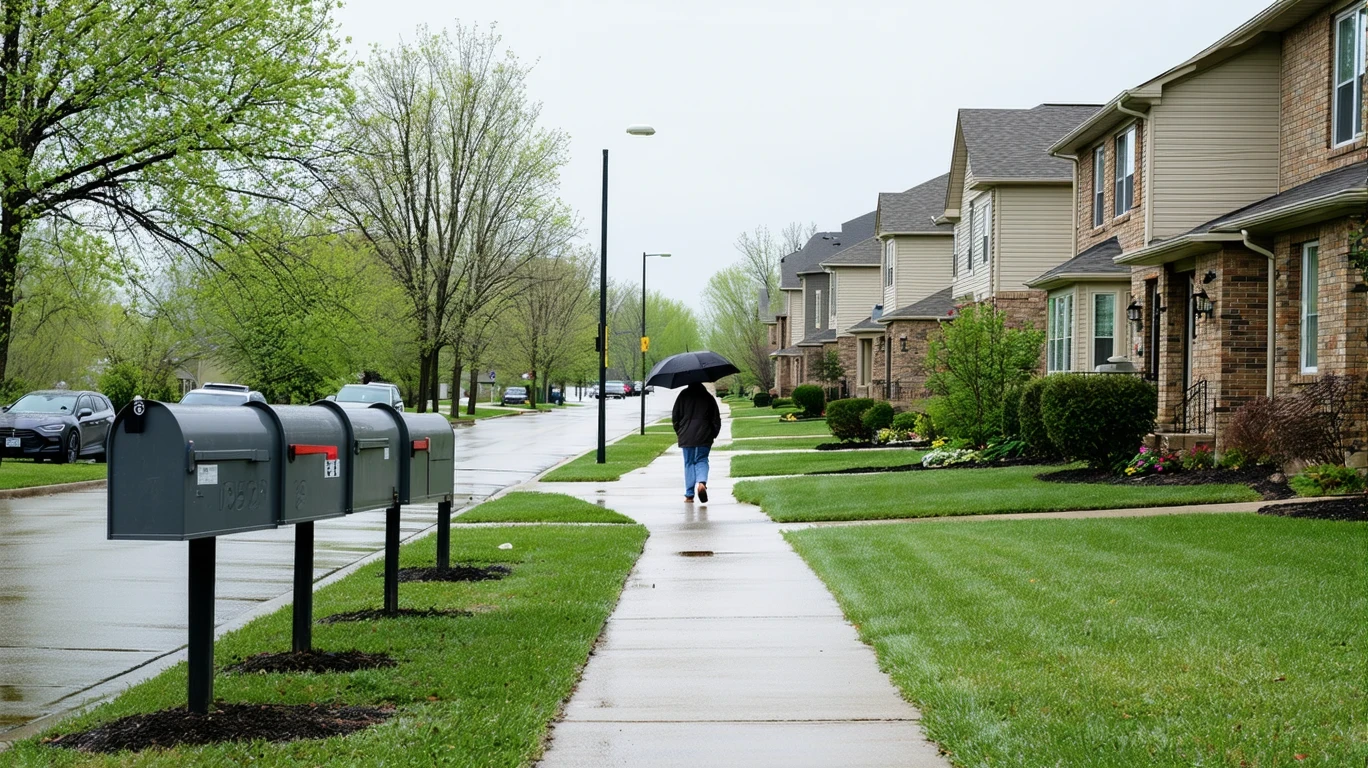
Minneapolis median home value: $328,700 | Saint Paul family infrastructure: Schools and playgrounds both meet density thresholds | Natural gas heating cost difference: $11.17/MCF (Minneapolis) vs $9.43/MCF (Saint Paul) | Both cities: Rail transit present, walkable pockets, broadly accessible groceries
Minneapolis and Saint Paul sit across the river from each other in the same metro area, share the same regional price environment, and offer nearly identical access to transit, groceries, and green space. Yet the cost experience between them differs in ways that matter deeply to specific households in 2026. Families weighing school and playground density, healthcare access, and housing entry barriers will find meaningful structural differences. Singles and couples evaluating commute friction, heating exposure, and transportation flexibility will encounter distinct tradeoffs.
This isn’t a question of which city costs less overall—it’s about where cost pressure concentrates, how predictably it shows up, and which households feel it most acutely. The decision hinges on whether your household is more exposed to housing entry costs, ongoing utility volatility, transportation dependence, or the presence of family-oriented infrastructure. Both cities reward different priorities; the better fit depends entirely on which costs dominate your day-to-day reality.
Housing Costs
Minneapolis shows a median home value of $328,700 and median gross rent of $1,267 per month, providing clear entry thresholds for both ownership and rental markets. These figures reflect the barrier households face when securing housing, not ongoing affordability—they signal what it takes to access the market in the first place. For renters, $1,267 represents the baseline obligation before utilities, parking, or renter’s insurance. For buyers, $328,700 sets the down payment requirement, mortgage structure, and property tax exposure for years to come.
Saint Paul’s housing data isn’t available in the same numeric form, but the city’s housing pressure operates through different mechanisms. Neighborhoods vary widely in age, density, and housing stock composition, meaning entry costs and ongoing obligations shift depending on proximity to transit corridors, school districts, and commercial nodes. Renters may encounter more variability in unit size and lease terms; buyers face different property tax structures and maintenance expectations tied to older housing stock in some areas. Without a single median to anchor expectations, households must evaluate housing cost exposure neighborhood by neighborhood, balancing proximity to work, schools, and services against rent or mortgage obligations.
The difference matters most for first-time buyers and families prioritizing space. Minneapolis offers more transparent entry thresholds, making it easier to plan down payments and monthly obligations in advance. Saint Paul requires more localized research but may offer pockets of lower entry costs or larger homes in exchange for longer commutes or older infrastructure. Renters in both cities face similar lease structures, but Minneapolis provides clearer baseline expectations, while Saint Paul rewards flexibility and willingness to explore neighborhoods with varying cost profiles.
Housing takeaway: Minneapolis exposes households to known, measurable housing entry costs; Saint Paul requires more neighborhood-specific evaluation but may offer variability that benefits households willing to trade convenience for space or lower entry barriers. Families prioritizing predictability and transparent budgeting may prefer Minneapolis; those comfortable with localized research and flexible housing search strategies may find Saint Paul offers more tailored fits.
Utilities and Energy Costs
Electricity rates stand identical in both cities at 14.98¢/kWh, meaning cooling, lighting, and appliance costs behave the same way regardless of location. The difference emerges in heating exposure: natural gas costs $11.17 per MCF in Minneapolis versus $9.43 per MCF in Saint Paul. Over Minnesota’s long heating season—spanning late fall through early spring—this gap compounds for households in single-family homes, older construction, or poorly insulated units. The difference isn’t dramatic on a per-unit basis, but it accumulates steadily across months of consistent heating demand.
Housing stock age and form amplify this difference. Older homes with original windows, minimal insulation, and forced-air systems consume more natural gas per square foot than newer construction with modern HVAC and better envelope performance. Single-family homes expose households to higher baseline heating costs than apartments, where shared walls and smaller square footage reduce per-unit consumption. In Minneapolis, higher natural gas prices mean these structural factors translate into steeper monthly volatility during cold months. In Saint Paul, lower gas prices soften the impact, though poorly insulated homes still face meaningful seasonal swings.
Household size and home age determine who feels this difference most. A family of four in a 1970s single-family home will notice Minneapolis’s higher heating costs more acutely than a couple in a newer apartment, where shared walls and modern systems limit exposure. Renters in older buildings face unpredictable utility bills regardless of city, but Saint Paul’s lower natural gas price provides a modest buffer. Homeowners planning multi-year stays should weigh heating cost exposure against other priorities—Minneapolis’s higher gas price becomes a recurring obligation, while Saint Paul’s lower rate offers slightly more predictable winter budgets.
Utility takeaway: Households in older, larger homes experience more heating cost volatility in Minneapolis due to higher natural gas prices; Saint Paul’s lower gas rate reduces seasonal swings but doesn’t eliminate them. Families in single-family homes and renters in older buildings feel this difference most; couples in newer apartments see minimal impact. Predictability favors Saint Paul for heating-sensitive households; Minneapolis’s identical electricity rate means cooling and baseline usage behave the same.
Groceries and Daily Expenses
Both cities operate within the same regional price environment, with Minneapolis showing a Regional Price Parity index of 100 and Saint Paul at 98—functionally identical for grocery and everyday spending. Derived estimates for staples like bread ($1.81/lb in both cities), chicken (roughly $2.01–$2.03/lb), and milk ($3.95–$4.07/half-gallon) reflect this near-parity. The difference in day-to-day spending comes not from price levels but from access patterns, store concentration, and household shopping strategies.
Experiential signals show both cities offer broadly accessible food and grocery options, with densities exceeding high thresholds. This means households in either city can reach multiple grocery stores, prepared food options, and convenience retailers without long drives or significant planning friction. The practical difference emerges in how neighborhoods cluster these options: some areas concentrate big-box stores along commercial corridors, while others integrate smaller grocers and specialty shops into walkable blocks. Households prioritizing one-stop shopping and bulk buying may find certain neighborhoods more convenient; those valuing walkable access to fresh produce and quick errands may prefer denser, mixed-use areas.
Grocery cost pressure varies more by household size and shopping habits than by city. Single adults and couples can absorb price variability by shifting between discount chains, farmers markets, and prepared food options depending on schedule and convenience needs. Families managing larger volumes face less flexibility—bulk buying becomes essential, and access to warehouse clubs or discount grocers matters more than proximity to specialty stores. Dining out and convenience spending creep affects all household types, but the impact depends on walkability and transit access: neighborhoods with broadly accessible food options reduce the friction cost of grabbing takeout or running quick errands, which can either increase spending or reduce time burden depending on household priorities.
Grocery takeaway: Price levels behave nearly identically across both cities; the difference lies in access patterns and shopping strategy fit. Families prioritizing bulk buying and predictable weekly shopping may prefer neighborhoods with concentrated big-box access; singles and couples valuing walkable convenience and flexible meal planning benefit from denser, mixed-use areas. Grocery cost sensitivity is driven more by household size and habits than by city-level price differences.
Taxes and Fees

Property taxes, sales taxes, and city-specific fees shape ongoing cost obligations differently for homeowners and renters in both cities. Minneapolis homeowners face property tax structures tied to assessed home values, meaning the $328,700 median translates into a recurring annual obligation that adjusts with reassessments and levy changes. Saint Paul’s property tax mechanisms operate similarly, but without published median home values, the baseline exposure varies more by neighborhood, housing age, and proximity to commercial districts. Both cities rely on property taxes to fund schools, infrastructure, and services, but the rate structures and assessment practices differ enough to create meaningfully different obligations for comparable homes.
Sales taxes apply uniformly within the metro area, meaning everyday purchases—groceries, clothing, household goods—face the same tax burden regardless of city. The difference emerges in city-specific fees: trash collection, water and sewer charges, parking permits, and special assessments for street repairs or infrastructure upgrades. Some neighborhoods bundle these into predictable monthly charges; others assess them annually or as one-time levies tied to capital projects. Homeowners planning to stay several years should evaluate not just current fee structures but the likelihood of future assessments, which vary by neighborhood age and infrastructure condition.
Renters encounter property taxes and fees indirectly, as landlords pass costs through lease terms or annual rent adjustments. Predictability depends more on lease structure and landlord practices than on city-level tax policy. Homeowners, by contrast, face direct exposure: property tax bills arrive annually, and special assessments can introduce unexpected obligations that strain budgets if not anticipated. Long-term residents benefit from understanding how tax levies and fee structures have changed over time, as this signals future volatility better than current rates alone.
Tax and fee takeaway: Homeowners in Minneapolis face more transparent property tax exposure tied to published median values; Saint Paul requires neighborhood-specific research to understand baseline obligations. Both cities impose similar sales tax burdens, but city-specific fees vary by neighborhood and housing type. Renters experience these costs indirectly and unpredictably; homeowners planning multi-year stays should evaluate not just current rates but historical levy patterns and infrastructure condition to anticipate future assessments.
Transportation & Commute Reality
Both cities show rail transit present and substantial pedestrian infrastructure, with bike-to-road ratios exceeding high thresholds. This means households in either city can access public transit, bike lanes, and walkable corridors without requiring a car for every trip. The practical difference emerges in commute patterns and fuel costs: Minneapolis shows an average commute of 22 minutes, with 28% of workers facing long commutes and only 3.8% working from home. Gas prices stand at $3.75 per gallon in Minneapolis versus $3.44 in Saint Paul—a meaningful gap for households driving daily.
The commute time and gas price difference compounds for car-dependent households. A worker driving 25 miles round trip at 25 MPG consumes one gallon per day; over a five-day workweek, Minneapolis’s higher gas price adds measurable cost compared to Saint Paul. The 22-minute average commute in Minneapolis suggests many workers live close to job centers, but the 28% long-commute share indicates a significant minority faces extended drive times, amplifying fuel cost exposure. Saint Paul’s lower gas price softens this burden, though without published commute data, it’s unclear whether workers there face similar or shorter average drive times.
Transit and bike infrastructure reduce car dependence for households prioritizing walkability and rail access, but the presence of infrastructure doesn’t eliminate fuel costs for those who drive. Families with multiple workers, school drop-offs, or suburban job locations still rely on cars for most trips, making gas price differences and commute distances primary cost drivers. Singles and couples living near rail stations and working in dense job centers can minimize driving, but the 3.8% work-from-home rate in Minneapolis suggests most workers still commute regularly, whether by car, transit, or bike.
Cost Structure Comparison
Housing pressure dominates the cost experience differently in each city. Minneapolis exposes households to known entry thresholds—$328,700 for ownership, $1,267 for rent—making it easier to plan down payments, monthly obligations, and long-term budgets. Saint Paul requires more neighborhood-specific evaluation, with housing costs varying by proximity to transit, schools, and commercial nodes. Families prioritizing transparent budgeting and predictable entry costs may find Minneapolis easier to navigate; those willing to research neighborhoods and trade convenience for space may discover more tailored fits in Saint Paul.
Utilities introduce slightly more volatility in Minneapolis due to higher natural gas prices, particularly for households in older, larger homes. The $11.17/MCF rate versus Saint Paul’s $9.43/MCF compounds over Minnesota’s long heating season, creating steeper seasonal swings for families in single-family homes or poorly insulated units. Saint Paul’s lower gas price offers more predictable winter budgets, though housing stock age and insulation quality still determine baseline exposure. Electricity costs behave identically, meaning cooling and appliance usage don’t differentiate the cities.
Daily living costs—groceries, dining, convenience spending—operate at near-identical price levels, with both cities showing Regional Price Parity indices within two points of each other. The difference lies in access patterns: both cities offer broadly accessible food and grocery options, but neighborhood-level clustering affects whether households prioritize bulk buying at big-box stores or walkable access to smaller grocers. Families managing larger volumes benefit from concentrated commercial corridors; singles and couples valuing convenience and flexibility prefer denser, mixed-use areas.
Transportation patterns matter more for car-dependent households. Minneapolis’s higher gas price and documented 22-minute average commute create measurable fuel cost exposure for workers driving daily, especially the 28% facing long commutes. Saint Paul’s lower gas price reduces this burden, though without published commute data, it’s unclear whether workers there face similar drive times. Both cities offer rail transit and notable bike infrastructure, but the low work-from-home rate in Minneapolis (3.8%) suggests most workers still commute regularly, making fuel costs a recurring obligation rather than an occasional expense.
For households sensitive to housing entry barriers, Minneapolis offers more transparent thresholds and predictable budgeting; Saint Paul rewards localized research and flexibility. For households exposed to heating costs in older or larger homes, Saint Paul’s lower natural gas price provides more stable winter budgets. For car-dependent workers, Saint Paul’s lower gas price reduces daily commute costs, though Minneapolis’s shorter average commute may offset this for some. The better choice depends on which costs dominate the household—predictability versus flexibility, heating exposure versus housing entry, commute distance versus fuel price.
How the Same Income Feels in Minneapolis vs Saint Paul
Single Adult
Housing becomes the first non-negotiable cost, with Minneapolis offering clear rent thresholds around $1,267 per month and Saint Paul requiring neighborhood-by-neighborhood evaluation. Flexibility exists in transportation—both cities offer rail transit and walkable pockets, reducing car dependence for those living near stations. Commute friction differs: Minneapolis’s documented 22-minute average suggests shorter drive times for many workers, while Saint Paul’s lower gas price softens fuel costs for those who drive. The role of housing form matters—apartments in denser areas reduce utility exposure, while single-family rentals increase heating costs, especially in Minneapolis with higher natural gas prices.
Dual-Income Couple
Housing entry costs dominate early budgeting, with Minneapolis’s $328,700 median setting clear down payment and mortgage expectations, while Saint Paul offers more variability depending on neighborhood and housing age. Flexibility emerges in commute patterns—if both partners work near transit lines, car dependence drops and fuel costs become occasional rather than daily. Where flexibility disappears: heating exposure in older homes, particularly in Minneapolis, where higher natural gas prices compound seasonal volatility. The role of commute friction shifts based on job locations—two workers driving daily face steeper fuel costs in Minneapolis, while couples leveraging transit or bike infrastructure see minimal transportation pressure in either city.
Family with Kids
School and playground density become non-negotiable first, with Saint Paul showing stronger family infrastructure—both schools and playgrounds meet density thresholds, compared to Minneapolis where playgrounds fall below thresholds despite adequate school density. Flexibility exists in housing form and neighborhood choice, but housing entry costs in Minneapolis create front-loaded pressure, while Saint Paul’s variability requires more research to find the right fit. Where flexibility disappears: healthcare access, with Minneapolis offering hospital presence versus Saint Paul’s clinic-only infrastructure, and heating costs in single-family homes, where Minneapolis’s higher natural gas prices create steeper seasonal swings. The role of commute friction intensifies—families juggling school drop-offs, work commutes, and errands face time costs that compound cash costs, making Minneapolis’s shorter average commute and Saint Paul’s lower gas price competing advantages depending on household logistics.
Decision Matrix: Which City Fits Which Household?
| Decision factor | If you’re sensitive to this… | Minneapolis tends to fit when… | Saint Paul tends to fit when… |
|---|---|---|---|
| Housing entry + space needs | You prioritize transparent budgeting and known thresholds over neighborhood variability | You value predictable rent and home price baselines that simplify planning | You’re willing to research neighborhoods to find tailored fits trading convenience for space |
| Transportation dependence + commute friction | You drive daily and fuel costs compound over time | You benefit from shorter average commute times despite higher gas prices | You prioritize lower fuel costs and can absorb potential commute variability |
| Utility variability + home size exposure | You live in an older or larger home and heating costs dominate winter budgets | You accept higher natural gas prices in exchange for other housing or location priorities | You value lower heating costs and more predictable seasonal utility swings |
| Grocery strategy + convenience spending creep | You manage large volumes or prioritize bulk buying over walkable access | You prefer concentrated commercial corridors with big-box access | You value denser mixed-use areas with walkable grocers and flexible shopping |
| Fees + friction costs (HOA, services, upkeep) | You want transparent property tax exposure and predictable ongoing obligations | You benefit from published median values that clarify baseline tax burdens | You’re comfortable evaluating neighborhood-specific fee structures and assessment histories |
| Time budget (schedule flexibility, errands, logistics) | You juggle school drop-offs, work commutes, and household errands daily | You prioritize shorter average commute times and hospital presence for urgent care | You value stronger family infrastructure with schools and playgrounds both meeting thresholds |
Lifestyle Fit
Both cities offer rail transit, walkable pockets, and broadly accessible groceries, with park densities exceeding high thresholds and water features integrated throughout. The lifestyle difference emerges in family infrastructure and healthcare access. Saint Paul shows both schools and playgrounds meeting density thresholds, creating more evenly distributed family-oriented amenities across neighborhoods. Minneapolis shows adequate school density but playgrounds fall below thresholds, meaning families may need to travel farther for outdoor play spaces. Healthcare access differs meaningfully: Minneapolis has hospital presence, providing emergency and specialized care locally, while Saint Paul relies on clinics and pharmacies for routine care, requiring travel to nearby hospitals for urgent needs.
Commute patterns shape daily rhythms differently. Minneapolis’s 22-minute average commute and 28% long-commute share suggest most workers live relatively close to job centers, though a significant minority faces extended drive times. The low work-from-home rate (3.8%) indicates most workers commute regularly, whether by car, transit, or bike. Saint Paul’s commute data isn’t available, but the presence of rail transit and notable bike infrastructure suggests similar flexibility for households living near transit corridors. The difference in gas prices—$3.75 in Minneapolis versus $3.44 in Saint Paul—compounds for car-dependent workers, making fuel costs a recurring consideration for those driving daily.
Urban form and mixed land use appear nearly identical, with both cities showing average building levels in the medium range and both residential and commercial land use detected throughout. This creates neighborhoods where homes, shops, and services intermingle, reducing the need for long drives to run errands or access daily needs. Green space access stands equally strong in both cities, with park densities exceeding high thresholds and water features present, offering families and outdoor enthusiasts ample options for recreation without leaving city limits. The lifestyle tradeoff isn’t about access to amenities—it’s about which amenities matter most to your household and how daily logistics (commute, errands, school runs, healthcare visits) fit your schedule and priorities.
Minneapolis average commute: 22 minutes | Saint Paul family infrastructure: Schools and playgrounds both meet density thresholds | Both cities: Rail transit present, park density exceeds high thresholds, water features integrated
FAQ
Is Minneapolis or Saint Paul cheaper for families with kids in 2026?
The answer depends on which costs dominate your household. Saint Paul shows stronger family infrastructure, with both schools and playgrounds meeting density thresholds, compared to Minneapolis where playgrounds fall below thresholds. Minneapolis offers hospital presence for urgent care, while Saint Paul relies on clinics. Housing entry costs in Minneapolis are more transparent ($328,700 median home value, $1,267 median rent), while Saint Paul requires neighborhood-specific research. Heating costs favor Saint Paul due to lower natural gas prices ($9.43/MCF vs $11.17/MCF), which matters more for families in older or larger homes. Families prioritizing predictable housing budgets and hospital access may prefer Minneapolis; those valuing evenly distributed playgrounds and lower heating costs may find Saint Paul a better fit.
How do commute costs compare between Minneapolis and Saint Paul in 2026?
Minneapolis shows an average commute of 22 minutes, with 28% of workers facing long commutes, while Saint Paul’s commute data isn’t available. Gas prices differ meaningfully: $3.75/gallon in Minneapolis versus $3.44/gallon in Saint Paul. For car-dependent workers driving daily, Saint Paul’s lower fuel costs reduce recurring expenses, though Minneapolis’s shorter average commute may offset this for some households. Both cities offer rail transit and notable bike infrastructure, reducing car dependence for those living near transit corridors. The better fit depends on whether your household prioritizes shorter drive times or lower fuel costs, and whether job locations and daily logistics allow for transit or bike commuting.
Which city has lower utility bills, Minneapolis or Saint Paul, in 2026?
Electricity rates are identical at 14.98¢/kWh, so cooling and appliance costs behave the same in both cities. The difference emerges in heating exposure: natural gas costs $11.17/MCF in Minneapolis versus $9.43/MCF in Saint Paul. Over Minnesota’s long heating season, this gap compounds for households in single-family homes, older construction, or poorly insulated units. Saint Paul’s lower gas price provides more predictable winter budgets, though housing stock age and insulation quality still determine baseline exposure. Families in older, larger homes feel this difference most acutely; couples in newer apartments see minimal impact. Utility cost pressure depends more on home age and size than on city-level rate differences, but Saint Paul’s lower heating costs offer a modest buffer for heating-sensitive households.
Do Minneapolis and Saint Paul have similar grocery costs in 2026?
Yes, both cities operate within the same regional price environment, with Minneapolis showing a Regional Price Parity index of 100 and Saint Paul at 98—functionally identical for grocery spending. Derived estimates for staples like bread, chicken, and milk reflect this near-parity. The difference lies in access patterns, not price levels. Both cities offer broadly accessible food and grocery options, with densities exceeding high thresholds. Households prioritizing bulk buying and one-stop shopping may prefer neighborhoods with concentrated big-box stores; those valuing walkable access to fresh produce and quick errands benefit from denser, mixed-use areas. Grocery cost sensitivity is driven more by household size and shopping habits than by city-level price differences.
What’s the biggest cost difference between living in Minneapolis versus Saint Paul in 2026?
Housing entry costs and family infrastructure create the most meaningful differences. Minneapolis offers transparent housing thresholds ($328,700 median home value, $1,267 median rent), making budgeting more predictable, while Saint Paul requires neighborhood-specific research with more variability in entry costs. Saint Paul shows stronger family infrastructure, with both schools and playgrounds meeting density thresholds, compared to Minneapolis where playgrounds fall below thresholds. Healthcare access differs: Minneapolis has hospital presence, while Saint Paul relies on clinics. Heating costs favor Saint Paul due to lower natural gas prices, and fuel costs favor Saint Paul due to lower gas prices. The biggest difference isn’t a single cost category—it’s where cost pressure concentrates for your specific household type and priorities.
Conclusion
Minneapolis and Saint Paul don’t compete on total cost—they offer different cost structures that fit different household priorities. Minneapolis provides transparent housing entry thresholds, hospital presence, and shorter average commutes, making it easier to plan budgets and access urgent care. Saint Paul offers stronger family infrastructure with evenly distributed schools and playgrounds, lower heating costs, and lower fuel prices, benefiting families in older homes and car-dependent workers. Both cities share identical access to rail transit, walkable pockets, broadly accessible groceries, and integrated green space, meaning lifestyle amenities don’t differentiate them—cost pressure does.
The better fit depends entirely on which costs dominate your household. Families prioritizing predictable housing budgets and hospital access may find Minneapolis more straightforward; those valuing lower heating exposure and stronger playground density may prefer Saint Paul. Car-dependent workers benefit from Saint Paul’s lower gas prices, while those with shorter commutes may find Minneapolis’s 22-minute average more valuable. Singles and couples face similar tradeoffs around housing entry, transit access, and utility exposure, with the decision hinging on whether transparency or flexibility matters more. Both cities reward specific priorities—neither offers a universal cost advantage, and that’s precisely why the choice requires understanding where your household’s cost pressure concentrates most.
How this article was built: In addition to public economic data, this article incorporates location-based experiential signals derived from anonymized geographic patterns—such as access density, walkability, and land-use mix—to reflect how day-to-day living actually feels in Minneapolis, MN.