
74 out of 100 residents say they’re happy in Minneapolis — but happiness here isn’t about perfection. It’s about alignment. Minneapolis tends to reward people who value walkable pockets, green space woven into daily life, and a strong sense of cultural identity. It tends to frustrate those expecting uniform suburban convenience or year-round outdoor ease. The city’s emotional tone reflects a place that’s proud of its infrastructure, protective of its character, and still negotiating what growth should look like.
Understanding whether Minneapolis feels like a good fit means understanding the tradeoffs that shape everyday experience: where pedestrian life thrives and where it thins out, how transit changes mobility without eliminating car dependency entirely, and how the long heating season affects both budget planning and outdoor rhythm. This isn’t a city that works for everyone — but for those whose priorities align with its structure, it tends to feel deeply livable.
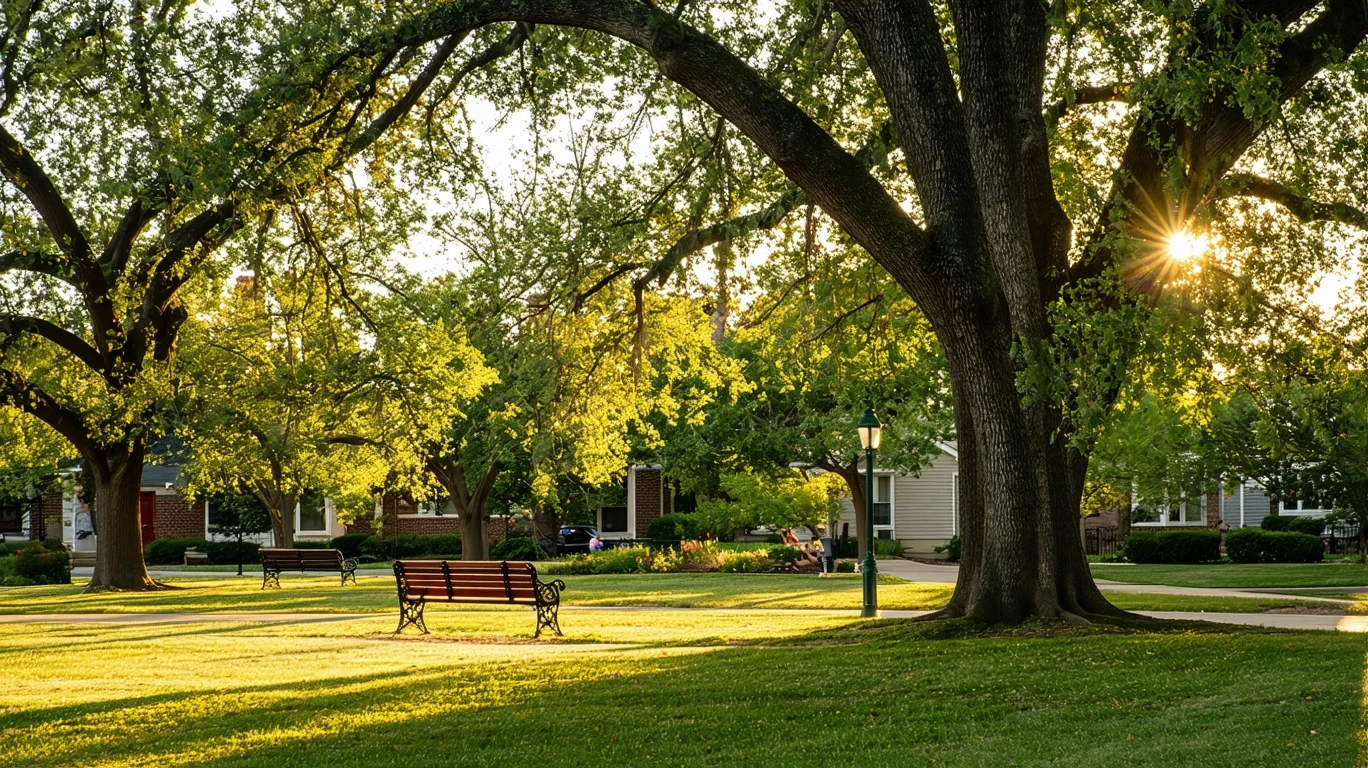
What Defines the Minneapolis Vibe
Minneapolis carries an emotional texture shaped by contrast. It’s a city where you can walk to a farmers’ market along a tree-lined boulevard in the morning and still need a car to reach certain errands by evening. Where summer feels abundant — lakes accessible, bike lanes active, patios full — and winter demands a different kind of commitment. Where neighborhood pride runs deep, but so does tension over development, density, and who gets to define “Minneapolis character.”
People who thrive here tend to value infrastructure that supports multiple modes of living. The pedestrian-to-road ratio exceeds high thresholds in many areas, meaning sidewalks, crossings, and pathways are woven into the street network in ways that make walking feel natural, not like an afterthought. Rail service is present, and bike infrastructure is notable throughout parts of the city, giving households real alternatives to driving for some trips. Food and grocery density exceeds high thresholds, meaning daily errands are broadly accessible without long drives.
But this accessibility isn’t uniform. The city’s structure creates pockets of walkability rather than blanket coverage, and that variation shapes how people experience daily logistics. Some neighborhoods feel like urban villages; others still require a car for most tasks. That unevenness is part of the city’s identity, and it’s a source of both pride and frustration depending on where you live and what you expected.
Social Media Buzz in Minneapolis
On platforms like Reddit, Facebook groups, and X, Minneapolis residents tend to talk about their city with a mix of defensiveness and affection. Conversations often circle around a few recurring themes: the bike infrastructure and trail systems, the lakes and parks, the food scene, and the winter. There’s pride in the city’s progressive identity and cultural offerings, but also fatigue around conversations that reduce Minneapolis to a single narrative.
Here’s the kind of sentiment you’ll encounter:
“People who complain about winter here just aren’t dressing right. You either embrace it or you’re miserable half the year.”
“The Chain of Lakes is the reason I stay. I can bike to work, run after dinner, and never feel like I’m missing out on nature.”
“It’s frustrating when people act like the whole city is the same. My neighborhood feels nothing like downtown, and that’s exactly what I wanted.”
Discussion tends to reflect a city that’s confident in its strengths but sensitive to oversimplification. Residents defend the winter not because it’s easy, but because it’s part of the deal — and for many, the summer payoff and year-round park access make it worth it. There’s also a recurring theme of neighborhood loyalty: people identify strongly with their part of the city and bristle when it’s lumped into a single story.
Local News Tone
Local coverage in Minneapolis tends to frame the city through themes of growth, identity, and infrastructure. Headlines and story angles often reflect ongoing debates about density, development, transit expansion, and how to preserve neighborhood character while accommodating change. The tone is rarely celebratory or alarmist in isolation — it’s more often exploratory, reflecting a city in conversation with itself.
Typical topic buckets include:
- “Community Debates What Growth Should Look Like”
- “New Bike Lanes Spark Discussion on Street Use”
- “Park Access and Equity Remain Central to City Planning”
- “Residents Weigh Density vs Neighborhood Character”
- “Winter Preparedness and Seasonal Infrastructure Challenges”
The framing tends to assume readers care deeply about how the city evolves, and it reflects a place where civic engagement is expected, not exceptional. That can feel energizing to people who want to be part of shaping their community, and exhausting to those who just want things to work without constant negotiation.
Review-Based Public Perception
On platforms like Google, Yelp, and neighborhood forums, Minneapolis earns praise for its parks, its food diversity, its bike-friendly infrastructure, and its cultural institutions. People who expected a mid-sized city with big-city amenities tend to feel delighted. Those who wanted consistent suburban ease or year-round outdoor comfort tend to feel let down.
Common positive themes include appreciation for the integrated green space — park density exceeds high thresholds, and water features are present throughout the city, making outdoor access feel woven into daily life rather than a weekend destination. The presence of rail transit and notable bike infrastructure earns frequent mention from people who value mobility options beyond driving.
Common critiques focus on winter’s length and intensity, the variability in walkability depending on neighborhood, and the tension between wanting urban texture and needing a car for certain errands. Some reviews reflect frustration that the city doesn’t fit neatly into “urban” or “suburban” categories — it’s both, depending on where you are and what you’re trying to do.
Neighborhood variation plays a significant role in perception. Newer planned areas tend to feel more car-oriented, while older pockets near the lakes or along transit corridors feel more pedestrian-friendly. That creates a wide range of experiences under the same city name, and it means lifestyle needs and location choice are tightly linked.
Comparison to Nearby Cities
| Aspect | Minneapolis | St. Paul | Bloomington |
|---|---|---|---|
| Walkability | Walkable pockets with strong pedestrian infrastructure in parts of city | Neighborhood-focused, quieter, more residential feel | Car-oriented with suburban convenience |
| Transit Access | Rail present, notable bike infrastructure | Bus-focused, less rail coverage | Limited transit, car-dependent |
| Parks & Outdoors | Integrated green space, lakes central to identity | Strong park system, river-focused | Parks present but less central to daily life |
| Urban Character | Mixed building heights, landuse mix present | Lower-rise, historic, neighborhood-oriented | Suburban, commercial corridors, lower density |
| Vibe | Progressive, bike-friendly, culturally engaged | Quieter, family-oriented, community-focused | Convenient, suburban, retail-accessible |
Minneapolis, St. Paul, and Bloomington sit close together geographically but offer distinct emotional experiences. Minneapolis tends to attract people who want urban texture without full downtown intensity — walkable neighborhoods, transit options, bike infrastructure, and cultural engagement. St. Paul offers a quieter, more neighborhood-focused feel with strong community identity but less transit coverage and fewer walkable pockets. Bloomington delivers suburban convenience with car-oriented access to retail and dining, but less pedestrian infrastructure and fewer green space integration.
If you value mobility options, bike culture, and integrated parks, Minneapolis tends to fit better. If you want a quieter, more residential pace with strong neighborhood identity, St. Paul may feel more aligned. If you prioritize car convenience and suburban ease, Bloomington offers that structure. None is objectively better — it’s about which tradeoffs match your priorities.
What Locals Are Saying
“I moved here for a job and stayed for the lakes. I can bike to three different parks from my place, and that’s not something I expected in a Midwest city.” — Young professional, renting near Uptown
“Winter is real, but it’s also why summer feels so good. You learn to layer, you get a good coat, and you stop fighting it. The people who leave are the ones who never adjusted.” — Long-time resident, homeowner
“We wanted walkability but also a yard, and we found that here. Our neighborhood has sidewalks, a school nearby, and we can bike to the grocery store. It’s not downtown, but it’s not suburban either.” — Family with young kids
“I thought I’d be able to ditch my car, but I still need it more than I expected. Transit gets me to work, but errands are harder without driving.” — Remote worker, renting
“The city’s changing, and not everyone’s happy about it. There’s tension between people who want more density and people who want to keep things the way they were.” — Longtime resident, involved in neighborhood association
“I love the food scene and the cultural events, but I underestimated how much the winter would affect my mood. It’s not just cold — it’s long.” — Newcomer from the South
“If you’re into biking, this is one of the best cities in the country. The infrastructure is real, not just painted lanes. You feel like the city actually thought about cyclists.” — Cyclist, homeowner
Does Minneapolis Feel Like a Good Fit?
Minneapolis tends to work for people who value infrastructure that supports multiple ways of moving through the city — walking, biking, transit, and driving — and who appreciate green space as a central part of daily life, not a weekend escape. It fits households willing to navigate neighborhood variation, embrace a long heating season, and engage with a city that’s still defining what it wants to become.
It tends to frustrate people expecting uniform suburban convenience, year-round outdoor ease, or a city that’s settled into a single identity. The walkable pockets don’t cover everywhere, the winter demands adjustment, and the ongoing debates about growth and character can feel exhausting if you just want things to stay predictable.
For those whose priorities align — urban texture without full downtown intensity, parks and lakes woven into daily rhythm, bike and transit infrastructure that’s real and usable — Minneapolis tends to feel deeply livable. For those expecting something else, the friction shows up quickly. The question isn’t whether Minneapolis is happy. The question is whether its tradeoffs match what you need from a place.
To explore how these patterns shape housing tradeoffs or day-to-day costs, the related guides offer more structure.
How this article was built: In addition to public economic data, this article incorporates location-based experiential signals derived from anonymized geographic patterns—such as access density, walkability, and land-use mix—to reflect how day-to-day living actually feels in Minneapolis, MN.
The perspectives shown reflect commonly expressed local sentiment and recurring themes in public discussion, rather than individual accounts.