
“I take the train downtown for work, but everything else? I’m in the car. Groceries, errands, picking up the kids—there’s just no other way to do it here.” That’s how one Miami Gardens commuter described the transportation reality in this northern Miami-Dade city, and it captures the tension many residents navigate: rail service exists, but daily life still revolves around driving.
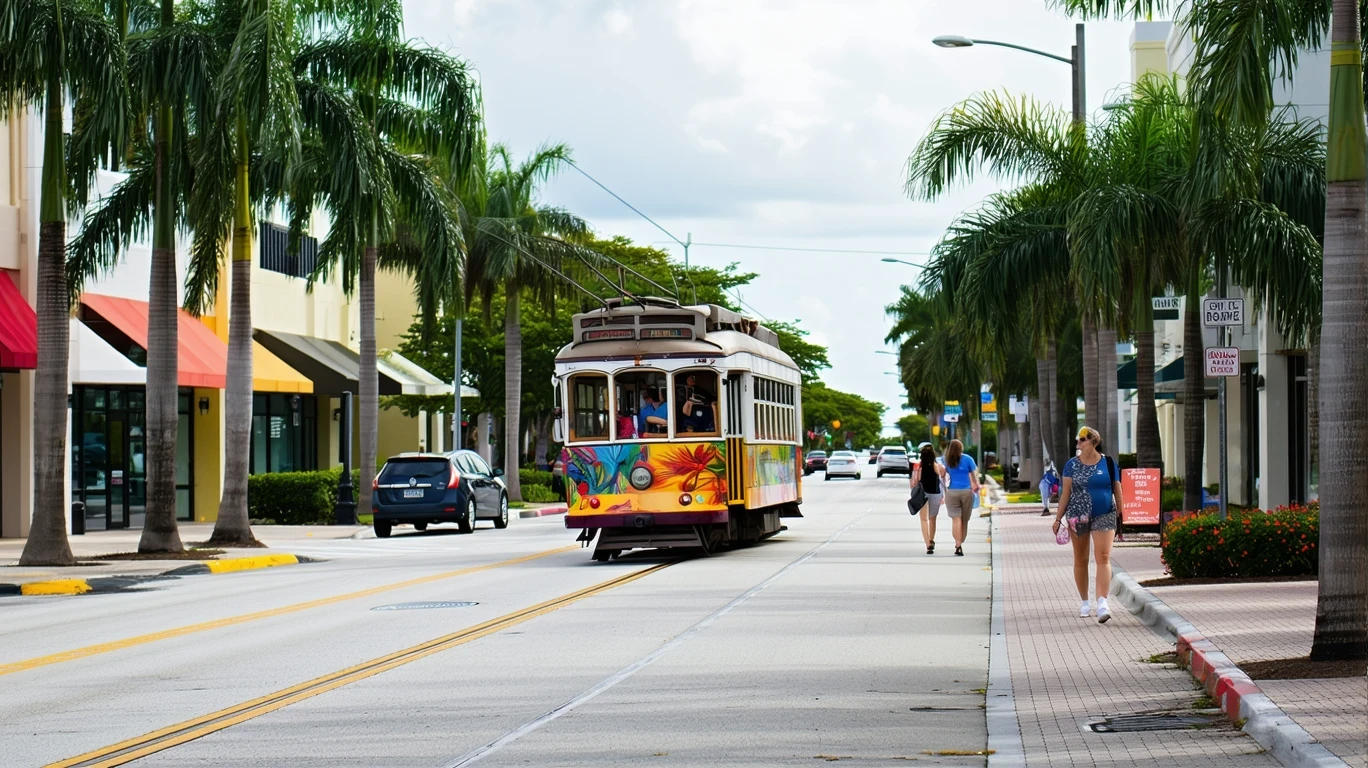
How People Get Around Miami Gardens
Miami Gardens is a car-first city with selective transit access. While rail service runs through parts of the area, the city’s layout—spread across residential neighborhoods, commercial corridors, and pockets of mixed-use development—means most daily trips require a vehicle. Newcomers often assume proximity to Miami’s broader transit network translates to easy mobility here, but transportation options in Miami Gardens are more limited in practice. The infrastructure supports driving far more reliably than it supports walking, biking, or transit dependence.
The pedestrian-to-road ratio sits in a middle band, meaning some sidewalks and crossings exist, but they’re not dense or continuous enough to make car-free living practical for most households. Bike infrastructure appears in pockets, but it’s not woven throughout the city in a way that supports routine cycling for errands or commuting. What defines mobility here is access to a car and the willingness to spend time behind the wheel.
Public Transit Availability in Miami Gardens
Public transit in Miami Gardens often centers around systems such as Metrorail, which provides rail service to parts of the city. For residents near stations, this creates a real option for commuting to job centers in downtown Miami, Brickell, or other rail-served areas. The presence of rail distinguishes Miami Gardens from purely car-dependent suburbs, and for single-destination commuters working standard hours, it can reduce driving frequency and offer predictability.
But transit’s role is narrow. Rail serves specific corridors, and bus service fills some gaps, but coverage doesn’t extend uniformly across neighborhoods. Residents in areas away from stations face longer walks, transfers, or the need to drive to a park-and-ride. Late-night service, weekend frequency, and multi-stop errands remain weak points. Transit works best for people whose daily routine aligns with where the system goes and when it runs—everyone else defaults to driving.
Driving & Car Dependence Reality
Driving isn’t just common in Miami Gardens; it’s structurally necessary for most households. Food and grocery establishment density falls below thresholds that would support walkable errands, meaning even routine tasks—picking up milk, dropping off dry cleaning, getting to a pharmacy—require a car. The city’s mixed building heights and land-use patterns create commercial activity, but that activity is dispersed, not clustered in walkable districts.
Parking is generally available and free at most destinations, which removes one friction point common in denser cities. But the tradeoff is time and distance. Commutes average 32 minutes, and more than 60% of workers face long commutes, reflecting both the geographic spread of the region and the limited reach of transit. For families managing school drop-offs, medical appointments, and weekend activities, a second vehicle often becomes necessary rather than optional.
Commuting Patterns & Daily Mobility
Commuting in Miami Gardens tends to follow one of two patterns: rail commuters who work in centralized, transit-accessible job centers, or drivers who work in dispersed locations across Miami-Dade and Broward counties. Only about 10% of workers report working from home, so the daily commute is a fixed reality for the vast majority of households.
For rail users, the commute is predictable but requires proximity to a station and a destination that’s also rail-served. For everyone else, driving offers flexibility but absorbs time and exposes households to fuel price volatility. At $4.09 per gallon, gas costs are noticeable, and longer commutes compound that exposure. The structure of the city—residential areas separated from job centers, limited walkable commercial zones—means most people spend significant time in transit, regardless of mode.
Who Transit Works For — and Who It Doesn’t
Transit in Miami Gardens works best for renters or homeowners living near rail stations who commute to a single, transit-accessible job in Miami’s urban core. It works for individuals or couples without complex household logistics—no multi-stop school runs, no evening activities in areas without service, no need to carry bulk groceries or supplies.
Transit doesn’t work well for families managing multiple daily stops, for shift workers outside standard hours, or for residents in neighborhoods beyond walking distance to stations. It doesn’t work for households that rely on spontaneity or need to respond quickly to changing schedules. And it struggles in a city where daily errands are car-dependent by design. Even households that use transit for commuting typically own a car for everything else.
Transportation Tradeoffs in Miami Gardens
Choosing between transit and driving in Miami Gardens isn’t about cost alone—it’s about control, predictability, and how much friction you’re willing to absorb. Transit offers lower direct expense and removes the need to navigate traffic, but it limits where you can go, when you can leave, and how much you can carry. Driving offers total flexibility and access to the entire region, but it requires vehicle ownership, maintenance, insurance, and fuel—plus the time spent in traffic during peak hours.
For households near rail with compatible work schedules, transit can reduce driving frequency and create breathing room in your monthly budget in Miami Gardens. For everyone else, driving remains the default, and the question becomes how to minimize exposure—choosing housing closer to work, consolidating trips, or adjusting work hours to avoid peak congestion.
The way Miami Gardens is built—residential blocks separated from commercial corridors, grocery stores and services spread across the city rather than clustered in walkable zones—means that even short errands become driving trips. You might live two miles from a supermarket, but without continuous sidewalks or safe crossings, walking isn’t practical. Rail service provides a real alternative for commuting to downtown Miami, but it doesn’t solve the daily challenge of getting to the pharmacy, the gym, or your child’s school. That gap between transit availability and daily accessibility is what defines mobility here: you can live near a train and still need a car.
FAQs About Transportation in Miami Gardens (2026)
Is public transit usable for daily commuting in Miami Gardens?
Yes, if you live near a rail station and commute to a transit-served job center in Miami. Rail provides reliable access to downtown, Brickell, and other core areas. But if your job is in a suburban office park, an industrial area, or anywhere off the rail line, transit becomes impractical and driving is necessary.
Do most people in Miami Gardens rely on a car?
Yes. The city’s layout, the dispersal of services, and the limited reach of transit mean that most households depend on a car for daily errands, school runs, and flexible scheduling. Even residents who use transit for commuting typically own a vehicle for everything else.
Which areas of Miami Gardens are easiest to live in without a car?
Areas within walking distance of rail stations offer the most viable car-free or car-light living, but only if your work and routine align with where transit goes. Even in those areas, grocery access and evening errands often require a vehicle or delivery service.
How does commuting in Miami Gardens compare to nearby cities?
Miami Gardens shares the long commute patterns common across northern Miami-Dade. The presence of rail service provides an option that some neighboring suburbs lack, but the overall commute experience—time, distance, and car dependence—is similar. Proximity to highways and regional job centers matters more than city boundaries.
Can you get by with one car in a two-adult household in Miami Gardens?
It depends on work locations and schedules. If both adults work near transit or one works from home, a single car can work. But if both commute to different areas, manage school or childcare logistics, or work non-standard hours, a second vehicle usually becomes necessary for practical reasons, not preference.
How Transportation Fits Into the Cost of Living in Miami Gardens
Transportation in Miami Gardens isn’t just a line item—it’s a structural factor that shapes where you live, how you spend your time, and how much flexibility you have in daily life. Car dependence means ongoing costs for fuel, insurance, maintenance, and parking, but it also means access to the entire region and control over your schedule. Transit offers lower direct costs and removes some driving burden, but it works only for specific commutes and doesn’t replace the need for a vehicle in most households.
The tradeoff isn’t between cheap and expensive—it’s between predictability and flexibility, between time and money, between proximity and access. Understanding how mobility works here helps you choose housing that aligns with your commute, anticipate transportation expenses, and structure your routine in a way that reduces friction rather than fighting the city’s layout.
How this article was built: In addition to public economic data, this article incorporates location-based experiential signals derived from anonymized geographic patterns—such as access density, walkability, and land-use mix—to reflect how day-to-day living actually feels in Miami Gardens, FL.